What Pet Owners Should Plan for During a Power Outage
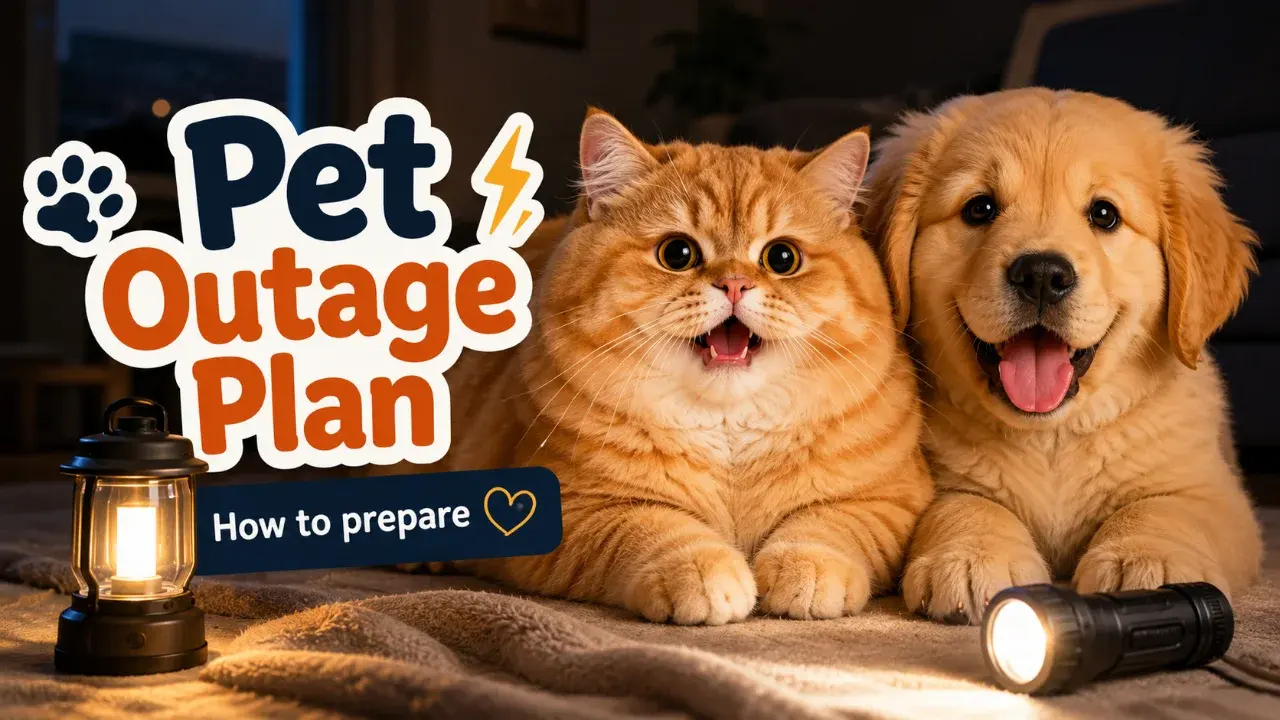
A blackout can affect much more than the lights. Pet owners should plan ahead for temperature changes, water, medication, secure transport and the possibility that staying home may no longer be safe.
A power outage can quickly change the conditions pets depend on at home. Heating and air conditioning may stop, water service can be affected, communications may become unreliable, and refrigerated supplies or medications may no longer stay at the required temperature.
For pet owners, that means the best blackout plan starts before the electricity fails.
Decide what would make your home unsafe
Not every outage requires evacuation. But owners should know in advance what conditions would make staying home unreasonable.
The American Red Cross advises households to plan for heating and cooling during an outage and to relocate if a home becomes dangerously hot or cold. It also recommends deciding ahead of time how and when to leave.
That decision matters for pets because they cannot independently move to a cooling center, find another source of water or explain that they are becoming distressed.
If conditions are no longer safe for the people in the home, pets should be included in the evacuation. The Red Cross specifically advises pet owners not to leave animals behind when a home must be evacuated.
Build a pet kit that works without electricity
Food is only one part of emergency preparation.
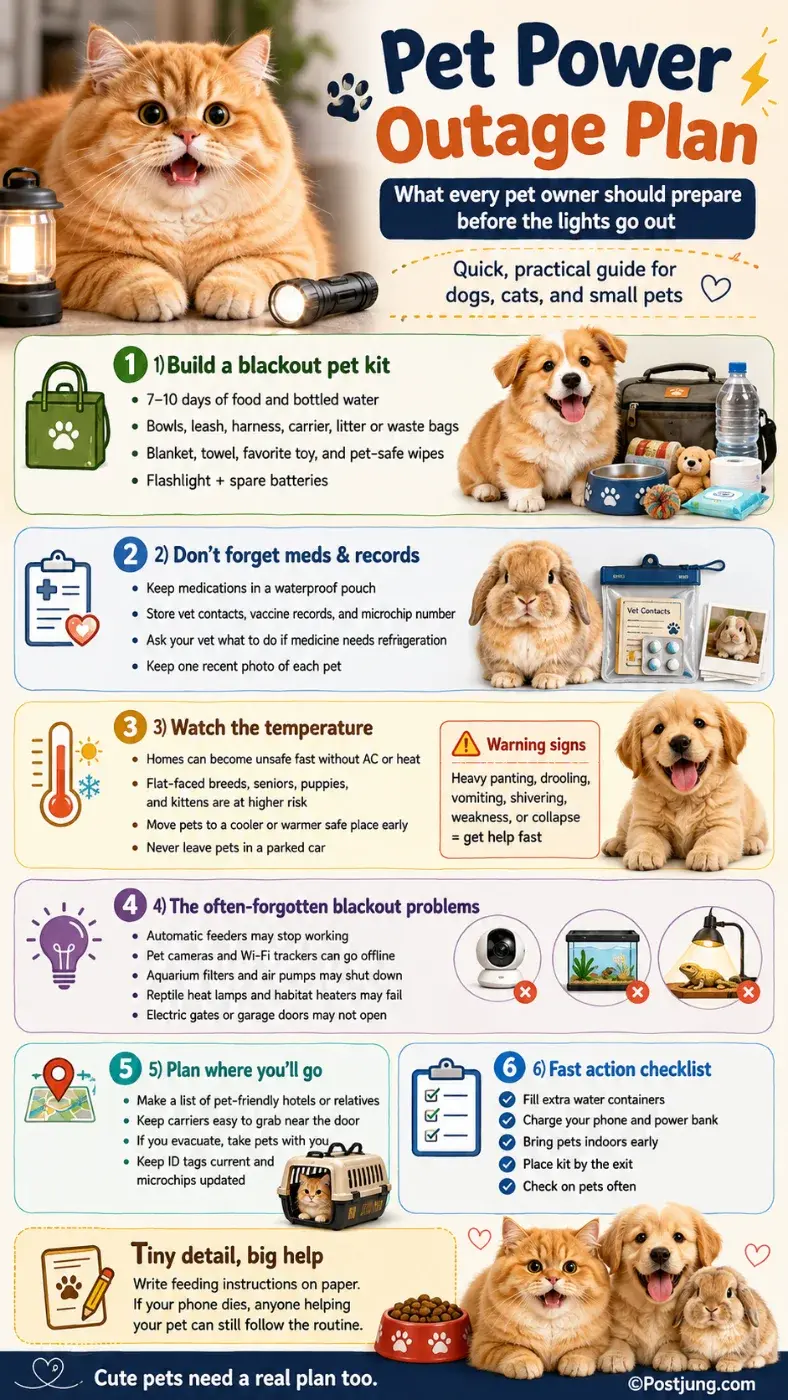
The Red Cross recommends keeping pet supplies in sturdy, accessible containers. Its suggested kit includes food, drinking water, bowls, medications, medical records, a first-aid kit, current photographs, leashes or harnesses and secure carriers.
The ASPCA recommends planning for roughly seven to 10 days of food and bottled water for each pet, along with sanitation supplies and a carrier or crate. It also advises keeping essential veterinary information and copies of medical and microchip records available.
Paper copies can be surprisingly useful during a prolonged outage. A dead phone battery or unavailable internet connection can make information stored only online difficult to retrieve.
Think about water before the outage begins
Water can become an overlooked problem during emergencies.
In places where electricity loss may also affect access to fresh water, the ASPCA advises preparing water supplies in advance. Its broader disaster guidance recommends storing at least seven days of bottled water for each person and pet.
Owners should also remember that pets may drink more than usual in hot conditions. The safest amount to keep on hand will vary with the animal, climate and household circumstances.
Have a plan for medications
Pets taking regular medication require an additional layer of preparation.
The ASPCA recommends keeping an emergency supply of necessary medication in a waterproof container with clear identifying information, while the Red Cross recommends including medications and copies of medical records in the pet emergency kit.
If a pet's medicine requires refrigeration or has special storage requirements, owners should ask their veterinarian in advance what to do if refrigeration is interrupted. A blackout is a poor time to discover that an essential drug cannot simply be left at room temperature.
Secure pets before they become frightened
Darkness, severe weather, unfamiliar noises and changes in routine can make animals more difficult to manage.
The ASPCA advises bringing pets indoors when a storm or disaster threatens because animals may become disoriented and wander away. It also recommends keeping identification current and using secure collars, harnesses and carriers.
The Red Cross similarly recommends current identification and suggests microchipping dogs and cats as an additional form of identification.
A carrier that exists somewhere in storage is less useful than one that can be reached immediately. Keeping carriers and leashes near an exit can shorten the time needed to leave.
Know where you can actually take your pet
One of the hardest parts of emergency evacuation can be discovering that the destination does not accept animals.
The Red Cross advises identifying pet-friendly hotels, relatives, boarding facilities, veterinarians or animal shelters before an emergency. It also notes that arrangements for household pets at emergency shelters can vary depending on the situation.
The ASPCA gives similar guidance, recommending that owners maintain a list of places or people able to accommodate their animals.
That list should ideally exist on paper as well as on a phone.
Some pets need species-specific backup plans
Dogs and cats are not the only animals vulnerable to prolonged electricity loss.
Birds, reptiles, fish and small mammals can depend heavily on controlled temperature, specialized housing or powered equipment. ASPCA disaster guidance, for example, includes separate precautions for birds, reptiles and small animals because their transport and environmental needs differ.
Owners of animals that depend on heaters, filters, pumps, lighting or other electrical equipment should develop a species-specific emergency plan with a veterinarian or experienced animal-care professional rather than improvising after power has already failed.
The most useful plan answers one question
A good outage plan does not need to predict exactly how long the electricity will be gone.
It needs to answer what happens next if the home becomes too hot, too cold or otherwise unable to meet the animal's basic needs.
If the carrier is accessible, the identification is current, the medication and records are ready, water is available and there is already somewhere safe to go, a power outage becomes far easier to manage without making rushed decisions.
SOURCES USED:

เขียนโดย Postjung Insights
 รู้หรือไม่? เปิดรายได้พนักงานส่งพัสดุของแต่ละแอป วันหนึ่งได้เท่าไร
 เจาะลึกรายได้พนักงานส่งอาหารแต่ละวันได้เท่าไร/หักค่าใช้จ่ายอะไรบ้าง
 ตาราง “เด่นเหนือเด่นใต้” งวด 1 ต.ค. 69 เปิดข้อมูลตามโพย เลขไหนอยู่ตรงไหน
 อำเภอที่มีชื่ออำเภอสั้นที่สุด 3 อำเภอเท่านั้นในประเทศไทย
 โรงเรียนที่มีนักเรียนมากที่สุดในไทย
 สุดระทึก! ไฟไหม้รางรถไฟฟ้า MRT สถานีเตาปูน-บางโพ..หยุดให้บริการชั่วคราวทุกสถานี
 สถิติย้อนหลัง 10 ปี ออกเลขไหนบ้างมาดูกัน
 แปลปกสลาก งวด 1 ต.ค. 69 ส่องตัวเลขจากภาพปกสลากกินแบ่งรัฐบาล
 ความลับ 30 ล้านปีของ “แม่น้ำไนล์”: ทำไมสายน้ำสายนี้ถึงไม่เคยเหือดแห้งกลางทะเลทรายซาฮารา
 เกษียณแล้วทำอะไรดี เปิด 4 กลุ่มอาชีพที่ผู้สูงวัยไทยทำกันน้อย จากข้อมูล 5.26 ล้านคน
 เลขเด็ดไพ่ยิปซี งวด 1 ตุลาคม 2569 รวมเลขเด่นและเลขท้าย 2 ตัว
 เปิด 5 โรงเรียนหญิงล้วนเก่าแก่ของไทย ที่มีประวัติยาวนานกว่าศตวรรษสุดระทึก! ไฟไหม้รางรถไฟฟ้า MRT สถานีเตาปูน-บางโพ..หยุดให้บริการชั่วคราวทุกสถานีเจาะลึกรายได้พนักงานส่งอาหารแต่ละวันได้เท่าไร/หักค่าใช้จ่ายอะไรบ้างเปิด 5 โรงเรียนหญิงล้วนเก่าแก่ของไทย ที่มีประวัติยาวนานกว่าศตวรรษ
 เปิด 5 สินค้าส่งออกของลาวที่คนไทยอาจคาดไม่ถึง หนึ่งในนั้นทำเงินเกือบ 1 พันล้านดอลลาร์เกษียณแล้วทำอะไรดี เปิด 4 กลุ่มอาชีพที่ผู้สูงวัยไทยทำกันน้อย จากข้อมูล 5.26 ล้านคน
 โรงเรียนเพียงแห่งเดียวของประเทศไทย ที่อยู่มาตั้งแต่ยุครัชกาลที่ 4
 English Edition