EP1 — What Does It Take to Turn a Book into a Real Product? Behind the Creation of Cosmic Mind: From Manuscript to Four Published Formats
In Episode 0, I introduced the idea of Learning by Doing through my experience of creating Cosmic Mind, a book that marked the beginning of my journey. It was the first project that helped me realize we can learn new skills while working on something real, rather than waiting until we have mastered everything before we begin.
Looking back at the process in greater detail, I discovered that creating a book involves much more than simply finishing the writing.
As the manuscript began to take shape, new questions kept emerging.
How should I structure the book? How should I organize the chapters and table of contents? How should I format the pages and prepare the files? What images should I use for the front and back covers? What did I need to understand about ISBNs? Which categories should the book belong to? Which platforms should I use to publish it? And once it became a product, how should I price it?
Even typography, font sizes, and document-editing software were things I had to learn along the way. When I started, I was not particularly proficient with Google Docs, Microsoft Word, or other document-editing programs.
These were all details I had to explore step by step because I had no previous experience in book production.
1. It Starts with Writing, but Writing Is Not the End
The first step was turning an idea into a manuscript that people could actually read from beginning to end.
I had to organize the overall structure, divide the content into chapters, write and refine each section, and revise the manuscript so that the ideas connected coherently.
After that came document formatting: arranging pages, choosing font sizes and typefaces, preparing the manuscript in formats suitable for publication, and creating front and back covers appropriate for the different book formats.
At first, I was focused mainly on the ideas I wanted to communicate. But once I began turning those ideas into an actual book, I had to learn writing and document preparation at the same time.
A completed manuscript and a publication-ready book file are not quite the same thing.
2. Learning the Publishing System
Once I had a manuscript, I needed to understand the different steps involved in making the book available to readers.
One of the subjects I had to study was the ISBN, or International Standard Book Number. I needed to understand what it was, what information I had to prepare, and how the ISBN application process related to publishing a book.
I also had to prepare bibliographic information and other book details required for publication.
Another area of learning was the difference between an eBook and a paperback, as well as Print on Demand, a publishing model in which physical books are produced when orders are placed instead of printing large quantities and storing them in advance.
Once I had chosen my publishing channels, I needed to learn how each platform worked. These included MEB for the Thai-language edition and Amazon Kindle Direct Publishing (KDP) for publishing the English-language edition as both an eBook and a paperback.
The requirements were not identical across platforms, so I had to study their individual guidelines and prepare the files accordingly.
3. Which Category Should My Book Belong To?
Another subject I needed to learn was book categorization.
I did not set out to understand every possible book category or become as knowledgeable about classification systems as someone working professionally in library science.
I simply needed to know enough to answer one practical question:
Which category best fits the book I have written?
I therefore studied the major types and categories of books, considered which ones most closely matched my content, and explored how different publishing platforms organized their categories.
The goal was not to memorize every category. It was to choose one that represented the actual content of my book as accurately as possible.
This taught me something important: learning does not always mean studying a subject until we know everything about it. Sometimes, it means understanding enough to make the decisions our work requires.
4. Pricing: When a Book Becomes a Product
Once the book was no longer just a personal manuscript and was about to become a product available to the market, I needed to learn about pricing.
I had to consider how eBooks and paperbacks differed in format and cost, what fees or conditions applied to each format, and how the price should relate to the product itself and the market I wanted to reach.
Pricing was not simply a matter of picking a number. It required understanding the conditions of each publishing platform and using that information to make a reasonable decision.
I did not need to know everything about the book business or become a pricing expert immediately. But I did need to learn enough to make an informed decision about pricing my own work.
There was, however, one important difference between my approach and that of a conventional product-development project.
My first priority for Cosmic Mind was not to maximize sales. It was to bring the book to the competitions and opportunities I had set my sights on.
Once the book was completed, I prioritized submitting
it for consideration in book awards—even before I had set its price.
5. Beyond Sales: A Goal for the Book
I wanted Cosmic Mind to reach as many readers as possible, but I did not choose to distribute it for free. My goals went beyond sales: I also wanted to give the work an opportunity to be considered on an international stage.
The English-language edition of my book was submitted for consideration to the Nautilus Book Awards 2025 in the United States. The awards focus on books associated with positive inspiration, meaningful change, and ideas that can have an impact on society.
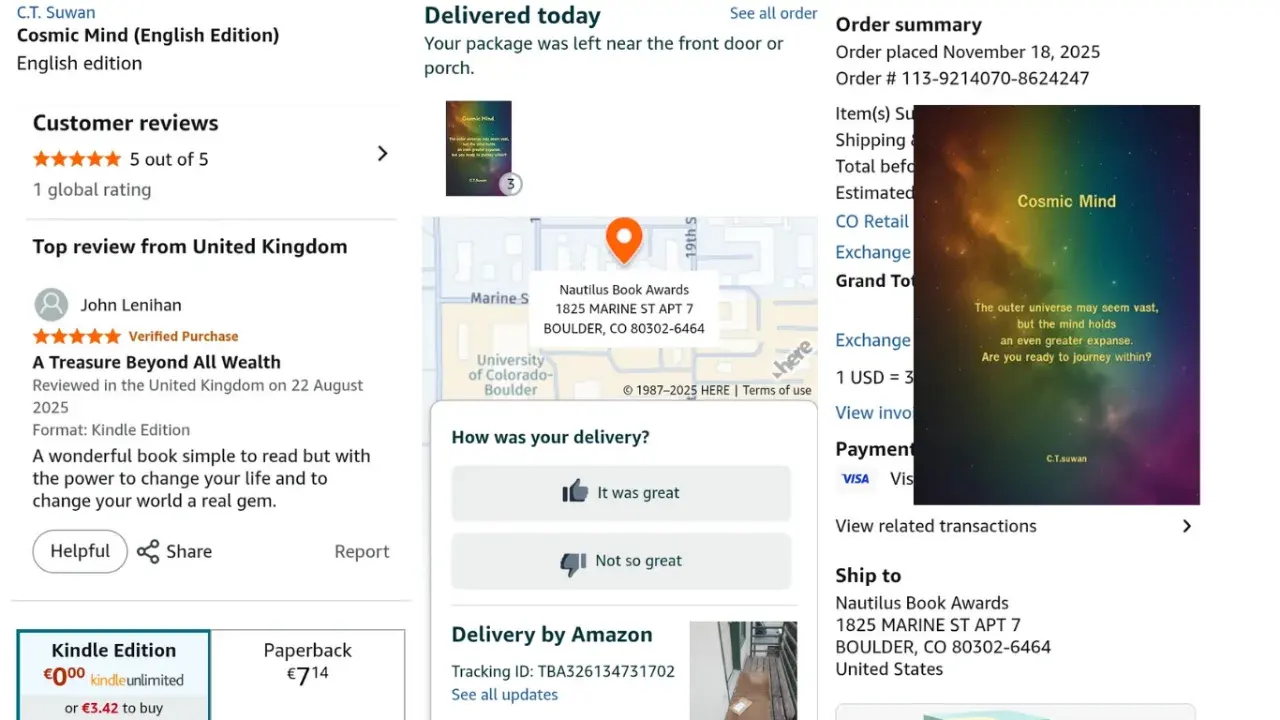
Although I did not win an award, getting my work through the application and submission process was already an achievement in its own right.
In my view, I had already won something the moment I managed to submit my work to a competition I had genuinely set out to enter.
Originally, I planned to submit Cosmic Mind to six international award programs. In the end, I was able to submit it only to the Nautilus Book Awards 2025.
The main obstacle was the cost of application and submission fees. I could not secure the necessary funds in time to meet the deadlines I had planned for, despite trying to move forward with the resources available to me.
I still regret that outcome, especially because I had already developed a plan to bring the book before several different award programs. I also regret that, at the time, I could not find competitions in Thailand or the surrounding region that seemed to accommodate the book's category and my intended goals as closely as I had hoped.
Some people might see the incomplete submissions as an excuse. I see them in the context of what actually happened: I had a goal, I made a plan, and I worked toward it within my limitations. Some opportunities simply required more resources than I could obtain within the available time.
I am not sharing this to suggest that limitations make everything impossible, nor am I asking for sympathy. I am sharing it because these constraints were part of the real experience of taking a project from its earliest stages to something that could be presented to the outside world.
6. Looking Back, I Created More Than a Book
If we look only at whether Cosmic Mind won an award or how much revenue it generated, we see only part of the story.
Looking at the process itself, I started from zero, without a budget for creating this work. During the period when I devoted myself to writing the book, I also had no income from other sources to support the project.
My primary working tool was an entry-level smartphone that cost approximately 3,000 Thai baht.
Along the way, I had to learn far more than writing. I studied English translation, used tools to check and evaluate the language, prepared publication files, learned how to distribute the work through different platforms, and planned promotional activities.
I created a page and channels to share the work, planned video content, prepared voice-over material, and developed promotional ideas that would introduce the book without revealing too much of its essential content.
These were additional tasks that emerged from the original writing project. I had to learn how to handle each one as it became necessary.
In the end, Cosmic Mind became more than a single manuscript. It was prepared in four published formats:
1. A Thai-language eBook on MEB
2. A Thai-language paperback through Print on Demand
3. An English-language eBook on Amazon KDP
4. An English-language paperback on Amazon KDP
To me, this was meaningful from a builder's perspective. Starting with one body of ideas, I learned how to develop the work into a product that could be published in several different formats.
I am not claiming that this process is easy or difficult for everyone, nor am I suggesting that anyone can accomplish everything without resources.
What I want to emphasize is this: not having all the knowledge at the beginning, or having limited resources, does not mean we are incapable of creating something.
Within my limitations, I chose to find ways to learn and then put what I learned into practice, one step at a time.
Closing: The Beginning of a Journey with One Smartphone
Looking back, Cosmic Mind means more to me than having finished a book or made it available to readers.
It was the starting point that showed me that even without complete knowledge, without enough funding for every stage, and with only a smartphone as my primary working tool, I could begin creating something that involved many steps and required a wide range of skills.
Of course, creating the book did not make every limitation disappear. There were opportunities I could not pursue as planned, and there were things I wanted to do but could not accomplish at the time.
Nevertheless, what I actually created remains: a completed book, four published formats, practical experience, and new skills I acquired along the way.
To me, these are tangible signs that starting from zero can lead to more than many people might expect.
And Cosmic Mind was only the beginning of a journey of learning and creating with one smartphone.
I did not wait until I was fully prepared in every area before starting. Instead, whenever I encountered something I did not yet know how to do, I learned what was necessary and applied that knowledge to the work in front of me.
This was what I learned from creating my first book, and it became an approach I would continue to use in other projects.
I build what I don't yet know how to build.
I choose to build things I do not yet know how to build, while learning the skills necessary to solve real problems along the way.
This is only part of the story behind Cosmic Mind. It is also the starting point for the stories of other things I have gone on to create.
From the Author
Since creating Cosmic Mind, one thing has changed significantly: I am no longer as afraid of doing things I have never done before.
I have begun to believe in my own capabilities in a way I had never experienced before. I have seen for myself that even when I start without experience in many areas, I can gradually learn and turn an idea into something real.
This confidence did not come from knowing everything. It came from taking action and discovering that I could learn what I did not yet know while working on a real project.
After that, I began moving into other fields and creating work that seemed increasingly distant from where I started. Sometimes, when I explain what I am working on, the projects may sound like an unusually wide leap across disciplines for an ordinary person.
But part of the reason I began that journey can be traced back to this book.
Cosmic Mind was not only a work I created. It also became a source of inspiration for me. It gave me the courage to learn, experiment, and begin projects I might never have imagined myself capable of taking on before.
I hope the stories I share from here onward can inspire some of the people who come across them, even if they have never heard of or read Cosmic Mind.
Because sometimes, the most important outcome of creating something is not only the thing we finish. It is what that experience teaches us to believe about our ability to keep learning and creating something new.
เขียนโดย CTSuwan
• Founder • Builder • Researcher
สนใจเทคโนโลยี การสร้างสรรค์ การวิจัยประยุกต์ และประเด็นร่วมสมัย เรียนรู้ผ่านการค้นคว้า
และการลงมือทำจริงในหลากหลายสาขา
ถ่ายทอดประสบการณ์ ความคิด และสิ่งที่เรียนรู้ระหว่างทางอย่างตรงไปตรงมา
 สนามบินแห่งเดียวของไทย ที่ตัวสนามบินตั้งอยู่ในเขต 2 จังหวัด
 กล้องวงจรปิดและสมาร์ตโฮมเสี่ยงแค่ไหน เมื่อ AI ทำงานเอง
 หมอเผย "ชายวัย 40 ไม่สูบบุหรี่หรือดื่มแอลกอฮอล์ กลับเป็นโรคหลอดเลือดสมอง"
 จากอเวจีสู่พระปัจเจกพุทธเจ้า ชะตากรรมของพระเทวทัตตามอรรถกถา
 ตรวจหวย 16 ตุลาคม 2569 ผลสลากกินแบ่งรัฐบาล รางวัลที่ 1 คือ
 ทรัมป์ขู่จะทิ้งระเบิด "ภูเขากาเซลล์" ของอิหร่าน
 จังหวัดเดียวของประเทศไทย ที่ไม่มี พื้นที่ติดกับจังหวัดอื่นเลย
 เปิดประวัติ 5 ซูเปอร์สตาร์ระดับโลก ที่มีสายเลือดไทยแฝงอยู่
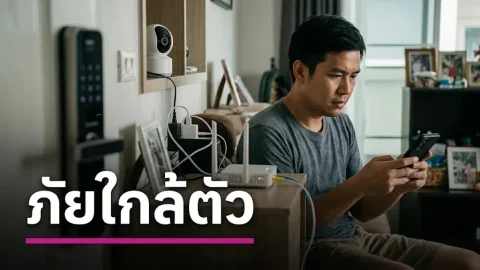 AI Agent เก่งขึ้น! 5 วิธีป้องกันอุปกรณ์ในบ้านจากภัยไซเบอร์
 มีตำบลหนึ่งของไทยที่ด้านหนึ่งติดทะเล อีกด้านติดประเทศเพื่อนบ้าน
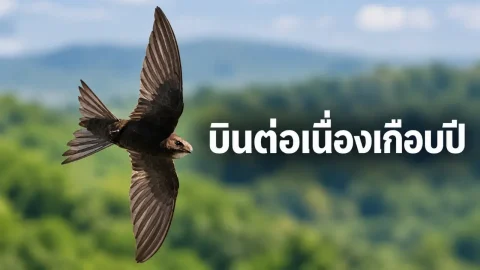 นกชนิดนี้สามารถบินได้อย่างต่อเนื่องเกือบหนึ่งปีโดยไม่ต้องลงจอด
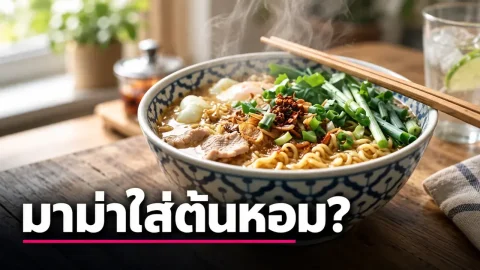 "มาม่าใส่ต้นหอม" ลองกันหรือยัง ? เมนูยอดฮิตที่เป็นไวรัลในโลกออนไลน์
 เปิด 5 มหาวิทยาลัยราชภัฏที่มีนักศึกษามากที่สุดในปี 2569 อันดับเปลี่ยนจากปีก่อนหรือไม่?มีตำบลหนึ่งของไทยที่ด้านหนึ่งติดทะเล อีกด้านติดประเทศเพื่อนบ้าน
 ประเทศที่มีการเปลี่ยนชื่อใหม่ล่าสุดหมอเผย "ชายวัย 40 ไม่สูบบุหรี่หรือดื่มแอลกอฮอล์ กลับเป็นโรคหลอดเลือดสมอง"
 อำเภอยักษ์ที่ใหญ่ที่สุด มีพื้นที่กว้างขวางที่สุดในประเทศไทย"มาม่าใส่ต้นหอม" ลองกันหรือยัง ? เมนูยอดฮิตที่เป็นไวรัลในโลกออนไลน์
 English Edition
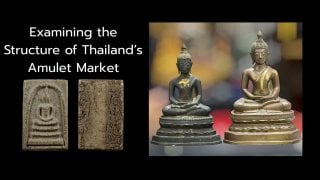 Examining the Structure of Thailand’s Amulet Market: When Certification Power, Pricing, and Belief Become a Self-Perpetuating Cycle By C.T. Suwan
 Why Cats Quiver Their Tails When They Greet You
 Is It Jealousy or Resource Competition Between Pets?
 Why a Dog’s Energy Level May Matter More Than Looks