Examining the Structure of Thailand’s Amulet Market: When Certification Power, Pricing, and Belief Become a Self-Perpetuating Cycle By C.T. Suwan
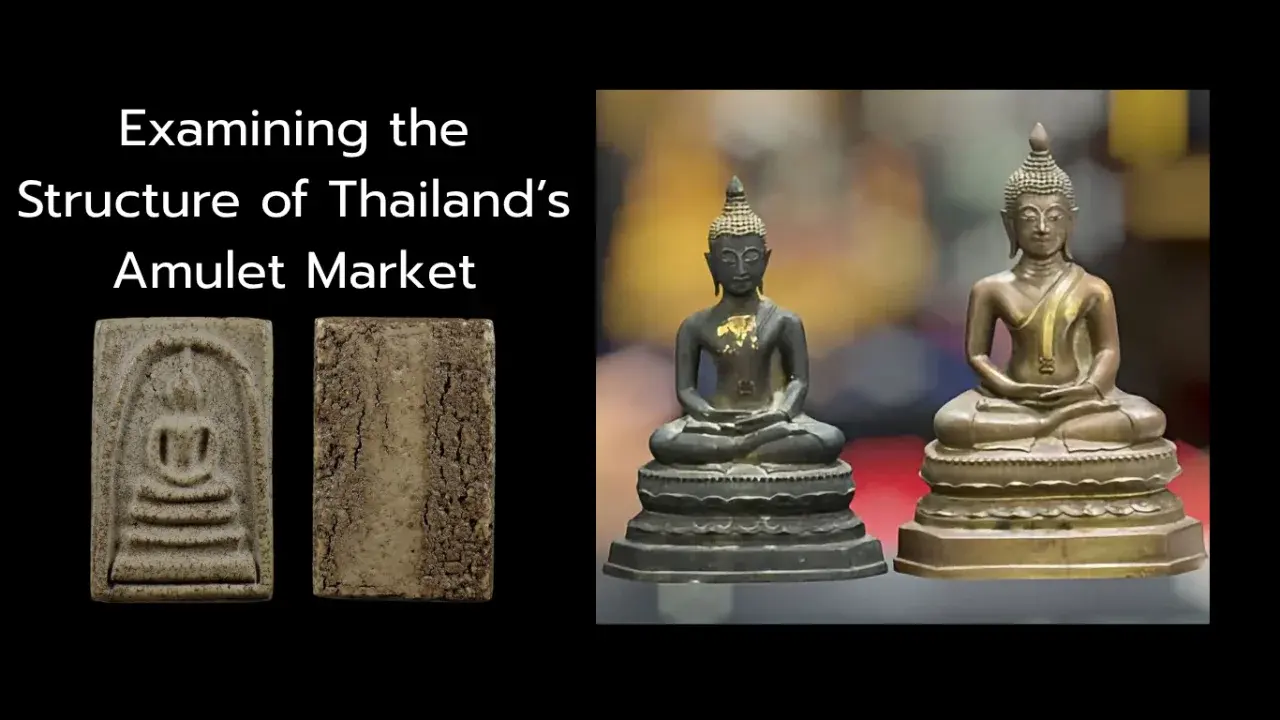
Introduction
Thailand’s amulet market is more than a market for religious objects. It is a system in which faith, historical narratives, expert authority, certification, and economic value intersect. For many people, amulets carry spiritual significance, cultural heritage, and personal meaning. For others, they are collectible assets that can command prices ranging from a few baht to millions of baht.
The question is not whether people should believe in amulets or whether amulets should have commercial value. The more fundamental question is how authenticity is established, who has the authority to determine it, and what happens when the same groups that define authenticity also influence market prices and purchasing decisions.
Consider a situation in which an amulet is rejected by one group of experts but accepted by another, or an object is described as authentic yet considered commercially undesirable. Who ultimately determines its status? Is authenticity an independently verifiable characteristic, a consensus among specialists, or a judgment shaped by the interests and conventions of a particular market?
These questions become particularly important when buyers invest substantial sums based on the judgments of experts, certificates, and claims about rarity. If there is no universally accepted standard, how can buyers distinguish between an object's historical authenticity, its spiritual significance, and its market value?
This article examines the structural problems that may arise when certification authority, pricing mechanisms, and belief reinforce one another without sufficient transparency or independent verification. It does not claim that every amulet is authentic, that counterfeits do not exist, or that everyone in the industry acts dishonestly. Rather, it questions whether the existing system provides adequate safeguards for buyers and whether its standards can withstand independent scrutiny.
1. The “Phuttho Klang” Case and the Question of Authenticity
Cases involving amulets such as the “Phuttho Klang” and objects referred to as “Rama-era amulets” raise a broader question: how should authenticity be established, and what evidence should support the prices attached to these objects?
The issue is not simply whether a particular amulet is genuine or counterfeit. It is also about the process through which an object receives recognition, acquires a reputation, and becomes commercially valuable.
In a market where expert opinions carry substantial weight, the judgment of an established amulet dealer or specialist can influence whether an object is accepted, rejected, or assigned a particular price. Such expertise can be valuable. Specialists may possess years of experience with historical records, manufacturing techniques, materials, and the characteristics of particular amulet traditions.
However, expertise should not automatically exempt its conclusions from examination.
When an object's authenticity is disputed, what evidence supports each position? Are the criteria publicly explained? Can another qualified specialist independently assess the same evidence? If opinions differ, is there a transparent process for reviewing the disagreement?
These questions matter because a judgment about authenticity can have significant financial consequences. An object accepted by a respected specialist may command a high price, while an object rejected by that same specialist may become difficult to sell.
The problem becomes more serious when there is no independent standard that all relevant parties recognize. In such circumstances, the authority to determine authenticity can become concentrated in a relatively small circle of market participants.
The central question, therefore, is not whether specialists should have a role. It is whether their authority should be accompanied by transparent reasoning, verifiable evidence, and meaningful accountability.
2. Information Asymmetry, Expert Authority, and the “Magic Marble” Example
One of the fundamental economic problems in the amulet market is information asymmetry: the seller or specialist may possess—or claim to possess—knowledge that an ordinary buyer cannot independently evaluate.
This imbalance can affect the buyer's ability to assess authenticity, rarity, and fair value. When a buyer cannot verify the relevant claims, the decision to purchase may depend heavily on trust in the person making those claims.
Consider a hypothetical example.
Someone takes an ordinary glass marble from an aquarium supply shop and claims that a revered monk has consecrated it. The marble is then offered for sale at one million baht. The seller provides a certificate and promises to refund the full purchase price if the buyer is dissatisfied.
To a particular group of believers or collectors, the marble might possess spiritual or symbolic significance. However, to someone outside that group, it may remain an ordinary glass marble with little or no resale value.
If the original buyer later attempts to sell it, another buyer may refuse to pay anything close to the original price. The seller's certificate may not persuade anyone who does not recognize the issuer's authority or accept the underlying claim.
This example is deliberately simplified, but it illustrates an important distinction: a price accepted within a particular group does not necessarily establish an object's broadly transferable economic value.
The question is not whether a buyer is entitled to attach personal meaning to an object. The question is whether the market price reflects characteristics that can be independently assessed or depends primarily on the recognition of a particular group of people.
A certificate does not automatically resolve this problem. Its value depends on who issued it, what was examined, which methods were used, what exactly was certified, and whether the issuer accepts responsibility for an incorrect assessment.
A certificate that merely records an opinion is not equivalent to an independently verifiable guarantee. Even a full-refund promise may leave the buyer facing uncertainty about enforcement, the time required to obtain a refund, and the costs of resolving a dispute.
Nor does the promise to refund the purchase price establish that the original valuation was reasonable.
This raises a broader consumer-protection question. If an object is sold at a very high price based on claims that ordinary buyers cannot independently verify, what safeguards should exist to protect those buyers?
Faith may be deeply personal, but commercial transactions involving substantial sums also require transparency and accountability. Invoking faith alone should not end the discussion about consumer protection.
3. Scientific Examination, the Meaning of Authenticity, and the Claim That “A Genuine Amulet Must Be Sellable”
Scientific examination offers one possible way to improve the quality of evidence in the amulet market.
Techniques such as microscopic examination, material analysis, and the study of aging and deterioration can provide information about an object's composition, manufacturing characteristics, and physical history. When properly applied, these methods can help test particular claims and identify inconsistencies.
However, scientific examination also has limitations. A laboratory result does not automatically establish every aspect of an object's history, nor can material analysis alone necessarily prove who created it, when it was made, or whether a particular religious ceremony took place.
Scientific evidence must therefore be interpreted within the scope of what the methods can actually establish.
Nevertheless, a different problem arises when scientific findings are dismissed simply because an object does not conform to the expectations of a particular market group.
Suppose an amulet displays material characteristics or physical features comparable to those found in highly valued examples. A specialist might still reject it on the grounds that no two genuine amulets are exactly alike, or that the object does not match the accepted characteristics of a recognized category.
There may be legitimate reasons for distinguishing between individual objects. Historical objects can differ because of variations in materials, manufacturing processes, storage conditions, repairs, and deterioration. The problem is not that specialists make distinctions. The problem is whether those distinctions follow explicit, consistent, and reviewable criteria.
If almost any result can be rejected by invoking the uniqueness of each object, how can an independent examination meaningfully challenge an established judgment?
This is where the market's standards require closer scrutiny.
The statement that “a genuine amulet must be sellable” is particularly problematic because it combines two different questions: whether an object is authentic and whether the market is willing to buy it.
An object may be historically authentic but commercially unpopular. Conversely, an object may be highly sought after without every claim made about it having been independently established.
Authenticity and market acceptance are not interchangeable.
When an object is rejected, the explanation may shift from “counterfeit” to “genuine but not recognized by the market,” “genuine but unpopular,” or “genuine but not valuable.” Such distinctions may sometimes be justified, but they also raise an important question: if the criteria change whenever an object is challenged, does the system provide a meaningful way to verify authenticity, or does it preserve the authority of the same market participants?
A market can legitimately develop its own preferences. However, market preference should not be presented as scientific proof, and scientific findings should not be accepted or rejected solely according to their effect on established prices.
The solution is not to assume that science can settle every question. It is to distinguish clearly between what scientific methods can establish, what historical evidence can support, what specialists infer, and what buyers are willing to pay.
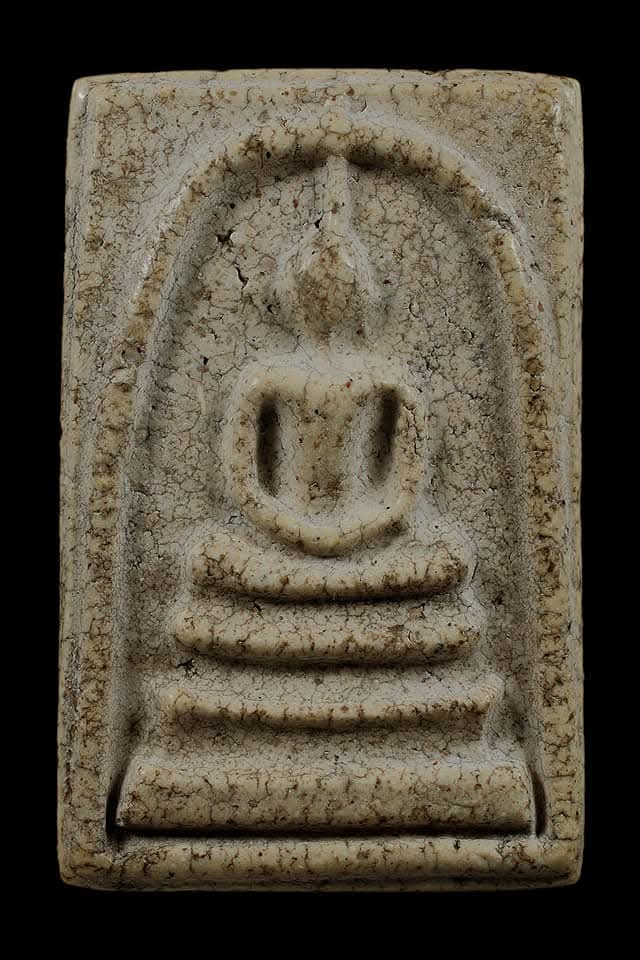
4. How Many Phra Somdej Amulets Were Actually Produced?
The question of the number of Phra Somdej amulets originally produced illustrates how claims about historical quantity can influence modern market value.
Within the amulet market, claims about limited production and rarity are important to the valuation of highly sought-after objects. Figures such as 84,000 pieces are sometimes invoked in discussions of production, while other accounts suggest that the number of surviving or originally produced amulets may have been much greater.
This raises a question that deserves serious examination: what historical evidence supports these competing accounts?
One possible hypothesis is that the number of Phra Somdej amulets produced across different occasions, locations, and circumstances could have reached several million—perhaps in the range of two to four million. This is not a claim that an exact count has been established. It is a hypothesis about possible production scale that should be examined against the available historical evidence.
The argument for considering a much larger quantity includes the possibility of production across multiple occasions and locations, as well as accounts of large religious construction projects associated with Somdet Phra Phutthachan (Toh). Historical records concerning major Buddha images and other large-scale religious works may provide relevant context for examining the resources, activities, and production capabilities associated with that period.
Such evidence does not, by itself, prove that millions of Phra Somdej amulets were produced. The connection between large religious projects and the number of amulets made must be investigated rather than assumed.
But the same standard of scrutiny must apply to claims of scarcity.
If a figure such as 84,000 is repeated through oral accounts and inherited market narratives, what is its original source? Does it refer to a documented production quantity, a particular batch, a specific occasion, or a later interpretation? What evidence supports treating that figure as the total number produced across all relevant circumstances?
It would be inconsistent to demand rigorous proof for the possibility of large-scale production while accepting claims of extremely limited production without comparable examination.
The important issue is not whether the estimate of two to four million is correct. It is whether competing claims are evaluated according to transparent and consistent evidentiary standards.
The economic implications are significant. If the number of authentic amulets were substantially greater than the market commonly assumes, the perceived scarcity of certain categories could be affected. That, in turn, could influence prices and expectations about future resale value.
This possibility may help explain why the distinction between “counterfeit” and “genuine but not commercially recognized” deserves scrutiny. If objects that were previously rejected were later accepted as genuine but considered unpopular or insufficiently valuable, the market's established hierarchy could remain largely intact even as the boundaries of authenticity shifted.
This is not proof that specialists deliberately manipulate classifications. It is a structural question about a market in which a relatively small group may exercise substantial influence over recognition and price.
The contradiction becomes especially noticeable when some amulets are promoted as objects that can command ten or twenty million baht, while ordinary people who possess similar-looking objects are told that theirs are counterfeit, unrecognized, or commercially undesirable.
Of course, visual similarity alone cannot establish authenticity. Differences in materials, manufacturing, provenance, and historical context may be decisive. But those differences should be explained through consistent criteria rather than treated as self-evident simply because an established market participant declares them.
There is also a tendency to portray ordinary people who hope to sell an amulet as greedy or motivated solely by money. That judgment deserves reconsideration.
When media coverage repeatedly highlights amulets selling for extraordinary sums, it naturally creates expectations among people who possess objects they believe may be similar. Their desire to have an object examined or to discover whether it has significant value is not inherently unreasonable.
The media and the market help shape those expectations. They should therefore also consider the consequences when the standards used to distinguish valuable objects from ordinary ones are unclear or inaccessible to the public.
Ultimately, historical scarcity should be supported by historical evidence. It should not become an unquestionable premise merely because it is economically useful to the existing market.
5. Certificates, Refund Guarantees, and the Limits of Consumer Protection
Promises to refund the full purchase price are often presented as reassurance to buyers. Such promises may provide a degree of confidence, but they do not resolve every issue associated with authenticity, valuation, or consumer protection.
A refund guarantee answers a relatively narrow question: what does the seller promise to do if a dispute arises under the stated conditions?
It does not necessarily answer whether the original assessment was accurate, whether the valuation was reasonable, or whether the buyer can recover the money promptly and without substantial expense.
Consider the distribution of risk in a high-value transaction.
The seller may receive and use the buyer's money for a period of time. If a dispute later arises, the buyer may have to locate the seller, obtain another assessment, gather documents, negotiate a refund, or pursue legal remedies. Even if the purchase price is eventually returned, the buyer may have borne significant costs in time, effort, and uncertainty.
The guarantee may therefore be meaningful without being sufficient.
The same applies to certificates. A credible certification system should make clear who issued the certificate, what evidence was examined, which methods were used, the limits of the assessment, and what responsibility the issuer accepts if the assessment is challenged.
Where a seller also controls or strongly influences the certification process, potential conflicts of interest deserve particular attention. The concern is not that every seller or specialist is dishonest, but that the structure should not depend entirely on the goodwill of individual participants.
It is also important to distinguish a commercial disagreement from a criminal offense. A dispute about authenticity or a failed resale does not, by itself, establish fraud. Whether conduct constitutes a criminal offense depends on the specific facts, representations, evidence, and applicable law. Likewise, a promise to refund money does not automatically turn a potentially criminal matter into a purely civil dispute.
 The objective should be a system in which claims can be examined fairly and responsibility can be established on the evidence.
Without such safeguards, buyers may be expected to trust the very parties whose judgments determine the commercial outcome, while having limited access to independent review.
That is not a strong foundation for a transparent market.
6. A Self-Perpetuating Market Cycle: Speculation, Liquidity, Asset Valuation, and the Need for Independent Standards
The amulet market can also be examined through the relationship between belief, expectations, and the willingness of future buyers to pay increasingly high prices.
In markets where value depends heavily on collective recognition, stories about good fortune, accidents, miracles, and extraordinary personal experiences may contribute to demand. Such stories can be culturally meaningful to believers, but they may also influence purchasing decisions and expectations about an object's value.
Accounts circulate within the amulet community about lottery winners, people who attribute survival from serious accidents to an amulet, and similar experiences reported in newspapers or other media. These stories may help explain why some people become interested in particular amulets.
However, a story about an extraordinary event does not, by itself, establish a causal relationship between the event and the object. Nor should an individual account be described as staged or fabricated without specific evidence.
The relevant question is how these narratives interact with commercial incentives.
In a market where scarcity, reputation, and anticipated resale value are central, the same objects may change hands repeatedly. A dealer may purchase an amulet, resell it at a higher price, and another buyer may later sell it to a different participant. In some transactions, checks or other payment arrangements may also be exchanged as objects move through the market.
Such transactions are not inherently improper. Resale is a normal feature of many collectible markets.
The structural concern arises when the valuation of an object depends increasingly on the expectation that another buyer will be willing to pay more, rather than on independently assessable characteristics or sustainable demand.
Under those conditions, the market can develop a self-reinforcing cycle: rising prices strengthen the belief that the objects are valuable, that belief attracts more buyers, and new transactions appear to confirm the earlier valuations.
The cycle can continue as long as sufficient buyers are willing and able to participate.
In this structural sense, parts of the market may exhibit characteristics resembling a chain-dependent cycle of price appreciation. This is not a claim that the entire amulet market is a Ponzi scheme or a legally defined pyramid scheme. Such a conclusion would require specific evidence about the transactions and arrangements involved.
The distinction matters. The concern is about a market structure that may depend heavily on continued turnover and the arrival of subsequent buyers.
What happens when that demand weakens?
There are signs of a different situation when collectors attempt to sell amulets back to the sources from which they originally purchased them, only to discover that the original sellers—or other potential buyers—are unwilling or unable to buy them at the expected prices.
When transactions become difficult to complete, liquidity declines. An object may still be described as valuable, but its owner may be unable to convert that claimed value into cash.

เขียนโดย CTSuwan
• Founder • Builder • Researcher
สนใจเทคโนโลยี การสร้างสรรค์ การวิจัยประยุกต์ และประเด็นร่วมสมัย เรียนรู้ผ่านการค้นคว้า
และการลงมือทำจริงในหลากหลายสาขา
ถ่ายทอดประสบการณ์ ความคิด และสิ่งที่เรียนรู้ระหว่างทางอย่างตรงไปตรงมา
 ถูกลอตเตอรี่แล้วขึ้นเงินที่ไหนได้เงินมากสุด กองสลาก ธนาคาร หรือร้าน
 จังหวัดเดียวของประเทศไทย ที่ไม่มี พื้นที่ติดกับจังหวัดอื่นเลย
 ตรวจหวย 16 ตุลาคม 2569 ผลสลากกินแบ่งรัฐบาล รางวัลที่ 1 คือ
 สนามบินแห่งเดียวของไทย ที่ตัวสนามบินตั้งอยู่ในเขต 2 จังหวัด
 เลขเด็ด "ปฏิทินท่านท้าวเวสสุวรรณ" งวดวันที่ 1 พฤศจิกายน 2569
 เลขเด็ดงวดวันที่ 1 พฤศจิกายน 69..คำนวณตามตารางเลขกำลังวัน รับประกันแม่นยำ!
 จังหวัดที่มีฟาร์มจระเข้มากที่สุดในไทย เปิดสถิติที่หลายคนอาจไม่เคยรู้
 เงินแต่ละประเทศเรียกว่าอะไร? เปิดชื่อสกุลเงินทั่วโลก พร้อมเรื่องน่ารู้
 เงินเดือนพนักงานเซเว่นปี 2569 ทำงานวันละกี่ชั่วโมง รายได้ต่อเดือนเท่าไหร่ พร้อมสวัสดิการที่ควรรู้ก่อนสมัครงาน
 หวย 1 พฤศจิกายน ย้อนหลัง 20 ปี เปิดสถิติเลขซ้ำ เลขท้าย 2 ตัวมีอะไรน่าจับตา
 จังหวัดที่มีเพียง 4 อำเภอ เพียงจังหวัดเดียวเท่านั้นในประเทศไทย
 ทำไมมนุษย์ถึงต้องฝัน? กลไกการเรียบเรียงข้อมูลของสมองในภาวะ REM Sleep
 เปิด 5 มหาวิทยาลัยราชภัฏที่มีนักศึกษามากที่สุดในปี 2569 อันดับเปลี่ยนจากปีก่อนหรือไม่?
 ประเทศที่มีการเปลี่ยนชื่อใหม่ล่าสุด
 อำเภอยักษ์ที่ใหญ่ที่สุด มีพื้นที่กว้างขวางที่สุดในประเทศไทย
 ผลการศึกษาจากญี่ปุ่นชี้ว่า "สุนัขสามารถแยกแยะผู้ใหญ่จากเด็กได้จากน้ำเสียง"เลขเด็ดงวดวันที่ 1 พฤศจิกายน 69..คำนวณตามตารางเลขกำลังวัน รับประกันแม่นยำ!
 English Edition
 EP1 — What Does It Take to Turn a Book into a Real Product? Behind the Creation of Cosmic Mind: From Manuscript to Four Published Formats
 Why Cats Quiver Their Tails When They Greet You
 Is It Jealousy or Resource Competition Between Pets?
 Why a Dog’s Energy Level May Matter More Than Looks