Why Children Should Never Be Asked to Hug an Unwilling Dog
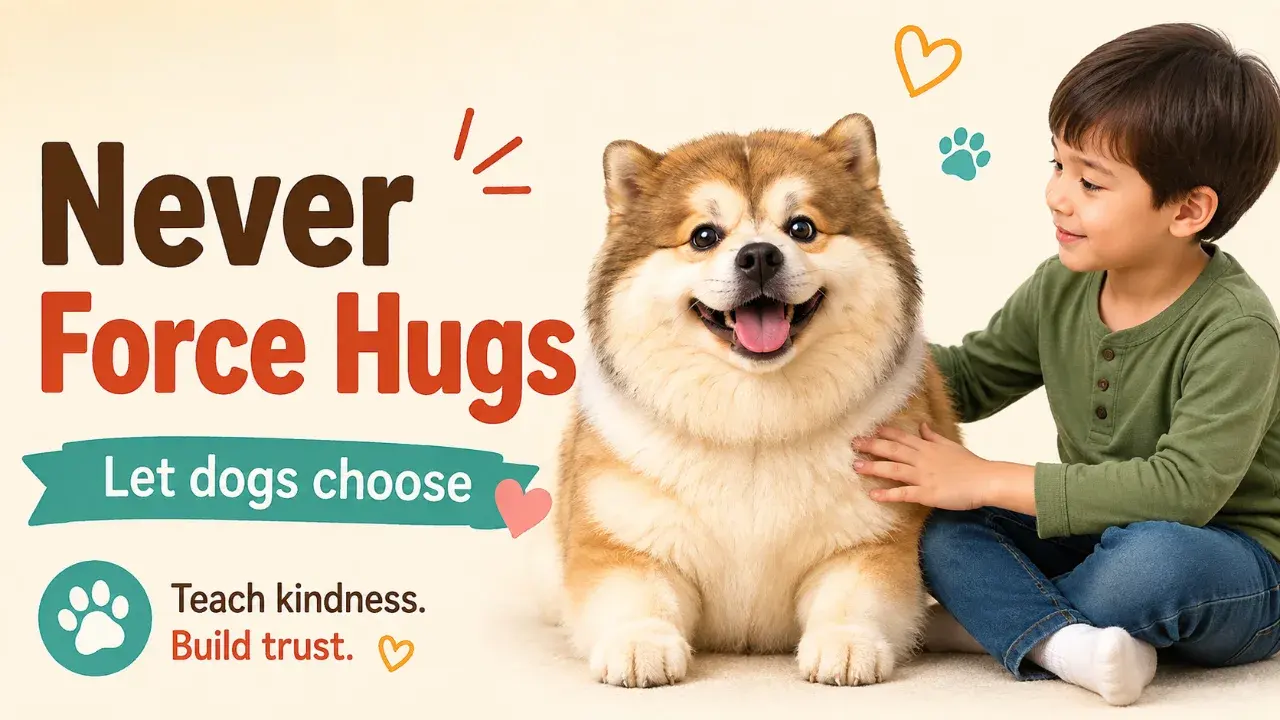
A hug may look affectionate to a person while feeling restrictive to a dog. Teaching children to recognize canine body language—and allowing dogs to move away—can make everyday interactions safer and more comfortable for both.
A child wrapping both arms around a beloved dog can look like a picture of friendship. From the dog’s perspective, however, that same embrace may restrict movement, bring a face uncomfortably close, and remove the easiest way to end an interaction: walking away.
That is why animal-welfare and veterinary guidance emphasizes giving dogs a choice rather than expecting them to accept physical affection. The American Veterinary Medical Association advises against letting children hug unfamiliar dogs and notes that even a family dog may not appreciate being hugged. It also recommends always giving dogs the option to leave an interaction.
A hug means something different to a dog
Humans commonly use hugs and kisses to express affection. Dogs do not necessarily interpret those gestures the same way.
Dogs Trust advises families that hugs and kisses can make dogs feel trapped or worried. Instead, children can offer gentle petting while allowing the dog to decide whether to remain nearby. A dog that voluntarily curls up beside someone is making a very different choice from one being held in place.
The RSPCA similarly notes that children and dogs communicate differently. Behaviors that seem affectionate or playful to a child—including hugging, picking up, or bringing the face very close—can be uncomfortable or threatening to some dogs.
The important distinction is choice.
If a dog approaches, remains relaxed and seeks additional contact, the interaction can continue gently. If the dog turns away or moves off, children should be taught that this means the interaction is finished.
Learn the quiet signs before a growl
A growl is easy to recognize. Earlier signs of discomfort can be much easier to miss.
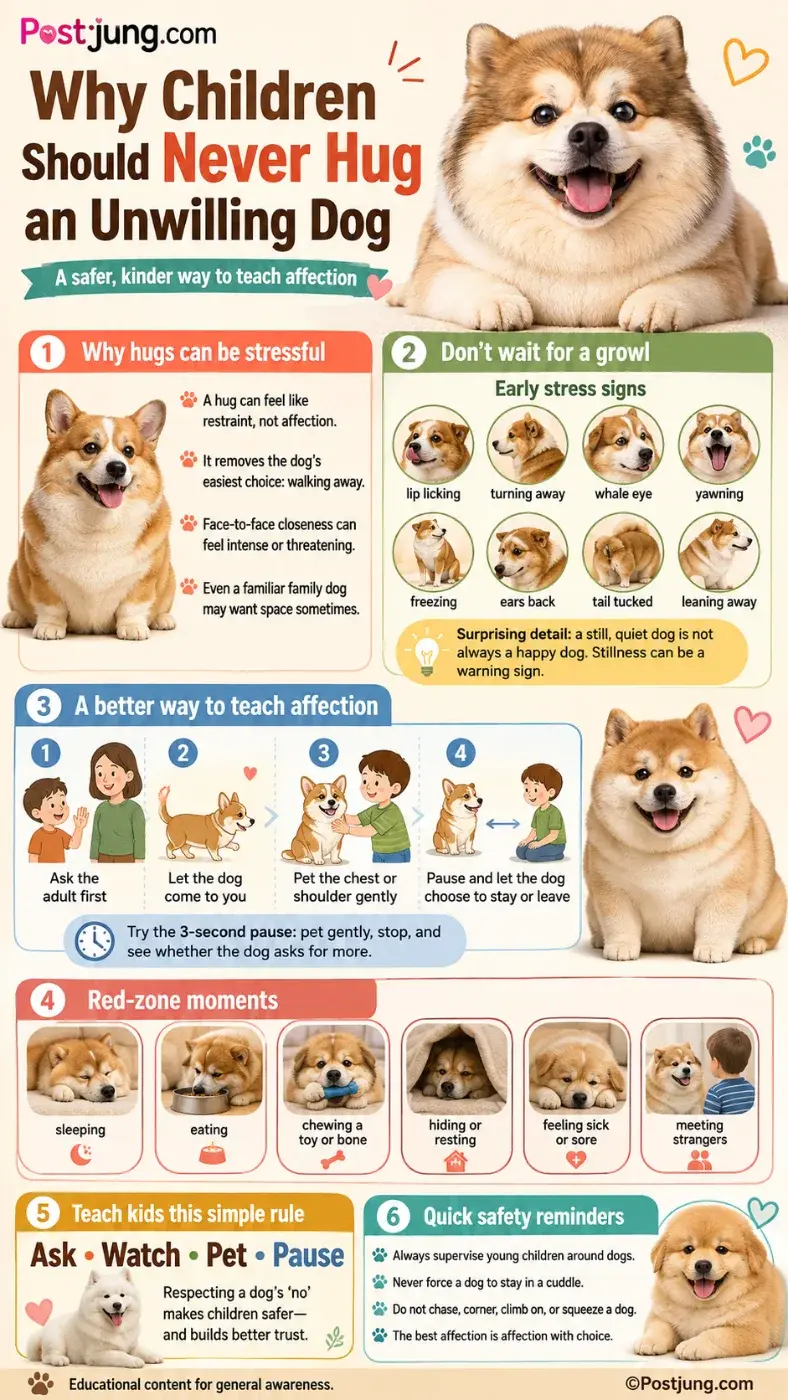
Dogs Trust describes these subtle signals as a dog's "whispers." They can include moving away, lip licking, leaning away, yawning, narrowing the eyes, lowering the body or tucking the tail.
Other signs can include becoming unusually still or stiff. A motionless dog should not automatically be interpreted as a dog enjoying a hug.
That distinction matters because children may assume that a dog that does not struggle is happy with what is happening. Instead of waiting for a more obvious warning, an attentive adult can end the interaction when the first signs of discomfort appear.
Familiar dogs still need boundaries
Knowing a dog well does not eliminate the need for supervision.
The AVMA says recorded dog-bite injuries are higher among children than adults and that young children are more likely to suffer bites to the face and neck. Its prevention guidance specifically recommends supervising interactions between young children and dogs, including the family's own pets.
Dogs may also be less tolerant at particular moments. Eating, sleeping, resting with a toy, experiencing pain or simply wanting to be left alone can change how comfortable a dog is with contact.
A history of being gentle does not mean a dog should be expected to tolerate every interaction indefinitely.
Teach children a simple alternative
Families do not need to discourage affection between children and dogs. They can change how that affection is expressed.
A useful rule is to let the dog participate voluntarily. Allow the dog to approach rather than pulling it closer. A child can gently stroke the dog's body if the dog appears comfortable, then pause. If the dog stays or seeks more contact, another gentle stroke may be welcome. If it walks away, let it go.
Children should also learn to leave dogs alone while they are eating, sleeping, resting or occupied with something valuable to them. Dogs Trust recommends active adult supervision and separation when an adult cannot pay close attention.
For unfamiliar dogs, children should ask the accompanying adult before attempting to interact and should never assume that every dog wants to be touched.
Respecting "no" can strengthen the relationship
Teaching a child not to hug an unwilling dog is not teaching fear of dogs. It is teaching observation and respect.
Children can learn that affection does not require holding an animal in place. A dog can choose to sit nearby, initiate contact, play, accept gentle petting or simply share the same space.
Those small choices create a useful habit: watch the dog, respond to what its body is communicating, and allow it to leave.
For families, that approach offers something better than a forced picture-perfect hug—a relationship in which both the child and the dog are comfortable participants.
SOURCES USED:

เขียนโดย Postjung Insights
 เจาะลึกรายได้พนักงานส่งอาหารแต่ละวันได้เท่าไร/หักค่าใช้จ่ายอะไรบ้าง
 อำเภอที่มีชื่ออำเภอสั้นที่สุด 3 อำเภอเท่านั้นในประเทศไทย
 เกษียณแล้วทำอะไรดี เปิด 4 กลุ่มอาชีพที่ผู้สูงวัยไทยทำกันน้อย จากข้อมูล 5.26 ล้านคน
 รู้หรือไม่? เปิดรายได้พนักงานส่งพัสดุของแต่ละแอป วันหนึ่งได้เท่าไร
 แปลปกสลาก งวด 1 ต.ค. 69 ส่องตัวเลขจากภาพปกสลากกินแบ่งรัฐบาล
 เลขเด็ดไพ่ยิปซี งวด 1 ตุลาคม 2569 รวมเลขเด่นและเลขท้าย 2 ตัว
 โรงเรียนเพียงแห่งเดียวของประเทศไทย ที่อยู่มาตั้งแต่ยุครัชกาลที่ 4
 สุดระทึก! ไฟไหม้รางรถไฟฟ้า MRT สถานีเตาปูน-บางโพ..หยุดให้บริการชั่วคราวทุกสถานี
 โรงเรียนที่มีนักเรียนมากที่สุดในไทย
 ตาราง “เด่นเหนือเด่นใต้” งวด 1 ต.ค. 69 เปิดข้อมูลตามโพย เลขไหนอยู่ตรงไหน
 เปิด 5 โรงเรียนหญิงล้วนเก่าแก่ของไทย ที่มีประวัติยาวนานกว่าศตวรรษ
 ความลับ 30 ล้านปีของ “แม่น้ำไนล์”: ทำไมสายน้ำสายนี้ถึงไม่เคยเหือดแห้งกลางทะเลทรายซาฮาราสุดระทึก! ไฟไหม้รางรถไฟฟ้า MRT สถานีเตาปูน-บางโพ..หยุดให้บริการชั่วคราวทุกสถานีเจาะลึกรายได้พนักงานส่งอาหารแต่ละวันได้เท่าไร/หักค่าใช้จ่ายอะไรบ้างเปิด 5 โรงเรียนหญิงล้วนเก่าแก่ของไทย ที่มีประวัติยาวนานกว่าศตวรรษ
 เปิด 5 สินค้าส่งออกของลาวที่คนไทยอาจคาดไม่ถึง หนึ่งในนั้นทำเงินเกือบ 1 พันล้านดอลลาร์เกษียณแล้วทำอะไรดี เปิด 4 กลุ่มอาชีพที่ผู้สูงวัยไทยทำกันน้อย จากข้อมูล 5.26 ล้านคนโรงเรียนเพียงแห่งเดียวของประเทศไทย ที่อยู่มาตั้งแต่ยุครัชกาลที่ 4
 English Edition