How Wildfire Smoke and Poor Air Quality Can Affect Pets
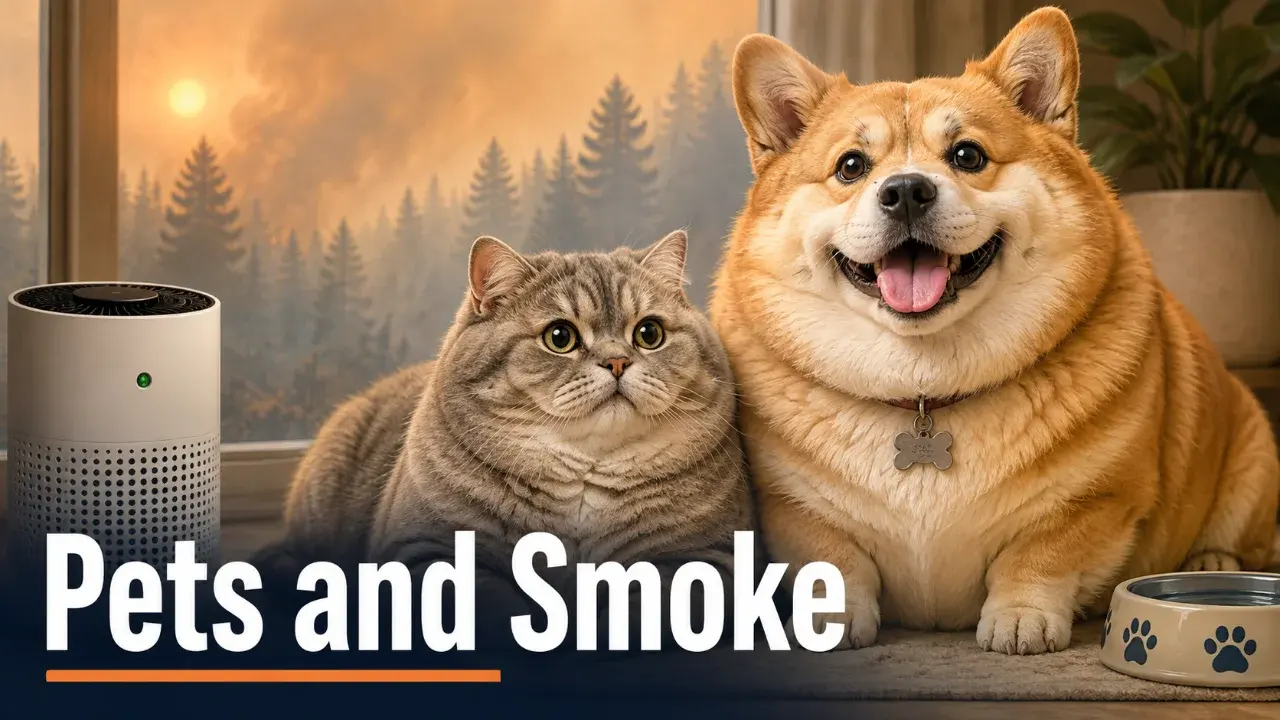
Dogs, cats, birds and other animals can experience eye and respiratory irritation when wildfire smoke degrades air quality. Some pets face greater risks, making cleaner indoor air and reduced outdoor activity especially important during smoke events.
Wildfire smoke does not stop at the human respiratory system. Dogs, cats, birds and other animals can also be affected when smoke pushes air quality into unhealthy territory, even if the wildfire itself is far from home.
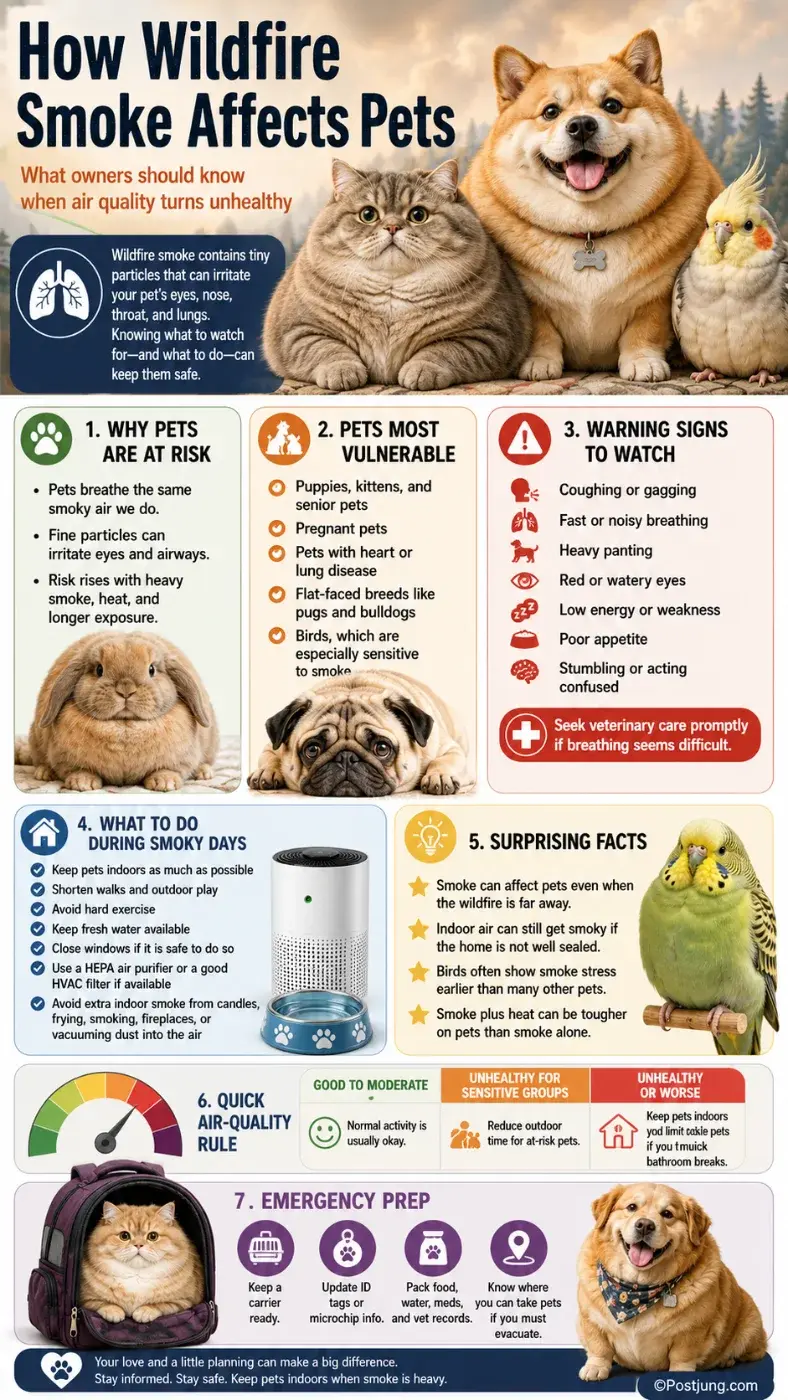
The U.S. Environmental Protection Agency (EPA) says smoke can irritate pets’ eyes and respiratory tracts. Animals that are very young, older, pregnant, or living with heart or lung disease may be particularly vulnerable. Smoke combined with hot weather may add another layer of stress.
Why wildfire smoke can be a problem for pets
Wildfire smoke is a complex mixture of gases and airborne particles. One of the major health concerns is fine particulate matter known as PM2.5 — particles with an aerodynamic diameter of 2.5 micrometers or smaller.
Their tiny size allows these particles to penetrate deeply into the respiratory system.
Animals breathe the same surrounding air their owners do, so poor outdoor air quality can affect them as well. Research and veterinary guidance indicate that smoke exposure can irritate the eyes and airways and make breathing more difficult.
That does not mean every pet exposed to smoky air will become seriously ill. Risk depends on factors including smoke concentration, duration of exposure, activity level, heat and the animal’s underlying health.
Some pets need extra attention
Not every animal faces the same level of risk.
The EPA advises particularly close monitoring of young, older and pregnant animals, along with pets that already have heart or lung disease.
Short-nosed, or brachycephalic, dogs such as pugs and bulldogs also deserve additional caution because breathing can already be more difficult for these breeds, especially when smoke and heat occur together.
UC Davis has similarly identified snub-nosed animals as potentially higher-risk. That category can include flat-faced cats as well as dogs.
Bird owners should be especially careful. The EPA notes that pet birds are particularly susceptible to smoke and recommends keeping them indoors in cleaner air when smoke is present.
Signs of smoke exposure to watch for
Changes in breathing are among the most important warning signs.
The EPA advises contacting a veterinarian when an animal develops concerning symptoms such as excessive coughing or gagging, rapid or noisy breathing, open-mouth breathing, red or watery eyes, nasal discharge, excessive panting, unusual weakness or fatigue, disorientation, stumbling, or reduced appetite or thirst.
Cats exposed to smoke or heat may also become restless, seek cooler locations, pant, drool or develop sweaty paws.
Any significant breathing difficulty deserves prompt veterinary attention rather than waiting to see whether air quality improves.
Keep outdoor activity short when the air is smoky
During a smoke event, reducing exposure is one of the simplest protective measures.
Keep pets indoors as much as practical and shorten outdoor bathroom breaks. Long walks, running and strenuous play can wait until conditions improve because exercise increases breathing and therefore the amount of polluted air entering the respiratory system.
Heat matters as well. Smoke and high temperatures occurring simultaneously can put additional strain on an animal, so pets should have continuous access to fresh water and a comfortably cool environment.
Checking local air-quality information before taking a pet outside can help owners decide when conditions are more favorable.
Cleaner indoor air can make a difference
Simply closing the door is not always enough because outdoor smoke can enter buildings.
The EPA recommends planning ahead with appropriate high-efficiency HVAC filters, where compatible with the system, or a portable air cleaner. Creating a cleaner-air room can provide another option during prolonged smoke episodes.
It is also useful to avoid producing extra particles indoors while outdoor air is smoky.
Activities such as frying or broiling food, burning candles, using fireplaces or wood stoves, smoking, vaping and even vacuuming can add particles to indoor air. Reducing these activities can help keep the indoor environment cleaner.
Doors and windows generally should remain closed when smoke is present if indoor temperatures can still be kept safe. During hot weather, however, avoiding dangerous indoor heat remains essential.
Wildfire preparation should include pets
Poor air quality may last for days, and an active wildfire can quickly turn an air-quality problem into an evacuation emergency.
Pet owners should therefore plan for both.
The EPA recommends getting pets accustomed to their carriers, keeping identification such as microchips current, knowing where animals tend to hide when frightened, and identifying evacuation destinations that accept pets.
An emergency kit should include essentials such as food, water, medications and important records.
These preparations are valuable even for people who never need to evacuate. A sudden deterioration in smoke, heat or fire conditions is a difficult time to discover that a frightened cat will not enter its carrier or that an emergency shelter cannot accommodate animals.
Wildfire smoke can travel hundreds or even thousands of miles, according to the EPA, meaning visible flames do not have to be nearby for air quality to become a concern.
For pet owners, the practical rule is simple: when smoke is affecting the air you breathe, consider the air your animals are breathing too. Keep their exposure low, watch vulnerable pets closely and contact a veterinarian if respiratory or other concerning symptoms appear.
SOURCES USED:
- U.S. Environmental Protection Agency — Protect Your Pets from Wildfire Smoke
EPA pet wildfire smoke guidance - U.S. Environmental Protection Agency — Frequent Questions About Wildland Fire Smoke for Individuals
EPA wildfire smoke FAQ - U.S. Environmental Protection Agency — Wildfire Smoke and Health Factsheets
EPA wildfire smoke health factsheets - UC Davis Environmental Health Sciences Center — Wildfires: Protecting Animals and Pets
UC Davis pet wildfire guidance

เขียนโดย Postjung Insights
 เจาะลึกรายได้พนักงานส่งอาหารแต่ละวันได้เท่าไร/หักค่าใช้จ่ายอะไรบ้าง
 รู้หรือไม่? เปิดรายได้พนักงานส่งพัสดุของแต่ละแอป วันหนึ่งได้เท่าไร
 เกษียณแล้วทำอะไรดี เปิด 4 กลุ่มอาชีพที่ผู้สูงวัยไทยทำกันน้อย จากข้อมูล 5.26 ล้านคน
 โรงเรียนที่มีนักเรียนมากที่สุดในไทย
 เปิด 5 โรงเรียนหญิงล้วนเก่าแก่ของไทย ที่มีประวัติยาวนานกว่าศตวรรษ
 เลขเด็ดไพ่ยิปซี งวด 1 ตุลาคม 2569 รวมเลขเด่นและเลขท้าย 2 ตัว
 อำเภอที่มีชื่ออำเภอสั้นที่สุด 3 อำเภอเท่านั้นในประเทศไทย
 สุดระทึก! ไฟไหม้รางรถไฟฟ้า MRT สถานีเตาปูน-บางโพ..หยุดให้บริการชั่วคราวทุกสถานี
 ตาราง “เด่นเหนือเด่นใต้” งวด 1 ต.ค. 69 เปิดข้อมูลตามโพย เลขไหนอยู่ตรงไหน
 แปลปกสลาก งวด 1 ต.ค. 69 ส่องตัวเลขจากภาพปกสลากกินแบ่งรัฐบาล
 เปิดศึกเลขเด็ดงวดนี้! เจ้าพ่อปากแดง ปะทะ เจ้าแม่ตะเคียนทอง งวด 1 ต.ค. 59 คัดมาให้เน้นๆ พร้อมลุ้นรวย
 ความลับ 30 ล้านปีของ “แม่น้ำไนล์”: ทำไมสายน้ำสายนี้ถึงไม่เคยเหือดแห้งกลางทะเลทรายซาฮาราสุดระทึก! ไฟไหม้รางรถไฟฟ้า MRT สถานีเตาปูน-บางโพ..หยุดให้บริการชั่วคราวทุกสถานีเจาะลึกรายได้พนักงานส่งอาหารแต่ละวันได้เท่าไร/หักค่าใช้จ่ายอะไรบ้างเปิด 5 โรงเรียนหญิงล้วนเก่าแก่ของไทย ที่มีประวัติยาวนานกว่าศตวรรษ
 เปิด 5 สินค้าส่งออกของลาวที่คนไทยอาจคาดไม่ถึง หนึ่งในนั้นทำเงินเกือบ 1 พันล้านดอลลาร์เกษียณแล้วทำอะไรดี เปิด 4 กลุ่มอาชีพที่ผู้สูงวัยไทยทำกันน้อย จากข้อมูล 5.26 ล้านคน
 โรงเรียนเพียงแห่งเดียวของประเทศไทย ที่อยู่มาตั้งแต่ยุครัชกาลที่ 4
 English Edition