Why Rabbits Grind Their Teeth: Contentment, Pain, and What to Watch For
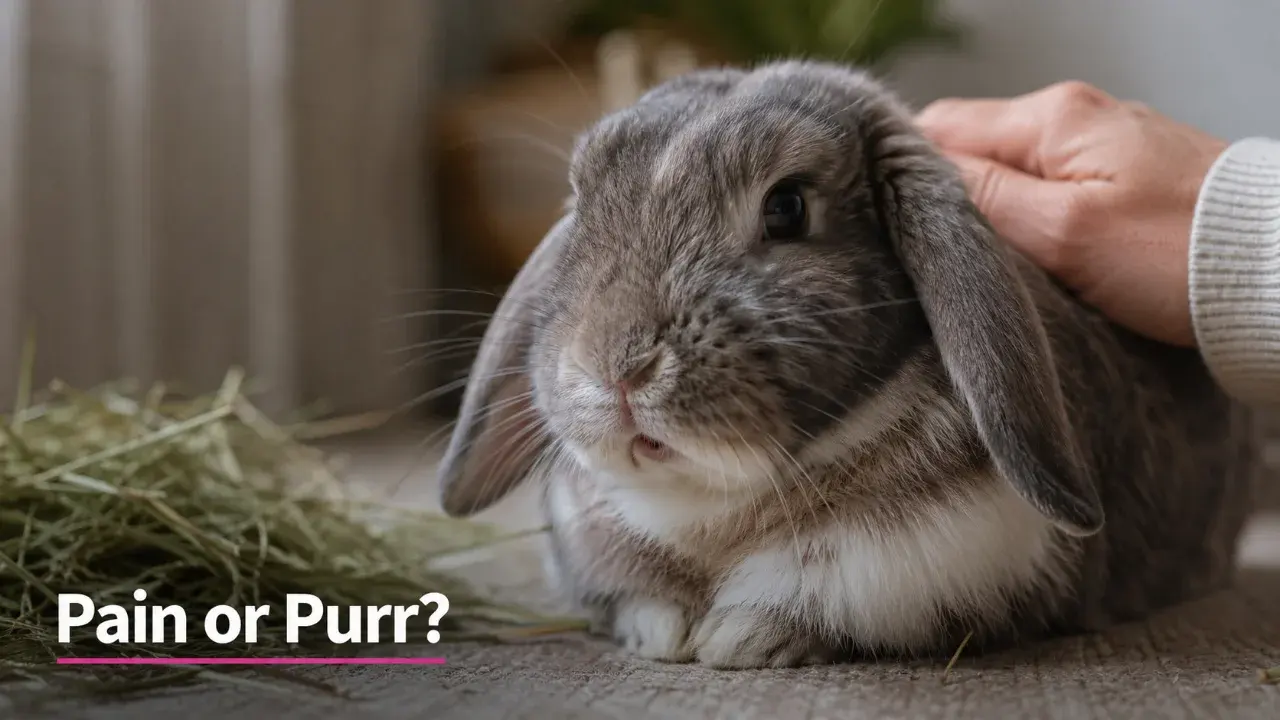
A quiet tooth chatter while a rabbit is relaxed can be a sign of contentment. Louder grinding—especially alongside a hunched posture, reduced appetite, drooling, or low energy—can instead signal pain or illness.
The sound of a rabbit grinding its teeth can mean two very different things. A faint, gentle chatter from a relaxed rabbit may be the rabbit equivalent of a cat purring, while louder or more forceful grinding can be associated with pain, illness, or distress. The sound makes more sense when you look at what the rest of the rabbit is doing at the same time.
Soft tooth chattering can be a rabbit’s “purr”
A comfortable rabbit may quietly move or chatter its front teeth while resting or being gently stroked. PDSA describes this soft grinding as a behavior seen when rabbits are happy and relaxed, while the RSPCA similarly notes that rabbits can produce a gentle tooth chatter when content.
Context is especially useful here. A rabbit stretched out or sitting comfortably, with relaxed body language and otherwise normal eating and activity, presents a very different picture from a rabbit that suddenly begins grinding its teeth while hunched and withdrawn.
That means the presence of tooth noise alone should not automatically be treated as evidence that something is wrong. The volume, situation, and accompanying behavior all matter.
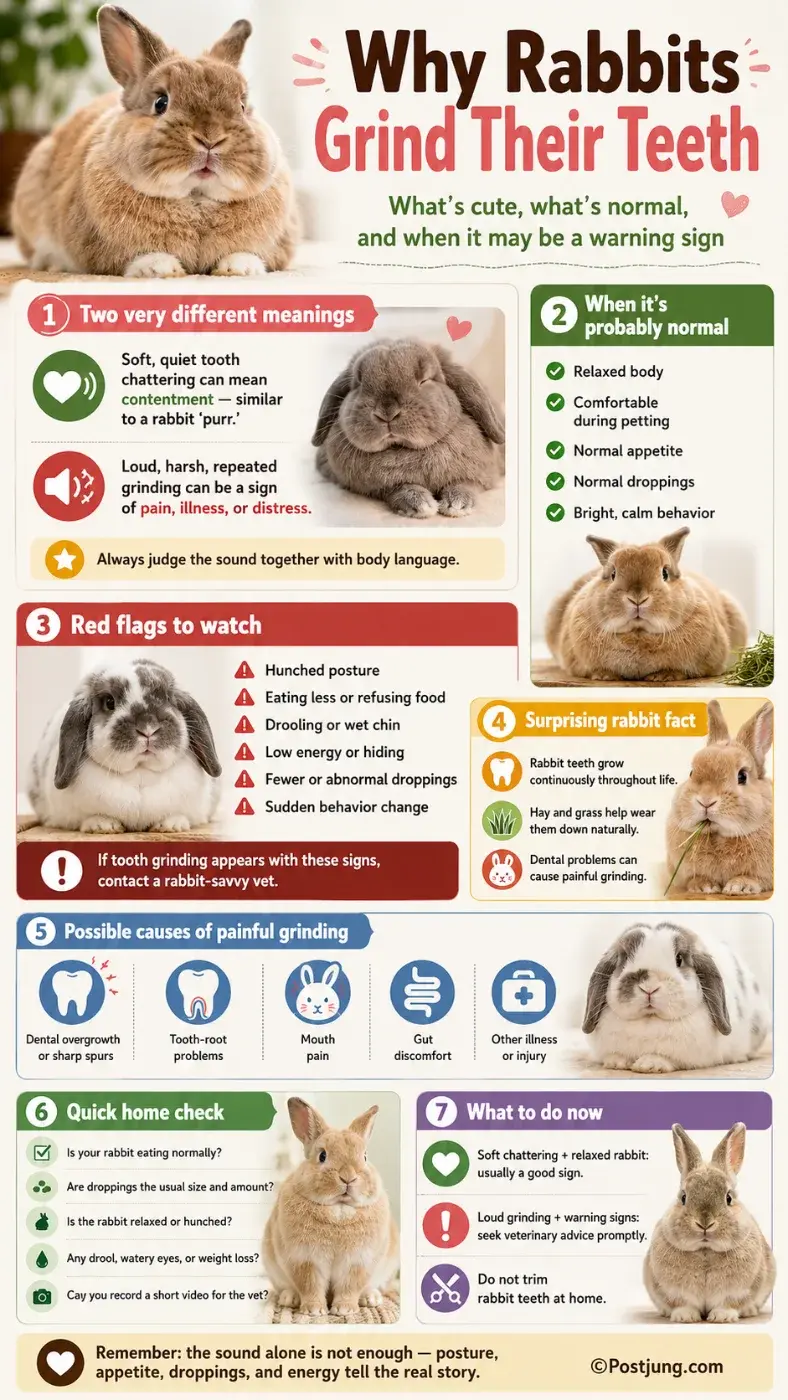
Loud grinding is more concerning
Loud tooth grinding deserves more attention. PDSA says rabbits may grind their teeth loudly when they are unwell, in pain, or distressed. The Merck Veterinary Manual also lists teeth grinding, particularly when accompanied by a hunched posture, among signs of pain or illness in rabbits.
Other warning signs can help distinguish a comfortable rabbit from one that needs veterinary attention. These include eating less than usual, drooling, reduced energy, hiding, behavioral changes, fewer droppings, and changes in stool. Rabbits can conceal signs of illness, which makes changes from an individual animal’s normal routine particularly useful to notice.
A sudden change matters too. A rabbit that has never made a particular grinding sound before and begins doing it while behaving abnormally should not simply be assumed to be “purring.”
Look at the whole rabbit, not just the mouth
One of the most useful checks is appetite. Loss of appetite or weight, drooling, reduced movement, and a decline in droppings are among the signs Merck advises rabbit owners to take seriously.
PDSA also recommends paying attention to reduced appetite, excessive drooling, weepy eyes, hiding, low energy, and changes in droppings when tooth grinding appears. If possible, recording a short video of the behavior can give a veterinarian useful context that may not be visible during an appointment.
In practical terms, a quiet tooth chatter from a rabbit that melts into a comfortable position during gentle petting is far less concerning than repeated grinding from a rabbit sitting tightly hunched, refusing food, or acting unusually subdued.
Dental problems are one possible cause of painful grinding
Rabbit teeth grow continuously, which is one reason appropriate chewing and diet are central to dental health. The RSPCA recommends hay and grass as the main part of a rabbit’s diet and notes that these fibrous foods help wear continuously growing teeth.
Dental problems such as overgrown teeth, sharp dental spurs, broken teeth, or tooth-root abscesses can cause significant discomfort. Signs can include tooth grinding, drooling, difficulty eating, weight loss, reduced appetite, low energy, and abnormalities around the jaw.
Still, grinding itself does not identify the cause. Merck includes it among broader signs of pain or illness, so a veterinary examination may be needed to determine whether the problem originates in the mouth or elsewhere.
Owners should not attempt to cut or trim problematic rabbit teeth at home. PDSA warns that improper trimming can fracture a tooth or expose sensitive internal structures, potentially creating additional pain and complications.
When should you contact a veterinarian?
If tooth grinding is new, unusually loud, persistent, or accompanied by other changes, contacting a veterinarian is the safer choice. PDSA advises prompt veterinary attention when grinding appears alongside signs such as reduced appetite, drooling, or low energy.
A rabbit that stops eating, produces substantially fewer droppings, becomes unusually inactive, or shows other signs of illness warrants particularly prompt attention. Merck advises contacting a veterinarian when signs such as appetite loss, drooling, abnormal droppings, reduced movement, or other indications of illness appear.
The key distinction is therefore not simply “grinding versus no grinding.” Quiet tooth chattering can be part of a relaxed rabbit’s normal behavior, while louder grinding combined with abnormal posture, appetite, activity, or other symptoms can be an important warning sign. Knowing your rabbit’s normal habits makes that difference much easier to spot.
SOURCES USED:

เขียนโดย Postjung Insights
 5 ไอเทมป้องกันความร้อนให้บ้านแบบโบราณ! ภูมิปัญญาเก่าที่ช่วยบ้านเย็นลงได้ 3-5 องศา
 โรงเรียนที่มีนักเรียนมากที่สุดในไทย
 ตาราง “เด่นเหนือเด่นใต้” งวด 1 ต.ค. 69 เปิดข้อมูลตามโพย เลขไหนอยู่ตรงไหน
 รู้หรือไม่? เปิดรายได้พนักงานส่งพัสดุของแต่ละแอป วันหนึ่งได้เท่าไร
 7 บทเพลงไวรัลยุคโบราณ! เพลงงานวัดที่เปิดเมื่อไหร่ คนก็ลุกขึ้นรำวงเมื่อนั้น
 7 คันเบ็ดตกปลาโบราณ สายเรโทรยอมทุ่มเงินซื้อ! ยิ่งเก่า ยิ่งหายาก ยิ่งมีเรื่องราว
 เช็กด่วน ! ข่าวบัตรสวัสดิการแจก 10,000 บาท ก.ย. 69 จริงหรือ ? ก่อนเชื่อควรรู้อะไร
 อำเภอที่มีชื่ออำเภอสั้นที่สุด 3 อำเภอเท่านั้นในประเทศไทย
 แปลปกสลาก งวด 1 ต.ค. 69 ส่องตัวเลขจากภาพปกสลากกินแบ่งรัฐบาล
 ทำไมหนังสือบางเล่มถึงมีหน้าว่างทั้งหน้า? มันอาจไม่ได้พิมพ์พลาด
 โรงเรียนชายล้วนแห่งแรกของไทยคือที่ไหน? ย้อนดูจุดเริ่มต้นโรงเรียนสวนกุหลาบวิทยาลัย
 รู้หรือไม่? ความทรงจำวัยเด็กอาจไม่ได้เหมือนที่เราเคยจำ! สมองสามารถ “เติมเรื่อง” ให้เราได้อำเภอที่มีชื่ออำเภอสั้นที่สุด 3 อำเภอเท่านั้นในประเทศไทย
 English Edition