How to Prepare Your Pet for a New Baby Before the Baby Arrives

A newborn changes the sounds, smells, routines, and boundaries of a home almost overnight. Introducing those changes gradually during pregnancy can make the transition easier for dogs, cats, and their humans.
A new baby does not need to be your pet’s first encounter with everything that comes with one.
Long before the newborn comes home, families can begin introducing new routines, baby equipment, unfamiliar sounds, household boundaries, and quieter expectations. Animal-welfare organizations recommend making these adjustments gradually so a dog or cat is not faced with several major changes at once.
That preparation matters because babies change far more than the number of people living in a home. They change when people sleep, when pets are walked or fed, which rooms receive the most attention, what objects appear around the house, and how much uninterrupted attention an animal receives.
Here is how to make that transition less abrupt.
Start changing the routine before the baby arrives
Think through what your pet’s normal day will probably look like once you have a newborn.
If walks will happen at different times, feeding will shift, certain rooms will become off-limits, or your dog will no longer sleep on the bed, begin making those changes during pregnancy.
The ASPCA specifically recommends anticipating routine changes one or two months before a baby arrives. It also advises establishing new household rules in advance rather than introducing restrictions at the same time as the newborn.
This helps separate the change itself from the baby's arrival.
Try to preserve some dependable parts of your pet's day, too. A predictable feeding time, regular exercise, play, or a familiar resting place can provide continuity while the household changes around them.
Let baby equipment become ordinary
A stroller rolling through the hallway, a crib appearing in a bedroom and a swing moving unexpectedly can all be novel experiences for an animal.
Set up major baby equipment before the birth when practical.
Let your dog or cat investigate new furniture and objects calmly under supervision. ASPCA guidance for dogs recommends introducing baby supplies gradually rather than unpacking everything at once.
This is also the time to establish boundaries.
If a nursery, crib, changing area, or certain furniture will be off-limits, introduce that rule now. Waiting until the baby is home can turn one enormous household change into several simultaneous ones.
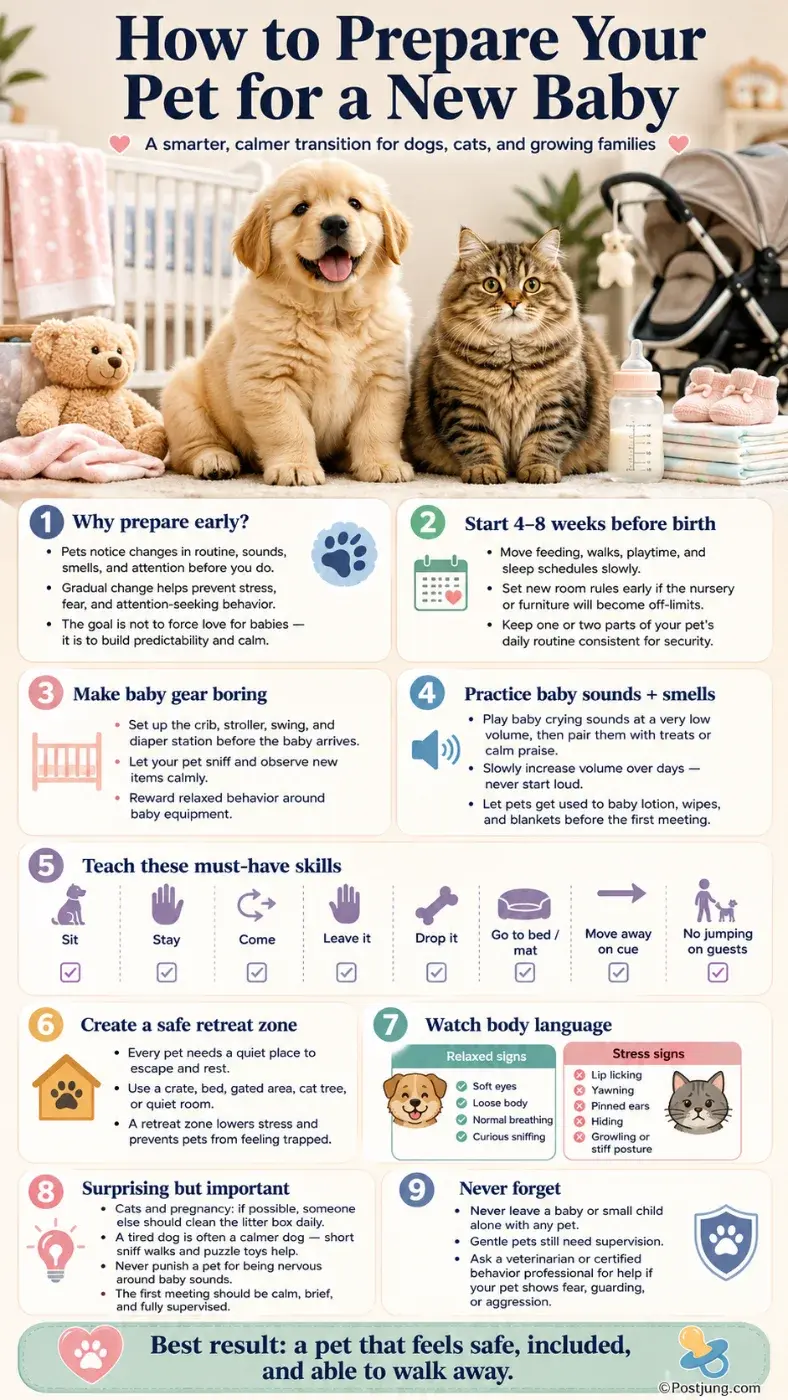
Introduce the sounds and smells of a baby
Newborns cry, squeak, move unpredictably and bring unfamiliar smells into a home.
For pets that have rarely been around babies, these sensations may be completely new. The ASPCA recommends gradually exposing dogs to baby-related sights, sounds, and smells while creating positive associations with them.
For example, families can play realistic recordings of baby sounds at a low, comfortable volume while giving the pet treats, play, or calm attention. Increase exposure gradually rather than trying to provoke or test the animal.
Baby lotions and other products the household actually intends to use can also become familiar before the birth.
The goal is simple: when the real baby arrives, not every smell and sound should be appearing for the first time.
Give your pet a safe place to retreat
Preparing a pet for a baby should not mean forcing constant proximity.
Give the animal a comfortable place where it can rest without being disturbed. For a dog, that might be a bed, crate, gated area, or quiet room. A cat may prefer a quiet room, elevated resting place, or another familiar retreat.
The ability to move away is particularly important.
The ASPCA notes that teaching dogs to move away on cue can help prevent them from feeling trapped when they are uncomfortable.
That lesson becomes increasingly valuable later, when a baby grows into a crawling and eventually walking child.
Work on useful dog skills now
You do not need a perfectly trained dog before becoming a parent, but a handful of reliable behaviors can make everyday life considerably easier.
Useful skills include:
- Sit or lie down
- Stay or wait
- Settle on a bed or mat
- Come when called
- Leave it
- Drop it
- Greet people without jumping
- Move away when asked
The ASPCA highlights many of these behaviors specifically for households preparing for a baby. A reliable “leave it,” for example, can help when baby items are on the floor, while settling on a mat gives the dog something predictable to do while an adult feeds or rocks the baby.
If a dog has a history of guarding food or toys, snapping, intense fear, or other concerning behavior, pregnancy is a better time to seek professional help than the week the baby comes home.
Schedule routine veterinary care
Before life becomes dominated by newborn appointments and interrupted sleep, make sure your pet's routine veterinary care is current.
The CDC recommends routine veterinary care for dogs and good hygiene around pets, their food, waste, and supplies.
A veterinary visit is also an opportunity to discuss pain, anxiety, behavioral changes, parasites, or other problems that could affect how comfortably an animal handles a changing household.
Cat owners should think about litter-box safety during pregnancy
Having a cat does not mean a family needs to give up the pet because someone is pregnant.
It does mean toxoplasmosis precautions deserve attention.
The CDC recommends that, when possible, someone other than the pregnant person change cat litter. If that is not possible, disposable gloves should be used followed by thorough handwashing. Keeping cats indoors and avoiding raw or undercooked meat for cats can also reduce opportunities for infection.
The CDC also recommends cleaning the litter box daily because Toxoplasma shed in feces does not become infectious immediately.
Anyone who is pregnant and has questions about personal infection risk should discuss them with their healthcare provider.
Prepare for supervision, not perfect trust
Even a gentle pet with years of affectionate family history remains an animal reacting to circumstances in real time.
A baby's presence should never be treated as an experiment designed to find out how tolerant a pet is.
The CDC advises always supervising young children around dogs, including trusted family pets. It notes that dogs may bite when frightened, nervous, eating, protecting something, or feeling unwell.
More broadly, young children are more vulnerable to some germs carried by animals, which makes hygiene and supervision important as the baby grows.
The objective before birth, then, is not to make a dog or cat “love babies.”
It is to make the new household easier to predict: familiar sounds, familiar equipment, manageable routines, clear boundaries, safe places to retreat and adults prepared to supervise interactions.
A few weeks or months of gradual preparation can remove many of the surprises from the day the newest member of the family finally comes home.
SOURCES USED:

เขียนโดย Postjung Insights
 5 ไอเทมป้องกันความร้อนให้บ้านแบบโบราณ! ภูมิปัญญาเก่าที่ช่วยบ้านเย็นลงได้ 3-5 องศา
 โรงเรียนที่มีนักเรียนมากที่สุดในไทย
 7 คันเบ็ดตกปลาโบราณ สายเรโทรยอมทุ่มเงินซื้อ! ยิ่งเก่า ยิ่งหายาก ยิ่งมีเรื่องราว
 ส่องเลข 3 สำนักพิมพ์ งวด 1 ต.ค. 69 ตัวไหนมีข้อมูลตรงกัน
 รู้หรือไม่? เปิดรายได้พนักงานส่งพัสดุของแต่ละแอป วันหนึ่งได้เท่าไร
 อำเภอที่มีชื่ออำเภอสั้นที่สุด 3 อำเภอเท่านั้นในประเทศไทย
 รู้หรือไม่? ความทรงจำวัยเด็กอาจไม่ได้เหมือนที่เราเคยจำ! สมองสามารถ “เติมเรื่อง” ให้เราได้
 แปลปกสลาก งวด 1 ต.ค. 69 ส่องตัวเลขจากภาพปกสลากกินแบ่งรัฐบาล
 โรงเรียนชายล้วนแห่งแรกของไทยคือที่ไหน? ย้อนดูจุดเริ่มต้นโรงเรียนสวนกุหลาบวิทยาลัย
 7 บทเพลงไวรัลยุคโบราณ! เพลงงานวัดที่เปิดเมื่อไหร่ คนก็ลุกขึ้นรำวงเมื่อนั้น
 ตาราง “เด่นเหนือเด่นใต้” งวด 1 ต.ค. 69 เปิดข้อมูลตามโพย เลขไหนอยู่ตรงไหน
 เช็กด่วน ! ข่าวบัตรสวัสดิการแจก 10,000 บาท ก.ย. 69 จริงหรือ ? ก่อนเชื่อควรรู้อะไรอำเภอที่มีชื่ออำเภอสั้นที่สุด 3 อำเภอเท่านั้นในประเทศไทย
 English Edition