Why senior pets often need a bigger health budget

Older dogs and cats may need more frequent testing, dental treatment, medication, and support for chronic conditions. Planning for several smaller recurring costs—as well as an occasional major bill—can make their care easier to manage.
A pet does not automatically become ill when it reaches its senior years. Aging does, however, increase the likelihood that routine veterinary care will expand beyond an annual examination and vaccinations.
For many families, the financial change is gradual. An extra blood test, a follow-up appointment, daily medication, or a therapeutic diet may not seem overwhelming on its own. The budget becomes noticeably larger when several of these needs occur at the same time.
“Senior” depends on the individual pet
There is no single birthday when every dog or cat becomes senior.
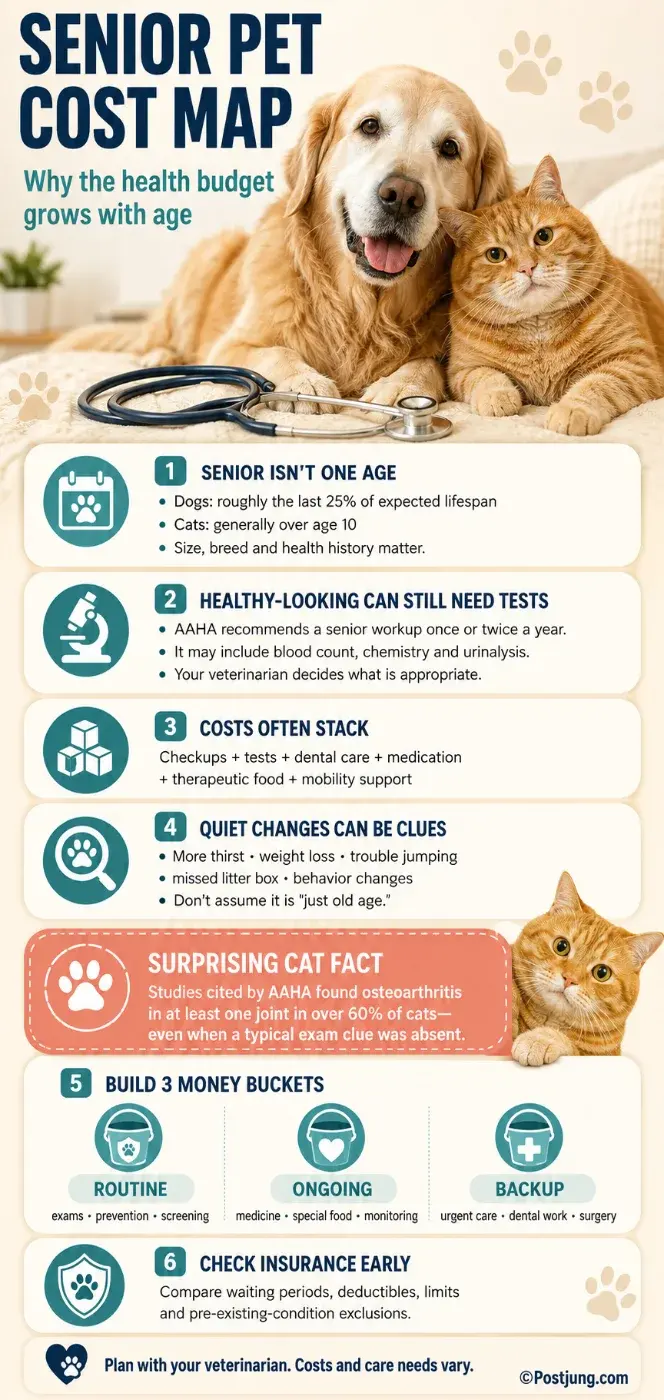
The American Animal Hospital Association defines the senior stage in dogs as approximately the final 25% of the animal’s expected lifespan. Size and breed matter because large dogs generally reach this stage earlier than small dogs. For cats, AAHA guidelines classify those older than 10 as senior.
These definitions are useful for planning, but veterinarians also consider the individual animal’s mobility, body condition, medical history, behavior, and existing diseases. A healthy older pet may require little beyond preventive monitoring, while another pet of the same age may already need several forms of ongoing care.
Routine monitoring can become more extensive
Senior veterinary visits tend to examine more than what can be seen during a basic physical check.
AAHA’s senior-care guidelines recommend a medical workup once or twice a year, depending on the animal. This may include a complete blood count, blood chemistry, and urinalysis. Blood-pressure measurement, thyroid testing, parasite screening, heart evaluation, or diagnostic imaging may also be appropriate for certain pets.
None of these tests is automatically required for every animal. Veterinarians choose them according to the pet’s species, breed, symptoms, medical history, lifestyle, and previous results.
The purpose is to identify meaningful changes early and establish trends. A single result may be less informative than seeing how kidney values, weight, blood pressure, or other measurements have changed over several visits.
This creates a new category in the household budget: diagnostic spending even when the pet appears well.
Chronic conditions add recurring costs
Older pets are more likely to develop conditions that require continued management rather than a single course of treatment.
Arthritis may involve medication, rehabilitation, repeat assessments, or changes to the home. Kidney disease can require regular blood and urine testing, dietary adjustments, and medication. Diabetes may involve insulin, monitoring supplies, and more frequent veterinary contact.
Senior pets can also have more than one condition at once. AAHA describes awareness of these comorbidities as an important part of senior care because one disease—or its treatment—may affect how another is managed.
Recurring expenses can therefore include:
- Prescription medication and monitoring
- Therapeutic food or changes in feeding
- Follow-up examinations and laboratory tests
- Rehabilitation or pain-management services
- Mobility aids and senior-friendly household equipment
A ramp, nonslip flooring, orthopedic bedding, or a low-entry litter box may be inexpensive compared with surgery, but these smaller purchases still contribute to the total cost of care.
Dental care can become a major expense
Dental disease is common in older animals and should not be dismissed as a cosmetic problem.
Cornell University’s Feline Health Center notes that dental disease can cause significant pain and interfere with eating in senior cats. AAHA also recommends examining the mouth at every veterinary visit, particularly because older pets may have periodontal disease, damaged teeth, tooth resorption, or oral tumors.
A complete dental procedure generally requires anesthesia, professional cleaning, and sometimes dental X-rays or extractions. The final cost depends heavily on what is found, which makes dental treatment one of the harder senior-care expenses to predict from an initial estimate.
Home dental care and routine examinations may reduce preventable problems, but they cannot eliminate every future procedure.
A practical way to plan the budget
Instead of searching for one universal annual figure, owners can divide the senior-pet budget into three parts.
The first covers predictable care: routine examinations, preventive treatment, vaccinations when appropriate, and planned screening tests.
The second covers ongoing management. This includes medication, special food, repeat testing, and supplies for conditions already diagnosed.
The third is a contingency fund for urgent illness, hospitalization, dental work, surgery, or specialist care. The appropriate amount will vary widely by country, local veterinary prices, the animal’s size, and the family’s financial circumstances.
Pet insurance may help with some unexpected expenses, but policies differ in exclusions, deductibles, reimbursement limits, waiting periods, and their treatment of pre-existing conditions. The American Veterinary Medical Association advises owners to examine those details carefully. Coverage is generally worth considering while a pet is still healthy because a condition that develops before enrollment may be excluded.
Owners can also ask their veterinarian for written estimates, which tests are most urgent, what can safely be staged, and how frequently monitoring is likely to be needed. If affordability becomes a concern, discussing it early gives the veterinary team more opportunity to prioritize care or identify legitimate assistance programs.
A bigger budget does not mean every senior pet will face a medical crisis. It reflects a shift from basic preventive care toward closer observation, earlier investigation, and the long-term management of problems that become more common with age.
SOURCES USED:
- American Animal Hospital Association — 2023 AAHA Senior Care Guidelines for Dogs and Cats
- American Animal Hospital Association — Defining the Senior Patient
- American Animal Hospital Association — Evaluating the Healthy Senior Pet
- Cornell University College of Veterinary Medicine — The Special Needs of the Senior Cat
- American Veterinary Medical Association — Do You Need Pet Insurance?
- American Veterinary Medical Association — Financial Assistance for Veterinary Care Costs

เขียนโดย Postjung Insights
 รู้หรือไม่? เปิดรายได้พนักงานส่งพัสดุของแต่ละแอป วันหนึ่งได้เท่าไร
 5 ไอเทมป้องกันความร้อนให้บ้านแบบโบราณ! ภูมิปัญญาเก่าที่ช่วยบ้านเย็นลงได้ 3-5 องศา
 โรงเรียนที่มีนักเรียนมากที่สุดในไทย
 7 คันเบ็ดตกปลาโบราณ สายเรโทรยอมทุ่มเงินซื้อ! ยิ่งเก่า ยิ่งหายาก ยิ่งมีเรื่องราว
 7 บทเพลงไวรัลยุคโบราณ! เพลงงานวัดที่เปิดเมื่อไหร่ คนก็ลุกขึ้นรำวงเมื่อนั้น
 แปลปกสลาก งวด 1 ต.ค. 69 ส่องตัวเลขจากภาพปกสลากกินแบ่งรัฐบาล
 อำเภอที่มีชื่ออำเภอสั้นที่สุด 3 อำเภอเท่านั้นในประเทศไทย
 รู้หรือไม่? ความทรงจำวัยเด็กอาจไม่ได้เหมือนที่เราเคยจำ! สมองสามารถ “เติมเรื่อง” ให้เราได้
 โรงเรียนเพียงแห่งเดียวของประเทศไทย ที่อยู่มาตั้งแต่ยุครัชกาลที่ 4
 เช็กด่วน ! ข่าวบัตรสวัสดิการแจก 10,000 บาท ก.ย. 69 จริงหรือ ? ก่อนเชื่อควรรู้อะไร
 โรงเรียนชายล้วนแห่งแรกของไทยคือที่ไหน? ย้อนดูจุดเริ่มต้นโรงเรียนสวนกุหลาบวิทยาลัย
 ตาราง “เด่นเหนือเด่นใต้” งวด 1 ต.ค. 69 เปิดข้อมูลตามโพย เลขไหนอยู่ตรงไหนอำเภอที่มีชื่ออำเภอสั้นที่สุด 3 อำเภอเท่านั้นในประเทศไทย
 English Edition