How to pet-proof your home before a new animal arrives

A safe home requires more than moving chemicals off the floor. Medications, plants, cords, windows and even empty snack bags can become hazards when an unfamiliar animal begins exploring.
Bringing home a new animal changes the meaning of “out of reach.” A pill beneath a cabinet, a dangling cord or an unsecured window may go unnoticed by people but become irresistible to an animal exploring unfamiliar surroundings.
Pet-proofing before arrival reduces that risk while giving the newcomer a smaller, calmer space in which to settle. The process should be tailored to the animal’s species, size, age and behavior rather than treated as a single checklist for every pet.
Begin from the animal’s point of view
Inspect every room the animal may enter from floor level. Look beneath furniture, behind appliances and inside gaps where a frightened or curious newcomer might crawl.
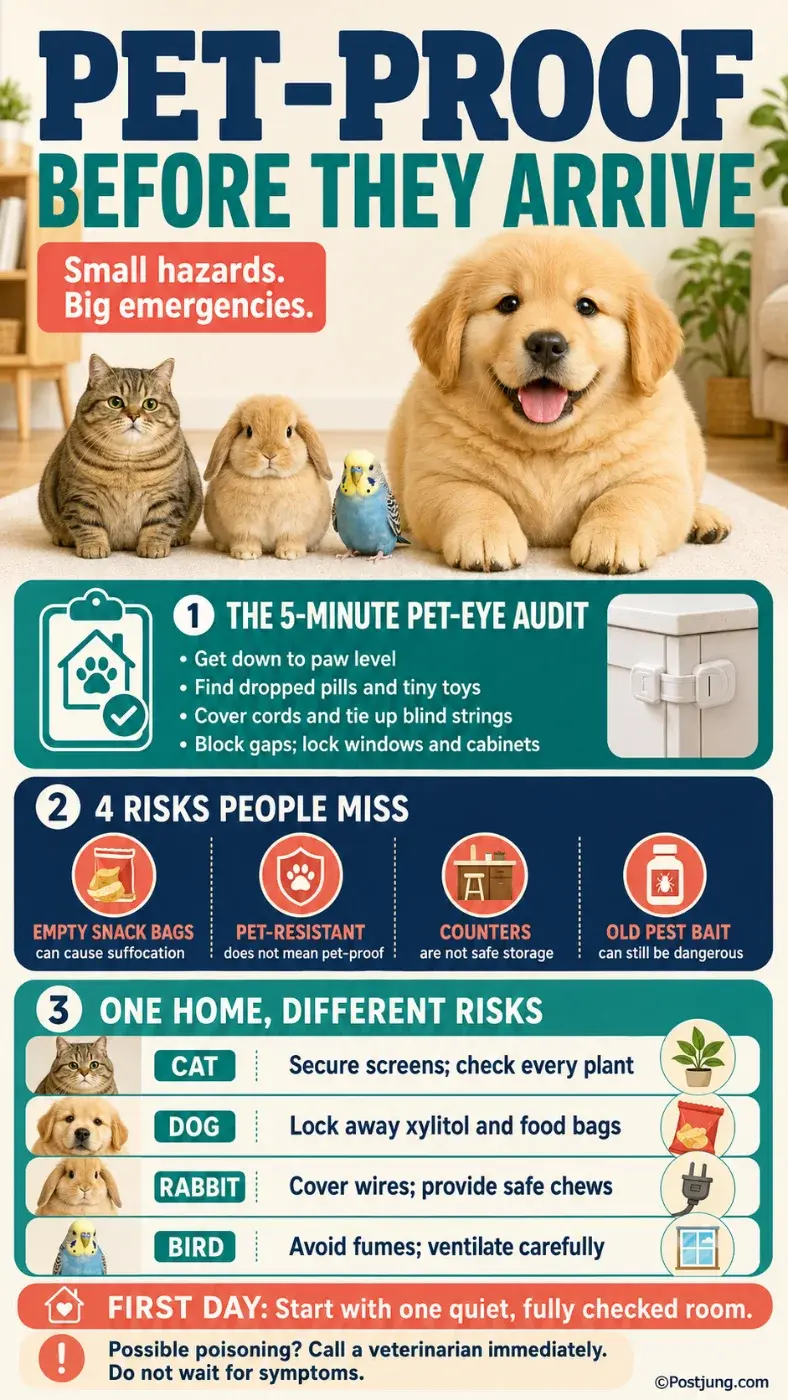
Electrical cords should be enclosed, secured or moved out of reach. Block openings where an animal could become trapped, and check that window screens fit securely. Long curtain pulls and blind cords should also be tied up, particularly around cats and other animals that climb or play with dangling objects.
A closed door is often the most reliable safety measure. Rooms that cannot be fully pet-proofed should remain inaccessible until the animal can be supervised safely.
Lock away more than cleaning products
Human medication is one of the easiest hazards to overlook. The ASPCA advises storing all medicine inside an enclosed cabinet, since pets may encounter tablets that have been dropped on the floor.
Medication prescribed for one person or animal should never be given to another pet without veterinary direction. The U.S. Food and Drug Administration warns that common human pain relievers can harm animals; acetaminophen, for example, can be fatal to cats.
Laundry products, household cleaners, cosmetics, pesticides, rodent bait, nicotine products and cannabis should also be stored behind securely closed doors. A package described as “pet-resistant” is not necessarily pet-proof. Some bait stations contain attractants designed for rodents that may also appeal to dogs or cats.
Bird owners need additional caution. The ASPCA notes that birds can be especially sensitive to cleaning-product fumes, making ventilation and veterinary guidance important when choosing products for rooms near them.
Check food, trash and food packaging
Chocolate, caffeine, alcohol, grapes, raisins, onions, garlic, macadamia nuts and products containing xylitol are among the foods the FDA identifies as potentially dangerous to pets. Toxicity varies by species, quantity consumed and, in the case of plants, the part eaten.
Some items create mechanical hazards rather than poisoning. Bones, fruit pits and corn cobs can obstruct the digestive tract. Small toys, rubber bands, string and food packaging may also be swallowed.
Empty snack bags deserve particular attention. The FDA warns that thin food bags can tighten around a dog’s nose and mouth as the animal breathes, creating a suffocation risk. Dispose of them inside a covered bin that the animal cannot open.
Kitchen counters should not be treated as safe storage. Motivated dogs may reach food left near an edge, while cats can jump onto surprisingly high surfaces.
Identify every plant
Do not rely on a plant’s appearance or a generic “pet-friendly” label. Record the exact name of each indoor and outdoor plant, then check whether it is safe for the species coming home.
The FDA lists lilies, sago palms, azaleas, oleander, pothos and numerous other plants among potential hazards. The ASPCA maintains a searchable plant database for dogs, cats and horses, while advising owners that its list is not exhaustive.
Even a plant classified as non-toxic may cause vomiting or digestive irritation if eaten. Unknown plants are best removed from accessible areas until they have been identified.
Adapt the home to the species
Dogs, especially puppies, may investigate with their mouths and swallow objects that appear too large to be tempting. Remove children’s toys, socks, string and anything that could splinter or become lodged in the throat or digestive system.
Cats require secure screens, protected cords and an inspection of high shelves as well as floors. Assume that a healthy cat may eventually reach any open surface.
Rabbits require extensive cord protection and safe materials to chew. Humane World for Animals recommends removing toxic plants, supervising rabbits outside their enclosure and separating their area from resident dogs or cats during the initial adjustment period.
Birds, reptiles and small mammals have their own needs involving temperature, ventilation, enclosure spacing and species-specific toxins. Advice from an experienced veterinarian or rescue organization can reveal hazards that a dog-or-cat checklist will miss.
Prepare one quiet starter area
A newly arrived animal does not need immediate access to the entire home. The ASPCA recommends beginning with a “home base” containing food, water, bedding, appropriate toys and, for cats, a litter box.
This smaller area can reduce overstimulation and make supervision easier. Other rooms can be introduced gradually as the animal becomes comfortable and the household learns how it explores.
Before arrival, save the contact details for a local veterinarian, an after-hours veterinary clinic and an animal poison service that operates in your country. If an animal may have swallowed something dangerous, contact a veterinarian or poison-control service immediately instead of waiting for symptoms or attempting a home remedy.
Pet-proofing is not a one-time cleaning project. Recheck the home as the animal grows, learns to climb, gains confidence or develops new chewing and jumping habits. The safest setup is one that changes with the animal living in it.
SOURCES USED:
- U.S. Food and Drug Administration — Potentially Dangerous Items for Your Pet
- ASPCA — What to Inspect When You’re Expecting a Puppy or Kitten
- ASPCA — Moving With Your Pet
- ASPCA — Toxic and Non-Toxic Plants
- ASPCA — Poisonous Household Products
- Humane World for Animals — Is a Rabbit the Right Pet for You?

เขียนโดย พชร ภูวดล
 7 คันเบ็ดตกปลาโบราณ สายเรโทรยอมทุ่มเงินซื้อ! ยิ่งเก่า ยิ่งหายาก ยิ่งมีเรื่องราว
 รู้หรือไม่? ความทรงจำวัยเด็กอาจไม่ได้เหมือนที่เราเคยจำ! สมองสามารถ “เติมเรื่อง” ให้เราได้
 5 ไอเทมป้องกันความร้อนให้บ้านแบบโบราณ! ภูมิปัญญาเก่าที่ช่วยบ้านเย็นลงได้ 3-5 องศา
 รู้หรือไม่? เปิดรายได้พนักงานส่งพัสดุของแต่ละแอป วันหนึ่งได้เท่าไร
 ตาราง “เด่นเหนือเด่นใต้” งวด 1 ต.ค. 69 เปิดข้อมูลตามโพย เลขไหนอยู่ตรงไหน
 อำเภอที่มีชื่ออำเภอสั้นที่สุด 3 อำเภอเท่านั้นในประเทศไทย
 โรงเรียนที่มีนักเรียนมากที่สุดในไทย
 แปลปกสลาก งวด 1 ต.ค. 69 ส่องตัวเลขจากภาพปกสลากกินแบ่งรัฐบาล
 7 บทเพลงไวรัลยุคโบราณ! เพลงงานวัดที่เปิดเมื่อไหร่ คนก็ลุกขึ้นรำวงเมื่อนั้น
 เช็กด่วน ! ข่าวบัตรสวัสดิการแจก 10,000 บาท ก.ย. 69 จริงหรือ ? ก่อนเชื่อควรรู้อะไร
 โรงเรียนชายล้วนแห่งแรกของไทยคือที่ไหน? ย้อนดูจุดเริ่มต้นโรงเรียนสวนกุหลาบวิทยาลัย
 ส่องเลข 3 สำนักพิมพ์ งวด 1 ต.ค. 69 ตัวไหนมีข้อมูลตรงกันอำเภอที่มีชื่ออำเภอสั้นที่สุด 3 อำเภอเท่านั้นในประเทศไทย
 English Edition