Why Dogs Eat Grass—and When the Habit May Be a Warning Sign

Occasional grazing is usually a normal behavior rather than proof of an upset stomach. The surrounding symptoms—and the type of grass or plants available—matter more than the habit alone.
A dog nibbling a few blades of grass may look as though it is trying to cure an upset stomach. In most cases, however, occasional grazing is a normal canine behavior, and researchers still do not know its single, definitive cause.
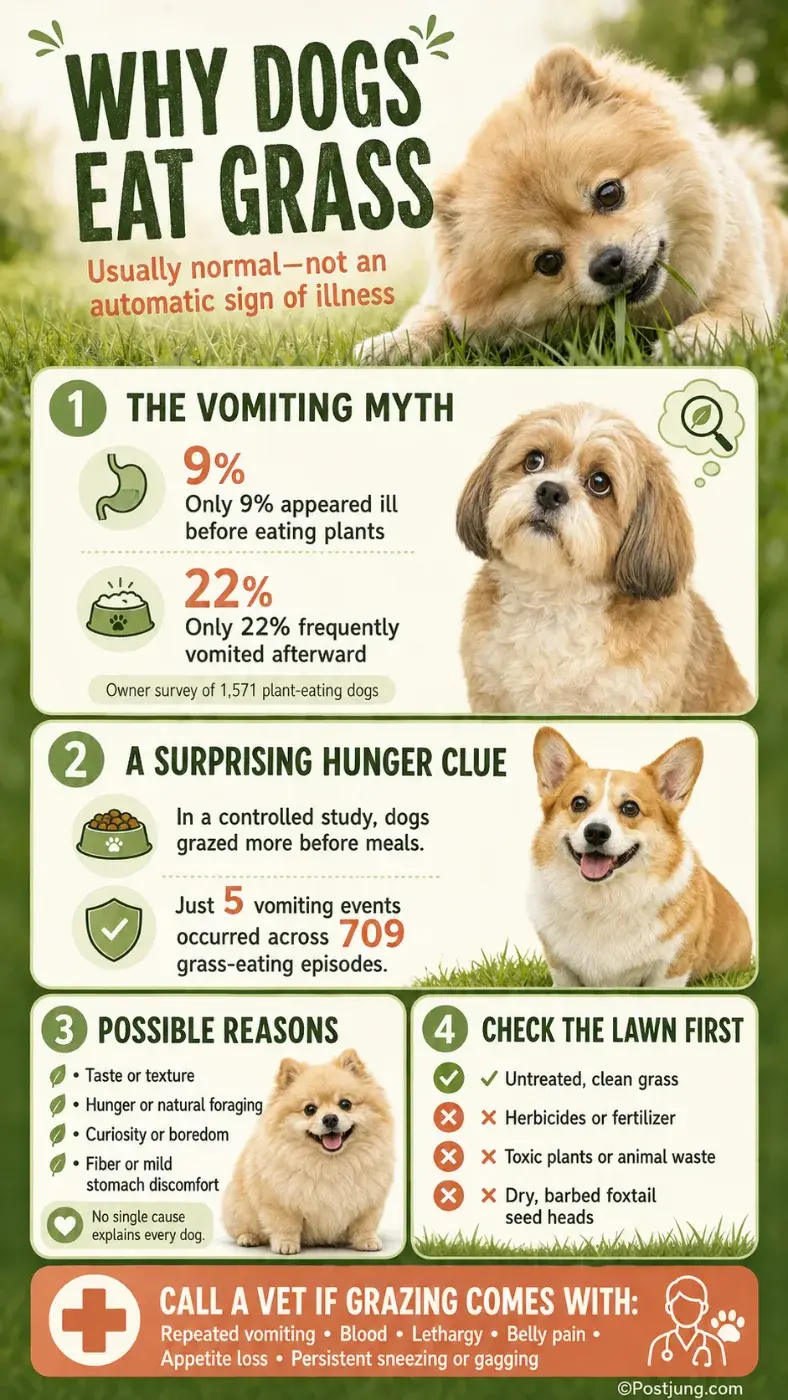
Some dogs may enjoy the taste or texture. Others may graze when hungry, while exploring their environment, or simply because the opportunity is there. Fiber, boredom, and digestive discomfort are also possible influences, but none explains every dog.
Most dogs do not vomit afterward
The familiar idea that dogs deliberately eat grass to make themselves vomit is not strongly supported by the available evidence.
A 2008 owner-survey study published in Applied Animal Behaviour Science examined plant eating in domestic dogs. Among 1,571 qualifying reports from owners of plant-eating dogs, only 9% said their dogs frequently appeared ill before eating plants, while 22% reported frequent vomiting afterward. Grass was the plant eaten most often.
Those results do not prove that nausea is never involved. A dog that already feels unwell may urgently seek grass and then vomit. But the overall pattern suggests that sickness and vomiting are not the usual explanation.
The study also found that younger dogs ate plants more frequently and were less likely to appear ill before grazing or to vomit afterward. The researchers concluded that plant eating generally appears to be normal behavior.
The evidence has limitations: much of it relies on owners remembering and interpreting what their dogs did. It can show broad patterns but cannot reveal exactly what an individual dog was feeling.
Hunger may influence grazing
A small controlled experiment involving 12 healthy dogs offers another clue. The dogs spent more time eating grass before their regular meal than after eating, and their grazing decreased later in the day.
Only five vomiting events occurred across 709 observed grass-eating episodes. The researchers suggested that grass may sometimes function like another available food source, with dogs more interested in it when they are hungry.
Because the experiment was small and involved dogs already known to eat grass, it cannot explain the behavior of every pet. Still, it further weakens the claim that dogs generally use grass as an emetic.
Fiber is another frequently proposed explanation. Grass contains indigestible plant material that could affect stool movement, but current evidence does not establish that routine grazing means a dog’s diet is fiber-deficient. Owners should not change food or add fiber supplements solely because a healthy dog occasionally eats grass. Dietary changes are best discussed with a veterinarian, particularly when constipation, diarrhea, weight change, or other symptoms are present.
The lawn may be more concerning than the grass
Plain, untreated grass is not automatically harmless. A lawn may contain herbicides, insecticides, fertilizers, animal waste, or toxic plants growing among the blades.
The ASPCA advises keeping pets away from treated areas according to product-label directions, including until an application has dried or been properly watered in. Even plants that are not classified as toxic can cause stomach upset if a dog consumes enough of them.
Dogs should also be kept away from grass when owners cannot identify nearby vegetation. Gardens and roadsides can contain plants that range from mildly irritating to dangerously toxic.
Certain grass seed heads create a different hazard. Foxtails and similar barbed awns can enter a dog’s nose, mouth, ears, eyes, paws, or skin. Their shape allows them to migrate through tissue, potentially causing infection or abscesses.
Persistent sneezing, gagging, head shaking, eye swelling, limping, or intense licking after time in dry grass warrants prompt veterinary attention.
When grass eating needs attention
An otherwise healthy dog that calmly nibbles a small amount of safe, untreated grass and then returns to normal usually does not require intervention. Owners can redirect the dog with a cue, treat, toy, or continued walk if they want to discourage grazing.
Contact a veterinarian when the behavior is new, suddenly intense, difficult to interrupt, or accompanied by:
- Repeated or frequent vomiting
- Vomiting lasting more than 24 hours
- Blood or coffee-ground-like material in vomit
- Diarrhea, loss of appetite, or weight loss
- Lethargy, fever, abdominal pain, or swelling
- Difficulty passing stool
- Suspected exposure to pesticides, fertilizer, or a toxic plant
- Persistent sneezing, gagging, head shaking, limping, or eye irritation after contact with dry grass
Cornell University’s College of Veterinary Medicine notes that an isolated episode of vomiting after grass may be minor, but vomiting as often as once a week can indicate disease.
The most useful question, then, is not simply whether a dog eats grass. Owners should watch how often it happens, whether the dog seems distressed, what else is growing or applied in the area, and whether any other symptoms follow.
SOURCES USED:
- FAO AGRIS — Characterisation of plant eating in dogs
- University of New England — Grass eating patterns in the domestic dog
- Cornell University College of Veterinary Medicine — Vomiting
- ASPCA — Hot Weather Safety Tips
- ASPCA — Toxic and Non-Toxic Plant List for Dogs
- UC Davis School of Veterinary Medicine — Foxtails and Dogs

เขียนโดย พชร ภูวดล
 5 ไอเทมป้องกันความร้อนให้บ้านแบบโบราณ! ภูมิปัญญาเก่าที่ช่วยบ้านเย็นลงได้ 3-5 องศา
 อำเภอที่มีชื่ออำเภอสั้นที่สุด 3 อำเภอเท่านั้นในประเทศไทย
 รู้หรือไม่? เปิดรายได้พนักงานส่งพัสดุของแต่ละแอป วันหนึ่งได้เท่าไร
 โรงเรียนที่มีนักเรียนมากที่สุดในไทย
 7 คันเบ็ดตกปลาโบราณ สายเรโทรยอมทุ่มเงินซื้อ! ยิ่งเก่า ยิ่งหายาก ยิ่งมีเรื่องราว
 7 บทเพลงไวรัลยุคโบราณ! เพลงงานวัดที่เปิดเมื่อไหร่ คนก็ลุกขึ้นรำวงเมื่อนั้น
 เปิด 5 โรงเรียนหญิงล้วนเก่าแก่ของไทย ที่มีประวัติยาวนานกว่าศตวรรษ
 โรงเรียนชายล้วนแห่งแรกของไทยคือที่ไหน? ย้อนดูจุดเริ่มต้นโรงเรียนสวนกุหลาบวิทยาลัย
 ตาราง “เด่นเหนือเด่นใต้” งวด 1 ต.ค. 69 เปิดข้อมูลตามโพย เลขไหนอยู่ตรงไหน
 รู้หรือไม่? ความทรงจำวัยเด็กอาจไม่ได้เหมือนที่เราเคยจำ! สมองสามารถ “เติมเรื่อง” ให้เราได้
 แปลปกสลาก งวด 1 ต.ค. 69 ส่องตัวเลขจากภาพปกสลากกินแบ่งรัฐบาล
 ส่องเลข 3 สำนักพิมพ์ งวด 1 ต.ค. 69 ตัวไหนมีข้อมูลตรงกันอำเภอที่มีชื่ออำเภอสั้นที่สุด 3 อำเภอเท่านั้นในประเทศไทย
 English Edition