Why End-of-Life Pet Care Takes Such an Emotional Toll

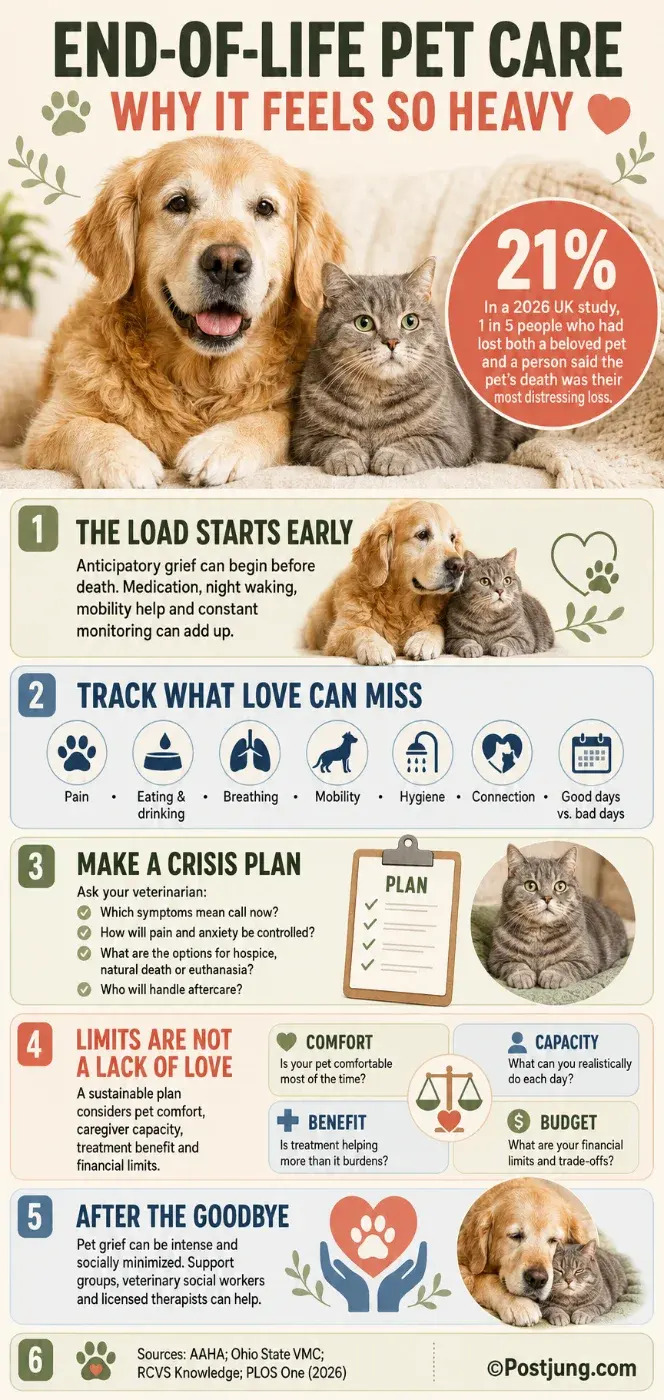
The emotional cost of end-of-life pet care often begins long before the final goodbye. Daily caregiving, uncertain medical decisions, financial pressure, and anticipatory grief can place a heavy burden on families.
Caring for a pet near the end of life can demand far more than medication, veterinary appointments, and money. Families may spend weeks or months watching for pain, reorganizing daily routines, questioning treatment decisions, and wondering whether they will recognize the right time to say goodbye.
That combination can create what researchers call caregiver burden: the emotional, practical, and sometimes financial strain of caring for an animal with a chronic or terminal illness.
Grief can begin before death
A terminal diagnosis may start the grieving process even while a pet is still eating, playing, or seeking affection.
The Ohio State University Veterinary Medical Center describes this as anticipatory grief. It can involve sadness, denial, anxiety, difficulty processing information, and renewed emotions connected to earlier losses.
This creates a painful contradiction. A caregiver may feel grateful for every remaining day while simultaneously dreading what comes next. Moments of happiness can be followed by guilt, fear, or constant monitoring for signs of decline.
The responsibilities may also expand as a pet’s condition changes. Caregivers might administer several medications, assist with eating or mobility, clean accidents, monitor breathing, wake during the night, or avoid leaving the pet alone.
A 2017 cross-sectional study summarized by RCVS Knowledge compared 119 owners of chronically or terminally ill dogs and cats with 119 matched owners of healthy animals. The caregivers of sick pets reported greater stress, more symptoms of depression and anxiety, and poorer quality of life.
The study was limited by its social-media recruitment and the comparatively high education and socioeconomic status of participants, so its findings should not be treated as representative of every pet-owning household. It nevertheless provides evidence that pet caregiving can affect the caregiver as well as the animal.
The hardest decision rarely has a perfect moment
One of the greatest emotional pressures is deciding whether to continue supportive care, pursue another treatment, allow a veterinarian-supported natural death, or choose euthanasia.
The American Animal Hospital Association says pet hospice focuses on relieving suffering and supporting caregivers from a terminal diagnosis through death. It may include pain and anxiety management, environmental changes, euthanasia, or a hospice-supported natural death under veterinary supervision.
Palliative care is broader. It focuses on controlling pain and other symptoms and may be provided alongside treatment intended to slow or manage disease. Hospice is generally the final stage of that approach, when comfort rather than cure becomes the central goal.
No checklist can make the final decision painless. Quality of life is individual, and an animal may have good and bad periods rather than a simple, steady decline.
Families can, however, make the situation less dependent on one emotionally charged moment. A veterinarian may recommend tracking appetite, hydration, breathing, mobility, hygiene, pain, interaction, and the number of good days compared with bad ones.
Keeping a written record can reveal gradual changes that are difficult to notice from day to day. It may also help family members discuss the pet’s condition using shared observations instead of guilt or fear.
Money can intensify the emotional burden
“Emotionally expensive” is partly a metaphor, but end-of-life care can also bring real financial pressure.
Diagnostic tests, medication, emergency visits, mobility equipment, special food, home modifications, hospice services, euthanasia, cremation, and memorial arrangements may all carry costs. Availability and pricing vary widely by country, region, clinic, and the animal’s medical needs.
Financial limits do not measure how deeply someone loves a pet. A realistic care plan should consider what can be sustained financially, physically, and emotionally while still protecting the animal from avoidable suffering.
Caregivers can ask the veterinary team to separate essential comfort measures from optional tests or treatments, explain the likely benefits and burdens of each option, and provide written cost estimates where possible. These conversations are most useful before a late-night crisis forces an immediate decision.
The loss may not receive the recognition it deserves
Grief does not necessarily end after the final appointment. The death can also remove daily routines, companionship, physical affection, and a sense of purpose.
A 2026 PLOS One study surveyed 975 adults in the United Kingdom. Among respondents who had experienced both the death of a beloved pet and the death of a person, 21% identified the pet’s death as their most distressing loss.
Using an ICD-11 prolonged-grief symptom framework adapted by the researcher to include pet loss, 7.5% of those whose most distressing bereavement was a pet met the study’s symptom and impairment thresholds. Current diagnostic rules do not formally recognize prolonged grief disorder following the death of a nonhuman companion, and the study’s findings require replication. They do, however, show that severe and lasting grief after pet loss should not be dismissed as trivial.
That dismissal can make mourning more isolating. A person may receive less social support, limited time to grieve, or comments suggesting the animal can simply be replaced.
A plan can reduce uncertainty, not sadness
Families can prepare by asking the veterinarian what changes are expected, which symptoms require urgent care, how pain will be controlled, and what should happen if the pet deteriorates outside normal clinic hours.
It may also help to decide in advance who will provide daily care, whether euthanasia would take place at home or at a clinic, who wishes to be present, and how the body will be handled afterward. These choices can be revised as circumstances change.
Preparation cannot make the loss easy. It can reduce avoidable panic and allow the final stage to center on comfort, connection, and the animal’s needs.
People whose grief remains overwhelming, significantly disrupts daily functioning, or creates thoughts of self-harm should seek help from a licensed mental health professional or local emergency service. Pet-loss support groups and veterinary social workers may also offer a space where the significance of the relationship is understood.
SOURCES USED:
- American Animal Hospital Association — 12 Things Pet Owners Should Know About End-of-Life Care for Dogs and Cats
- The Ohio State University Veterinary Medical Center — How Will I Know? Assessing Quality of Life and Making End-of-Life Decisions for Your Pet
- RCVS Knowledge — Caregiver Burden in Owners of a Sick Companion Animal
- PLOS One — No Pets Allowed: Evidence That Prolonged Grief Disorder Can Occur Following the Death of a Pet

เขียนโดย Postjung Insights
 5 ไอเทมป้องกันความร้อนให้บ้านแบบโบราณ! ภูมิปัญญาเก่าที่ช่วยบ้านเย็นลงได้ 3-5 องศา
 อำเภอที่มีชื่ออำเภอสั้นที่สุด 3 อำเภอเท่านั้นในประเทศไทย
 รู้หรือไม่? ความทรงจำวัยเด็กอาจไม่ได้เหมือนที่เราเคยจำ! สมองสามารถ “เติมเรื่อง” ให้เราได้
 โรงเรียนที่มีนักเรียนมากที่สุดในไทย
 รู้หรือไม่? เปิดรายได้พนักงานส่งพัสดุของแต่ละแอป วันหนึ่งได้เท่าไร
 7 บทเพลงไวรัลยุคโบราณ! เพลงงานวัดที่เปิดเมื่อไหร่ คนก็ลุกขึ้นรำวงเมื่อนั้น
 ตาราง “เด่นเหนือเด่นใต้” งวด 1 ต.ค. 69 เปิดข้อมูลตามโพย เลขไหนอยู่ตรงไหน
 เช็กด่วน ! ข่าวบัตรสวัสดิการแจก 10,000 บาท ก.ย. 69 จริงหรือ ? ก่อนเชื่อควรรู้อะไร
 7 คันเบ็ดตกปลาโบราณ สายเรโทรยอมทุ่มเงินซื้อ! ยิ่งเก่า ยิ่งหายาก ยิ่งมีเรื่องราว
 เปิด 5 โรงเรียนหญิงล้วนเก่าแก่ของไทย ที่มีประวัติยาวนานกว่าศตวรรษ
 แปลปกสลาก งวด 1 ต.ค. 69 ส่องตัวเลขจากภาพปกสลากกินแบ่งรัฐบาล
 AI วิเคราะห์สถิติ 20 ปีหวยงวด 1 ตุลาคม 69 ให้เลขท้าย 2 ตัวเน้นๆ!อำเภอที่มีชื่ออำเภอสั้นที่สุด 3 อำเภอเท่านั้นในประเทศไทย
 English Edition