How the Right Pet Bowl Can Make Mealtime Safer and Easier
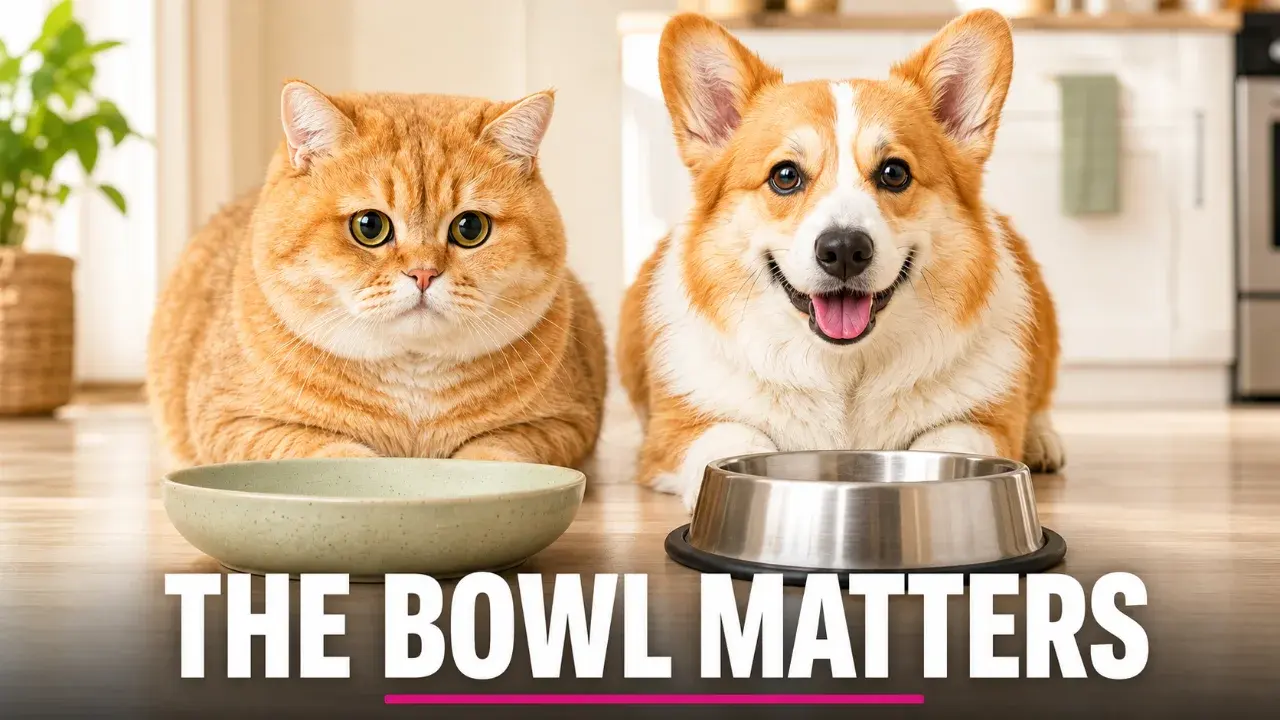
A good pet bowl should be comfortable to use, difficult to tip, and easy to clean. Shape and placement may also matter, but some popular claims—especially about feline “whisker stress”—have less evidence than advertising suggests.
The bowl holding your pet’s food may seem like a minor purchase, but its design can influence cleanliness, access, eating pace, and how secure an animal feels during a meal. There is no single bowl that works best for every dog or cat; the useful question is whether the bowl suits the individual animal and can be kept properly clean.
Before buying a specialized product, look at what happens during an ordinary meal. A pet that pushes the bowl across the floor, struggles to reach the food, eats unusually fast, or repeatedly walks away may benefit from a different setup.
Cleanability should come first
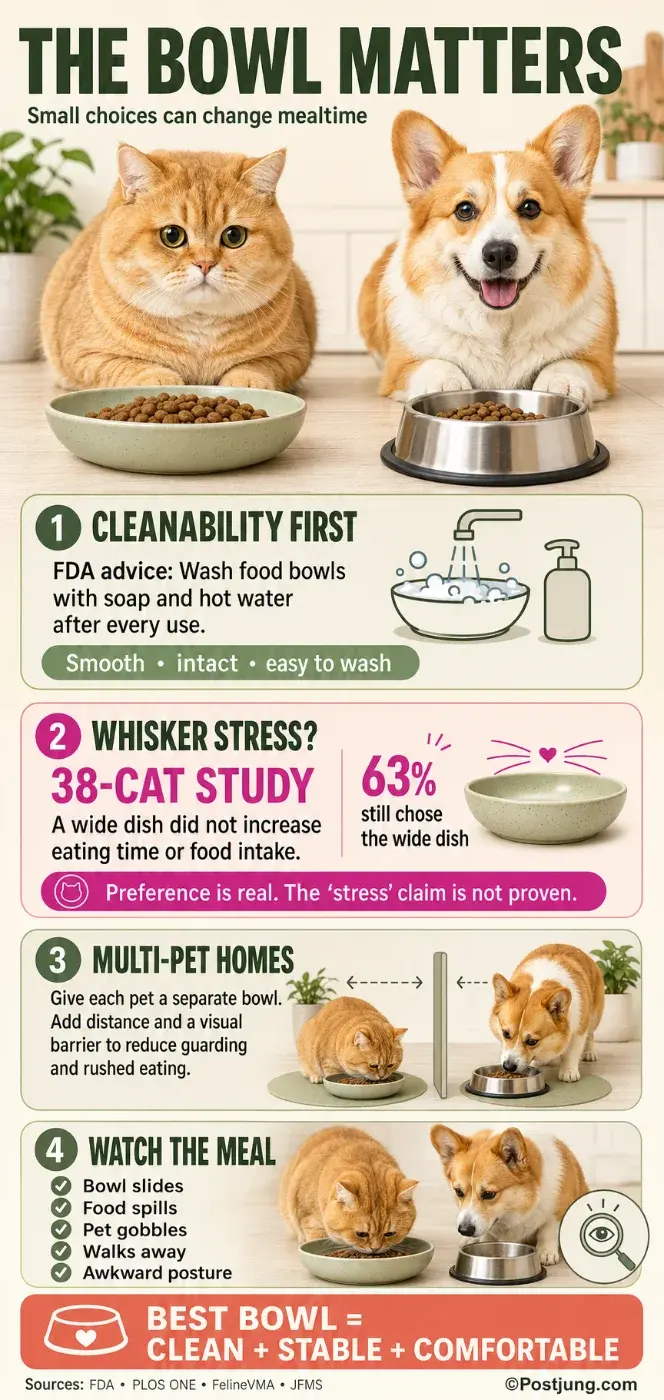
Food residue and saliva can accumulate inside bowls, regardless of how attractive or expensive they are. The U.S. Food and Drug Administration recommends washing pet-food bowls and feeding utensils with soap and hot water after each use.
A 2022 PLOS ONE study involving 417 dog-owner surveys and swabs from 68 household food dishes found that following hygiene protocols significantly reduced bacterial counts. The study was relatively small and measured general aerobic bacterial contamination rather than illness in pets, but it reinforces a simple point: regular washing makes a measurable difference.
Choose a food-safe bowl with a smooth, intact surface that is easy to wash thoroughly. Check whether the manufacturer says it is dishwasher-safe. Replace bowls that become deeply scratched, cracked, chipped, or difficult to clean.
A non-slip base can also help. It prevents the bowl from sliding while a pet eats and may reduce spills, noise, and frustration.
Wide bowls and the “whisker stress” question
Wide, shallow dishes are often marketed to cat owners as protection against “whisker stress” or “whisker fatigue.” The theory is that repeated contact between a cat’s sensitive whiskers and the sides of a narrow bowl may be unpleasant.
Evidence for this condition remains limited. In a small at-home study of 38 cats, researchers compared each cat’s regular dish with a commercially marketed whisker-friendly dish. The cats did not spend more time eating, consume more food, or drop less food when using the specialized dish.
When both dishes were presented together, 63% of the cats chose the whisker-friendly option. That suggests some cats may have a preference, but it does not prove that narrow bowls cause stress or harm.
A wide dish is still a reasonable, low-risk option if a cat appears more comfortable using it. Owners should treat the cat’s behavior as useful feedback rather than assuming every cat needs a product carrying a whisker-friendly label.
Placement can matter as much as shape
For cats, the social environment around a bowl may have a greater effect than the bowl itself. Guidance from the Feline Veterinary Medical Association recommends giving cats private, accessible feeding locations and using separate stations in multi-cat homes.
Cats that appear willing to eat together may still experience subtle competition. One cat may guard the food, stare at another, block access, or cause a more cautious cat to eat quickly and leave.
Separate bowls with distance and visual barriers can reduce that pressure. Food should also be placed away from litter boxes, noisy appliances, heavy foot traffic, and locations where another animal can trap or surprise the cat.
Puzzle feeders and automatic feeders may be useful in some homes. Puzzle feeders encourage activity and allow pets to work for portions of food, while automatic or microchip-controlled bowls can help manage separate diets. Introduce unfamiliar feeders gradually so the device does not become another obstacle to eating.
Match the bowl to the individual pet
Observe posture and movement during meals. The pet should be able to reach the food without repeatedly chasing the bowl or taking an awkward stance. Older animals and pets with mobility, dental, neurological, or facial-structure issues may need an adapted setup recommended by a veterinarian.
Do not assume that raising a bowl is automatically healthier. The right height depends on the animal and the reason for changing it. Owners of dogs at increased risk of gastric dilatation-volvulus, commonly called bloat, should discuss feeding arrangements with their veterinarian rather than relying on generalized product claims.
Eating speed matters too. A slow-feeding bowl may help spread food out for an animal that bolts meals, but it should not make eating excessively difficult or stressful. Monitor the pet during the transition and stop using the bowl if it causes frustration, coughing, repeated gagging, or refusal to eat.
Most importantly, a bowl change should not be used to explain away a sudden loss of appetite, difficulty chewing or swallowing, vomiting, weight loss, or an abrupt change in feeding behavior. Those signs can indicate illness or pain and warrant veterinary advice.
The best bowl is rarely the one with the most features. It is the one your pet can use comfortably, in a secure location, and that you can clean thoroughly after every meal.
SOURCES USED:
- U.S. Food and Drug Administration — Tips for Safe Handling of Pet Food and Treats
- PLOS ONE — Survey evaluation of dog owners’ feeding practices and dog bowls’ hygiene assessment in domestic settings
- Journal of Feline Medicine and Surgery — Evaluation of whisker stress in cats
- Tufts University Cummings School of Veterinary Medicine — Whisker worry: Are cats’ whiskers a key to their eating pleasure?
- Feline Veterinary Medical Association — How to Feed a Cat

เขียนโดย Postjung Insights
 รู้หรือไม่? เปิดรายได้พนักงานส่งพัสดุของแต่ละแอป วันหนึ่งได้เท่าไร
 5 ไอเทมป้องกันความร้อนให้บ้านแบบโบราณ! ภูมิปัญญาเก่าที่ช่วยบ้านเย็นลงได้ 3-5 องศา
 โรงเรียนที่มีนักเรียนมากที่สุดในไทย
 7 บทเพลงไวรัลยุคโบราณ! เพลงงานวัดที่เปิดเมื่อไหร่ คนก็ลุกขึ้นรำวงเมื่อนั้น
 7 คันเบ็ดตกปลาโบราณ สายเรโทรยอมทุ่มเงินซื้อ! ยิ่งเก่า ยิ่งหายาก ยิ่งมีเรื่องราว
 ตาราง “เด่นเหนือเด่นใต้” งวด 1 ต.ค. 69 เปิดข้อมูลตามโพย เลขไหนอยู่ตรงไหน
 อำเภอที่มีชื่ออำเภอสั้นที่สุด 3 อำเภอเท่านั้นในประเทศไทย
 เช็กด่วน ! ข่าวบัตรสวัสดิการแจก 10,000 บาท ก.ย. 69 จริงหรือ ? ก่อนเชื่อควรรู้อะไร
 รู้หรือไม่? ความทรงจำวัยเด็กอาจไม่ได้เหมือนที่เราเคยจำ! สมองสามารถ “เติมเรื่อง” ให้เราได้
 เปิด 5 โรงเรียนหญิงล้วนเก่าแก่ของไทย ที่มีประวัติยาวนานกว่าศตวรรษ
 5 เมนูอาหารไทยโบราณที่หาทานยาก ชื่อคุ้นหู แต่คนรุ่นใหม่อาจไม่เคยชิม
 โรงเรียนชายล้วนแห่งแรกของไทยคือที่ไหน? ย้อนดูจุดเริ่มต้นโรงเรียนสวนกุหลาบวิทยาลัยอำเภอที่มีชื่ออำเภอสั้นที่สุด 3 อำเภอเท่านั้นในประเทศไทย
 English Edition