Dental chews can help—but they are not a complete dental plan
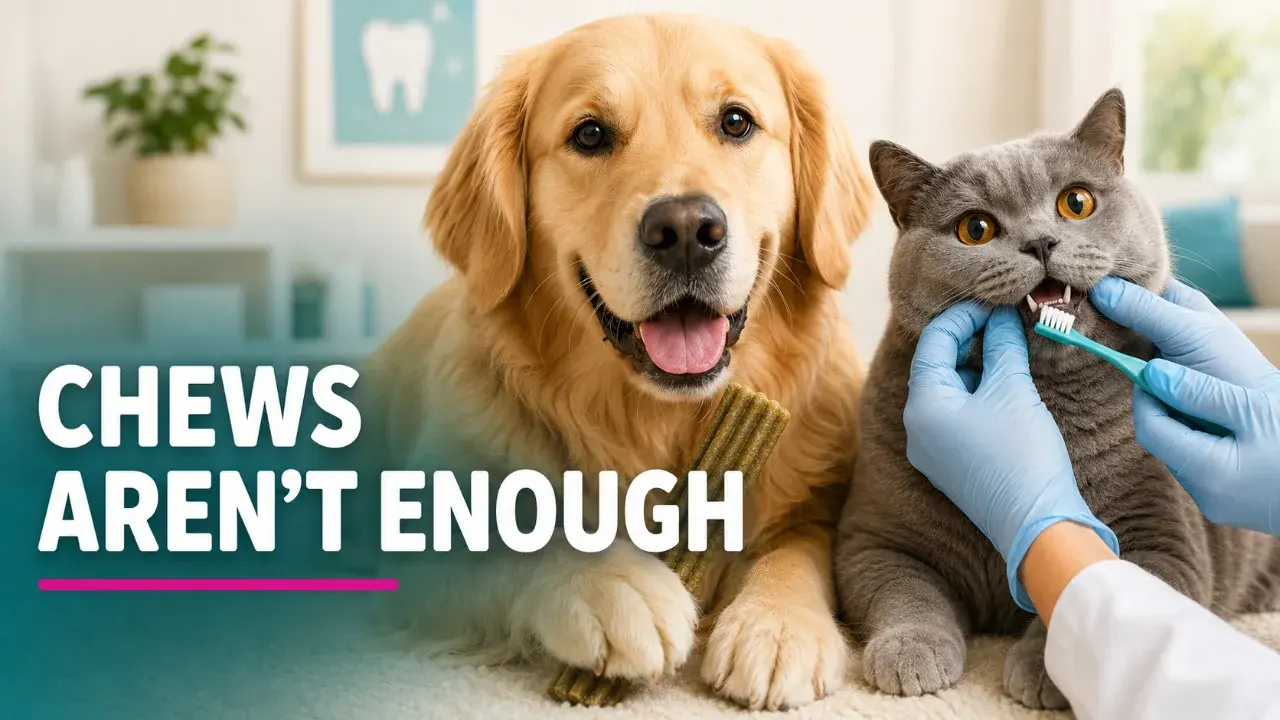
Some dental chews can slow plaque or tartar accumulation, but they cannot clean every tooth, examine the gumline, or treat an infection. A complete plan also requires suitable home care and regular veterinary assessment.
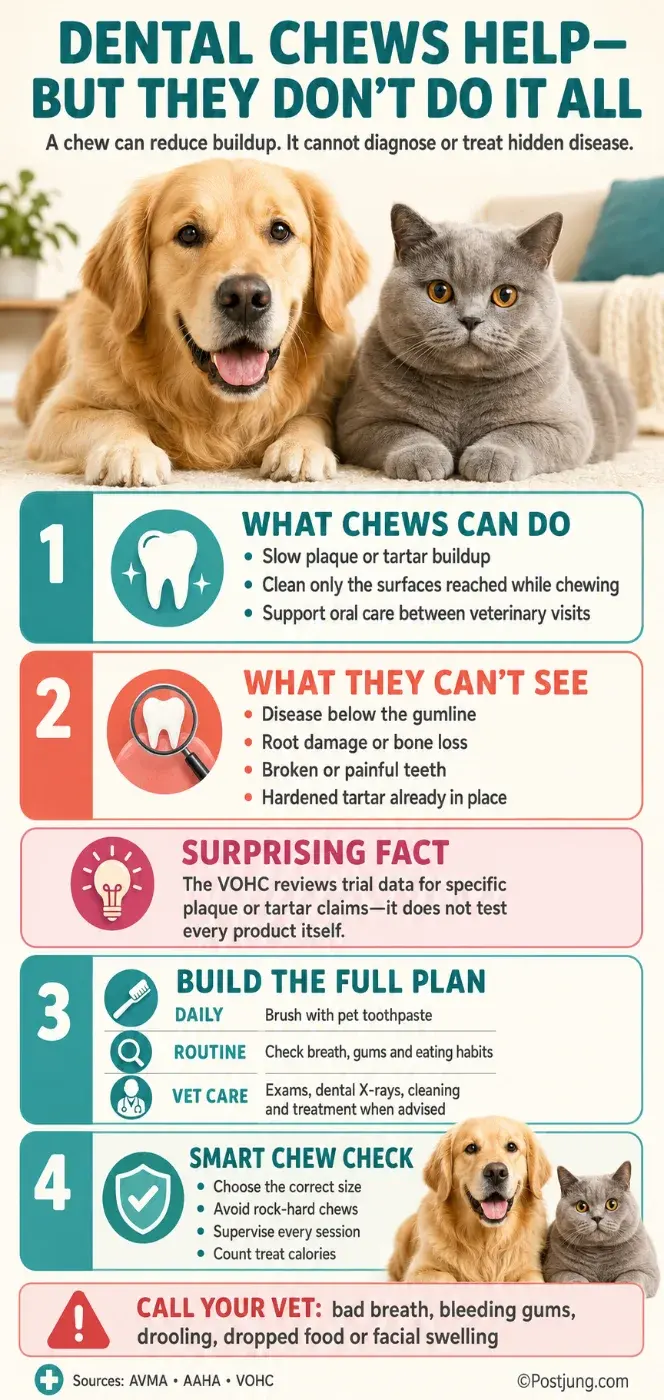
A daily dental chew may help keep a dog or cat’s teeth cleaner, but it cannot provide a complete picture of oral health. Disease can develop beneath the gumline or inside apparently normal teeth—areas that no treat can examine or treat.
The distinction matters because a cleaner-looking tooth is not necessarily a healthy one. Dental chews are preventive tools, not substitutes for brushing, veterinary examinations, dental X-rays, professional cleaning, or treatment.
What a dental chew can actually do
Dental chews generally work through physical abrasion as the animal bites into them. Some products also contain ingredients intended to slow plaque or tartar accumulation.
Plaque is the soft bacterial film that continually forms on teeth. If it is not disrupted, minerals in saliva can turn it into hardened calculus, commonly called tartar.
A well-designed chew may reduce how quickly that material accumulates on the surfaces it contacts. The benefit depends on the product, how frequently it is used, whether the pet chews it properly and whether it is the correct size.
The Veterinary Oral Health Council, or VOHC, awards its seal to products that meet its standards for controlling plaque, tartar or both. The organization reviews data from trials conducted according to its protocols; it does not personally test every product.
That distinction is easy to miss. A VOHC seal supports the specific plaque or tartar claim displayed on the product. It does not mean the chew replaces veterinary dental care or has been proven to treat every form of oral disease.
What chewing leaves behind
A chew does not reliably reach every surface of every tooth. Some pets work it with only one part of the mouth, while others swallow treats after only a few bites.
More importantly, chewing cannot reveal what is happening below the gumline. Periodontal pockets, damaged roots, bone loss, tooth resorption and infections may be difficult—or impossible—to identify during a simple look inside an awake pet’s mouth.
The American Animal Hospital Association recommends full-mouth intraoral X-rays for dental patients because significant problems can be hidden inside or beneath teeth that look normal from the outside.
Chews also cannot remove established disease. A pet with inflamed gums, a fractured tooth or infection needs veterinary assessment rather than another dental treat. Hardened tartar may require professional scaling, while a damaged or infected tooth may need extraction or another specific treatment.
Brushing remains the strongest home-care step
Regular brushing is the most effective way for most caregivers to disrupt plaque between veterinary dental procedures. AAHA guidance says brushing must be performed daily to provide its intended benefit.
Use a soft brush and toothpaste made for pets. A veterinarian can demonstrate a gradual introduction technique, especially for an animal that has never had its teeth brushed.
Do not begin brushing a visibly painful or inflamed mouth without veterinary guidance. AAHA warns that brushing inflamed gums can hurt and may cause an animal to become strongly resistant to future home care.
If brushing is not possible, a veterinarian may recommend a combination of alternatives—including an accepted dental chew, dental diet, wipe, gel, rinse or water additive—suited to the individual animal. Partial home care is still useful, but its limitations should be understood.
A complete dental plan has several layers
An effective plan usually includes:
- Regular checks at home for changes in breath, gums, teeth and eating behavior
- Daily brushing when the pet can comfortably tolerate it
- Evidence-supported dental products selected for the animal’s size and health
- Oral assessment during routine veterinary visits
- An anesthetized examination, dental X-rays, cleaning and treatment when clinically indicated
The interval between professional dental procedures is not identical for every animal. Age, species, breed, tooth alignment, existing disease and the effectiveness of home care all influence the schedule.
Seek veterinary attention if a pet develops persistent bad breath, bleeding or swollen gums, loose or broken teeth, excessive drooling, facial swelling, difficulty chewing, dropped food or a sudden reluctance to eat. Pets may continue eating despite significant oral pain, so normal appetite alone does not rule out disease.
The chew itself must also be safe
Bigger and harder are not necessarily better. Extremely hard items—including antlers, bones and some rigid chews—can fracture teeth. Pieces that are too small or break apart may also create choking or intestinal obstruction risks.
Choose the size specified for the pet, follow the feeding directions and supervise chewing. The calories supplied by edible dental treats should also be included in the pet’s daily food allowance.
A dental chew earns its place in a care routine by doing one limited job consistently: helping control buildup. The rest of the plan is what detects hidden problems, relieves pain and protects the teeth over a lifetime.
SOURCES USED:
- American Veterinary Medical Association — Pet dental care
- American Animal Hospital Association — 2019 AAHA Dental Care Guidelines for Dogs and Cats
- American Animal Hospital Association — Recommending home oral hygiene and products
- Veterinary Oral Health Council — About the VOHC
- Veterinary Oral Health Council — Accepted products
- American Animal Hospital Association — Don’t Chew on This!

เขียนโดย Postjung Insights
 รู้หรือไม่? เปิดรายได้พนักงานส่งพัสดุของแต่ละแอป วันหนึ่งได้เท่าไร
 โรงเรียนที่มีนักเรียนมากที่สุดในไทย
 7 บทเพลงไวรัลยุคโบราณ! เพลงงานวัดที่เปิดเมื่อไหร่ คนก็ลุกขึ้นรำวงเมื่อนั้น
 7 คันเบ็ดตกปลาโบราณ สายเรโทรยอมทุ่มเงินซื้อ! ยิ่งเก่า ยิ่งหายาก ยิ่งมีเรื่องราว
 อำเภอที่มีชื่ออำเภอสั้นที่สุด 3 อำเภอเท่านั้นในประเทศไทย
 ตาราง “เด่นเหนือเด่นใต้” งวด 1 ต.ค. 69 เปิดข้อมูลตามโพย เลขไหนอยู่ตรงไหน
 5 ไอเทมป้องกันความร้อนให้บ้านแบบโบราณ! ภูมิปัญญาเก่าที่ช่วยบ้านเย็นลงได้ 3-5 องศา
 เช็กด่วน ! ข่าวบัตรสวัสดิการแจก 10,000 บาท ก.ย. 69 จริงหรือ ? ก่อนเชื่อควรรู้อะไร
 แปลปกสลาก งวด 1 ต.ค. 69 ส่องตัวเลขจากภาพปกสลากกินแบ่งรัฐบาล
 ทำไมหนังสือบางเล่มถึงมีหน้าว่างทั้งหน้า? มันอาจไม่ได้พิมพ์พลาด
 รู้หรือไม่? ความทรงจำวัยเด็กอาจไม่ได้เหมือนที่เราเคยจำ! สมองสามารถ “เติมเรื่อง” ให้เราได้
 โรงเรียนชายล้วนแห่งแรกของไทยคือที่ไหน? ย้อนดูจุดเริ่มต้นโรงเรียนสวนกุหลาบวิทยาลัยอำเภอที่มีชื่ออำเภอสั้นที่สุด 3 อำเภอเท่านั้นในประเทศไทย
 English Edition