Why Every Pet Collar Needs Regular Fit Checks
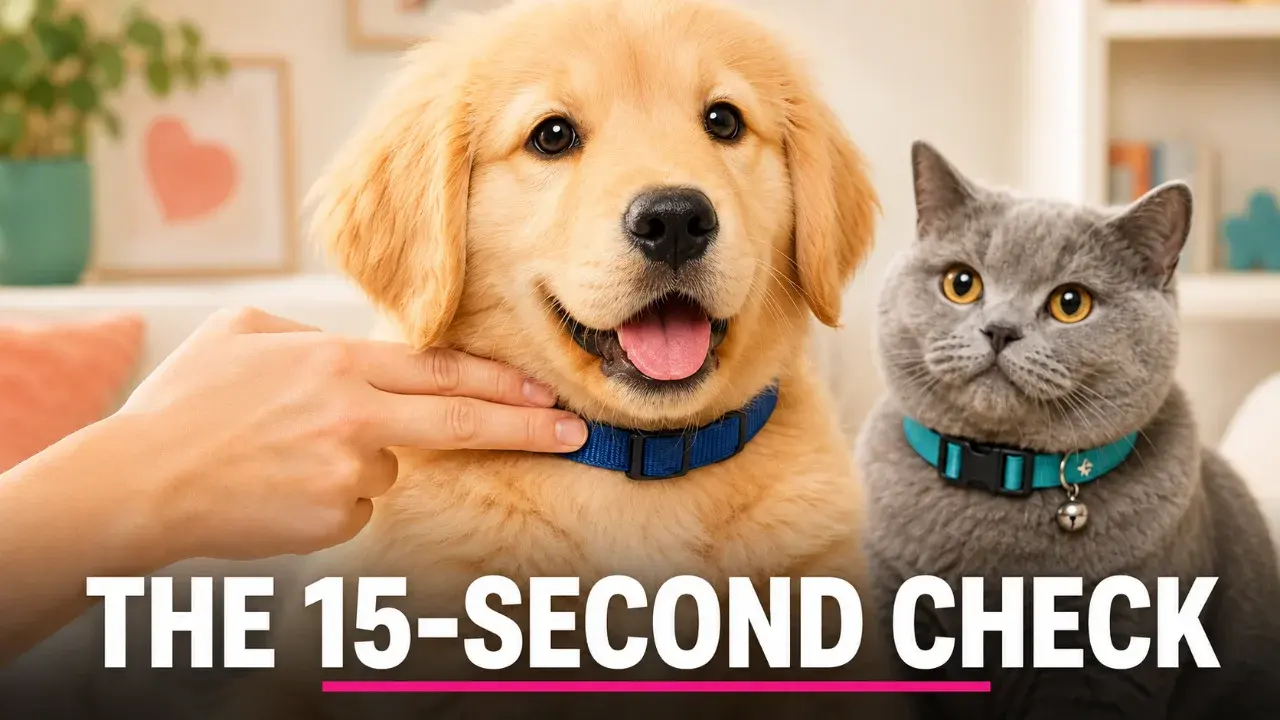
A collar can become tighter as a young pet grows or loosen through everyday use. A quick check can reveal poor fit, worn hardware, and skin irritation before they turn into more serious problems.
A pet collar should be secure enough to stay in place without pressing into the neck. That balance can change as a puppy or kitten grows, an adult pet gains or loses weight, or the collar stretches and wears.
Checking the fit regularly takes only a few seconds, but it can help prevent rubbing, escape, entanglement, and injuries hidden beneath the fur.
Why a one-time adjustment is not enough
A collar that fitted well when purchased will not necessarily remain safe.
Puppies can grow rapidly, sometimes outgrowing collars sooner than owners expect. Blue Cross specifically advises checking a puppy’s collar regularly because it may become too tight as the animal grows.
Weight changes can affect adult pets as well. Seasonal coat changes, grooming, matting, wet material, stretched webbing, and an adjustment buckle that gradually slips may also alter how a collar sits.
Cats require particular attention because they climb, squeeze through narrow spaces, and groom with their paws near the collar. Blue Cross recommends checking a cat’s collar every few days for changes in fit, damage, or loose threads. The skin beneath it should also be examined.
The two-finger check is a useful starting point
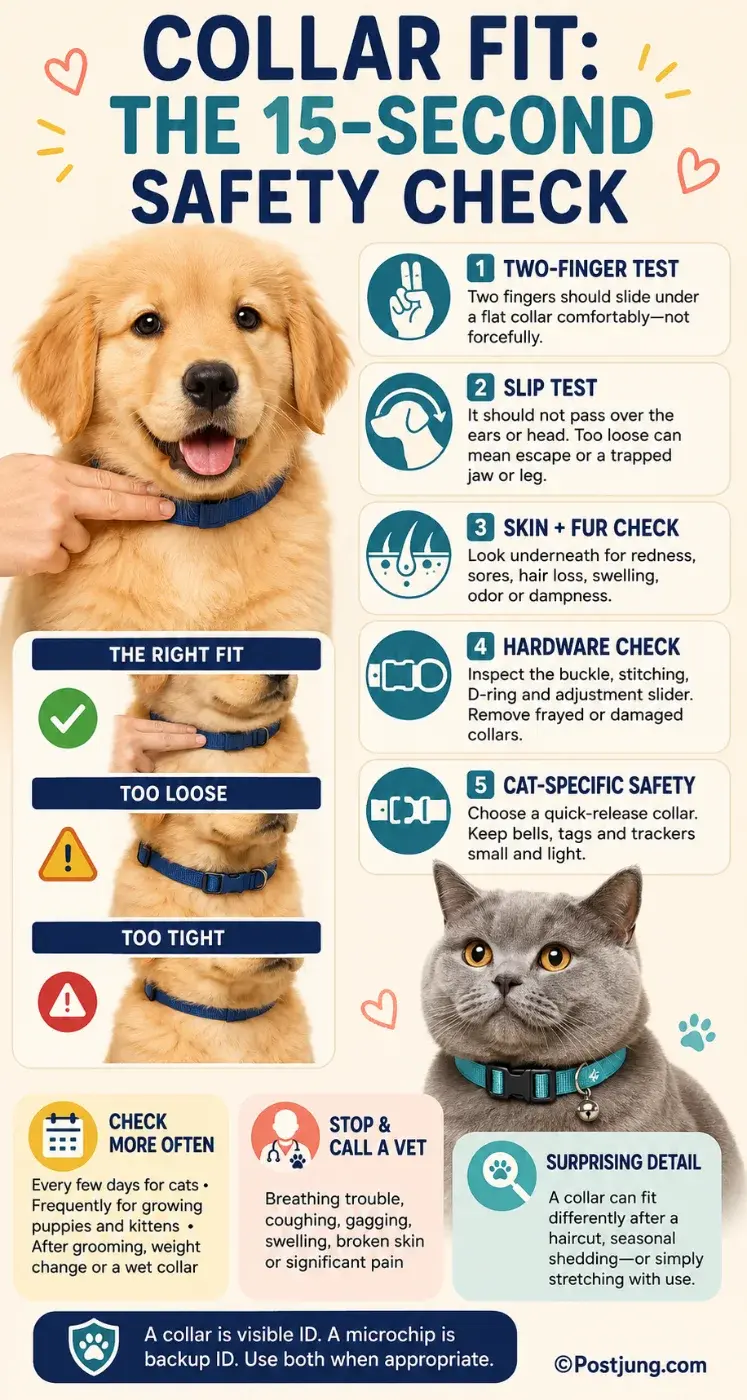
For an ordinary flat collar, a widely used check is to slide two fingers between the collar and the pet’s neck. They should fit comfortably without having to force them underneath.
If there is not enough room for the fingers, the collar may be too tight. If the gap is large enough for the collar to pass over the head—or for a leg or jaw to slip underneath—it may be too loose.
The two-finger method is a practical guide rather than a precise measurement for every animal. Pet size, neck shape, coat thickness, collar width, and collar design all matter. A very small dog, a narrow-headed breed, or a specialty collar may require different fitting instructions.
After adjusting the collar, gently test whether it could slide over the pet’s ears or head. Recheck the fit while the pet is standing naturally rather than pulling against the collar.
What happens when a collar is too tight?
An overly tight collar can rub the skin, damage fur, and cause persistent discomfort. Watch for redness, sores, swelling, hair loss, an unpleasant odor, or sensitivity when the neck is touched.
A collar should not leave a deep indentation or restrict comfortable movement. Coughing, gagging, noisy breathing, or difficulty breathing requires prompt attention. Remove pressure from the neck and contact a veterinarian, particularly if breathing appears impaired.
Dogs that pull hard against a neck collar can place pressure on delicate structures in the neck. A correctly fitted body harness may be a better walking option for dogs with neck pain, airway disease, or persistent pulling, but a harness must also be adjusted correctly to prevent rubbing or escape.
A loose collar creates different dangers
Looser does not automatically mean safer.
A dog may back out of a poorly fitted collar near traffic or in another hazardous setting. A cat may push a front leg or lower jaw through an oversized collar, leaving the material trapped across the body or mouth.
Loose collars can also catch on crates, branches, fences, furniture, heating vents, or another animal during play. Check that the buckle closes securely and examine the fabric, stitching, attachment rings, and adjustment hardware for damage.
Pet tags and tracking devices should be small enough that they do not interfere with movement or the collar’s safety mechanism.
Cats need a quick-release design
Blue Cross recommends quick-release, also called breakaway, collars for cats and advises against non-breakaway and elastic designs. A breakaway buckle is intended to open if the collar becomes caught, allowing the cat to leave the collar behind rather than remain trapped.
Test the release mechanism before putting the collar on the cat, then inspect it during subsequent fit checks. Heavy tags or trackers should not prevent the buckle from releasing properly.
A collar and tag can provide visible identification, but they are not permanent. A collar may break or fall off, so microchipping—and keeping the registration details current—provides an important additional way to identify a lost pet.
Make the check part of normal care
Run your fingers beneath the collar whenever you groom your pet, after bathing or clipping the coat, and whenever you notice a change in body weight. Growing puppies and kittens need more frequent checks.
Look beneath the collar instead of judging only from the outside. Confirm that the skin is healthy, the material is clean and dry, the buckle works, and no sharp or frayed section touches the neck.
If irritation persists after the collar is removed or adjusted, or if there is broken skin, swelling, discharge, pain, coughing, or breathing difficulty, ask a veterinarian to examine the pet. The right collar is not simply one that fastens—it is one that continues to fit safely as the pet and the equipment change.
SOURCES USED:

เขียนโดย Postjung Insights
 รู้หรือไม่? เปิดรายได้พนักงานส่งพัสดุของแต่ละแอป วันหนึ่งได้เท่าไร
 อำเภอที่มีชื่ออำเภอสั้นที่สุด 3 อำเภอเท่านั้นในประเทศไทย
 7 บทเพลงไวรัลยุคโบราณ! เพลงงานวัดที่เปิดเมื่อไหร่ คนก็ลุกขึ้นรำวงเมื่อนั้น
 5 ไอเทมป้องกันความร้อนให้บ้านแบบโบราณ! ภูมิปัญญาเก่าที่ช่วยบ้านเย็นลงได้ 3-5 องศา
 โรงเรียนที่มีนักเรียนมากที่สุดในไทย
 7 คันเบ็ดตกปลาโบราณ สายเรโทรยอมทุ่มเงินซื้อ! ยิ่งเก่า ยิ่งหายาก ยิ่งมีเรื่องราว
 เปิด 5 โรงเรียนหญิงล้วนเก่าแก่ของไทย ที่มีประวัติยาวนานกว่าศตวรรษ
 ตาราง “เด่นเหนือเด่นใต้” งวด 1 ต.ค. 69 เปิดข้อมูลตามโพย เลขไหนอยู่ตรงไหน
 รู้หรือไม่? ความทรงจำวัยเด็กอาจไม่ได้เหมือนที่เราเคยจำ! สมองสามารถ “เติมเรื่อง” ให้เราได้
 โรงเรียนชายล้วนแห่งแรกของไทยคือที่ไหน? ย้อนดูจุดเริ่มต้นโรงเรียนสวนกุหลาบวิทยาลัย
 แปลปกสลาก งวด 1 ต.ค. 69 ส่องตัวเลขจากภาพปกสลากกินแบ่งรัฐบาล
 ทำไมหนังสือบางเล่มถึงมีหน้าว่างทั้งหน้า? มันอาจไม่ได้พิมพ์พลาดอำเภอที่มีชื่ออำเภอสั้นที่สุด 3 อำเภอเท่านั้นในประเทศไทย
 English Edition