Why Pet Wipes Help With Messes but Do Not Replace Bathing
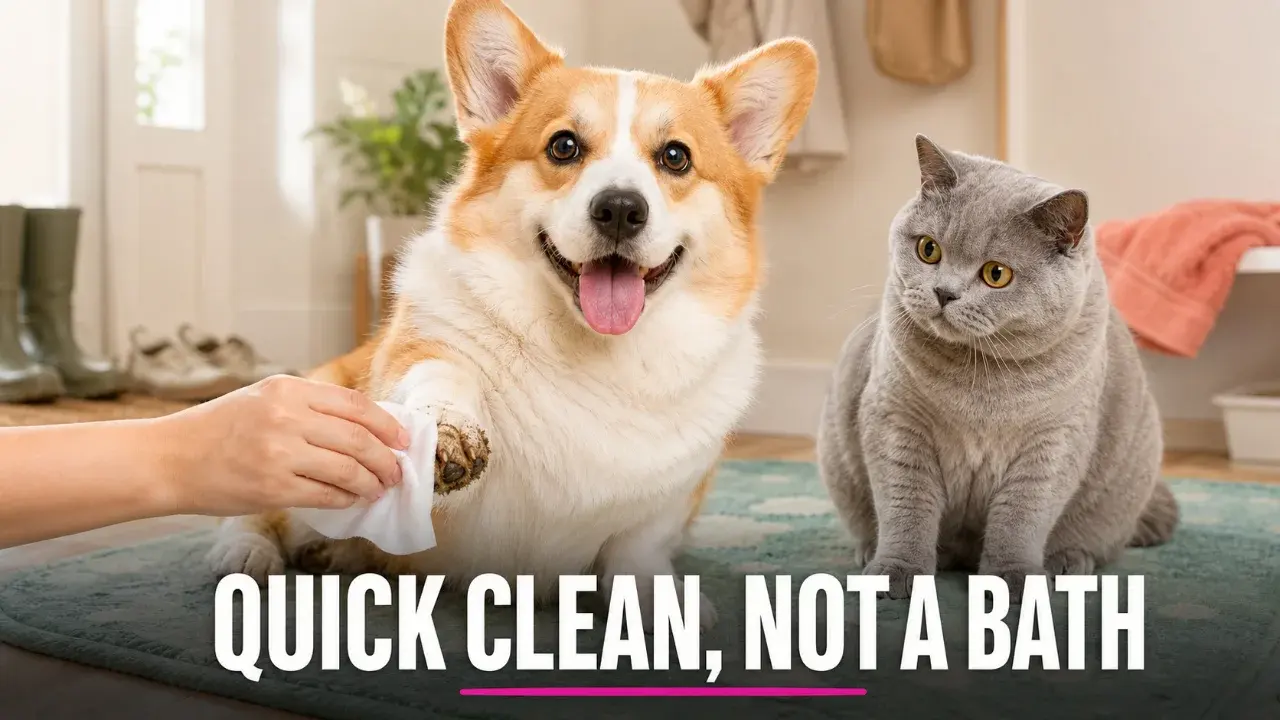
Pet wipes can remove light dirt from paws and fur in seconds, but they cannot thoroughly clean every coat or solve persistent skin and odor problems. Knowing their limits helps owners choose the safest cleaning method for each mess.
Pet wipes are useful for small, immediate jobs: dusty paws after a walk, a little dirt on the coat, or a minor mess around a dog’s rear. They are portable, require no rinsing, and may be less stressful than putting an animal in a tub.
Their convenience does not make them a complete replacement for bathing. A wipe cleans only the area it touches, while a proper wash can move through the coat, reach the skin, loosen heavier dirt, and rinse away residue.
The right choice depends on the animal, the substance on its coat, and whether the problem is simply dirt or a possible medical issue.
What pet wipes do well
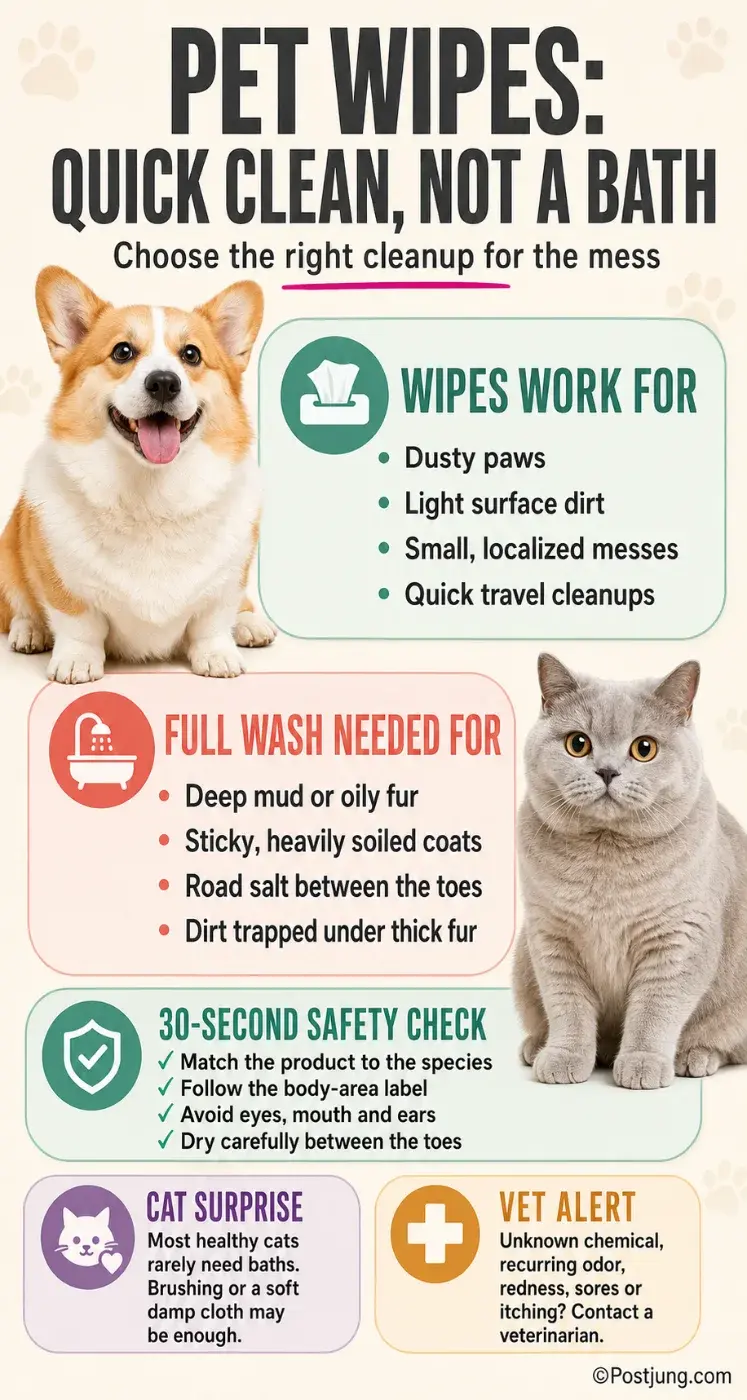
Pet-safe grooming wipes work best for light, localized dirt. The American Kennel Club recommends wipes labeled safe for pets as a quick option for muddy, sandy, or salty dog paws, particularly while traveling.
They can also be useful for:
- Wiping a dog’s paws after a routine walk
- Removing light dust or loose surface dirt
- Cleaning a small area before dirt is tracked indoors
- Freshening the coat between regular grooming sessions
- Helping an older or mobility-limited pet with a minor mess, following veterinary advice
Check between the toes and around the paw pads rather than wiping only across the top. Dirt, salt, and moisture can remain trapped in these areas and cause irritation. Dry the paws afterward, especially between the toes.
For a dog’s face, a soft cloth dampened with water may be enough for ordinary dirt. The ASPCA advises avoiding direct contact with the eyeball, while the American Kennel Club recommends keeping grooming wipes away from the eyes, mouth, and ears unless the product is specifically intended for that area.
Why wiping is not the same as bathing
A wipe has limited moisture and covers a limited surface. It may pick up light debris, but it cannot thoroughly saturate a thick or heavily soiled coat. It also does not provide the rinsing action needed to remove shampoo, sticky material, or substances embedded close to the skin.
VCA Animal Hospitals advises working species-appropriate shampoo through the entire coat during a bath to remove dirt and debris, followed by thorough rinsing. Dogs with dense or long coats may require particular attention because the visible surface can look clean while dirt and moisture remain underneath.
A bath or targeted wash is usually the better option when:
- Mud has penetrated deeply into the coat
- The fur feels oily, sticky, or heavily soiled
- Road salt or another irritating substance is trapped around the paws
- The animal has rolled in feces, decomposing material, or another serious contaminant
- Dirt remains after several passes with a wipe
- A veterinarian has prescribed a medicated shampoo
If an unknown chemical, cleaner, paint, fuel, pesticide, or other potentially harmful substance gets onto a pet, do not assume a grooming wipe is sufficient. Prevent licking where it is safe to do so and contact a veterinarian or animal poison-control service promptly for substance-specific instructions.
Choose the product by species and body area
“Pet wipe” is a broad label. Grooming wipes intended for direct use on fur are different from household disinfecting wipes, surface cleaners, ear wipes, eye wipes, and dental wipes.
Read the full label before use. It should clearly state that the product is intended for direct application to the animal’s species and identify where it may be used. A product made for dogs should not automatically be considered safe for cats.
Cats Protection notes that cats can be more sensitive to some chemicals, fragrances, essential oils, and ingredients found in dog products. Some dog flea shampoos, for example, may contain permethrin, which is toxic to cats.
Human shampoo and baby shampoo are also poor default choices. VCA advises using products formulated specifically for dogs or cats because their skin differs from human skin. The same caution supports choosing purpose-made grooming wipes instead of routinely substituting cosmetic, baby, or household wipes.
Stop using a product if the pet develops redness, itching, swelling, excessive licking, drooling, vomiting, breathing difficulty, weakness, or unusual behavior. Seek veterinary advice when symptoms are significant or persistent.
Dogs and cats do not need identical routines
A dog’s bathing schedule varies with its coat, activities, age, and health. A dog that frequently swims, rolls in unpleasant material, or develops a medical skin condition may need a different routine from a short-haired indoor dog. Frequent bathing or persistent odor should be discussed with a veterinarian rather than managed indefinitely with scented wipes.
Most healthy adult cats rarely need baths because they groom themselves. Cats Protection recommends regular brushing—particularly for long-haired cats—and suggests a soft, damp cloth when brushing alone does not remove a small amount of dirt.
Some cats do require additional help. Arthritis, obesity, long hair, skin disease, or reduced mobility can make self-grooming difficult. Hairless breeds may also have specialized bathing needs. In these cases, the cleaning method and frequency should be based on veterinary guidance.
Odor can be information
A wipe may temporarily cover or reduce an odor without addressing its source. Recurring smells can be associated with damp skin folds, ear trouble, dental disease, infection, fecal contamination, or another condition that needs attention.
Owners should arrange a veterinary examination if odor returns quickly or occurs with redness, sores, hair loss, discharge, persistent scratching, head shaking, pain, or changes in behavior.
Pet wipes earn their place beside the leash and grooming brush because they make small cleanups easy. The useful distinction is simple: wipe a light surface mess, wash a deeper one, and treat unexplained skin or odor problems as health concerns rather than grooming inconveniences.
SOURCES USED:
- American Kennel Club — How to Wash a Dog Without Water: Mess-Free Tips
- American Kennel Club — How to Clean and Care for Your Dog’s Paws
- VCA Animal Hospitals — Grooming and Coat Care for Your Dog
- VCA Animal Hospitals — Grooming and Coat Care for Your Cat
- Cats Protection — Should I Bathe My Cat?
- ASPCA — Dog Grooming Tips

เขียนโดย Postjung Insights
 5 ไอเทมป้องกันความร้อนให้บ้านแบบโบราณ! ภูมิปัญญาเก่าที่ช่วยบ้านเย็นลงได้ 3-5 องศา
 โรงเรียนที่มีนักเรียนมากที่สุดในไทย
 7 บทเพลงไวรัลยุคโบราณ! เพลงงานวัดที่เปิดเมื่อไหร่ คนก็ลุกขึ้นรำวงเมื่อนั้น
 รู้หรือไม่? ความทรงจำวัยเด็กอาจไม่ได้เหมือนที่เราเคยจำ! สมองสามารถ “เติมเรื่อง” ให้เราได้
 รู้หรือไม่? เปิดรายได้พนักงานส่งพัสดุของแต่ละแอป วันหนึ่งได้เท่าไร
 ส่องเลข 3 สำนักพิมพ์ งวด 1 ต.ค. 69 ตัวไหนมีข้อมูลตรงกัน
 โรงเรียนชายล้วนแห่งแรกของไทยคือที่ไหน? ย้อนดูจุดเริ่มต้นโรงเรียนสวนกุหลาบวิทยาลัย
 7 คันเบ็ดตกปลาโบราณ สายเรโทรยอมทุ่มเงินซื้อ! ยิ่งเก่า ยิ่งหายาก ยิ่งมีเรื่องราว
 อำเภอที่มีชื่ออำเภอสั้นที่สุด 3 อำเภอเท่านั้นในประเทศไทย
 เปิด 5 โรงเรียนหญิงล้วนเก่าแก่ของไทย ที่มีประวัติยาวนานกว่าศตวรรษ
 โรงเรียนเพียงแห่งเดียวของประเทศไทย ที่อยู่มาตั้งแต่ยุครัชกาลที่ 4
 มารู้จัก“ชมพู่สีม่วงดำ”ผลไม้หน้าตาแปลก สีเข้มจนเกือบดำอำเภอที่มีชื่ออำเภอสั้นที่สุด 3 อำเภอเท่านั้นในประเทศไทย
 English Edition