How to Build a Pet Emergency Fund Before You Need It
A useful pet emergency fund is based on local veterinary costs, your insurance coverage, and what you can realistically save. Start small, automate the habit, and prepare a backup plan before urgent care is needed.
A pet emergency fund gives you money that can be used immediately when an animal is injured or becomes seriously ill. It cannot remove every difficult decision, but it can prevent the first hours of an emergency from becoming a scramble for payment.
There is no single correct amount for every household. Veterinary prices vary by country, city, species, clinic, and type of treatment. The right target is one based on the care available near you and the financial protection you already have.
Keep emergency savings separate from routine pet costs
Vaccinations, parasite prevention, annual examinations, grooming, food, and planned dental care belong in a regular pet budget. An emergency fund is for expenses that are urgent, unpredictable, and difficult to postpone.
Examples may include an accident, suspected poisoning, breathing difficulty, uncontrolled bleeding, a urinary blockage, emergency diagnostics, surgery, or hospitalization. The American Veterinary Medical Association recommends immediate veterinary consultation for potentially life-threatening signs rather than delaying care to see whether the animal improves.
Create a separate savings account or clearly labeled savings category so the money is not gradually absorbed into ordinary spending. The U.S. Consumer Financial Protection Bureau advises keeping emergency savings somewhere safe, accessible, and less tempting to use for non-emergencies.
Set your target using local costs
Instead of choosing an arbitrary figure from an online article, contact your regular veterinarian and one nearby emergency hospital. Ask for approximate current prices for:
- An emergency examination
- Basic blood tests and diagnostic imaging
- Initial stabilization
- One day of hospitalization
- A common urgent procedure for your pet’s species or breed
These are planning estimates, not guaranteed quotes. The final bill will depend on the diagnosis and treatment required, but local figures provide a far more useful target than a national average from another country.
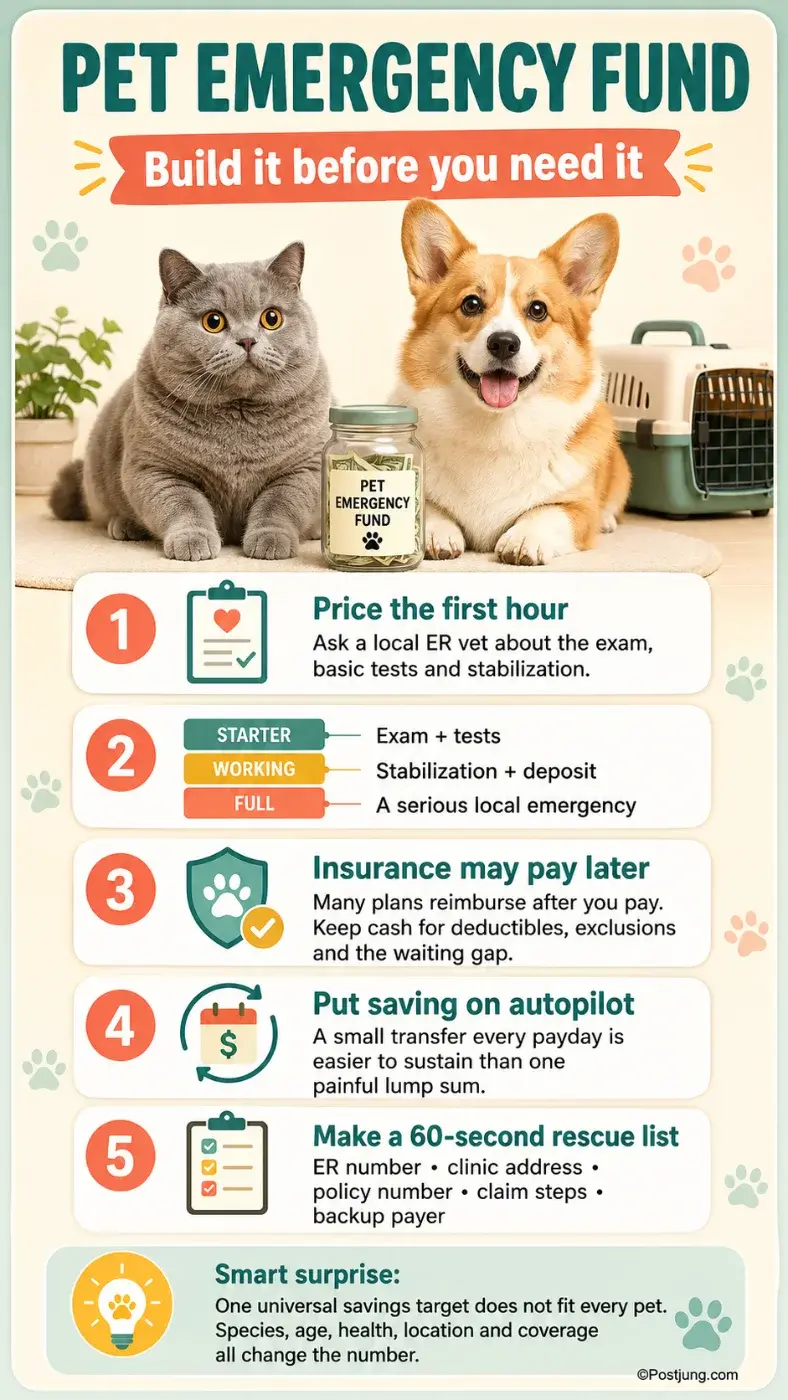
Build the fund in three stages:
- Starter target: Enough for an emergency examination and initial tests.
- Working target: Enough for examination, diagnostics, stabilization, and a deposit or initial treatment.
- Full target: An amount based on a serious but plausible emergency discussed with your veterinarian.
If the full target feels impossible, begin with the starter amount. Even a modest reserve can reduce the amount that must be borrowed.
Households with several pets may need a larger target, but multiplying the fund by the exact number of animals is not always necessary. Consider their ages, species, known conditions, and whether more than one animal could be affected by the same event.
Automate a contribution you can maintain
Choose a weekly, monthly, or payday contribution that fits your cash flow. A smaller automatic transfer that continues throughout the year is generally more useful than an ambitious amount that forces you to stop saving after a few weeks.
The Consumer Financial Protection Bureau identifies recurring transfers as one of the simplest ways to make saving consistent. Occasional income—such as a bonus, gift, refund, or freelance payment—can also help the fund reach its next stage faster.
Review the target at least once a year and after any major change in your pet’s health, local veterinary prices, or insurance coverage. If you use the fund, treat replenishing it as the next savings goal.
Insurance does not always replace accessible cash
Pet insurance can reduce the eventual cost of covered treatment, but policies differ widely. Before relying on one, check:
- Deductibles and reimbursement percentages
- Annual, per-condition, or lifetime limits
- Waiting periods
- Pre-existing-condition exclusions
- Coverage for chronic or hereditary conditions
- Emergency care outside your home area
- Whether the clinic is paid directly
The North American Pet Health Insurance Association notes that many policies exclude pre-existing conditions and apply a waiting period before coverage begins. Rules and available products differ by jurisdiction.
Many policies also operate through reimbursement: the owner pays the veterinary bill and submits a claim afterward. Direct payment may be available in some cases, but it should be confirmed in advance. For this reason, insured owners may still benefit from keeping enough accessible cash to cover a deductible, excluded charges, or the period before reimbursement.
Store the policy number, claims contact, deductible, coverage limit, and claim instructions in your phone. Keep a second copy with your pet’s medical records.
Make a payment plan before an emergency
Save the phone numbers and addresses of your regular veterinarian and the nearest after-hours emergency facility. Ask both clinics what payment methods they accept and whether deposits are commonly required for hospitalization or surgery.
Write down the order in which you would use available resources:
- Pet emergency savings
- Insurance or direct-payment arrangements
- A pre-approved, affordable credit option
- Help from a trusted family member
- Local nonprofit, shelter, veterinary college, or assistance program
Do not assume that grants or crowdfunding will provide money quickly enough for urgent treatment. Assistance programs may have eligibility requirements, limited funding, or application delays.
In the United States, Humane World for Animals maintains information on veterinary colleges, community clinics, local aid directories, and organizations that may provide financial assistance. Similar resources may exist through animal-welfare organizations or veterinary schools in other countries.
Review all credit terms carefully. Interest, fees, and deferred-interest provisions can make an emergency bill substantially more expensive if repayment conditions are missed.
A good plan does not require a perfect savings balance on the first day. It begins with a separate account, a locally informed target, and a contribution that continues. The goal is to give yourself more time and better choices when your pet needs care without warning.
This is general financial information. Veterinary costs, insurance terms, assistance programs, and consumer-credit rules vary by location; confirm current details with local providers and qualified financial or insurance professionals.
SOURCES USED:
- American Veterinary Medical Association — Loving your pet, managing the costs
- American Veterinary Medical Association — 13 animal emergencies that require immediate veterinary consultation and/or care
- Consumer Financial Protection Bureau — An essential guide to building an emergency fund
- North American Pet Health Insurance Association — Pet Insurance Buying Guide
- North American Pet Health Insurance Association — How to Claim
- Humane World for Animals — Free and Low-Cost Pet Food and Vet Care Near You

เขียนโดย Postjung Insights
 5 ไอเทมป้องกันความร้อนให้บ้านแบบโบราณ! ภูมิปัญญาเก่าที่ช่วยบ้านเย็นลงได้ 3-5 องศา
 รู้หรือไม่? ความทรงจำวัยเด็กอาจไม่ได้เหมือนที่เราเคยจำ! สมองสามารถ “เติมเรื่อง” ให้เราได้
 อำเภอที่มีชื่ออำเภอสั้นที่สุด 3 อำเภอเท่านั้นในประเทศไทย
 โรงเรียนที่มีนักเรียนมากที่สุดในไทย
 เช็กด่วน ! ข่าวบัตรสวัสดิการแจก 10,000 บาท ก.ย. 69 จริงหรือ ? ก่อนเชื่อควรรู้อะไร
 7 บทเพลงไวรัลยุคโบราณ! เพลงงานวัดที่เปิดเมื่อไหร่ คนก็ลุกขึ้นรำวงเมื่อนั้น
 7 คันเบ็ดตกปลาโบราณ สายเรโทรยอมทุ่มเงินซื้อ! ยิ่งเก่า ยิ่งหายาก ยิ่งมีเรื่องราว
 รู้หรือไม่? เปิดรายได้พนักงานส่งพัสดุของแต่ละแอป วันหนึ่งได้เท่าไร
 ตาราง “เด่นเหนือเด่นใต้” งวด 1 ต.ค. 69 เปิดข้อมูลตามโพย เลขไหนอยู่ตรงไหน
 เปิด 5 โรงเรียนหญิงล้วนเก่าแก่ของไทย ที่มีประวัติยาวนานกว่าศตวรรษ
 โรงเรียนชายล้วนแห่งแรกของไทยคือที่ไหน? ย้อนดูจุดเริ่มต้นโรงเรียนสวนกุหลาบวิทยาลัย
 มารู้จัก“ชมพู่สีม่วงดำ”ผลไม้หน้าตาแปลก สีเข้มจนเกือบดำอำเภอที่มีชื่ออำเภอสั้นที่สุด 3 อำเภอเท่านั้นในประเทศไทย
 English Edition