How pet cameras help owners spot problems they might otherwise miss
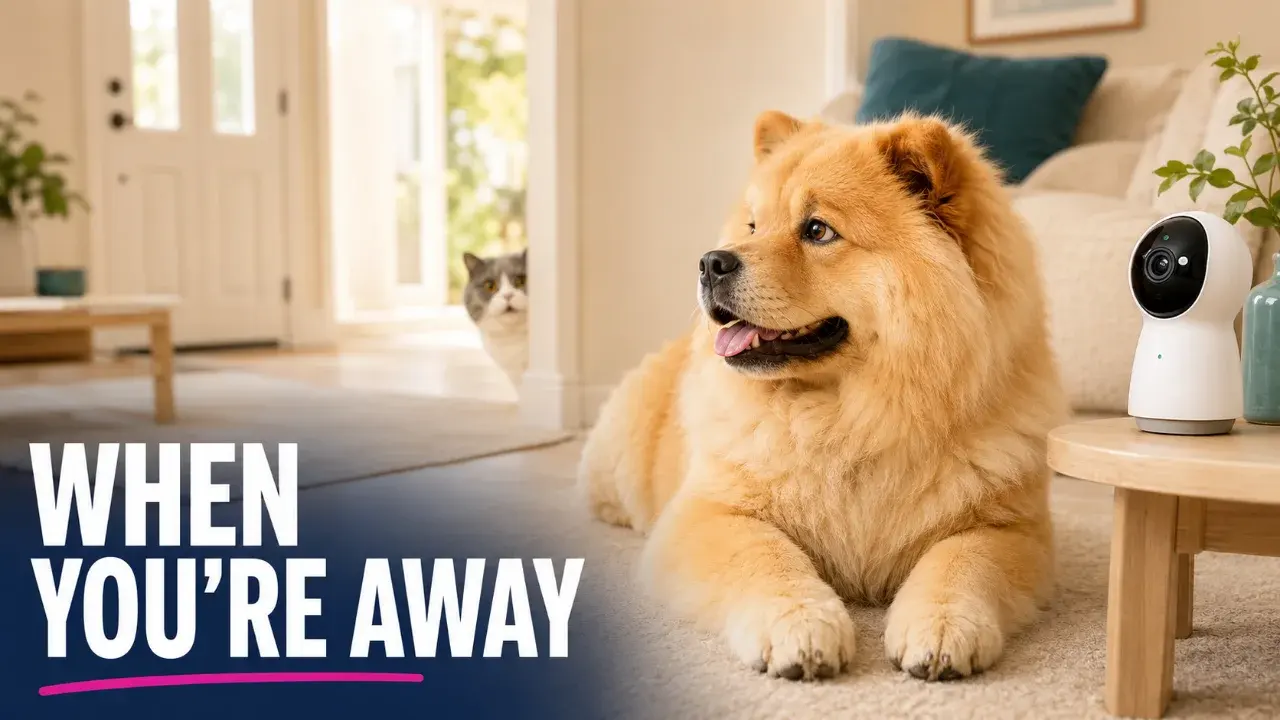
A camera cannot replace exercise, companionship, or veterinary care. Used thoughtfully, however, it can reveal hidden distress, identify triggers, and provide useful evidence when a pet’s behavior changes.
A pet camera’s greatest value is not the ability to say hello or dispense treats from another room. It is the chance to observe what an animal actually does when no one is watching.
That distinction matters because the evidence owners find after returning home—a damaged door, an accident on the floor, or an untouched meal—does not always reveal what caused it. Recorded video can show when a behavior began, how long it lasted, and what was happening around the pet at the time.
Cameras can uncover quiet signs of distress
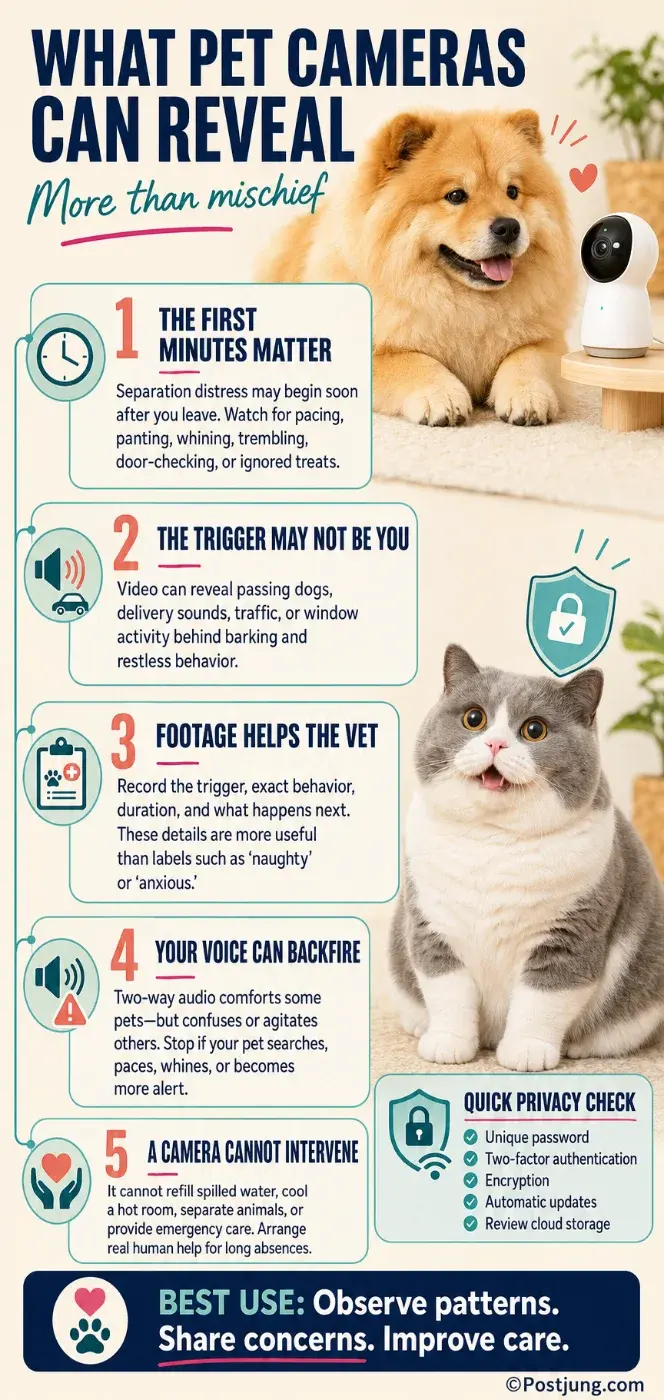
Dogs experiencing separation-related distress do not always destroy furniture or bark loudly enough for a neighbor to complain. Some pace, pant, tremble, remain near an exit, refuse food, or repeatedly move between a door and a window.
The Royal Society for the Prevention of Cruelty to Animals notes that signs may begin within minutes of an owner’s departure. It recommends occasionally using a camera to check for behaviors that would otherwise remain hidden.
A recording can also prevent owners from jumping to the wrong conclusion. Barking may be triggered by people passing a window, construction noise, another animal, or a delivery at the door. House soiling may have a medical, training, or environmental cause rather than separation anxiety.
The American Animal Hospital Association says footage can help document the onset, frequency, duration, and possible triggers of a behavioral problem. That information is more useful than simply describing a pet as “anxious,” “aggressive,” or “naughty.”
Video can help a veterinary team see the problem
Animals do not always display the same behavior in a veterinary clinic that they show at home. A clear recording can give a veterinarian or qualified behavior professional observable details such as posture, movement, vocalization, environmental triggers, and interactions with other pets.
Footage may be useful when investigating separation-related behavior, excessive grooming, nighttime restlessness, conflict in a multipet household, or unexplained episodes that could have a medical component.
It does not provide a diagnosis by itself. Panting, restlessness, vocalization, accidents, or changes in activity can have multiple causes. Owners should show concerning recordings to a veterinarian, especially when a behavior is new, severe, worsening, or accompanied by possible pain, breathing difficulty, collapse, self-injury, vomiting, or other physical symptoms.
Repeated recordings can also help a veterinary team compare behavior over time. For a pet undergoing a treatment or behavior-modification program, this may provide a more reliable picture of improvement than memory alone.
Start with observation, not constant intervention
A basic camera or spare device may be enough for an initial check. Position it where the pet usually rests or near the route between that area and the home’s main exit. Audio can remain useful even when the animal moves out of frame.
Owners testing how a dog copes alone can begin with a short, ordinary departure and review the recording afterward. The goal is to observe natural behavior—not deliberately provoke distress or leave an animal struggling for an extended period.
Features such as a wide field of view, night vision, motion alerts, and adequate recording storage may be more valuable than a treat launcher. The right setup depends on the animal, the home, and the behavior being investigated.
Two-way audio should be introduced cautiously. Some pets appear comfortable hearing a familiar voice, while others may become startled or search for an owner who is not physically present. VCA Animal Hospitals warns that some dogs can become more upset or confused by this feature. If speaking through the camera increases pacing, whining, searching, or agitation, it is better to stop and use the device only for observation.
A camera should not be used to scold a pet remotely. Punishment after or during a stress-related behavior can increase fear without addressing its cause.
A camera cannot provide hands-on care
Live video may reassure an owner, but it cannot take a dog outside, refill spilled water, separate fighting animals, cool an overheated room, or help a pet experiencing a medical emergency.
Alerts also need context. Motion notifications can be triggered by normal activity, while a camera’s field of view may miss a pet resting elsewhere. Owners should avoid assuming that no alert means no problem—or that repeated checking necessarily improves the animal’s welfare.
Pets still require appropriate exercise, enrichment, toilet opportunities, social contact, and arrangements for care during long absences. A camera is a source of information, not a substitute for those needs.
Do not overlook household privacy
An internet-connected pet camera can capture far more than a pet. It may record conversations, visitors, daily routines, or private areas of the home.
The U.S. Federal Trade Commission recommends replacing default credentials, using a strong password that is not reused elsewhere, enabling two-factor authentication when available, keeping the camera and its app updated, and using encryption. Owners should also review who can access recordings, how long cloud footage is retained, and whether remote viewing can be disabled.
The most useful pet camera is ultimately the one that answers a specific care question: Is the animal settling down? What triggers the barking? Which pet is involved? Is a treatment making a measurable difference?
Used that way, a camera does more than satisfy curiosity. It turns an unseen part of a pet’s day into evidence that can support calmer, more informed decisions.
SOURCES USED:
- RSPCA — Recognising separation-related behaviour and anxiety in dogs
- American Animal Hospital Association — Separation anxiety and the “pandemic puppy”
- American Animal Hospital Association — “Spying” on pets with clients
- VCA Animal Hospitals — Watching your watch dog: Home pet monitoring systems
- Federal Trade Commission — How to secure your home security cameras

เขียนโดย Postjung Insights
 5 ไอเทมป้องกันความร้อนให้บ้านแบบโบราณ! ภูมิปัญญาเก่าที่ช่วยบ้านเย็นลงได้ 3-5 องศา
 รู้หรือไม่? ความทรงจำวัยเด็กอาจไม่ได้เหมือนที่เราเคยจำ! สมองสามารถ “เติมเรื่อง” ให้เราได้
 ส่องเลข 3 สำนักพิมพ์ งวด 1 ต.ค. 69 ตัวไหนมีข้อมูลตรงกัน
 รู้หรือไม่? เปิดรายได้พนักงานส่งพัสดุของแต่ละแอป วันหนึ่งได้เท่าไร
 โรงเรียนที่มีนักเรียนมากที่สุดในไทย
 7 คันเบ็ดตกปลาโบราณ สายเรโทรยอมทุ่มเงินซื้อ! ยิ่งเก่า ยิ่งหายาก ยิ่งมีเรื่องราว
 เปิด 5 โรงเรียนหญิงล้วนเก่าแก่ของไทย ที่มีประวัติยาวนานกว่าศตวรรษ
 อำเภอที่มีชื่ออำเภอสั้นที่สุด 3 อำเภอเท่านั้นในประเทศไทย
 7 บทเพลงไวรัลยุคโบราณ! เพลงงานวัดที่เปิดเมื่อไหร่ คนก็ลุกขึ้นรำวงเมื่อนั้น
 ตาราง “เด่นเหนือเด่นใต้” งวด 1 ต.ค. 69 เปิดข้อมูลตามโพย เลขไหนอยู่ตรงไหน
 โรงเรียนชายล้วนแห่งแรกของไทยคือที่ไหน? ย้อนดูจุดเริ่มต้นโรงเรียนสวนกุหลาบวิทยาลัย
 5 เมนูอาหารไทยโบราณที่หาทานยาก ชื่อคุ้นหู แต่คนรุ่นใหม่อาจไม่เคยชิมอำเภอที่มีชื่ออำเภอสั้นที่สุด 3 อำเภอเท่านั้นในประเทศไทย
 English Edition