What pet owners should know before buying a wellness plan

A wellness plan can spread routine veterinary costs across the year, but it usually will not protect you from a large emergency bill. Its value depends on the services included, the provider’s regular prices, and the contract terms.
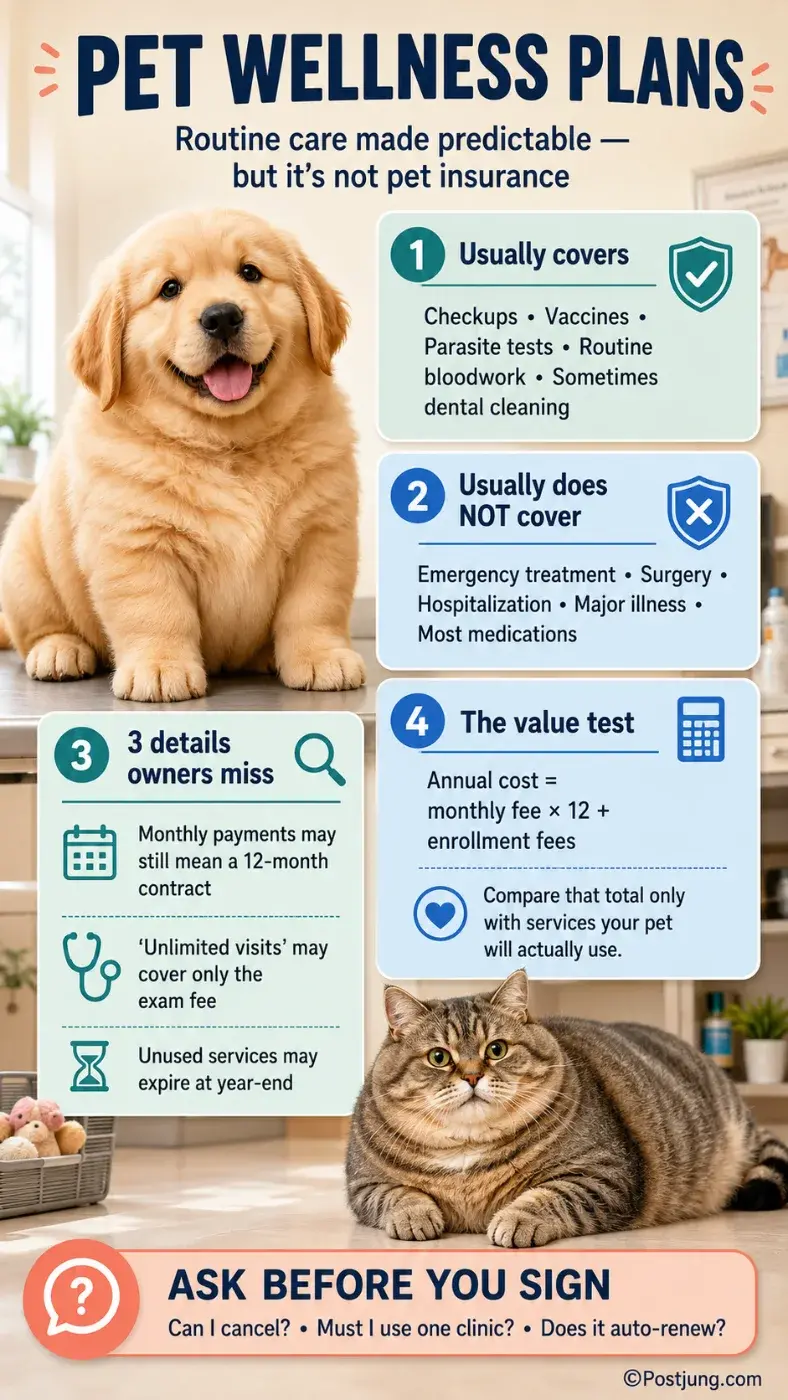
A pet wellness plan is generally a prepaid package for routine veterinary care, not financial protection against an unpredictable accident or illness. That distinction matters: paying monthly for vaccines and checkups does not necessarily help if a pet later needs emergency surgery, hospitalization, or treatment for cancer.
These plans can still be useful. They may make preventive care easier to budget for and encourage owners to keep appointments throughout the year. The sensible way to evaluate one, however, is to compare the full contract with the care an individual pet actually needs—not simply the advertised monthly payment.
What a wellness plan usually includes
Coverage varies widely, but common services include physical examinations, vaccinations, parasite screening, blood or urine tests, microchipping, and routine deworming. Higher-tier plans may include dental cleaning, spaying or neutering, or additional diagnostic tests.
Some plans also advertise unlimited office visits. Owners should check whether that means only the examination fee is included. Medication, imaging, laboratory work, procedures, and treatment performed during the same visit may still cost extra.
Preventive care itself should be individualized. The World Small Animal Veterinary Association says health checks and preventive plans should take account of factors such as a pet’s age, breed, lifestyle, environment, and travel. A young indoor cat, a senior dog with chronic health concerns, and a puppy that needs an initial vaccine series will not require identical services. WSAVA’s vaccination guidelines recommend regular health checks with care tailored to the animal rather than a one-size-fits-all schedule.
A wellness plan is not the same as pet insurance
Pet insurance generally transfers some of the financial risk from unexpected eligible accidents or illnesses to an insurer. Depending on the policy, the owner may pay a deductible or excess, cover a percentage of the bill, and submit a claim for reimbursement.
A non-insurance wellness plan normally sells a defined bundle of services that can be used during a specific period. In the United States, the National Association of Insurance Commissioners’ model law says non-insurance wellness programs must not be marketed as pet insurance and their prices and terms should be presented separately. Actual consumer protections depend on the law adopted in each state or country. NAIC’s consumer guidance likewise describes wellness programs as a separate tool for services such as examinations and vaccinations.
The terminology is not perfectly consistent. An insurer may offer “wellness” or “routine care” benefits as an optional addition to an insurance policy, while a veterinary clinic may sell a similarly named membership that is not insurance at all. The contract—not the product name—reveals which one is being offered.
Calculate value using services you will actually use
Start with the plan’s total annual cost:
Monthly payment × number of payments + enrollment fees and required add-ons
Then request the clinic’s regular, itemized prices for the included services. Add only the services that your veterinarian recommends and that you realistically expect to use during that plan year.
If the useful services would cost $400 separately and the plan costs $480, the plan does not produce a direct saving, even if its full brochure lists benefits supposedly worth much more. Convenience or predictable payments may still have value, but they should not be confused with a discount.
Ask whether unused benefits expire. A bundle can look attractive on paper but offer poor value if several included tests, visits, or procedures are unnecessary for that particular pet—or if the owner cannot schedule them before the plan ends.
Read the commitment and cancellation terms
Monthly billing does not always mean month-to-month membership. Some plans are yearlong agreements whose cost is merely divided into installments.
For example, VCA states that its CareClub plans run for a full year and generally cannot be canceled during that term except in specified circumstances. Some versions also renew annually unless renewal is turned off. These are examples of one provider’s rules, not universal terms, but they show why owners should read the agreement before enrolling. VCA CareClub’s current plan information lists its inclusions, annual term, and cancellation limitations.
Before signing, obtain clear answers to these questions:
- Is this insurance, an insurance add-on, or a service contract?
- Which services and quantities are included?
- Are there per-service or annual benefit limits?
- Must all care be received at one clinic or network?
- Are emergency treatment, medication, imaging, and hospitalization excluded?
- What happens if the pet dies, is rehomed, or the owner moves?
- Can the plan be transferred to another clinic or pet?
- Is early cancellation allowed, and could used services become payable at full price?
- Does the agreement renew automatically?
- How and when must non-renewal be requested?
Who may benefit most
A wellness plan may suit an owner who wants predictable routine-care expenses, intends to remain with the participating clinic, and expects to use most of the included services. Puppies, kittens, and some senior pets may have more scheduled care during a year, although suitability still depends on the individual animal and the package.
It may be less useful for someone who changes clinics frequently, already receives preventive care elsewhere, or would leave several benefits unused. It is also an incomplete solution for anyone whose main concern is a sudden, expensive veterinary bill.
The clearest approach is to give preventive care and emergency risk separate consideration. Compare a wellness plan with paying routine expenses directly, then independently decide whether insurance, dedicated savings, or another financial arrangement is needed for unexpected treatment.
A veterinarian can help determine which preventive services fit the pet. Questions about insurance coverage, cancellation rights, or contract disputes should be checked with the provider and the relevant consumer or insurance authority where the owner lives.
SOURCES USED:
- American Veterinary Medical Association — Preventive pet healthcare
- National Association of Insurance Commissioners — Pet insurance consumer guidance
- National Association of Insurance Commissioners — Pet Insurance Model Act
- World Small Animal Veterinary Association — 2024 guidelines for the vaccination of dogs and cats
- North American Pet Health Insurance Association — Pet Insurance Buying Guide
- VCA Animal Hospitals — CareClub Pet Wellness Plans

เขียนโดย Postjung Insights
 รู้หรือไม่? เปิดรายได้พนักงานส่งพัสดุของแต่ละแอป วันหนึ่งได้เท่าไร
 เปิด 5 โรงเรียนหญิงล้วนเก่าแก่ของไทย ที่มีประวัติยาวนานกว่าศตวรรษ
 ถ้าไม่กลัวเหนื่อย 7 อาชีพที่ตลาดยังต้องการ และค่าทักษะไปถึง 800 บาท/วัน
 โรงเรียนที่มีนักเรียนมากที่สุดในไทย
 หัวลูกศรหินย้อนเวลา 80,000 ปี ในเอเชียกลาง… หลักฐานใหม่ชี้ โฮโม เซเปียนส์ อาจเคยบุกยุโรปเร็วขึ้นนับหมื่นปี!
 อำเภอที่มีชื่ออำเภอสั้นที่สุด 3 อำเภอเท่านั้นในประเทศไทย
 ฝูงลิงญี่ปุ่นนับสิบรุมล้อมและโจมตีชายคนหนึ่งในคานากาวะ
 ยูเครนขอจัดการประชุมสุดยอดกับญี่ปุ่น
 โรงเรียนเพียงแห่งเดียวของประเทศไทย ที่อยู่มาตั้งแต่ยุครัชกาลที่ 4
 ตาราง “เด่นเหนือเด่นใต้” งวด 1 ต.ค. 69 เปิดข้อมูลตามโพย เลขไหนอยู่ตรงไหน
 ลืมเปิด โหมดเครื่องบิน อันตรายไหม เฉลยความจริง ทำไมแอร์ยังย้ำให้เปิด
 อินฟลูเอนเซอร์สาวผู้สร้างคอนเทนต์สำหรับผู้ใหญ่และมีรายได้ต่อปีกว่า 33 ล้านบาท ตัดสินใจเปลี่ยนอาชีพมาเป็นแพทย์แทนเปิด 5 โรงเรียนหญิงล้วนเก่าแก่ของไทย ที่มีประวัติยาวนานกว่าศตวรรษหัวลูกศรหินย้อนเวลา 80,000 ปี ในเอเชียกลาง… หลักฐานใหม่ชี้ โฮโม เซเปียนส์ อาจเคยบุกยุโรปเร็วขึ้นนับหมื่นปี!ถ้าไม่กลัวเหนื่อย 7 อาชีพที่ตลาดยังต้องการ และค่าทักษะไปถึง 800 บาท/วัน
 ทำไมแผนที่ส่วนใหญ่เอาทิศเหนือไว้ด้านบน ทั้งที่โลกไม่มี “ด้านบน” จริง ๆ?
 English Edition