What to Put in a Pet Emergency Kit Before You Need to Evacuate
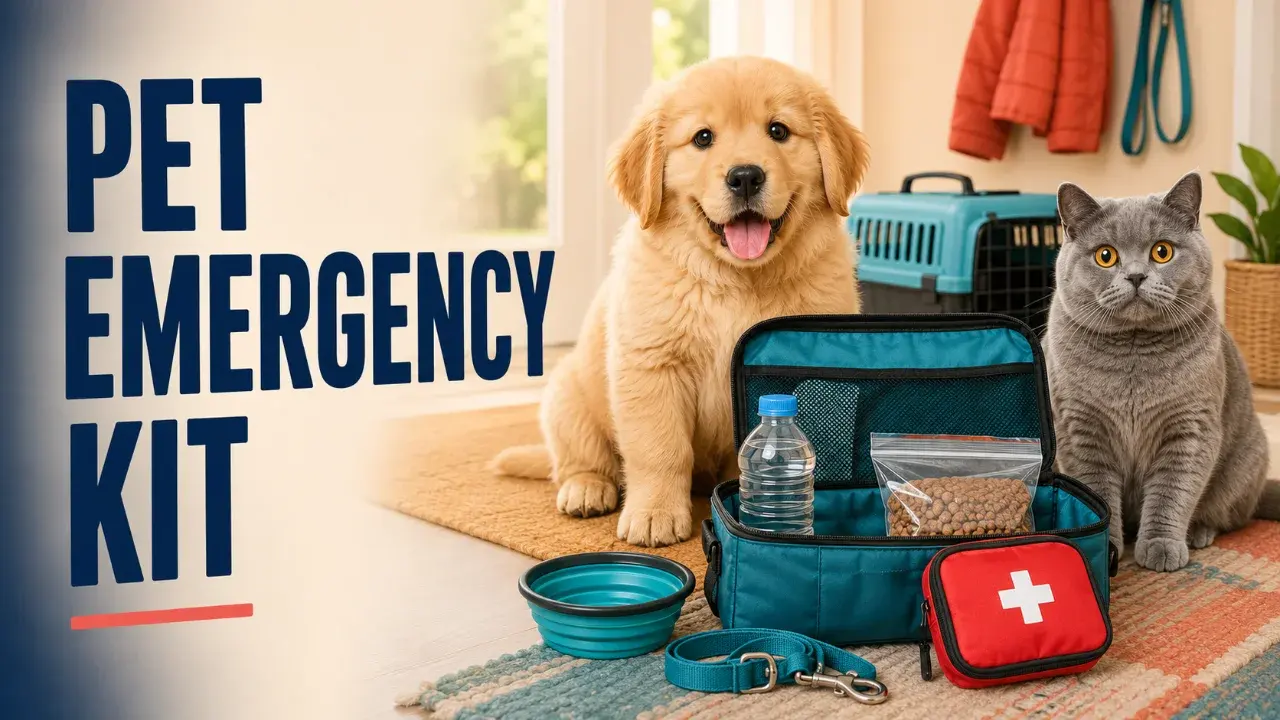
A useful pet emergency kit needs more than food and a leash. Pack enough supplies, medicine, identification, medical records, and sanitation equipment to keep each animal safe if you must leave home quickly.
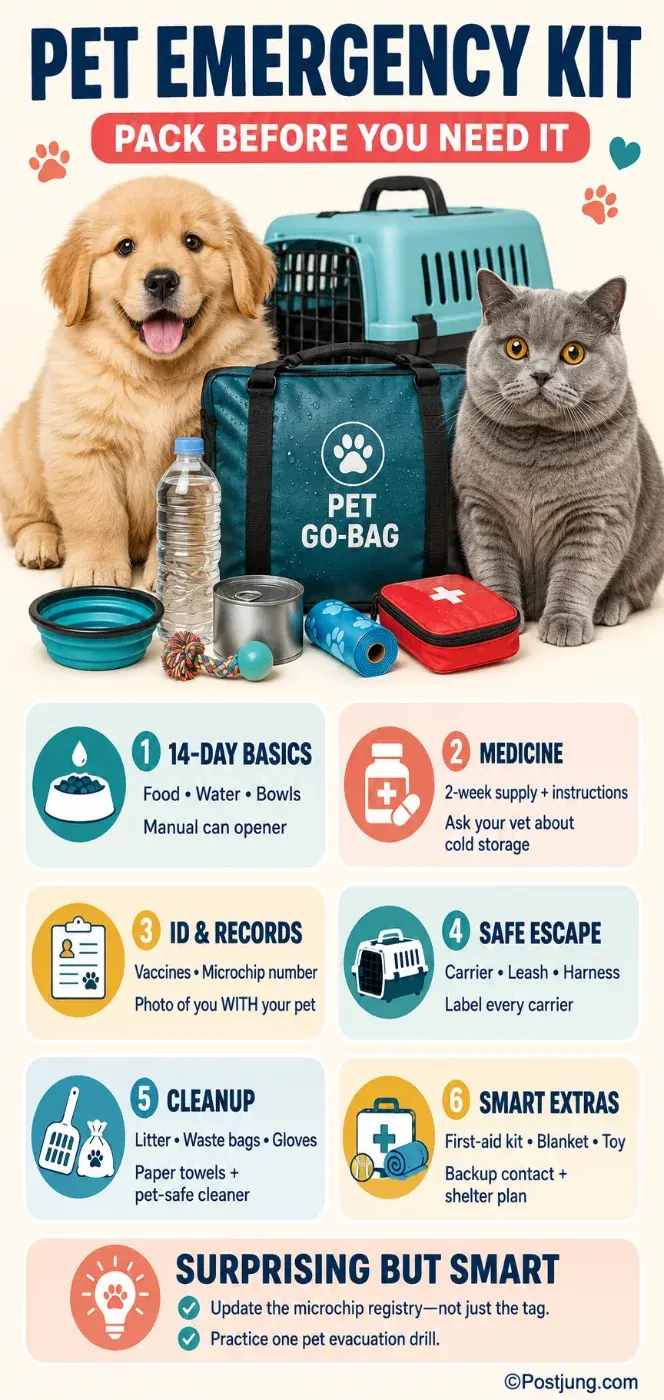
An effective pet emergency kit should keep each animal fed, identifiable, contained, and medically supported if you must evacuate without warning. Current guidance from the U.S. Centers for Disease Control and Prevention recommends preparing up to a two-week supply of food, water, and necessary medications for each pet.
The kit should be assembled before an emergency, stored somewhere accessible, and packed in waterproof containers or easy-to-carry bags. Do not assume there will be time to gather prescriptions, find a carrier, or download vaccination records after an evacuation order arrives.
Food, water, and medicine for each pet
Pack a two-week supply of your pet’s usual food in sealed, waterproof containers. Sudden dietary changes can be difficult during an already stressful evacuation, so rotate the stored food before it expires rather than relying on unfamiliar emergency products.
Include enough drinking water for each animal, along with non-spill bowls and a manual can opener if the food requires one. If the full water supply is too heavy for one bag, divide it among clearly marked, grab-ready containers.
Do not allow pets to drink floodwater or stagnant water after a disaster. Such water may contain chemicals, waste, harmful bacteria, or disease-causing organisms.
For pets taking prescription medicine, pack:
- A two-week supply when your veterinarian and local dispensing rules allow
- Written medication names, doses, and schedules
- Copies of current prescriptions
- Any equipment needed to administer the medicine
- Your regular veterinarian’s contact information
- Details for an emergency veterinary clinic near your intended destination
The CDC also recommends keeping a one-month supply of the flea, tick, and heartworm preventives your pet normally uses. Ask your veterinarian how to prepare medications requiring refrigeration or special storage.
Identification and records that can reunite you
A collar and tag can be lost, while a microchip is useful only if its registration details are current. Use both whenever appropriate for the animal.
Pack a waterproof document pouch containing:
- Vaccination records, including the rabies certificate
- A medical summary and medication history
- Microchip number and registry contact details
- Proof of ownership or adoption records
- Pet insurance information, if applicable
- A written description of the pet, including color, sex, breed, weight, and distinguishing marks
- Contact details for the owner and an out-of-area emergency contact
- Recent photographs of the pet
- A photograph showing the owner with the pet
The last image can help establish the relationship between an animal and its owner if they become separated. Keep copies on a phone as well as printed copies in the kit, since batteries and internet connections may be unavailable.
Label every carrier with the pet’s name and the owner’s current phone number and address.
Safe transport and restraint
Keep an appropriate carrier or crate near the exit for every pet that requires one. Dogs should have a sturdy leash, harness, backup collar, and identification tag. Cats and smaller animals need a secure carrier they cannot push open when frightened.
A carrier is much less useful if the animal refuses to enter it. The CDC advises owners to practice placing pets in their carriers and rehearse a household evacuation. Learn where a frightened pet tends to hide and decide in advance who will retrieve each animal.
Include familiar bedding, a towel, blanket, or small toy if space permits. These are not substitutes for essential supplies, but a familiar scent may help reduce stress in an unfamiliar environment.
Sanitation and first-aid supplies
Waste management can become a health issue in crowded shelters or temporary accommodation. Pack:
- Waste bags for dogs
- A litter box, scoop, litter, and disposal bags for cats
- Paper towels
- Trash bags
- Disposable gloves
- Pet-safe cleaning and disinfecting supplies
- Cage liners when appropriate
Add a veterinarian-approved pet first-aid kit and a pet first-aid guide. First aid may help stabilize an animal while professional care is being arranged, but the CDC warns that it is not a substitute for veterinary treatment.
Injured or frightened pets may bite or scratch even if they are normally gentle. Handle them slowly, keep your face away from their mouth, and avoid putting yourself or other people at risk.
A packed bag cannot replace an evacuation plan
Some public evacuation centers do not admit household pets, although rules for trained service animals may differ. Identify pet-friendly shelters, hotels, boarding facilities, veterinary hospitals, friends, or relatives along more than one evacuation route.
Create a buddy arrangement with a trusted neighbor who can reach and evacuate your pets if you are away from home. Give that person access instructions, care directions, your contact details, and written authorization describing what veterinary treatment they may approve.
The FDA recommends taking pets with you whenever possible. Leaving an animal behind can expose it to injury, escape, contaminated water, heat, fire, or delayed rescue.
Review the kit regularly. Replace expired food, water, medication, batteries, and preventives; update photographs and medical records; and confirm that every harness and carrier still fits.
Specialized pets—including birds, reptiles, fish, rabbits, and other small animals—may need temperature control, species-specific food, or specialized transport. Ask a veterinarian familiar with that species to adapt the kit rather than relying solely on a dog-and-cat checklist.
The best pet emergency kit is not necessarily the biggest. It is the one that is complete, current, labeled, easy to reach, and paired with a plan the household has already practiced.
SOURCES USED:
- Centers for Disease Control and Prevention — Build a Pet Disaster Preparedness Kit
- Centers for Disease Control and Prevention — Be Prepared: Pet Safety in Emergencies
- Centers for Disease Control and Prevention — Pets in Evuation Centers
- U.S. Food and Drug Administration — Take Care of Your Pets Before Disaster Strikes

เขียนโดย Postjung Insights
 รู้หรือไม่? เปิดรายได้พนักงานส่งพัสดุของแต่ละแอป วันหนึ่งได้เท่าไร
 โรงเรียนที่มีนักเรียนมากที่สุดในไทย
 เลขเด็ดปฏิทิน "หลวงปู่โต๊ะ" งวดวันที่ 1 ตุลาคม 69..ส่องเลย เลขไหนให้โชค!
 จุฬาฯ มหาวิทยาลัยแห่งแรกของไทย มีจุดเริ่มต้นในสมัยรัชกาลที่ 5
 5 คณะที่เรียนจบมาแล้ว มีอาชีพรองรับมากกว่าที่คิด
 ตาราง “เด่นเหนือเด่นใต้” งวด 1 ต.ค. 69 เปิดข้อมูลตามโพย เลขไหนอยู่ตรงไหน
 อำเภอที่มีชื่ออำเภอสั้นที่สุด 3 อำเภอเท่านั้นในประเทศไทย
 สถิติย้อนหลัง 10 ปี ออกเลขไหนบ้างมาดูกัน
 อุทยานเขาใหญ่เรียกตัว “ตีนผี” หลังขับจี้ช้างป่าพ่อลูก ลั่นระยะ 50 เมตรต้องจำให้ขึ้นใจ
 เปิดรายชื่อโรงเรียนในไทยที่ “ว่ายน้ำ” อยู่ในหลักสูตร เรียนจริงตั้งแต่อนุบาลถึงมัธยม
 Google ยอมรับแล้ว! Gemini AI เข้าถึงระบบบริษัทจริง 3 แห่ง ระหว่างการทดสอบความปลอดภัย
 ทำไมของพลาสติกเก่าบางชิ้นถึง “เหนียว” ขึ้นมาเอง ทั้งที่ไม่ได้เปื้อนอะไร?5 คณะที่เรียนจบมาแล้ว มีอาชีพรองรับมากกว่าที่คิดเปิดรายชื่อโรงเรียนในไทยที่ “ว่ายน้ำ” อยู่ในหลักสูตร เรียนจริงตั้งแต่อนุบาลถึงมัธยมGoogle ยอมรับแล้ว! Gemini AI เข้าถึงระบบบริษัทจริง 3 แห่ง ระหว่างการทดสอบความปลอดภัยเลขเด็ดปฏิทิน "หลวงปู่โต๊ะ" งวดวันที่ 1 ตุลาคม 69..ส่องเลย เลขไหนให้โชค!ทำไมของพลาสติกเก่าบางชิ้นถึง “เหนียว” ขึ้นมาเอง ทั้งที่ไม่ได้เปื้อนอะไร?อุทยานเขาใหญ่เรียกตัว “ตีนผี” หลังขับจี้ช้างป่าพ่อลูก ลั่นระยะ 50 เมตรต้องจำให้ขึ้นใจ
 English Edition