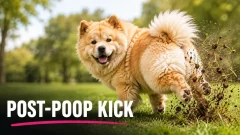
Why dogs lick their paws after walks—and when to worry

A little post-walk licking may follow contact with dirt or outdoor irritants. Persistent licking, limping, redness, or swelling can signal allergies, injury, infection, or something lodged between the toes.
A dog that starts licking its paws immediately after a walk may be reacting to something encountered outside. Dirt, plant material, rough ground, allergens, heat, and chemicals can all affect the feet, while a thorn, damaged nail, or small cut may make one paw suddenly painful.
The timing offers a useful clue, but paw licking alone cannot identify the cause. The number of paws involved, visible changes to the skin, and the dog’s behavior help determine whether a quick rinse is enough or a veterinarian should take a closer look.
One paw or several?
Sudden attention to one paw often points toward a localized problem. Check for a small stone, splinter, grass awn, burr, cracked pad, cut, insect sting, or damaged nail.
The MSD Veterinary Manual notes that lesions associated with foreign material such as grass awns are commonly solitary and often appear on a front foot. A dog with a painful paw may also limp, avoid putting weight on it, or resist having it touched.
Repeated licking of several paws—particularly when accompanied by itchy ears, facial rubbing, or irritated skin elsewhere—can fit the pattern of environmental allergies. Dogs with atopic dermatitis commonly lick or chew their paws because the feet are among the areas frequently affected by itching.
Seasonal pollen and contact with grass may contribute to flare-ups in susceptible dogs. Food allergies can also cause itchy feet, but the fact that licking happens after a walk does not prove grass or pollen is responsible. Veterinary evaluation may be needed to separate allergies from parasites, infection, injury, and other skin disorders.
Outdoor surfaces can leave an irritating residue
A dog does not have to be allergic to experience irritation after a walk. Lawn treatments, cleaning agents, road residue, and de-icing salts may remain on the paws and prompt licking.
De-icers deserve particular attention in colder regions. The ASPCA advises wiping or rinsing a dog’s paws after walking through treated areas because these products may irritate the feet. Licking the residue can also expose the dog’s mouth and digestive system to the chemicals.
Hot pavement and rough terrain can damage paw pads as well. A dog may not show discomfort until the walk is over, so inspect the pads if the animal begins licking soon after returning home.
Moisture trapped between the toes may compound an existing skin problem. Repeated licking then keeps the area damp and creates more irritation. MSD’s veterinary guidance notes that licking associated with allergic or irritant dermatitis can traumatize the skin and contribute to painful inflammation between the toes.
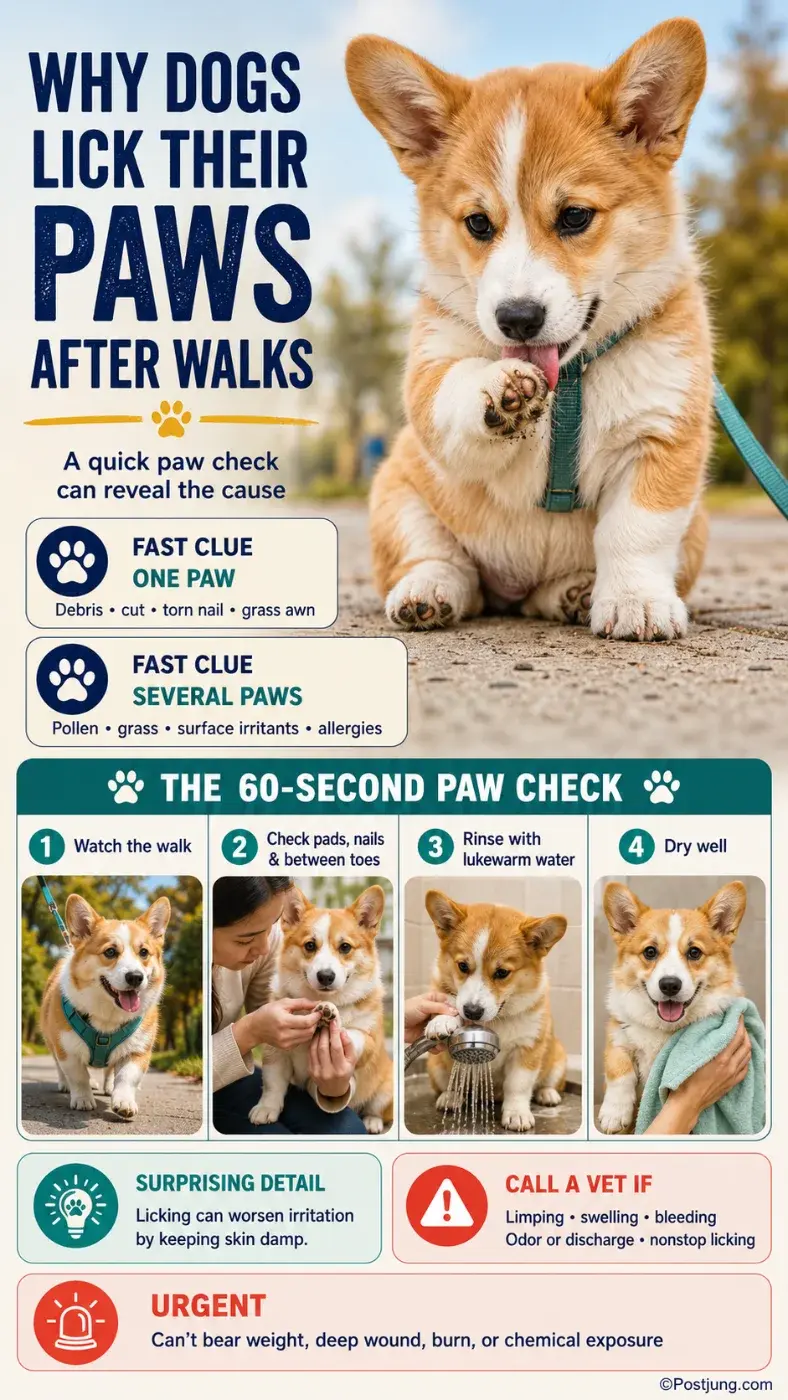
A quick post-walk paw check
If the dog is otherwise comfortable and the paw has no serious wound, begin with a calm inspection:
- Watch the dog walk before handling the foot. Look for limping, shortened steps, or reluctance to bear weight.
- Examine every pad, the spaces between the toes, and the area around each nail.
- Look for redness, swelling, cracks, blisters, punctures, seeds, burrs, or sticky residue.
- Rinse dirty or exposed paws with plain lukewarm water, then dry them carefully, including between the toes.
- Monitor whether the licking stops once the paws are clean and dry.
Do not dig deeply into the paw or pull forcefully on an embedded object. Grass awns and similar plant material can penetrate farther beneath the skin, where veterinary removal may be necessary.
Avoid applying human pain creams, medicated ointments, essential oils, or antiseptics unless a veterinarian confirms that the product and concentration are safe for the dog. Anything placed on a paw may be swallowed during licking.
When paw licking needs veterinary attention
Contact a veterinarian if licking is persistent, repeatedly returns after walks, or begins damaging the skin. An appointment is also warranted for:
- Limping or refusal to bear weight
- Significant redness, heat, or swelling
- Bleeding, an open wound, blistering, or a torn nail
- A lump or sore between the toes
- Discharge, crusting, moisture, or an unusual odor
- Hair loss or darkened skin caused by chronic licking
- Pain or aggression when the paw is touched
- Itching affecting several paws, the ears, face, or abdomen
Cornell University’s College of Veterinary Medicine identifies excessive licking of one area, limping, reluctance to exercise, and reactions to touch as potential signs of pain.
Seek prompt help for a deep wound, suspected burn, rapidly increasing swelling, an embedded object that cannot be removed easily, or possible chemical exposure. If a dog licked a potentially toxic substance and develops vomiting, diarrhea, drooling, tremors, weakness, or seizures, contact a veterinarian or animal poison service immediately.
Brief licking that stops after the feet are cleaned may reflect a passing outdoor irritation. Licking that continues is not simply a grooming habit to ignore: it can intensify inflammation and hide a problem developing beneath the fur.
SOURCES USED:

เขียนโดย Postjung Insights
 5 คณะที่เรียนจบมาแล้ว มีอาชีพรองรับมากกว่าที่คิด
 รู้หรือไม่? เปิดรายได้พนักงานส่งพัสดุของแต่ละแอป วันหนึ่งได้เท่าไร
 เปิดรายชื่อโรงเรียนในไทยที่ “ว่ายน้ำ” อยู่ในหลักสูตร เรียนจริงตั้งแต่อนุบาลถึงมัธยม
 อำเภอที่มีชื่ออำเภอสั้นที่สุด 3 อำเภอเท่านั้นในประเทศไทย
 ตาราง “เด่นเหนือเด่นใต้” งวด 1 ต.ค. 69 เปิดข้อมูลตามโพย เลขไหนอยู่ตรงไหน
 โรงเรียนที่มีนักเรียนมากที่สุดในไทย
 Google ยอมรับแล้ว! Gemini AI เข้าถึงระบบบริษัทจริง 3 แห่ง ระหว่างการทดสอบความปลอดภัย
 เลขเด็ดปฏิทิน "หลวงปู่โต๊ะ" งวดวันที่ 1 ตุลาคม 69..ส่องเลย เลขไหนให้โชค!
 สถิติย้อนหลัง 10 ปี ออกเลขไหนบ้างมาดูกัน
 อุทยานเขาใหญ่เรียกตัว “ตีนผี” หลังขับจี้ช้างป่าพ่อลูก ลั่นระยะ 50 เมตรต้องจำให้ขึ้นใจ
 ดอลลาร์จะล่มสลายจริงไหม?
 ถ้าไม่กลัวเหนื่อย 7 อาชีพที่ตลาดยังต้องการ และค่าทักษะไปถึง 800 บาท/วัน
 😃 ชวนเข้ามาดูกันอีกกับคนที่มีร่างกายพิเศษจนเหมือนมีกล่องสมบัติที่หายาก 😯5 คณะที่เรียนจบมาแล้ว มีอาชีพรองรับมากกว่าที่คิดเปิดรายชื่อโรงเรียนในไทยที่ “ว่ายน้ำ” อยู่ในหลักสูตร เรียนจริงตั้งแต่อนุบาลถึงมัธยมGoogle ยอมรับแล้ว! Gemini AI เข้าถึงระบบบริษัทจริง 3 แห่ง ระหว่างการทดสอบความปลอดภัยเลขเด็ดปฏิทิน "หลวงปู่โต๊ะ" งวดวันที่ 1 ตุลาคม 69..ส่องเลย เลขไหนให้โชค!
 ทำไมของพลาสติกเก่าบางชิ้นถึง “เหนียว” ขึ้นมาเอง ทั้งที่ไม่ได้เปื้อนอะไร?
 English Edition