Why calming pet beds are not a cure for anxiety
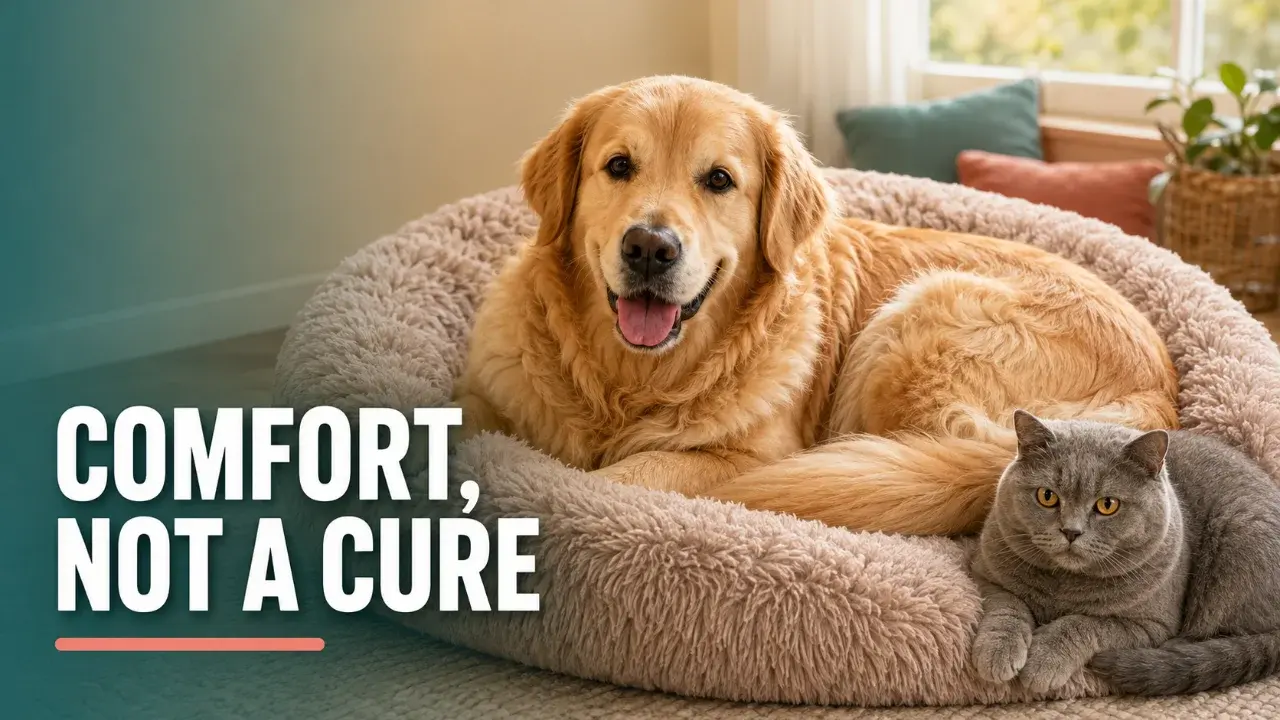
A soft, sheltered bed may help a dog or cat settle, but anxiety has many possible triggers. The bed works best as one part of a safe environment, consistent routine, and appropriate behavioral or veterinary care.
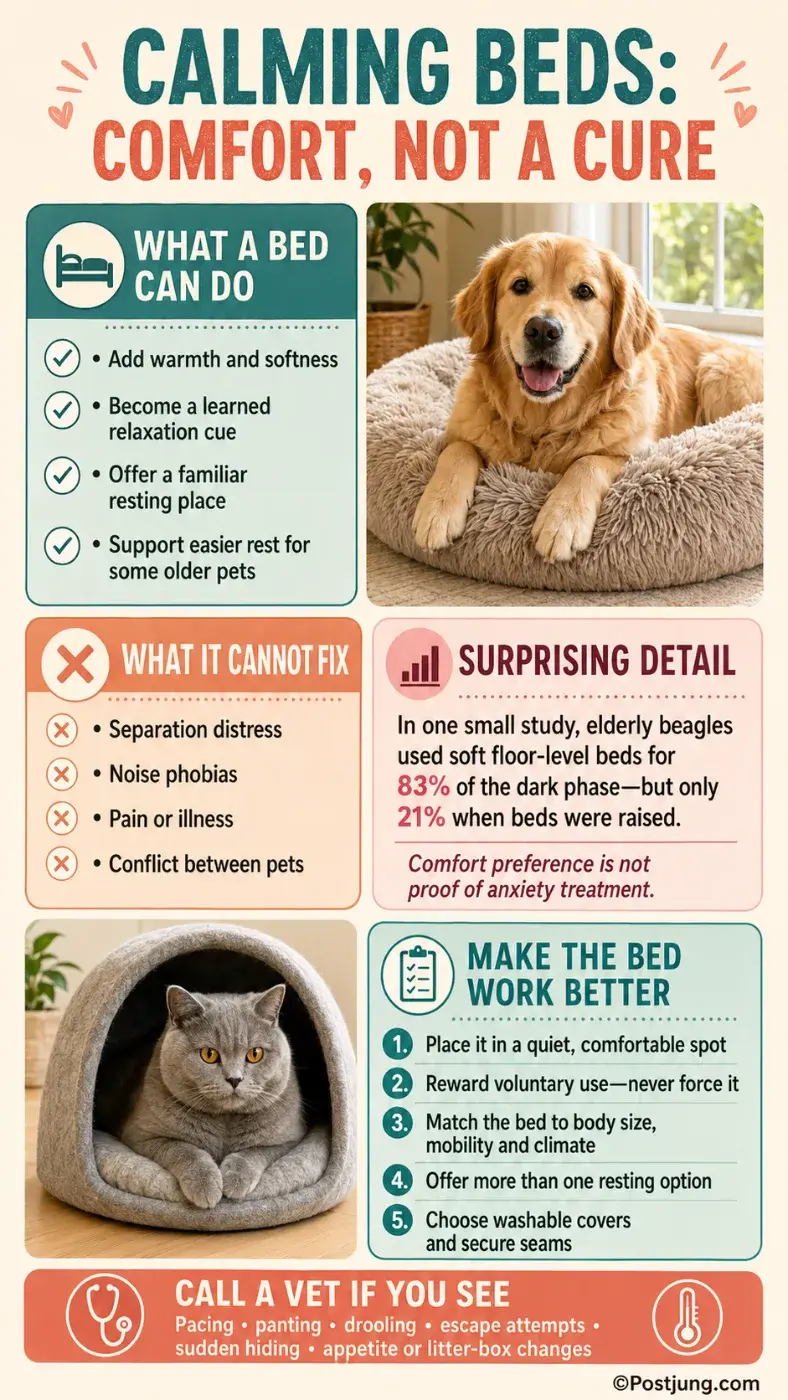
A “calming” pet bed may provide warmth, softness, and a familiar place to rest. What it cannot do is remove separation distress, noise phobia, pain, conflict between pets, or another underlying cause of anxiety.
That distinction matters because an animal curled inside a plush bed is not necessarily an animal whose anxiety has been treated. Veterinary behavior guidance supports comfortable resting places, environmental management, and relaxation training—but not the idea that a particular bed shape or fabric works as a stand-alone cure.
Comfort is real, but the anxiety claim is much bigger
Beds sold as calming products commonly have deep cushioning, raised rims, or shaggy fabric intended to create a sheltered feeling. Those features may suit animals that like to curl up, lean against a surface, or hide part of their body.
There is evidence that dogs value comfortable bedding. A small 2018 study involving laboratory beagles found that the dogs frequently chose soft resting areas, while elderly dogs used beds at floor level much more than elevated beds. However, the research examined bed use and preference—not whether a commercial calming bed treated anxiety.
That is an important limitation. A bed can improve physical comfort without changing the emotional response to thunder, being left alone, unfamiliar visitors, or tension with another animal.
Individual preference also matters. A long-coated dog in a warm climate may choose cool tile over a thick, heat-trapping bed. A senior dog may avoid a high rim that is difficult to step across. One cat may want an enclosed cave near the floor, while another feels safer on an elevated perch with a clear view of the room.
If a pet repeatedly sleeps beside an expensive bed rather than inside it, that is useful information—not stubbornness.
The bed can become a relaxation cue
The most useful feature of a bed may be what the animal learns there.
The Merck Veterinary Manual notes that learning to relax on a designated bed or mat can help a dog manage arousal during controlled behavior exercises. The surface itself is not producing that change. Repeated calm experiences, rewards, predictable routines, and carefully managed exposure build the association.
Owners can encourage that association by placing the bed in a quiet but socially comfortable location and rewarding the pet for approaching or resting there voluntarily. Treats, a safe chew, gentle attention, or a favorite toy can make the area more valuable.
Forcing an anxious animal into the bed, shutting it in an unfamiliar crate, or physically holding it there can have the opposite effect. Confinement can intensify distress in some dogs, particularly those with barrier or separation anxiety.
Cats have different environmental priorities. The Feline Veterinary Medical Association and International Society of Feline Medicine recommend access to private, secure safe places, often in elevated locations. They also emphasize choice: resting areas should be distributed around the home, especially where several cats live together.
A calming bed is therefore only one possible safe place. A familiar carrier, cardboard box, padded shelf, folded blanket, or quiet chair may serve the same purpose more successfully.
Match the bed to the animal, not the label
Before paying extra for the word “calming,” look at practical features:
- The pet can stretch out or curl up without being cramped.
- Entry is low enough for an older, painful, or mobility-impaired animal.
- The material suits the room temperature and the pet’s coat.
- The filling does not collapse into an unstable hollow.
- Covers are removable and washable.
- Loose fibers, foam, and fasteners cannot be easily swallowed.
- The location is away from persistent noise, foot traffic, or competition with another pet.
Offer the bed without immediately removing the animal’s existing sleeping options. Observing where the pet rests, at what temperature, and in which position can reveal more than a product description.
For dogs, a simple mat may be especially useful for relaxation training because it is portable. The same learned cue can then be used in another room or a controlled unfamiliar setting.
Persistent anxiety needs more than furniture
Dogs experiencing separation distress may pace, vocalize, salivate, destroy doors or belongings, eliminate indoors, refuse food, or remain unable to settle. Video recorded during a brief absence can help a veterinarian determine when the behavior starts and whether outside noises, confinement, or departure cues are involved.
Cats may express distress less obviously through prolonged hiding, aggression, spraying, reduced activity, changes in appetite, or altered litter-box behavior.
These signs do not always have a purely behavioral cause. Pain, sensory decline, cognitive dysfunction, urinary disease, and other medical conditions can produce behavior that resembles anxiety. A sudden or severe change deserves veterinary assessment rather than another accessory.
The American Animal Hospital Association describes comprehensive behavioral treatment as a combination of environmental management, behavior modification or training, and medication when appropriate. Treatment must be matched to the trigger and the individual animal.
A well-chosen bed still has value. It can provide comfort, choice, and a dependable place where calm behavior is practiced. Its benefit comes from fitting into the pet’s wider environment—not from a magical material hidden beneath the cover.
SOURCES USED:
- Merck Veterinary Manual — Behavior Problems of Dogs — https://www.merckvetmanual.com/behavior/behavior-of-dogs/behavior-problems-of-dogs
- American Animal Hospital Association — Changing Behaviors — https://www.aaha.org/resources/2015-aaha-canine-and-feline-behavior-management-guidelines/changing-behaviors/
- VCA Animal Hospitals — Separation Anxiety in Dogs — https://vcahospitals.com/know-your-pet/separation-anxiety-in-dogs
- Journal of Veterinary Behavior — Use of Beds by Laboratory Beagles — https://www.sciencedirect.com/science/article/abs/pii/S1558787817302125
- Feline Veterinary Medical Association — 2013 AAFP/ISFM Environmental Needs Guidelines — https://catvets.com/resource/aafp-isfm-environmental-needs-guidelines/

เขียนโดย Postjung Insights
 คุณนุชออกโรงชี้แจง ปมมีภาพถ่ายร่วมสัมภาษณ์ “หนุ่ม กรรชัย” ยอมรับผิด พร้อมขอโทษทุกฝ่าย
 รู้หรือไม่? เปิดรายได้พนักงานส่งพัสดุของแต่ละแอป วันหนึ่งได้เท่าไร
 เลขขายดีงวดนี้ 1 ตุลาคม 2569 สำรวจกระแสเลขเด่นก่อนหวยออก พร้อมวิธีอ่านข้อมูลอย่างมีสติ
 อำเภอที่มีชื่ออำเภอสั้นที่สุด 3 อำเภอเท่านั้นในประเทศไทย
 แทสเมเนีย: ถอดรหัสเกาะปริศนาที่แผนที่โลกมักลืมเขียน
 “หลุมยักษ์แห่งไซบีเรีย” หน้าต่างสู่น้ำแข็งอายุ 650,000 ปี ที่กำลังเปิดประวัติศาสตร์โลกออกมาทีละชั้น
 โรงเรียนที่มีนักเรียนมากที่สุดในไทย
 5 คณะที่เรียนจบมาแล้ว มีอาชีพรองรับมากกว่าที่คิด
 Phnom Penh Post ยกประวัติศาสตร์ขอมตอบโต้ข่าวภาพหญิง ร.5 แต่ปมสำคัญยังอยู่ที่หลักฐานของภาพ
 โรงเรียนเพียงแห่งเดียวของประเทศไทย ที่อยู่มาตั้งแต่ยุครัชกาลที่ 4
 ส่องเลข 3 สำนักพิมพ์ งวด 1 ต.ค. 69 ตัวไหนมีข้อมูลตรงกัน
 แปลปกสลาก งวด 1 ต.ค. 69 ส่องตัวเลขจากภาพปกสลากกินแบ่งรัฐบาล
 AI กำลังเปลี่ยนตลาดงาน เปิด 5 สาขามหาวิทยาลัยที่ไทยต้องการบุคลากรในอีก 5 ปีPhnom Penh Post ยกประวัติศาสตร์ขอมตอบโต้ข่าวภาพหญิง ร.5 แต่ปมสำคัญยังอยู่ที่หลักฐานของภาพแทสเมเนีย: ถอดรหัสเกาะปริศนาที่แผนที่โลกมักลืมเขียนเลขขายดีงวดนี้ 1 ตุลาคม 2569 สำรวจกระแสเลขเด่นก่อนหวยออก พร้อมวิธีอ่านข้อมูลอย่างมีสติ
 ทำไมคนไทยยังแห่ซื้อ"iPhone 18" ทั้งที่ราคาสูง แต่ค่าครองชีพสวนทางกับรายได้?
 จากยาพิษโบราณสู่อาณาจักรหมื่นล้าน: มหากาพย์ “อัลมอนด์” พืชเศรษฐกิจที่สร้างแคลิฟอร์เนีย
 English Edition