Why Stressed Cats May Overgroom—and When to Call a Vet
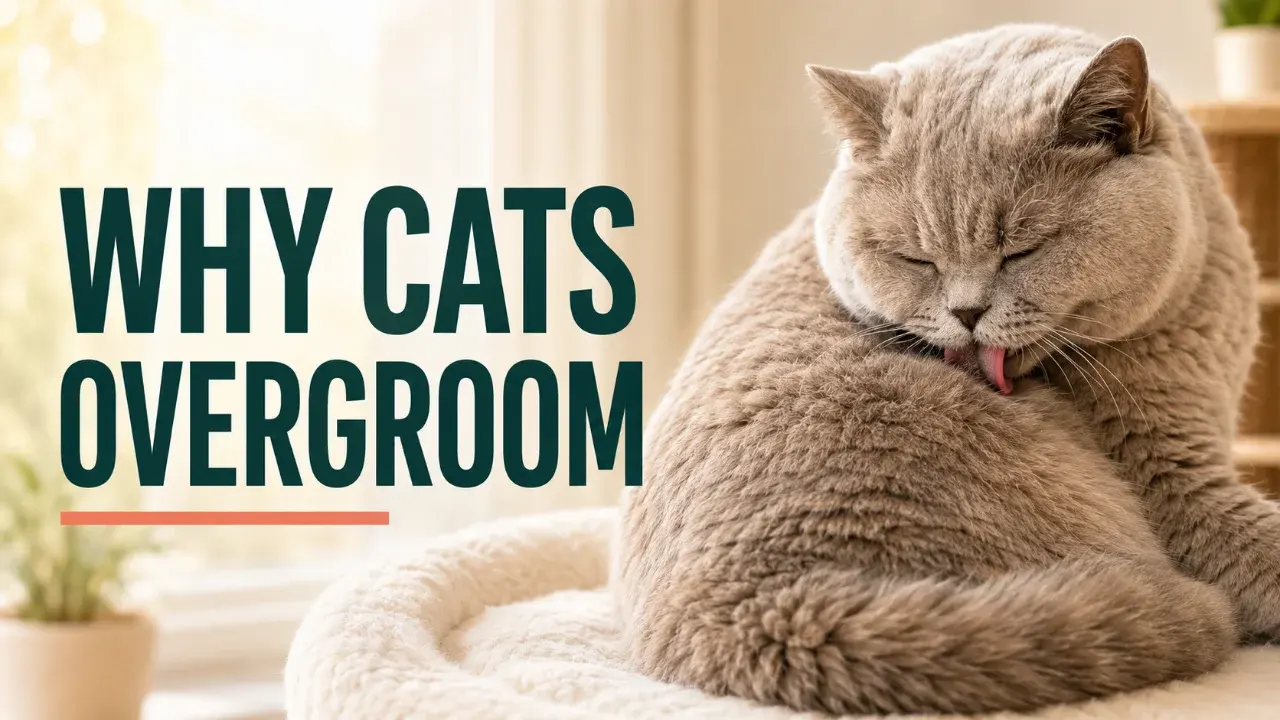
Repetitive licking can help a cat cope with anxiety, but bald patches are not proof of a behavioral problem. Parasites, allergies, infection, and pain must be considered first.
Grooming is an essential part of a cat’s routine, but repeated licking that thins the coat, produces bald patches, or damages the skin is not simply a sign of exceptional cleanliness. Stress can trigger overgrooming, yet it is only one of several possible explanations.
Cats also lick excessively when their skin itches or part of their body hurts. That makes a veterinary examination an important first step rather than something to postpone while attempting to solve the behavior at home.
How grooming can become a coping behavior
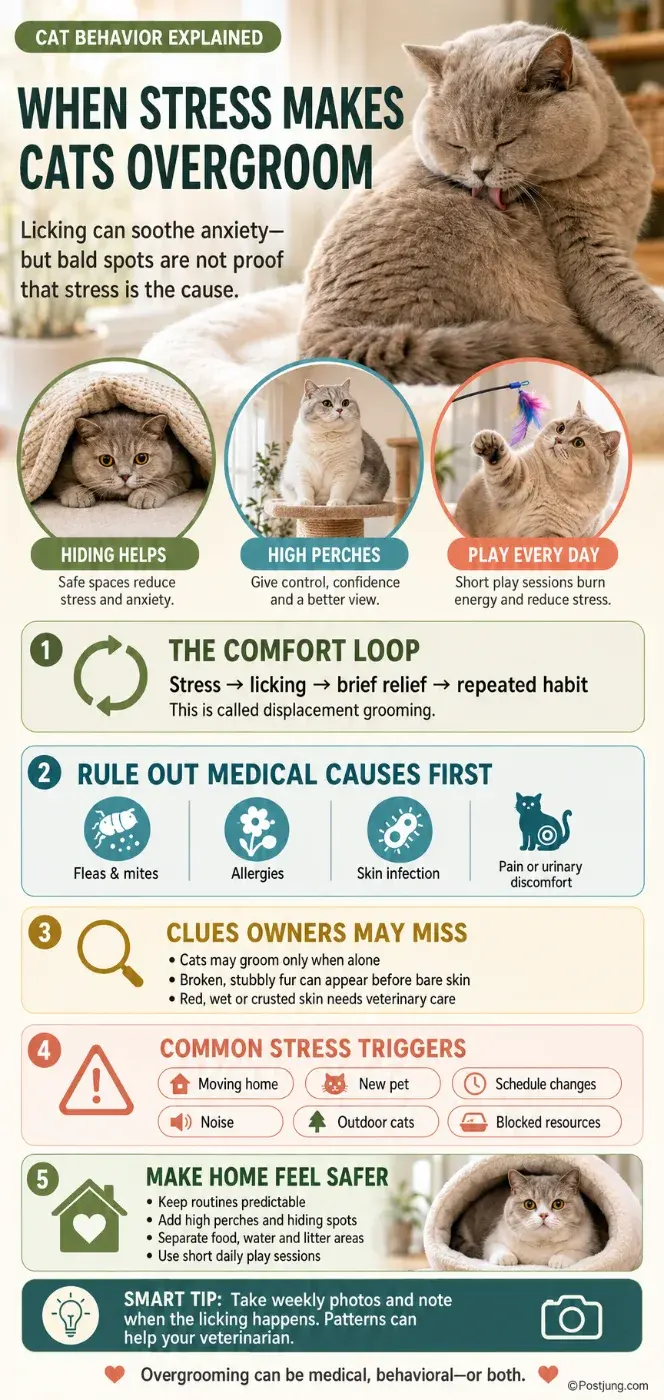
Cats often groom themselves after a tense, frustrating, or uncertain encounter. This is sometimes described as displacement behavior: the animal performs a familiar action when it cannot easily respond to the situation causing the tension.
Licking may temporarily soothe the cat. If the same stress continues, grooming can be repeated more often and for longer periods. Eventually, the behavior may persist as a habit even after the original trigger has changed.
The Cornell Feline Health Center notes that changes such as moving home, losing or gaining another pet, and disruptions to a familiar schedule can cause anxiety in some cats.
Other possible stressors include building noise, unfamiliar visitors, outdoor cats visible through a window, insufficient hiding places, and tension between cats living in the same home. Conflict is not always obvious. One cat may quietly block another from reaching food, water, a litter box, or a favorite resting place without fighting openly.
Bald fur does not automatically mean anxiety
The pattern may offer clues, but it cannot reliably identify the cause on its own.
Fleas and other parasites, food or environmental allergies, fungal or bacterial infections, and painful conditions can all provoke licking or chewing. A cat repeatedly grooming its lower abdomen or genital area could also be responding to urinary discomfort.
Cats may groom when no one is watching, leaving owners to discover only the result: unusually short or broken hair, a smooth bald area, more hairballs than usual, or irritated skin.
Cornell advises involving a veterinarian once simple problems such as visible fleas or tangled fur have been checked. Depending on the cat’s symptoms, the veterinarian may examine the skin and coat, review parasite prevention, look for pain, or recommend diagnostic or dietary trials.
Stress-related overgrooming should therefore be treated as a diagnosis reached after relevant physical causes have been investigated—not as the default explanation for every bald patch.
Seek veterinary advice promptly if the skin is red, bleeding, crusted, swollen, wet, or producing discharge. A cat should also be assessed if grooming is accompanied by reduced appetite, vomiting, difficulty urinating, changes in litter-box use, lethargy, hiding, or signs of pain.
Look for changes beyond the licking
Overgrooming may be only one part of a wider behavioral change. The RSPCA lists increased hiding, a tense posture, altered feeding or toileting, indoor spraying, aggression, and avoidance of people among possible signs of stress or fear.
A simple record can help reveal a pattern. Note when the grooming happens, which body areas are targeted, what occurred immediately beforehand, and whether anything recently changed in the home. Weekly photographs taken in similar lighting can show whether an area is improving or expanding.
A short video may also help the veterinarian distinguish ordinary grooming from prolonged licking, fur pulling, biting, or a reaction linked to touching or movement.
Reducing stress without punishing the cat
Scolding, spraying water, or physically interrupting the cat can add fear without addressing the reason for the behavior. A safer approach is to make the environment more predictable and give the cat greater control over where it rests, eats, hides, and interacts.
The feline environmental guidelines published by the Feline Veterinary Medical Association and International Society of Feline Medicine emphasize safe spaces, separated resources, opportunities for play, positive human interaction, and respect for a cat’s sense of smell.
Useful changes may include:
- Maintaining consistent feeding and play schedules
- Providing elevated perches as well as quiet, low hiding places
- Placing food, water, beds, scratching areas, and litter boxes in separate locations
- Ensuring that one cat cannot block another from essential resources
- Introducing people, pets, furniture, and routine changes gradually
- Offering short interactive play sessions with toys that imitate prey
- Rotating toys and using puzzle feeders to provide mental activity
- Allowing the cat to withdraw instead of forcing handling or social contact
The American Animal Hospital Association also recommends thoughtfully distributed resting, feeding, drinking, scratching, and toileting areas. Some cats feel safer above the floor, while others prefer enclosed spaces closer to the ground, so the best setup depends on the individual cat.
Environmental changes may take time to affect an established grooming habit. If medical problems have been excluded and the behavior continues, a veterinarian may recommend consultation with a qualified veterinary behavior professional. Medication is appropriate in some cases, but it should be prescribed for the individual cat and combined with efforts to address the underlying stress.
The essential distinction is simple: stress can make a cat overgroom, but overgrooming should never be assumed to be “just stress.” The damaged coat is a visible clue that something—physical, environmental, or both—needs attention.
Cornell Feline Health Center — Cats that Lick Too Much
Feline Veterinary Medical Association — AAFP/ISFM Environmental Needs Guidelines
American Animal Hospital Association — Behavior and Environmental Needs
RSPCA — Understanding Your Cat’s Behaviour

เขียนโดย Postjung Insights
 รู้หรือไม่? เปิดรายได้พนักงานส่งพัสดุของแต่ละแอป วันหนึ่งได้เท่าไร
 ซาบีดา” เรียกถกด่วน ปมภาพ “ชุดไทย” ถูกนำไปอ้างเป็นชุดกัมพูชา
 เปิดรายชื่อ 5 โรงเรียนเป้าหมาย เด็กสอบเข้าต้องเตรียมตัวให้พร้อม
 'สควีชชี่'ของเล่นที่กำลังเป็นไวรัลอาจถูกเจ้าหน้าที่ของสนามบินยึดได้ ตรวจสอบให้ดีก่อนนำขึ้นเครื่อง
 แปลปกสลาก งวด 1 ต.ค. 69 ส่องตัวเลขจากภาพปกสลากกินแบ่งรัฐบาล
 Ctrip แพลตฟอร์มการท่องเที่ยวของจีน เปิดขายตั๋วสำหรับทริปท่องเที่ยวอวกาศ ของ Virgin Galactic 6 วัน ในราคาประมาณ 24 ล้านบาท
 หนุ่มขับ Porsche ใจหล่อสุดๆ ติดประกาศเด็กหายไว้รอบคัน..หวังช่วยเผยแพร่ข้อมูลให้ตามหาได้เร็วขึ้น
 อำเภอที่มีชื่ออำเภอสั้นที่สุด 3 อำเภอเท่านั้นในประเทศไทย
 เปิด 5 โรงเรียนหญิงล้วนเก่าแก่ของไทย ที่มีประวัติยาวนานกว่าศตวรรษ
 โรงเรียนที่มีนักเรียนมากที่สุดในไทย
 ตาราง “เด่นเหนือเด่นใต้” งวด 1 ต.ค. 69 เปิดข้อมูลตามโพย เลขไหนอยู่ตรงไหน
 เรียก “ป๋อง สุพรรณ” เซียนพระดัง แจงปมมูลนิธิฯ วัดพุทไธศวรรย์ซาบีดา” เรียกถกด่วน ปมภาพ “ชุดไทย” ถูกนำไปอ้างเป็นชุดกัมพูชาเปิดรายชื่อ 5 โรงเรียนเป้าหมาย เด็กสอบเข้าต้องเตรียมตัวให้พร้อมหนุ่มขับ Porsche ใจหล่อสุดๆ ติดประกาศเด็กหายไว้รอบคัน..หวังช่วยเผยแพร่ข้อมูลให้ตามหาได้เร็วขึ้น
 วาบิ-ซาบิ (Wabi-Sabi) ปรัชญาญี่ปุ่นที่สอนให้เราโอบกอดความไม่สมบูรณ์แบบ
 English Edition