Why cold weather can still harm pets inside the home

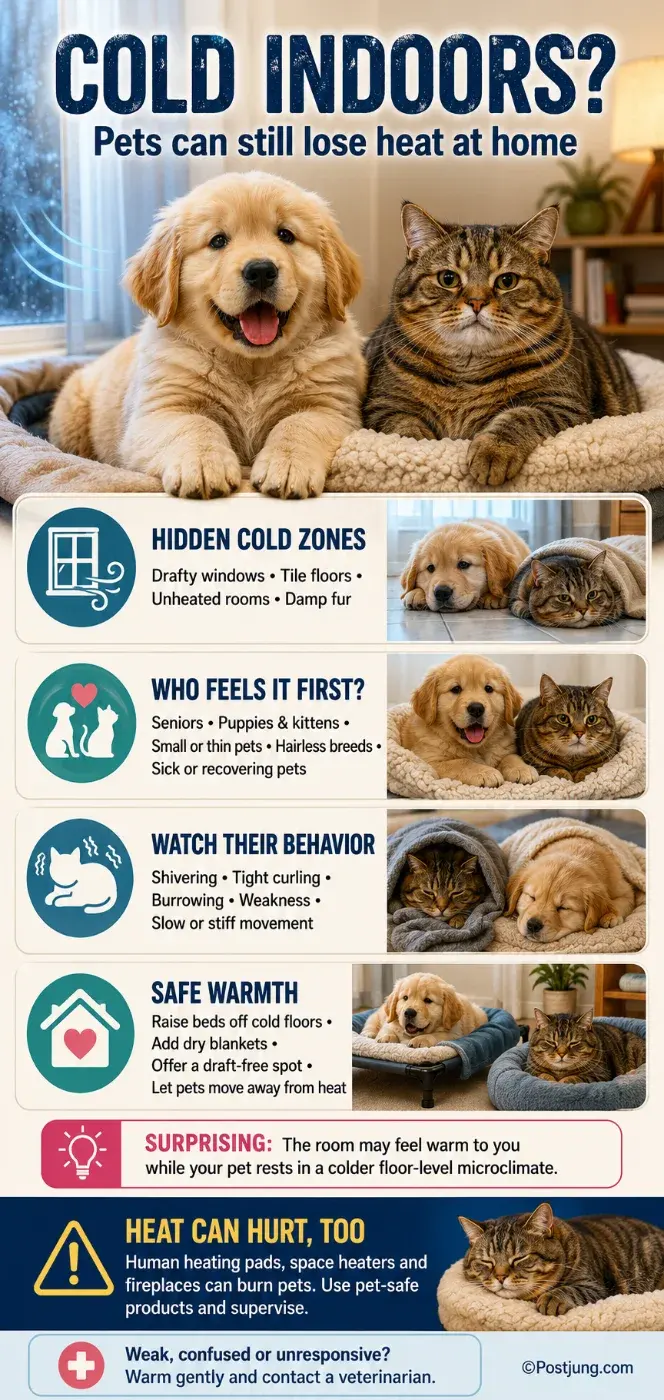
Drafts, cold floors, damp fur, and falling overnight temperatures can leave some indoor pets struggling to stay warm. Senior, young, small, thin-coated, and unwell animals need particular attention—but unsafe heaters can create a different danger.
Keeping a dog or cat inside is one of the most effective ways to protect them from severe winter weather. It does not, however, guarantee that every part of the home is warm enough for every animal.
A room that feels comfortable to a person wearing clothes may feel considerably colder to a small, thin-coated pet resting close to a tile or concrete floor. Drafty windows, unheated hallways, garages, basements, air-conditioned rooms, and overnight heating changes can create cold pockets that a wall thermostat does not reveal.
Serious hypothermia is unlikely in a normally heated home, but prolonged exposure to a cold indoor environment can still cause discomfort and place vulnerable animals at risk.
Some pets lose heat more easily
Cold tolerance varies widely. A healthy, active dog with a dense double coat will generally cope differently from a small short-haired dog, a hairless cat, or an elderly animal with limited mobility.
Pets that may need closer monitoring include:
- Puppies, kittens, and other very young animals
- Senior pets
- Small dogs and cats
- Thin, underweight, or recently ill animals
- Hairless and thin-coated breeds
- Pets with arthritis, heart disease, poor circulation, or weakened immunity
- Animals recovering from surgery
- Pets that cannot easily move away from a cold surface
Older animals present a particular challenge. They may produce or conserve heat less effectively, sleep for longer periods, and struggle to relocate when uncomfortable. Cornell University’s College of Veterinary Medicine recommends keeping an older cat’s soft bed away from drafts while also warning that excessive direct heat can burn a cat unable to move quickly.
Cold conditions can also make existing mobility problems more noticeable. Veterinary welfare guidance from the RSPCA advises warm, supportive bedding for dogs and cats with arthritis, along with suitable activity and veterinary evaluation when stiffness, limping, or difficulty rising appears.
The floor may be colder than the room
Pets experience a home from a different height than people. A bed placed directly on stone, tile, or concrete can lose warmth into the surface beneath it. A draft under a door may also pass directly across an animal’s sleeping area without being obvious to a standing person.
Moving a bed away from exterior doors and windows can help. A padded, insulated bed raised slightly above a cold floor is often more useful than simply increasing the thermostat for the entire house.
After rain or snow, dry the animal’s fur, paws, and underside promptly. Wet fur reduces insulation and can continue cooling a pet even after it has returned indoors.
Give the animal a choice whenever possible: a warm, draft-free bed with blankets and access to a cooler resting place. Choice matters because overheating is also harmful, and different animals prefer different conditions.
Watch the pet, not just the thermostat
There is no single household temperature that suits every species, breed, age, and health condition. Behavior often provides the earliest warning that a pet is uncomfortable.
The American Veterinary Medical Association lists signs such as whining, shivering, anxiety, slowing down, weakness, stopping movement, or searching for somewhere warm to burrow.
Other warning signs can include:
- Curling into an unusually tight position
- Persistently lifting the paws
- Cold ears or limbs
- Reluctance to leave a blanket
- Unusual tiredness or reduced responsiveness
- Stiff or uncoordinated movement
- Pale skin or gums
Shivering is an important warning, but its absence does not prove that an animal is safe. A very young, sick, exhausted, or severely chilled pet may not shiver normally.
Move a cold pet to a warm, dry room and wrap it loosely in dry blankets. Do not rub cold skin, apply very hot water, or place concentrated heat directly against the animal. Weakness, confusion, collapse, abnormal breathing, extreme sleepiness, or failure to warm up requires urgent veterinary attention.
Warming devices can become hazards
The solution to a cold room should not introduce burns, electrocution, or fire risk.
VCA Animal Hospitals warns that ordinary electric heating pads can become hot enough to burn sleeping pets, particularly elderly, arthritic, or sick animals that cannot rise quickly. Electrical cords also create a chewing hazard.
If a veterinarian recommends supplemental heat, use a pet-specific product according to its instructions. The animal must be able to move away from it, and the heat source should never press directly against bare skin. Supervision remains important.
Fireplaces and portable space heaters also require barriers and clearance. Keep beds, blankets, tails, and fur away from heating elements and open flames. Never confine an animal beside a heater or leave an unsafe portable unit running unattended.
Central heating has a less obvious downside: dry indoor air may contribute to dry, flaky, or irritated skin. Grooming, access to fresh water, and veterinary advice for persistent itching or skin changes are preferable to applying human moisturizers, which may contain ingredients unsafe for pets.
A warm home is not defined only by the number on the thermostat. For a pet, safe warmth means a dry coat, insulated bedding, freedom from drafts, access to water, and the ability to move toward or away from heat. Paying attention to where an animal actually sleeps—and how it behaves there—often reveals more than the room temperature alone.
SOURCES USED:
- American Veterinary Medical Association — Cold weather animal safety
- Cornell University College of Veterinary Medicine — Loving Care for Older Cats
- VCA Animal Hospitals — Heating Pads: True or False
- VCA Animal Hospitals — Dog Winter Safety Tips
- RSPCA — Winter and Cold Weather Care for Dogs
- RSPCA — Cold Weather Care for Cats

เขียนโดย Postjung Insights
 รู้หรือไม่? เปิดรายได้พนักงานส่งพัสดุของแต่ละแอป วันหนึ่งได้เท่าไร
 หนุ่มขับ Porsche ใจหล่อสุดๆ ติดประกาศเด็กหายไว้รอบคัน..หวังช่วยเผยแพร่ข้อมูลให้ตามหาได้เร็วขึ้น
 อำเภอที่มีชื่ออำเภอสั้นที่สุด 3 อำเภอเท่านั้นในประเทศไทย
 โรงเรียนที่มีนักเรียนมากที่สุดในไทย
 เปิดรายชื่อ 5 โรงเรียนเป้าหมาย เด็กสอบเข้าต้องเตรียมตัวให้พร้อม
 แปลปกสลาก งวด 1 ต.ค. 69 ส่องตัวเลขจากภาพปกสลากกินแบ่งรัฐบาล
 ซาบีดา” เรียกถกด่วน ปมภาพ “ชุดไทย” ถูกนำไปอ้างเป็นชุดกัมพูชา
 เปิด 5 โรงเรียนหญิงล้วนเก่าแก่ของไทย ที่มีประวัติยาวนานกว่าศตวรรษ
 โรสแมรี่ แฮร์ริส ‘ป้าเมย์’ แห่ง Spider-Man ฉบับโทบีย์ แม็คไกวร์ อายุครบ 99 ปี
 ส่องเลข 3 สำนักพิมพ์ งวด 1 ต.ค. 69 ตัวไหนมีข้อมูลตรงกัน
 เรียก “ป๋อง สุพรรณ” เซียนพระดัง แจงปมมูลนิธิฯ วัดพุทไธศวรรย์
 บุ๋ม ปนัดดา” เล่าเบื้องหลังหญิงตีเนียน หลังเจออยู่กลางวงสัมภาษณ์ “หนุ่ม กรรชัย”ซาบีดา” เรียกถกด่วน ปมภาพ “ชุดไทย” ถูกนำไปอ้างเป็นชุดกัมพูชาเปิดรายชื่อ 5 โรงเรียนเป้าหมาย เด็กสอบเข้าต้องเตรียมตัวให้พร้อมหนุ่มขับ Porsche ใจหล่อสุดๆ ติดประกาศเด็กหายไว้รอบคัน..หวังช่วยเผยแพร่ข้อมูลให้ตามหาได้เร็วขึ้น
 วาบิ-ซาบิ (Wabi-Sabi) ปรัชญาญี่ปุ่นที่สอนให้เราโอบกอดความไม่สมบูรณ์แบบ
 English Edition