How to Choose the Right Bed for an Older Dog
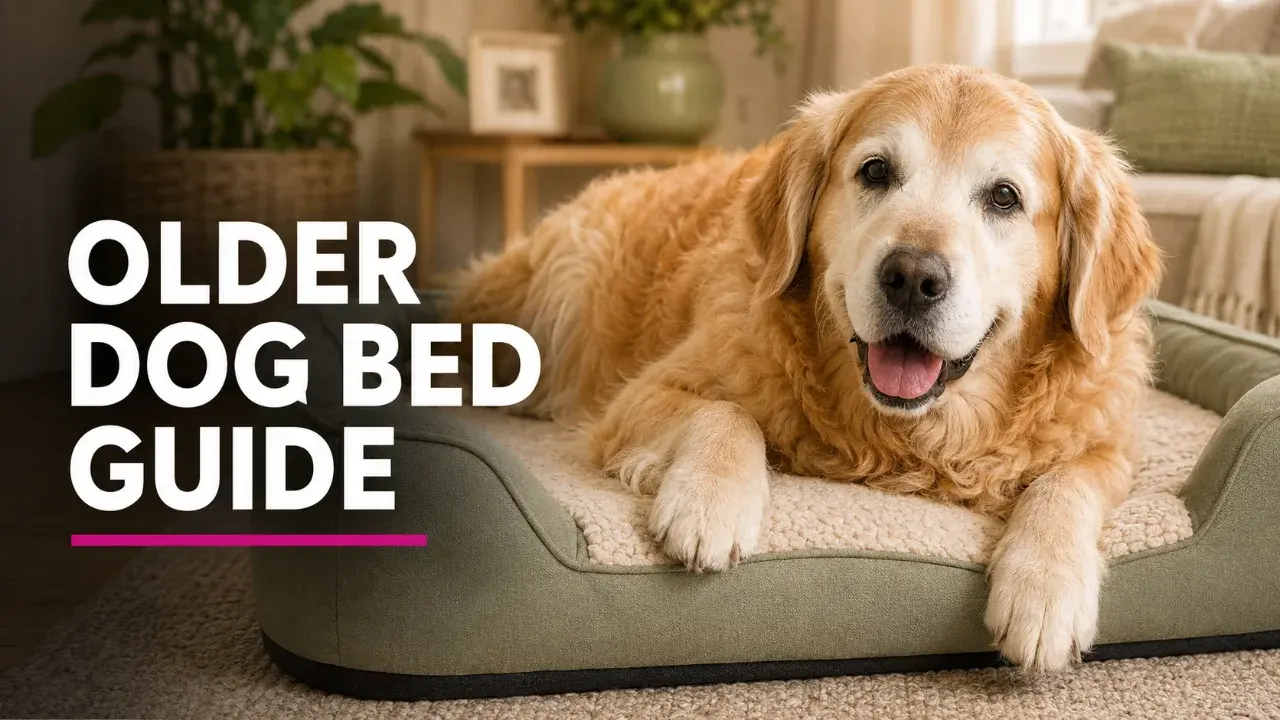
The best senior dog bed combines stable support, easy access, traction, and washable materials. Your dog’s sleeping position and movement reveal more than an “orthopedic” label does.
Older dogs often need more from a bed than a soft place to sleep. Stiff joints, reduced muscle mass, incontinence, declining vision, and difficulty standing can turn the wrong bed into an obstacle.
The best choice is not necessarily the thickest or most expensive model. It is the bed your dog can enter, use, and leave comfortably without sinking, slipping, overheating, or struggling to rise.
Begin with how your dog moves
Watch your dog before shopping. Does your dog hesitate before lying down, circle repeatedly, lower the body carefully, or struggle to stand after resting? These behaviors can help reveal what the bed needs to solve.
The Cornell University College of Veterinary Medicine lists stiffness, difficulty rising, altered gait, reluctance to use stairs, and trouble jumping onto furniture among the possible signs of canine osteoarthritis.
A bed may improve comfort, but it cannot diagnose or treat joint disease. New stiffness, limping, weakness, pain, or difficulty standing should prompt a veterinary examination.
Choose support, not maximum softness
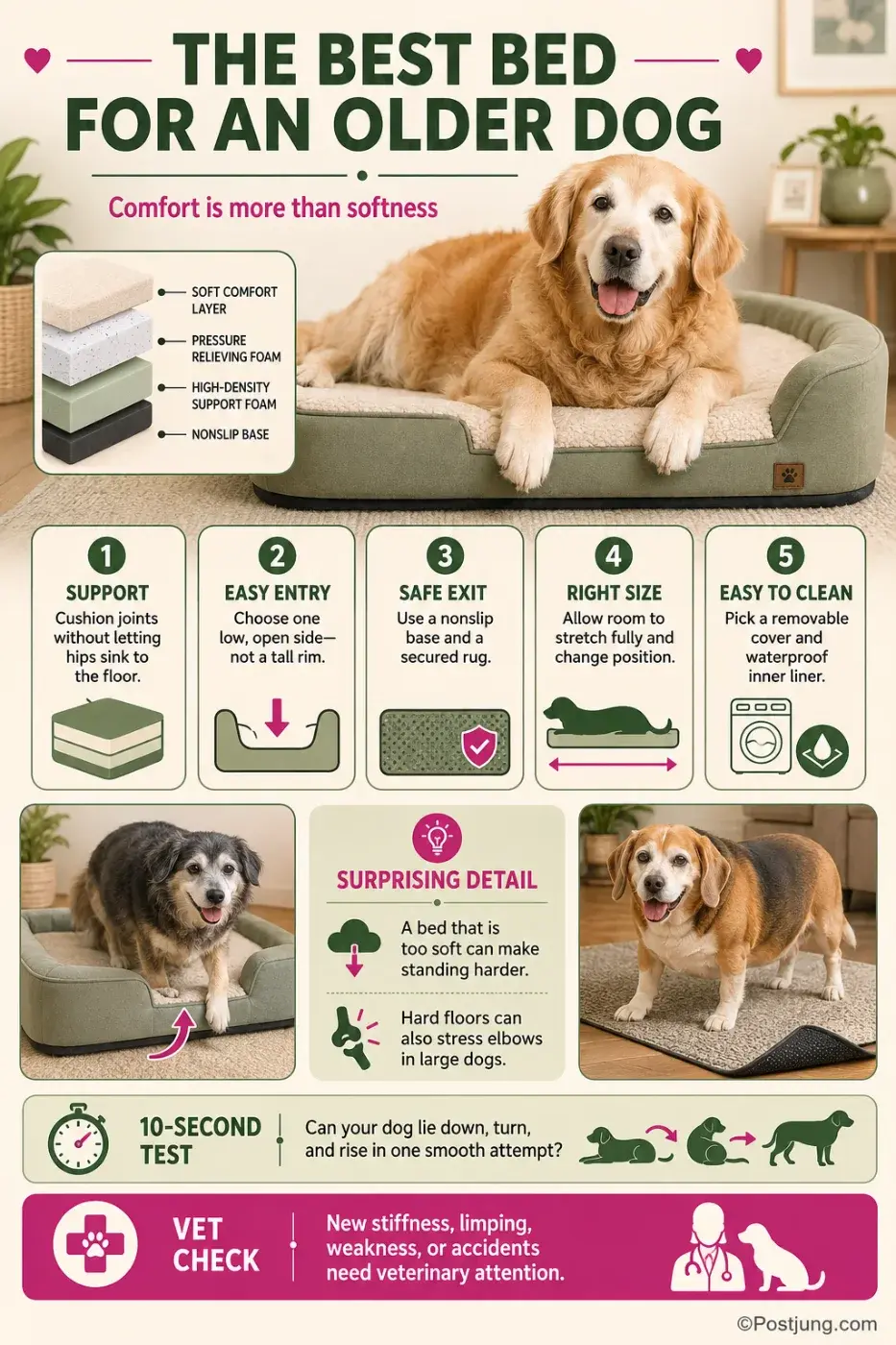
A senior dog generally needs cushioning over the hips, elbows, shoulders, and other bony areas, but extremely soft filling can create a different problem. If the dog sinks deeply, standing up may require more effort.
Look for a mattress that compresses enough to cushion the body without collapsing to the floor. Press down firmly with your hand and release it. The material should provide resistance and recover its shape rather than remaining flattened.
Memory foam, layered foam, and egg-crate-style foam can all provide useful padding. The construction and density matter more than the material’s name. “Orthopedic” is a product description, so examine the actual mattress rather than relying on the word alone.
Adequate cushioning is especially important for large dogs and dogs that spend long periods lying down. VCA Animal Hospitals notes that repeated contact with hard surfaces can contribute to hygromas—fluid-filled swellings commonly found over the elbows. Large and giant breeds can develop them even when they are not elderly.
Make sure the bed is large enough
Observe your dog’s preferred sleeping position. A dog that curls tightly may enjoy a smaller nest-style bed, while one that sleeps fully stretched needs enough room to extend the legs without hanging over an edge.
Measure the space your dog occupies while resting naturally and allow extra room on every side. Do not choose solely by breed or weight categories, which can vary between manufacturers.
Raised bolsters can provide a comfortable headrest, but they should not surround the entire bed if climbing over them is difficult. A design with one open or low side often gives an older dog an easier entrance while preserving a supported edge elsewhere.
Entry height and traction are easy to overlook
A deeply cushioned bed is not helpful if a dog cannot step into it safely. For dogs with arthritis, weakness, or poor balance, choose a low entrance without a rigid lip.
Check the floor around the bed too. Pushing up from a mattress while the bed slides across tile or polished wood can make standing harder and increase the risk of a fall. Choose a nonslip base and, if needed, create a stable approach with a secured rug or traction mat.
The American Animal Hospital Association includes orthopedic bedding, nonslip rugs, and ramps among environmental changes that can support mobility. Cornell likewise recommends nonslip surfaces and ramps as part of managing osteoarthritis.
Placement also matters. Put the bed somewhere quiet but socially connected, where the dog can rest without being startled or isolated. Avoid stairs, drafts, direct heat, and routes where people frequently step over the dog.
Some older dogs benefit from more than one bed. Placing beds near the family during the day and in the usual sleeping area at night reduces unnecessary walking and stair use.
Plan for accidents before they happen
A removable, machine-washable cover is one of the most useful features in a senior bed. Check whether the inner mattress has a waterproof liner or can be protected with one. A washable blanket or absorbent pad can add another replaceable layer.
Water resistance should not mean trapping moisture against the dog’s skin. Wet bedding should be changed promptly, and the mattress should be checked regularly for dampness, odor, damaged foam, or mold.
Inspect zippers, seams, and closures as well. They should not press against the dog’s body or be easily reached by a dog that chews fabric.
Sudden house-soiling should not simply be dismissed as aging. The American Veterinary Medical Association notes that behavior and elimination changes may be associated with pain, cognitive dysfunction, or medical conditions and should be discussed with a veterinarian.
Let your dog perform the final test
If possible, buy from a retailer that allows returns after a short home trial. Familiar smells can help: place a blanket your dog already uses on the new bed, then allow the dog to investigate without being forced onto it.
Over several days, watch for four things:
- Can the dog step onto the bed without hesitation?
- Can the dog change positions without rolling off?
- Does the mattress prevent the hips and elbows from pressing against the floor?
- Can the dog stand without repeated attempts or slipping?
Frequent use is encouraging, but avoidance does not always mean the mattress is uncomfortable. The location, temperature, unfamiliar smell, raised edges, or unstable base may be the real problem.
A good senior dog bed is ultimately a small piece of accessible home design. It should cushion the body, reduce avoidable effort, remain dry and clean, and let the dog rest close to the people and places that feel safe.
SOURCES USED:
- American Animal Hospital Association — 2023 AAHA Senior Care Guidelines for Dogs and Cats
- American Animal Hospital Association — How to Assess Your Senior Pet’s Quality of Life
- Cornell University College of Veterinary Medicine — Osteoarthritis
- American Veterinary Medical Association — Senior Pets
- VCA Animal Hospitals — Hygroma in Dogs

เขียนโดย Postjung Insights
 โรงเรียนที่มีนักเรียนมากที่สุดในไทย
 แปลปกสลาก งวด 1 ต.ค. 69 ส่องตัวเลขจากภาพปกสลากกินแบ่งรัฐบาล
 Ctrip แพลตฟอร์มการท่องเที่ยวของจีน เปิดขายตั๋วสำหรับทริปท่องเที่ยวอวกาศ ของ Virgin Galactic 6 วัน ในราคาประมาณ 24 ล้านบาท
 รู้หรือไม่? เปิดรายได้พนักงานส่งพัสดุของแต่ละแอป วันหนึ่งได้เท่าไร
 เปิดรายชื่อ 5 โรงเรียนเป้าหมาย เด็กสอบเข้าต้องเตรียมตัวให้พร้อม
 'สควีชชี่'ของเล่นที่กำลังเป็นไวรัลอาจถูกเจ้าหน้าที่ของสนามบินยึดได้ ตรวจสอบให้ดีก่อนนำขึ้นเครื่อง
 อำเภอที่มีชื่ออำเภอสั้นที่สุด 3 อำเภอเท่านั้นในประเทศไทย
 หนุ่มขับ Porsche ใจหล่อสุดๆ ติดประกาศเด็กหายไว้รอบคัน..หวังช่วยเผยแพร่ข้อมูลให้ตามหาได้เร็วขึ้น
 เรียก “ป๋อง สุพรรณ” เซียนพระดัง แจงปมมูลนิธิฯ วัดพุทไธศวรรย์
 ซาบีดา” เรียกถกด่วน ปมภาพ “ชุดไทย” ถูกนำไปอ้างเป็นชุดกัมพูชา
 ตาราง “เด่นเหนือเด่นใต้” งวด 1 ต.ค. 69 เปิดข้อมูลตามโพย เลขไหนอยู่ตรงไหน
 ส่องเลข 3 สำนักพิมพ์ งวด 1 ต.ค. 69 ตัวไหนมีข้อมูลตรงกันซาบีดา” เรียกถกด่วน ปมภาพ “ชุดไทย” ถูกนำไปอ้างเป็นชุดกัมพูชาเปิดรายชื่อ 5 โรงเรียนเป้าหมาย เด็กสอบเข้าต้องเตรียมตัวให้พร้อมหนุ่มขับ Porsche ใจหล่อสุดๆ ติดประกาศเด็กหายไว้รอบคัน..หวังช่วยเผยแพร่ข้อมูลให้ตามหาได้เร็วขึ้น
 วาบิ-ซาบิ (Wabi-Sabi) ปรัชญาญี่ปุ่นที่สอนให้เราโอบกอดความไม่สมบูรณ์แบบ
 English Edition