Why cats scratch during play—and how to keep hands safe
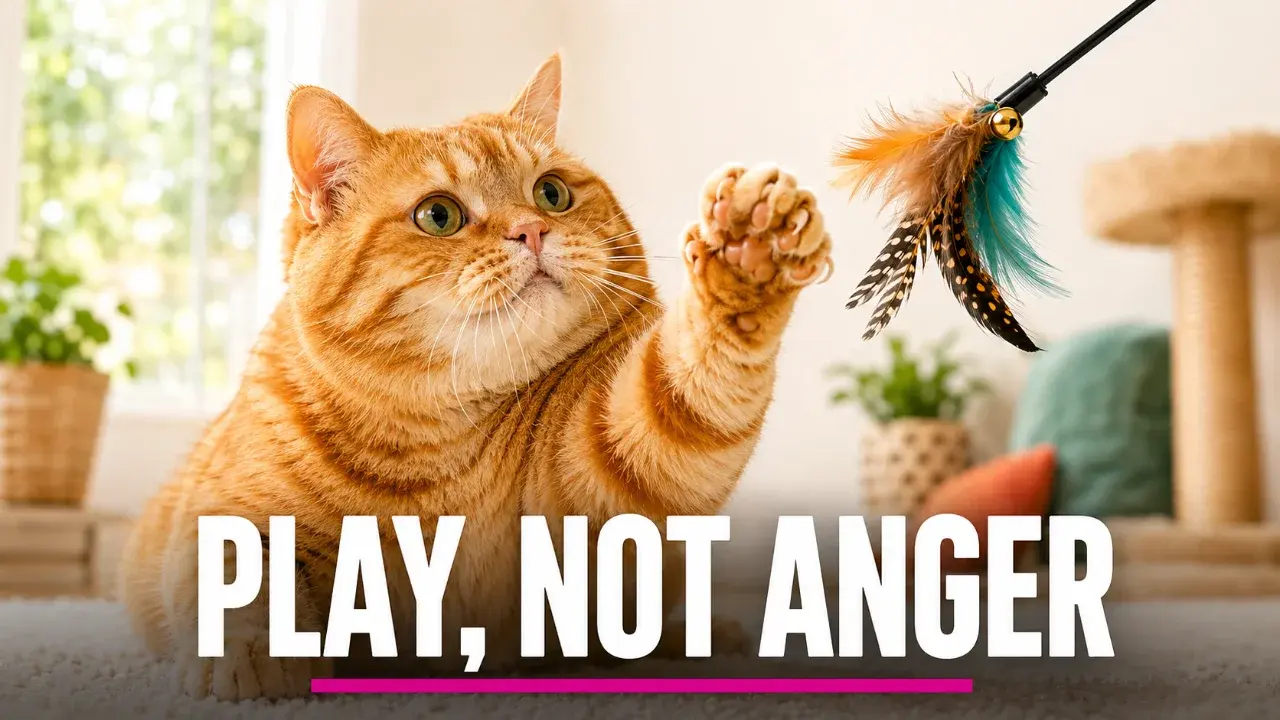
Scratching during play usually reflects a cat’s natural hunting sequence, not anger or spite. The right toys, shorter sessions, and attention to body language can prevent painful encounters.
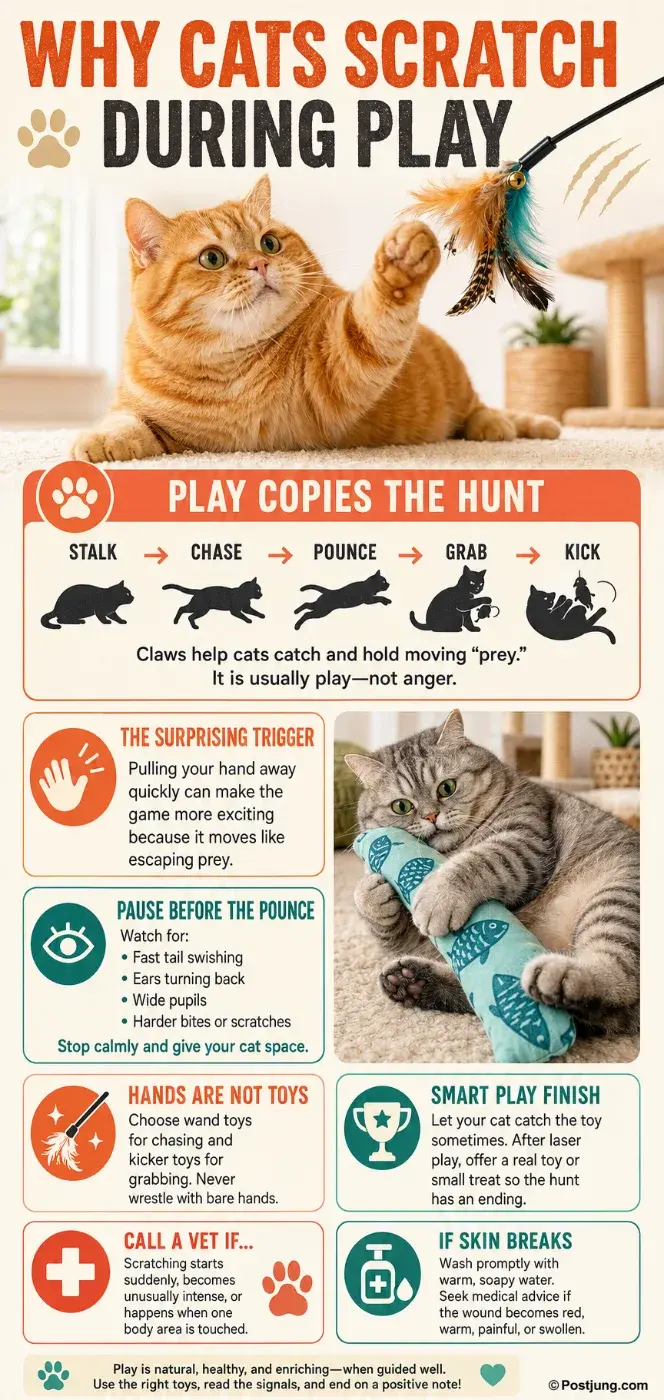
A cat that grabs, scratches, or “bunny kicks” during play is usually practicing the same movements it would use to catch prey. Claws help cats seize and hold a moving target, so they can appear even when the cat is relaxed and having fun.
That does not mean people must accept scratched hands. It means the safest solution is to give the behavior a better target while learning when a playful cat is becoming overstimulated.
Play is a rehearsal for hunting
Feline play often follows a recognizable sequence: watching, stalking, chasing, pouncing, grabbing, biting, and clawing. Kittens practice these movements with their littermates, toys, and almost anything that moves.
The Feline Veterinary Medical Association notes that behavior interpreted as aggression may actually be prey-related play. A cat can be well fed and still feel motivated to stalk and capture things because hunting behavior is not driven by hunger alone.
This explains why a cat may suddenly hook a toy with its front claws or grasp it before kicking with the back feet. The cat is not necessarily losing its temper; it is completing part of a built-in motor sequence.
Hands can accidentally become prey
A kitten chasing wiggling fingers may seem harmless, but repeated hand play teaches the animal that human skin is an acceptable target. The habit becomes considerably less cute when the kitten develops adult teeth, stronger legs, and sharper claws.
Environmental-enrichment guidance from The Ohio State University warns that encouraging cats to chase hands and feet can reinforce play-related aggression. Pulling a hand away quickly may make it even more exciting because the movement resembles escaping prey.
Cats may also target ankles when people walk past furniture or turn corners. In many cases, the cat has discovered that ambushing a moving person reliably starts an energetic interaction.
The lesson is simple: hands should deliver food, gentle handling, and affection—not imitate prey.
Watch for the moment play becomes too intense
Healthy play generally looks loose, bouncy, and voluntary. The cat may pause, change position, or return to the toy without appearing frightened.
Play should stop when the cat begins showing signs of excessive arousal or discomfort. These can include:
- Rapid or forceful tail swishing
- Enlarged pupils
- Ears turning sideways or flattening backward
- A tense or crouched body
- Repeated hard biting or scratching
- Hissing, growling, or attempts to escape
VCA Animal Hospitals recommends ending a session when warning signs such as intense tail movement, backward ears, or enlarged pupils appear. Waiting until the cat is fully aroused makes redirection more difficult.
If scratching begins, become still rather than jerking the targeted hand or foot away. Calmly end the interaction and give the cat space to settle. Hitting, shouting, or physically wrestling with the cat can create fear—and physical contact may inadvertently continue the game.
Build a safer play routine
Use toys that place distance between claws and skin. Long wand toys allow a cat to stalk, chase, leap, and capture something without reaching the person holding it. Soft kicker toys provide an appropriate target for grabbing and hind-leg kicking.
Move a wand toy like prey rather than repeatedly waving it in the cat’s face. Let it travel away, disappear behind furniture, pause, and occasionally be caught. Rotate toys to preserve novelty, and put strings, ribbons, and damaged toys away after supervised play because swallowed material can cause serious intestinal injury.
Short, regular sessions often work better than one long session that continues until the cat becomes overexcited. Stop while the interaction is still enjoyable, especially if the cat has a history of escalating quickly.
When an ambush pattern occurs at predictable times or locations, prepare a toy before passing that spot. Redirecting the cat before it reaches an ankle is easier than responding after contact.
When scratching may not be playful
Not every scratch delivered during an interaction is play. A frightened cat may use its claws when it feels cornered. A cat experiencing pain may also react defensively when touched or handled.
Arrange a veterinary examination if the behavior begins suddenly, becomes unusually intense, occurs when a particular body area is touched, or appears alongside hiding, reduced activity, appetite changes, or other changes in routine. A qualified feline behavior professional can help when medical problems have been excluded but the behavior continues.
If a scratch breaks the skin, the U.S. Centers for Disease Control and Prevention advises washing it immediately with warm, soapy water. Seek local medical advice for a serious wound, signs such as increasing redness, warmth, pain, or swelling, or uncertainty about rabies and tetanus protection.
A playful cat does not need punishment or fewer opportunities to play. It needs appropriate prey substitutes, clear boundaries, and a caregiver who recognizes when excitement is approaching its limit.
SOURCES USED:
- Feline Veterinary Medical Association — A Guide to Creating a Cat Friendly Practice
- Feline Veterinary Medical Association — Claw Friendly Educational Toolkit: Scratching Resources
- The Ohio State University Indoor Pet Initiative — Environmental Enrichment for Indoor Cats
- VCA Animal Hospitals — Play and Predatory Aggression in Cats
- Centers for Disease Control and Prevention — Cats: Healthy Pets, Healthy People

เขียนโดย Postjung Insights
 อำเภอที่มีชื่ออำเภอสั้นที่สุด 3 อำเภอเท่านั้นในประเทศไทย
 สุดระทึก! ไฟไหม้รางรถไฟฟ้า MRT สถานีเตาปูน-บางโพ..หยุดให้บริการชั่วคราวทุกสถานี
 โรงเรียนที่มีนักเรียนมากที่สุดในไทย
 เกษียณแล้วทำอะไรดี เปิด 4 กลุ่มอาชีพที่ผู้สูงวัยไทยทำกันน้อย จากข้อมูล 5.26 ล้านคน
 รู้หรือไม่? เปิดรายได้พนักงานส่งพัสดุของแต่ละแอป วันหนึ่งได้เท่าไร
 ตาราง “เด่นเหนือเด่นใต้” งวด 1 ต.ค. 69 เปิดข้อมูลตามโพย เลขไหนอยู่ตรงไหน
 เปิด 5 โรงเรียนหญิงล้วนเก่าแก่ของไทย ที่มีประวัติยาวนานกว่าศตวรรษ
 เจาะลึกรายได้พนักงานส่งอาหารแต่ละวันได้เท่าไร/หักค่าใช้จ่ายอะไรบ้าง
 ความลับ 30 ล้านปีของ “แม่น้ำไนล์”: ทำไมสายน้ำสายนี้ถึงไม่เคยเหือดแห้งกลางทะเลทรายซาฮารา
 เลขเด็ดไพ่ยิปซี งวด 1 ตุลาคม 2569 รวมเลขเด่นและเลขท้าย 2 ตัว
 แปลปกสลาก งวด 1 ต.ค. 69 ส่องตัวเลขจากภาพปกสลากกินแบ่งรัฐบาล
 เปิดศึกเลขเด็ดงวดนี้! เจ้าพ่อปากแดง ปะทะ เจ้าแม่ตะเคียนทอง งวด 1 ต.ค. 59 คัดมาให้เน้นๆ พร้อมลุ้นรวยสุดระทึก! ไฟไหม้รางรถไฟฟ้า MRT สถานีเตาปูน-บางโพ..หยุดให้บริการชั่วคราวทุกสถานีเจาะลึกรายได้พนักงานส่งอาหารแต่ละวันได้เท่าไร/หักค่าใช้จ่ายอะไรบ้างเปิด 5 โรงเรียนหญิงล้วนเก่าแก่ของไทย ที่มีประวัติยาวนานกว่าศตวรรษ
 เปิด 5 สินค้าส่งออกของลาวที่คนไทยอาจคาดไม่ถึง หนึ่งในนั้นทำเงินเกือบ 1 พันล้านดอลลาร์เกษียณแล้วทำอะไรดี เปิด 4 กลุ่มอาชีพที่ผู้สูงวัยไทยทำกันน้อย จากข้อมูล 5.26 ล้านคน
 โรงเรียนเพียงแห่งเดียวของประเทศไทย ที่อยู่มาตั้งแต่ยุครัชกาลที่ 4
 English Edition