How city life can shape a dog’s behavior
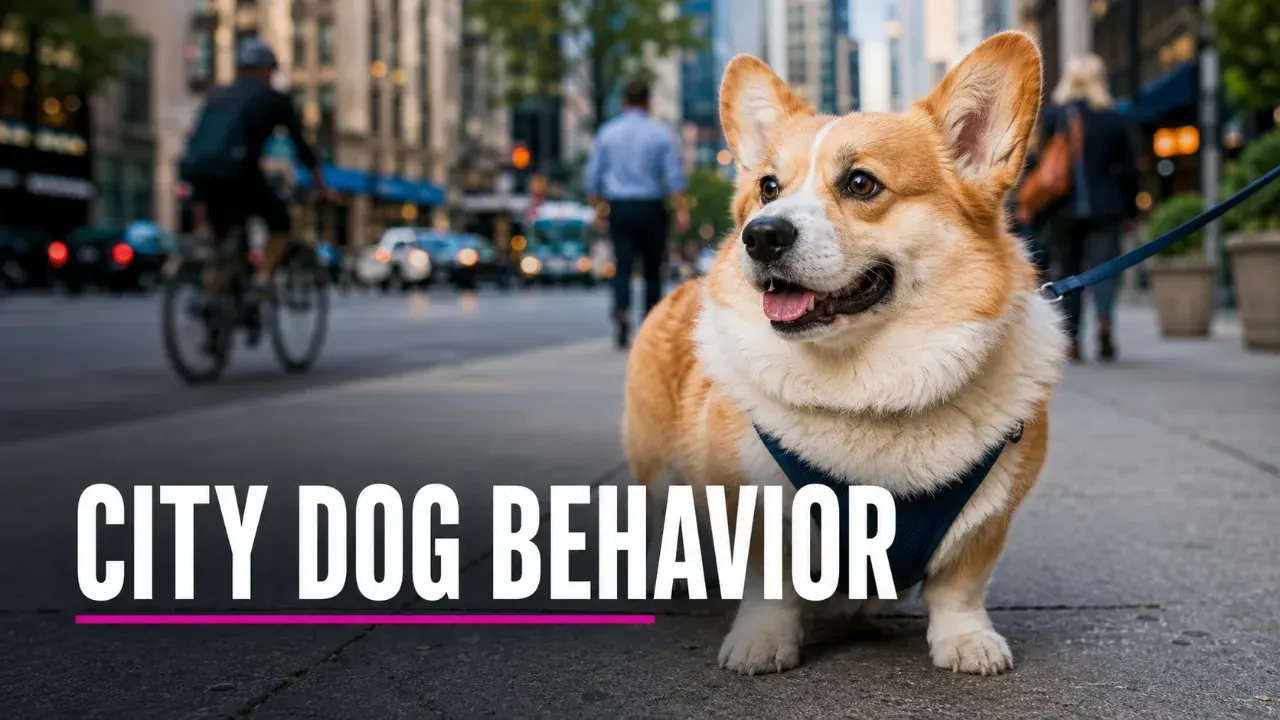
Traffic, elevators, crowded sidewalks, and limited off-leash space can influence how dogs respond to the world. Research suggests that urban living matters, but it is only one part of a much more complicated behavioral picture.
A city gives a dog an unusually concentrated sensory world. Traffic rumbles beneath apartment windows, strangers appear in elevators, other dogs pass within a few feet, and every walk may involve construction noise, bicycles, food smells, and crowded sidewalks.
These experiences can produce a confident, adaptable dog when they are introduced gradually and paired with safety. For another dog, the same environment can contribute to fear, vigilance, barking, or reactivity.
The difference is not simply whether a dog lives in an apartment or has a yard. Early experience, genetics, health, exercise, training, and the dog’s ability to recover after stressful encounters all matter.
Urban dogs may face a higher risk of social fear
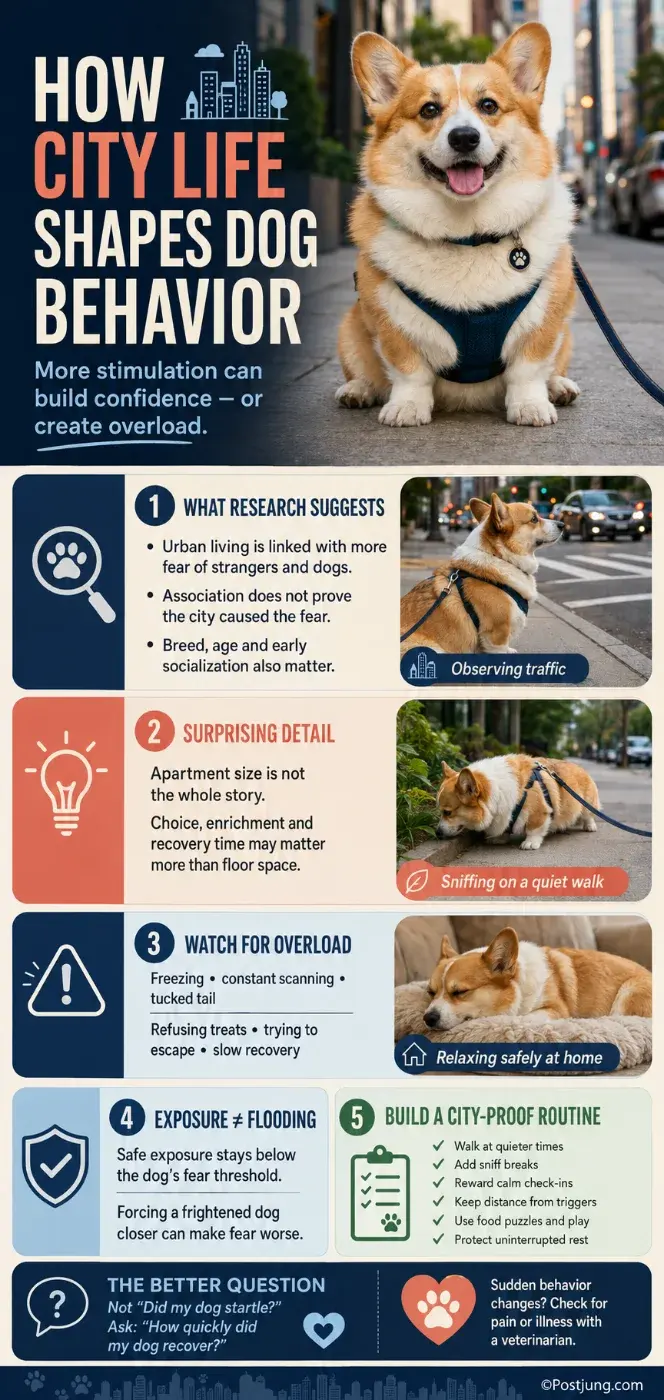
A 2020 study published in Scientific Reports examined behavioral survey data from approximately 6,000 Finnish pet dogs. Dogs living in more urban environments were more likely to be reported as fearful of unfamiliar people and other dogs than those living in more natural or agricultural settings.
The finding was an association, not proof that cities directly caused the fear. The study relied on owner-reported behavior, and several other factors were connected with fearfulness, including breed, body size, activity levels, and puppyhood socialization.
Early socialization had one of the strongest associations. Dogs that had fewer varied experiences between roughly 7 and 16 weeks of age were more likely to show social fear later.
A separate study of more than 11,000 dogs found that breed and age had stronger relationships with personality than the environmental factors examined. Puppyhood socialization was the most influential environmental variable, but the individual effects were generally small. In other words, a postal code cannot predict a dog’s personality.
The challenge is intensity, not exposure alone
City dogs frequently encounter people, animals, surfaces, sounds, and moving objects. That variety can help a dog learn that novelty is normal—but only when the animal remains able to cope.
A puppy calmly watching buses from a comfortable distance while receiving treats is learning something very different from a puppy being pulled toward heavy traffic while trying to escape. The first experience can build a positive association. The second may teach the puppy that streets are frightening and that retreat is impossible.
The American Veterinary Society of Animal Behavior identifies the first three months of life as the most important period for puppy socialization. It recommends safe exposure to different people, animals, environments, and stimuli without causing excessive fear, withdrawal, or avoidance.
Socialization therefore does not mean forcing a puppy to greet every person or dog. A successful outing may involve observing quietly, sniffing, eating treats, and leaving before the puppy becomes overwhelmed.
Noise can remain difficult even for experienced dogs
Traffic, sirens, construction, alarms, and slamming doors make unpredictable noise part of urban life. Not every dog becomes accustomed to it through repetition.
A 2023 review of research on canine noise fears estimated that such fears affect between one-quarter and one-half of pet dogs, although fireworks, thunder, and gunshots—not ordinary traffic—were the most frequently reported triggers. The review found support for management, gradual desensitization, and counterconditioning, in which noises predict food or play.
Simply exposing a frightened dog to louder or more frequent noise is not the same as treatment. When exposure repeatedly exceeds what the dog can tolerate, fear may worsen instead of disappearing.
Owners should pay attention to recovery as well as the initial reaction. A brief startle followed by relaxed exploration is different from prolonged hiding, pacing, escape attempts, or refusing food long after the sound has stopped.
Apartment size tells only part of the story
Limited indoor space can restrict spontaneous movement, but a large home does not automatically provide exercise, stimulation, or companionship.
A Danish owner survey found that apartment living was associated with a higher risk of reported fear problems. More frequent training, meanwhile, was associated with lower risks of fear, aggression, and disobedience, while daily off-leash time was associated with fewer aggression- and disobedience-related problems.
The researchers cautioned that their study could not establish cause and effect. Fearful dogs may receive different forms of exercise, for example, while owners who train regularly may also differ in other important ways.
The practical lesson is that usable opportunities matter more than floor area alone. Sniffing walks, food-search games, reward-based training, chewing, play, and quiet rest can all fit into an apartment routine. Some dogs also need access to calmer routes or safely enclosed spaces where movement is less restricted.
A better city routine gives dogs more choice
Urban walks do not need to be long battles with stimulation. Owners can make them easier by choosing quieter hours, increasing distance from triggers, allowing time to sniff, and avoiding forced greetings in narrow spaces.
Rewarding a dog for checking in with its handler can create a useful habit before a difficult situation occurs. On especially busy days, indoor scent games or short training sessions may provide stimulation without adding another overwhelming outing.
Sudden behavioral changes deserve more attention. Pain and illness can reduce a dog’s tolerance and contribute to fear or aggression, so a veterinary examination is an appropriate first step when behavior changes abruptly. Persistent fear, panic, or aggression may require help from a veterinarian or a qualified reward-based behavior professional.
City living does not inevitably make dogs anxious, nor does rural living guarantee behavioral health. The most important question is whether the dog’s environment provides manageable exposure, adequate activity, predictable rest, and a reliable way to retreat when the world becomes too much.
Scientific Reports — Inadequate socialisation, inactivity, and urban living environment are associated with social fearfulness in pet dogs
Journal of Veterinary Behavior — Behavior problems in dogs: An assessment of prevalence and risk factors based on responses from a representative sample of Danish owners
iScience — Breed, age, and social environment are associated with personality traits in dogs
American Veterinary Society of Animal Behavior — Position Statement on Puppy Socialization
Animals — Therapy and Prevention of Noise Fears in Dogs: A Review of the Current Evidence for Practitioners

เขียนโดย Postjung Insights
 10 นามสกุลที่มีผู้ใช้มากที่สุดในประเทศไทย
 4 โรงงานใหญ่ในไทย ที่มีพนักงานหลักพันคน
 มังกรหยก วางเลขเด่นคนละหลัก! ชูหลักสิบ 1 หลักหน่วย 8 จัดคู่สองตัว 10 ชุด งวด 16 พ.ย. 69
 รวมเลขปฏิทินจีน งวด 16 พ.ย 69
 เปิดพิกัดทางหลวง 117 ถนนสายยาวผ่านพิจิตร กับปริศนาทางตรงเกือบ 100 กิโลเมตร
 5 มหาวิทยาลัยไทย ที่เรียนจบยากมากที่สุด ต้องผ่านกี่ด่านกว่าจะได้ปริญญา?
 เปิดความหมาย "กอปร" อ่านอย่างไร แปลว่าอะไร? รู้จักคำไทยทรงคุณค่าที่พบบ่อยในงานเขียน
 พลังเต่าหับ ชูเลขเด่นวงกลม 5-1 จัด 8 คู่สองตัว แบ่งชัดสองกลุ่ม งวด 16 พ.ย. 69
 5 ชาราคาแพงที่สุดในโลก แพงเพราะอะไรและมีที่มาอย่างไร
 ลาภเด็ด...เช็คให้รวย เปิดเลขเด่นวงกลม 2-9 จัดคู่เลข 6 ชุด งวด 16 พ.ย. 69
 มหาวิทยาลัยไหนมีบัณฑิตตกงานน้อยที่สุดในไทย
 คนเราฟังเพลงกี่เพลงตลอดชีวิต
 รถไฟสายแรกของไทยเปิดตั้งแต่ พ.ศ. 2436 แต่ทำไมคนส่วนใหญ่จึงจำปี 2439
 มนุษย์เป็นสัตว์ชนิดเดียวที่มีคางจริงหรือคนเราฟังเพลงกี่เพลงตลอดชีวิต
 คนเรากินอาหารกี่มื้อตลอดชีวิต
 ร่างกายสร้างเม็ดเลือดแดงใหม่ได้เร็วแค่ไหนลาภเด็ด...เช็คให้รวย เปิดเลขเด่นวงกลม 2-9 จัดคู่เลข 6 ชุด งวด 16 พ.ย. 69
 English Edition
 Examining the Structure of Thailand’s Amulet Market: When Certification Power, Pricing, and Belief Become a Self-Perpetuating Cycle By C.T. Suwan
 EP1 — What Does It Take to Turn a Book into a Real Product? Behind the Creation of Cosmic Mind: From Manuscript to Four Published Formats
 Why Cats Quiver Their Tails When They Greet You
 Is It Jealousy or Resource Competition Between Pets?