Why Senior Cats Struggle to Groom—and When to Call a Vet
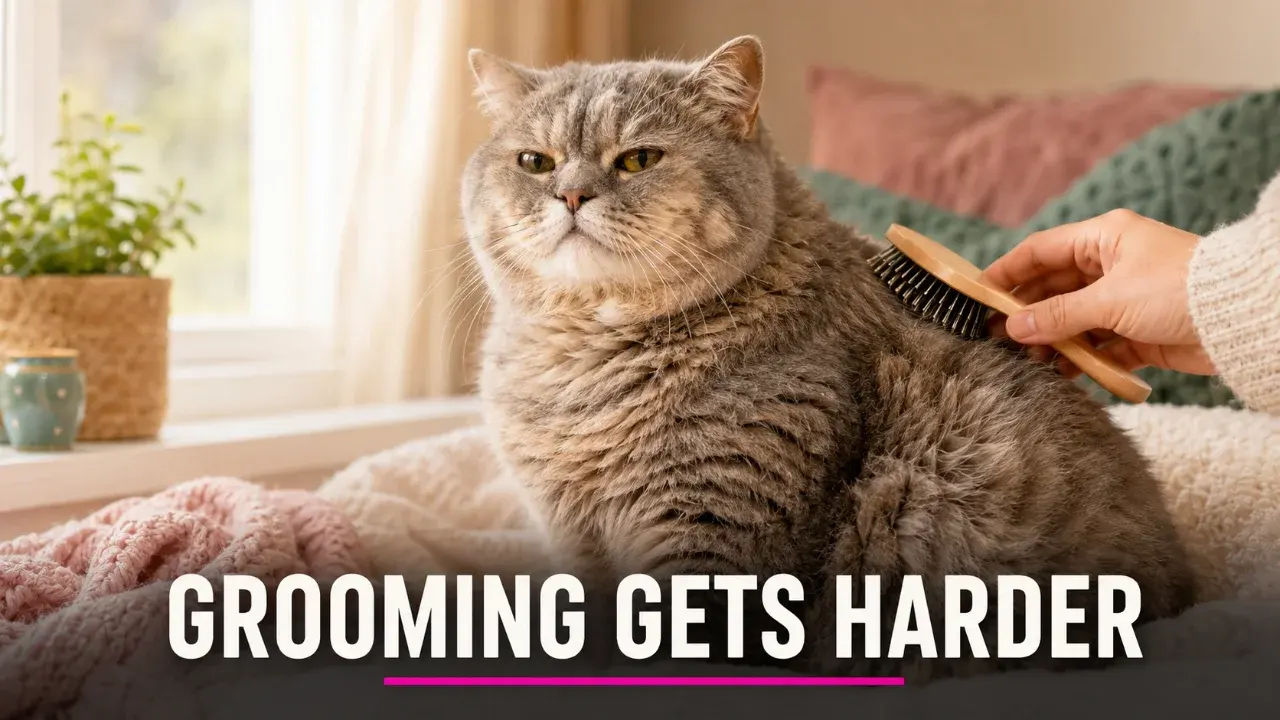
An older cat’s messy coat is not always a harmless part of aging. Stiff joints, pain, weight changes, or illness may make familiar grooming movements increasingly difficult.
Cats are famously meticulous about their coats, but that routine can quietly change with age. A senior cat may stop reaching the lower back, leave food around the mouth, or develop greasy patches and tangles that never appeared before.
The change may be gradual, but poor grooming can be an early health clue. Older cats often hide discomfort, so the condition of the coat may reveal a problem before an owner notices obvious pain or illness.
Grooming requires more movement than it seems
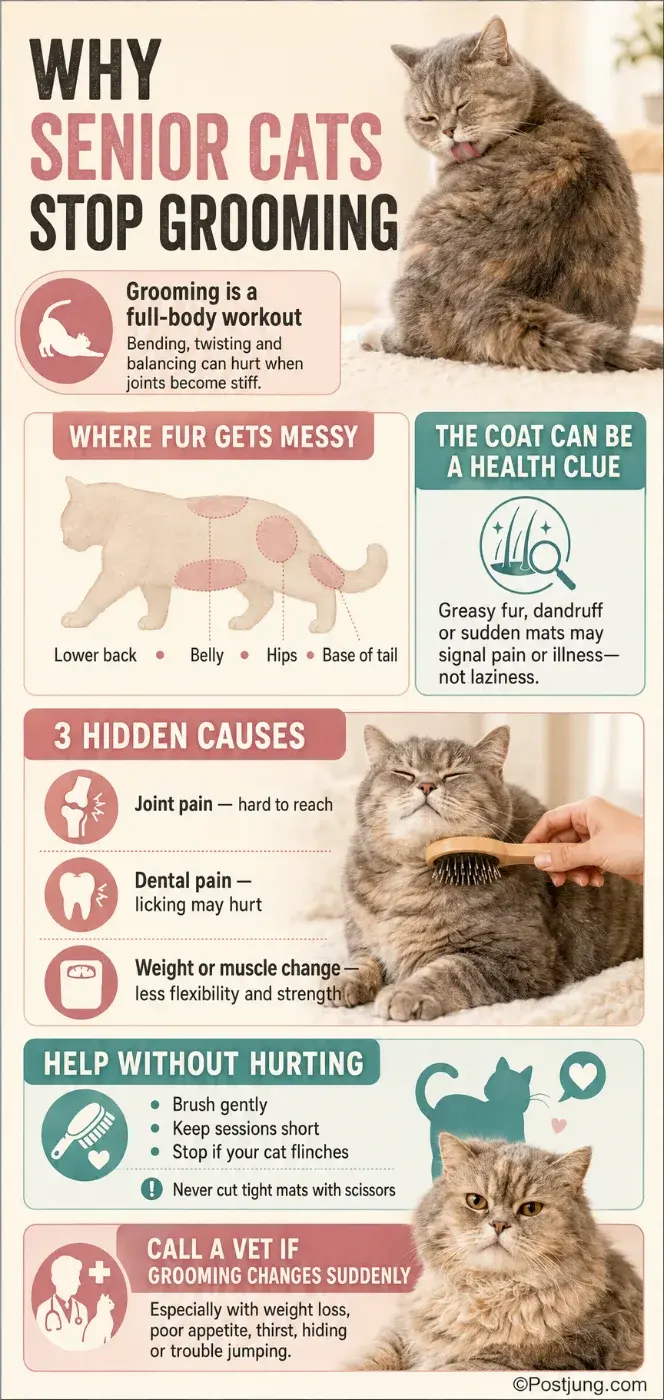
A full grooming session asks a cat to bend its spine, rotate its hips, lift its legs, balance, and repeatedly turn its head. Those movements are easy for a healthy young cat but can become uncomfortable when joints lose mobility.
Osteoarthritis, also called degenerative joint disease, is an important possibility in older cats. A cat with painful hips, knees, elbows, or a stiff back may still groom the areas it can reach comfortably while neglecting the lower back, hindquarters, belly, or base of the tail.
The signs can be subtle. Instead of limping, a cat may hesitate before jumping, sleep in easier-to-reach places, avoid stairs, resist being picked up, or become irritable when touched along the back.
Cats often conceal chronic pain, which is why changes in grooming, movement, and social behavior deserve attention together.
Body shape can limit a cat’s reach
Weight changes can also interfere with grooming.
An overweight cat may have difficulty bending far enough to clean the belly, inner thighs, and rear end. At the other extreme, an older cat that has lost muscle may lack the strength or stability needed to hold demanding grooming positions.
Muscle loss is not always obvious, particularly when a cat is also carrying excess body fat. Owners may notice a bonier spine or hips, weaker jumping, or a change in the shape of the hind legs.
Unexplained weight loss or gain should not be dismissed as aging. Kidney disease, diabetes, thyroid disease, digestive disorders, cancer, and other conditions seen in senior cats may affect weight, energy, hydration, and coat quality.
The problem may begin in the mouth
Grooming depends heavily on the tongue, teeth, and jaw. Dental disease or mouth pain can make licking uncomfortable even when the rest of the body remains flexible.
Possible clues include bad breath, drooling, dropping food, chewing on one side, eating less, preferring softer food, or reacting when the face is touched. Some cats continue eating despite considerable dental discomfort, so a normal appetite does not completely rule out a problem.
A cat that suddenly stops cleaning its face or chest may therefore need an oral examination—not simply a new brush.
Cognitive changes, anxiety, skin disease, and systemic illness can also disrupt familiar grooming habits. A poor coat does not identify one particular diagnosis; it tells an owner that something may have changed.
What an under-groomed coat can look like
Early changes may be easy to miss. Watch for:
- Greasy, separated, or clumped fur
- Dandruff or an unusual amount of loose hair
- Tangles around the armpits, belly, hind legs, or tail
- Urine or fecal material around the rear
- Food residue around the mouth or chest
- A new odor
- Redness, sores, parasites, or irritated skin hidden beneath the coat
Mats are not merely cosmetic. As tangled hair tightens, it can pull on the skin and make ordinary movement uncomfortable. Dense mats may also conceal inflammation or wounds.
A sudden decline in grooming is more concerning than a mild, slow change. Contact a veterinarian if the coat deteriorates quickly or the change appears alongside reduced appetite, increased thirst, weight loss, vomiting, confusion, hiding, difficulty jumping, or sensitivity to touch.
Help in short, gentle sessions
A senior cat may benefit from regular hands-on grooming, especially if the coat is long or prone to tangling. Begin with a soft brush or a comb appropriate for the cat’s coat, and work on an area the cat already enjoys having touched.
Keep sessions brief. A few comfortable minutes are better than forcing the cat through a full-body brushing. Stop if the cat flinches, turns sharply toward the brush, growls, lashes its tail, tries to bite, or repeatedly moves away.
Let the cat set the pace and use treats or calm attention to create a positive association. Grooming time also gives owners an opportunity to notice lumps, sores, weight changes, or painful areas.
Avoid pulling firmly on knots. Large, tight, or widespread mats are best handled by a veterinarian or an experienced cat groomer. Clippers may be needed, and a painful or frightened cat may require veterinary support for safe removal.
Never cut close mats with scissors. Cat skin is thin and can be drawn up inside a mat, making it dangerously easy to cut the skin without realizing it.
Bathing is usually not the first solution. Most cats rarely need routine baths, and water can tighten existing tangles. Ask a veterinarian about appropriate coat care if the cat is greasy, soiled, painful, or unable to clean itself.
A messy coat is information, not a diagnosis
Some older cats simply need more grooming help than they once did. But aging alone should not be used to explain every change.
The useful question is not whether senior cats groom less. It is why this particular cat has changed. A veterinary examination can look for joint pain, dental disease, weight or muscle changes, skin problems, and illnesses that may be affecting the cat’s energy or mobility.
Helping with the coat can improve comfort, but finding the reason grooming became difficult may do far more for a senior cat’s quality of life.
Cornell Feline Health Center, Feline Veterinary Medical Association, VCA Animal Hospitals
REFERENCES:
https://www.vet.cornell.edu/departments-centers-and-institutes/cornell-feline-health-center/health-information/feline-health-topics/loving-care-older-cats
https://catvets.com/wp-content/uploads/2024/12/FelineVMA_Sr.-Care-Guideline_Web.2.pdf
https://vcahospitals.com/know-your-pet/grooming-and-coat-care-for-your-cat

เขียนโดย Postjung Insights
 เปิดรายชื่อ 5 โรงเรียนเอกชนขนาดใหญ่ นักเรียนกว่า 5,000 คนทุกแห่ง
 ราคาทองวันนี้ 21 ก.ย. 69 อัปเดตตลาดทองคำ ทองรูปพรรณแตะ 69,750 บาท
 เปิด 5 โรงเรียนหญิงล้วนเก่าแก่ของไทย ที่มีประวัติยาวนานกว่าศตวรรษ
 อำเภอที่มีชื่ออำเภอสั้นที่สุด 3 อำเภอเท่านั้นในประเทศไทย
 รู้หรือไม่? เปิดรายได้พนักงานส่งพัสดุของแต่ละแอป วันหนึ่งได้เท่าไร
 ตาราง “เด่นเหนือเด่นใต้” งวด 1 ต.ค. 69 เปิดข้อมูลตามโพย เลขไหนอยู่ตรงไหน
 โรงเรียนที่มีนักเรียนมากที่สุดในไทย
 'สควีชชี่'ของเล่นที่กำลังเป็นไวรัลอาจถูกเจ้าหน้าที่ของสนามบินยึดได้ ตรวจสอบให้ดีก่อนนำขึ้นเครื่อง
 แปลปกสลาก งวด 1 ต.ค. 69 ส่องตัวเลขจากภาพปกสลากกินแบ่งรัฐบาล
 เปิดรายชื่อ 5 โรงเรียนเป้าหมาย เด็กสอบเข้าต้องเตรียมตัวให้พร้อม
 ส่องเลข 3 สำนักพิมพ์ งวด 1 ต.ค. 69 ตัวไหนมีข้อมูลตรงกัน
 ซาบีดา” เรียกถกด่วน ปมภาพ “ชุดไทย” ถูกนำไปอ้างเป็นชุดกัมพูชา
 เปิด 5 สินค้าส่งออกของลาวที่คนไทยอาจคาดไม่ถึง หนึ่งในนั้นทำเงินเกือบ 1 พันล้านดอลลาร์ราคาทองวันนี้ 21 ก.ย. 69 อัปเดตตลาดทองคำ ทองรูปพรรณแตะ 69,750 บาทเปิดรายชื่อ 5 โรงเรียนเอกชนขนาดใหญ่ นักเรียนกว่า 5,000 คนทุกแห่งซาบีดา” เรียกถกด่วน ปมภาพ “ชุดไทย” ถูกนำไปอ้างเป็นชุดกัมพูชาเปิดรายชื่อ 5 โรงเรียนเป้าหมาย เด็กสอบเข้าต้องเตรียมตัวให้พร้อม
 หนุ่มขับ Porsche ใจหล่อสุดๆ ติดประกาศเด็กหายไว้รอบคัน..หวังช่วยเผยแพร่ข้อมูลให้ตามหาได้เร็วขึ้น
 English Edition