Foods Cats Should Never Eat—and What to Do After Exposure
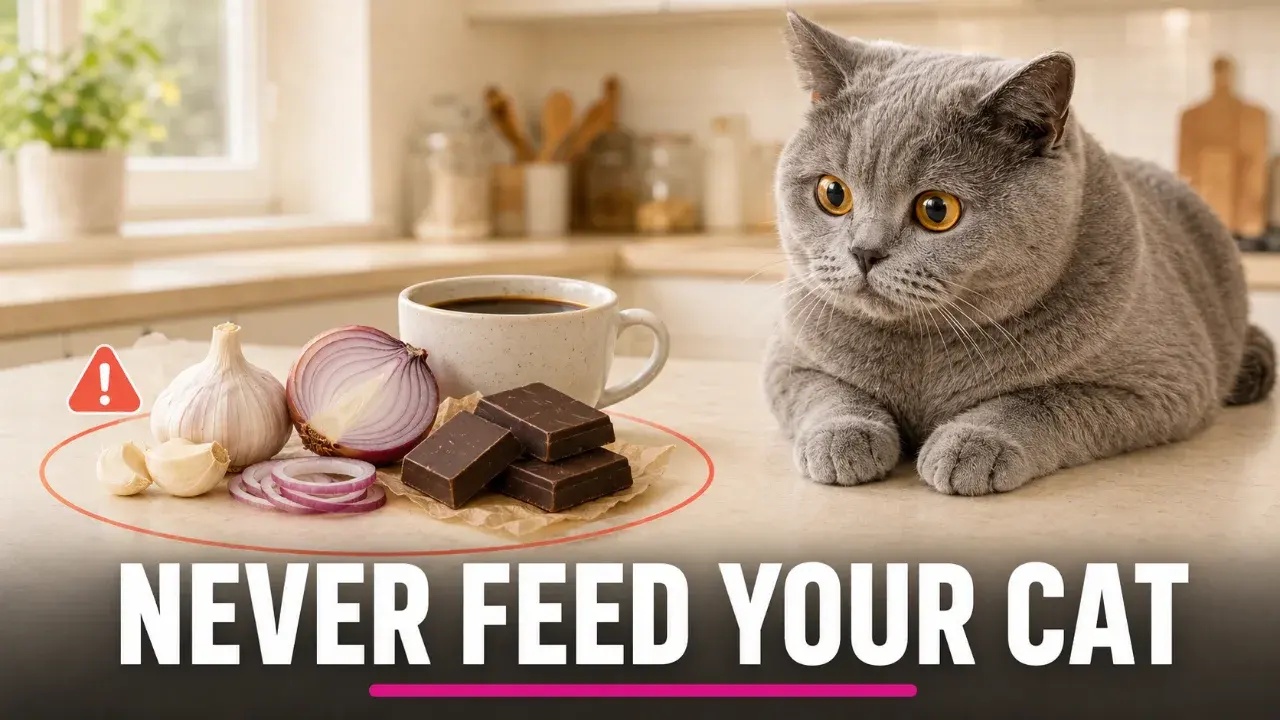
Some everyday foods can damage a cat’s red blood cells, nervous system, or digestive tract. Others are not poisonous but still make poor treats—and knowing the difference can help owners respond appropriately.
A curious cat can reach a coffee cup, lick sauce from a dinner plate, or steal food before anyone notices. While a tiny taste does not always cause poisoning, some human foods can seriously harm cats, and waiting for symptoms may waste valuable treatment time.
The safest approach is to feed a complete, balanced cat food and offer only treats made for cats or approved by a veterinarian. These are the foods and ingredients that deserve special caution.
Onions, garlic, chives, and seasoned foods
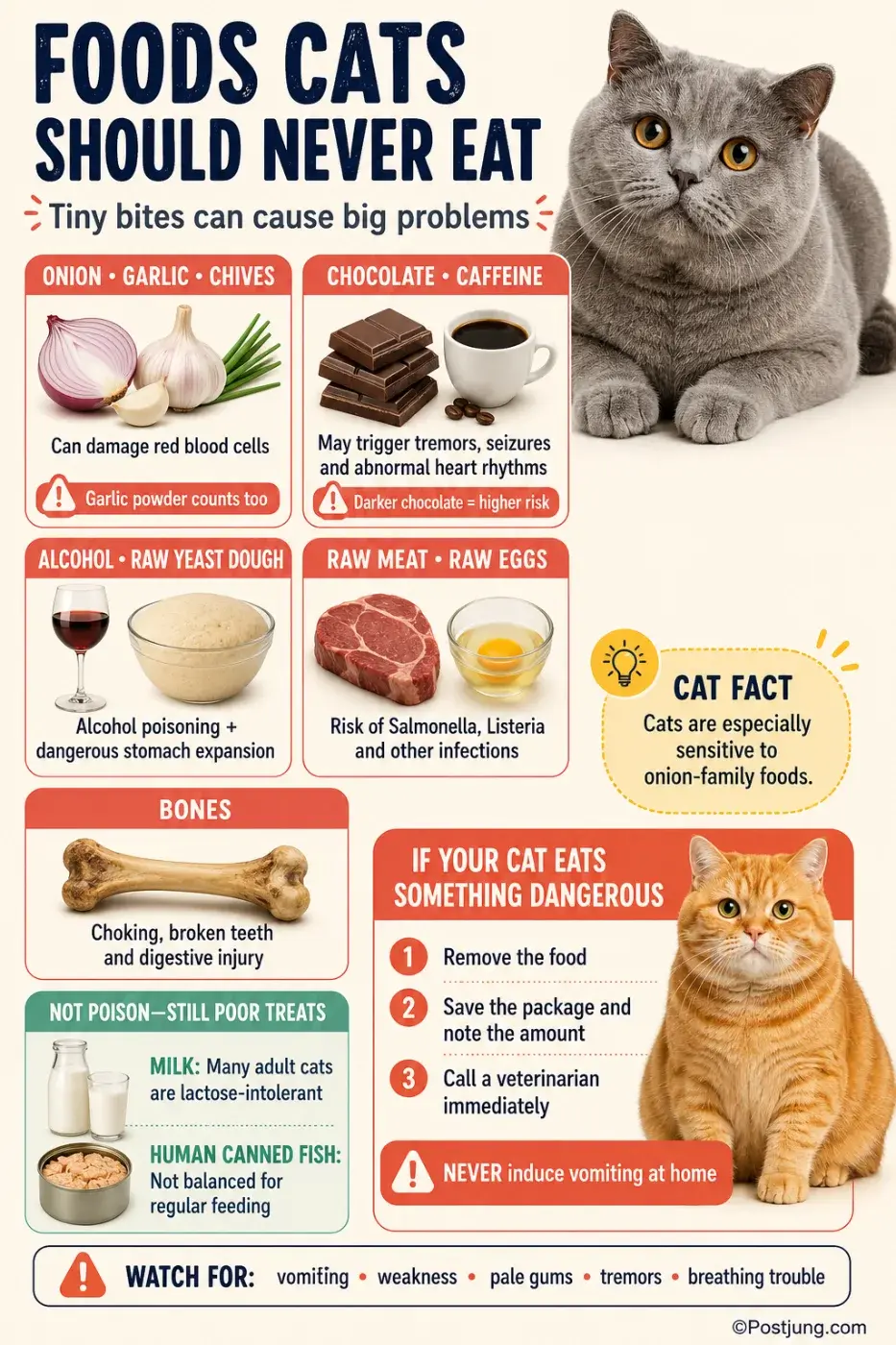
Onions, garlic, chives, and related plants in the allium family can irritate a cat’s digestive system and damage red blood cells, potentially causing anemia. Cats are particularly susceptible.
The danger is not limited to raw vegetables. Cooked onion, garlic powder, dried seasoning, concentrated sauces, soup mixes, gravy, and some baby foods may contain the same harmful compounds.
Possible signs include vomiting, weakness, reduced appetite, pale gums, rapid breathing, and dark urine. Some effects may not be obvious immediately, so seasoning powders should never be treated as harmless. The ASPCA advises checking labels carefully and contacting a veterinarian when exposure is suspected. ASPCA Poison Control
Chocolate, coffee, tea, and other caffeine sources
Chocolate and caffeinated products contain methylxanthines, including caffeine and theobromine. These substances can cause vomiting, diarrhea, restlessness, excessive thirst, abnormal heart rhythms, tremors, seizures, and, in severe cases, death.
Cocoa powder and baking chocolate generally contain more methylxanthines than milk or white chocolate, but owners should not try to calculate safety from color alone. Coffee grounds, energy drinks, tea bags, caffeine tablets, and chocolate desserts can also present a risk.
Desserts may contain several hazards at once, such as chocolate, alcohol, coffee, or raw dough. Keep cups, baking ingredients, and food waste away from cats—not just finished meals.
Alcohol and raw yeast dough
Alcohol can be found in beverages, desserts, sauces, fermented products, and spills that may smell interesting to a pet. Exposure can cause vomiting, poor coordination, breathing problems, tremors, coma, and other serious effects.
Raw bread dough containing yeast creates a second problem. It can expand inside the digestive tract, causing painful bloating, while fermentation produces alcohol. Raw yeast dough is a veterinary emergency risk, not an amusing kitchen mishap.
Raw meat, raw eggs, and bones
Cats are carnivores, but that does not mean uncooked meat is automatically safe. Raw meat and eggs can carry disease-causing organisms, while raw diets may also expose people through contaminated bowls, utensils, surfaces, or animal waste.
Cornell University’s Feline Health Center does not recommend raw meat as food or a treat because it can transmit toxoplasmosis and other infectious diseases. The FDA has also identified Salmonella and Listeria monocytogenes in samples of raw pet food. Cornell Feline Health Center U.S. Food and Drug Administration
Bones create additional risks. They can become lodged, damage teeth, cause choking, or injure the digestive tract. Cooked bones may become brittle and splinter, but raw bones are not risk-free either.
Foods that are unsuitable, even when they are not classic poisons
Some foods belong on the “do not feed” list because they commonly cause illness or can disrupt a balanced diet, even though a small accidental lick may not be a toxic emergency.
Milk is the familiar example. Cats may be pictured drinking bowls of milk, but many adult cats do not digest lactose well. Dairy products can lead to diarrhea or other stomach problems.
Human canned fish is another poor replacement for cat food. Cornell notes that some cats eating canned fish products intended for people have developed potentially serious neurological problems. Regularly feeding a single human food may also leave a cat without the correct balance of nutrients.
Fatty, salty, heavily seasoned, or fried table scraps can cause digestive upset and provide unnecessary calories. “Not immediately poisonous” does not mean nutritionally appropriate.
What about grapes, raisins, and xylitol?
Grapes, raisins, and the sweetener xylitol are well-known hazards for dogs. Evidence and documented risk are much clearer in dogs than in cats, but that uncertainty is not a reason to offer them to a cat.
Keep them out of reach, especially because they often appear in mixed foods such as baked goods, candy, gum, protein products, and desserts that may contain other dangerous ingredients. If a cat eats one, contact a veterinarian for advice based on the product, quantity, timing, and the cat’s health.
What to do if your cat eats something dangerous
Do not wait for visible illness when the food is known or suspected to be toxic. Remove the remaining food, save the package or ingredient list, and note approximately how much was eaten and when.
Contact a veterinarian or emergency veterinary clinic promptly. In the United States, owners may also contact the ASPCA Animal Poison Control Center at 888-426-4435 or Pet Poison Helpline at 855-764-7661; consultation fees may apply. Readers elsewhere should use a local veterinarian or animal poison service.
Do not try to make a cat vomit at home. Hydrogen peroxide, salt, oil, milk, and other online “antidotes” can cause additional harm or delay proper treatment. Pet Poison Helpline specifically advises against home antidotes and inducing vomiting without professional guidance. Pet Poison Helpline
Seek urgent veterinary care if the cat develops trouble breathing, repeated vomiting, severe weakness, poor coordination, tremors, seizures, collapse, pale gums, or an abnormal heartbeat. A cat that appears normal may still need advice because the danger depends on the ingredient, dose, body weight, and time since exposure.
The simplest prevention strategy is also the most reliable: keep human food, baking ingredients, drinks, supplements, and garbage secured. A nutritionally complete cat food may seem less exciting than sharing from the plate, but safe treats are a better form of affection.
ASPCA Animal Poison Control Center, Cornell Feline Health Center, U.S. Food and Drug Administration, Pet Poison Helpline
REFERENCES:
https://www.aspca.org/pet-care/aspca-poison-control/people-foods-avoid-feeding-your-pets
https://www.vet.cornell.edu/departments-centers-and-institutes/cornell-feline-health-center/health-information/feline-health-topics/feeding-your-cat
https://www.fda.gov/animal-veterinary/animal-health-literacy/get-facts-raw-pet-food-diets-can-be-dangerous-you-and-your-pet
https://www.petpoisonhelpline.com/

เขียนโดย Postjung Insights
 เปิดรายชื่อโรงเรียนในไทยที่ “ว่ายน้ำ” อยู่ในหลักสูตร เรียนจริงตั้งแต่อนุบาลถึงมัธยม
 รู้หรือไม่? เปิดรายได้พนักงานส่งพัสดุของแต่ละแอป วันหนึ่งได้เท่าไร
 Google ยอมรับแล้ว! Gemini AI เข้าถึงระบบบริษัทจริง 3 แห่ง ระหว่างการทดสอบความปลอดภัย
 5 คณะที่เรียนจบมาแล้ว มีอาชีพรองรับมากกว่าที่คิด
 เลขเด็ดปฏิทิน "หลวงปู่โต๊ะ" งวดวันที่ 1 ตุลาคม 69..ส่องเลย เลขไหนให้โชค!
 จุฬาฯ มหาวิทยาลัยแห่งแรกของไทย มีจุดเริ่มต้นในสมัยรัชกาลที่ 5
 อำเภอที่มีชื่ออำเภอสั้นที่สุด 3 อำเภอเท่านั้นในประเทศไทย
 เปิด 5 โรงเรียนหญิงล้วนเก่าแก่ของไทย ที่มีประวัติยาวนานกว่าศตวรรษ
 โรงเรียนที่มีนักเรียนมากที่สุดในไทย
 อุทยานเขาใหญ่เรียกตัว “ตีนผี” หลังขับจี้ช้างป่าพ่อลูก ลั่นระยะ 50 เมตรต้องจำให้ขึ้นใจ
 ทำไมของพลาสติกเก่าบางชิ้นถึง “เหนียว” ขึ้นมาเอง ทั้งที่ไม่ได้เปื้อนอะไร?
 ถ้าไม่กลัวเหนื่อย 7 อาชีพที่ตลาดยังต้องการ และค่าทักษะไปถึง 800 บาท/วัน
 😃 ชวนเข้ามาดูกันอีกกับคนที่มีร่างกายพิเศษจนเหมือนมีกล่องสมบัติที่หายาก 😯5 คณะที่เรียนจบมาแล้ว มีอาชีพรองรับมากกว่าที่คิดเปิดรายชื่อโรงเรียนในไทยที่ “ว่ายน้ำ” อยู่ในหลักสูตร เรียนจริงตั้งแต่อนุบาลถึงมัธยมGoogle ยอมรับแล้ว! Gemini AI เข้าถึงระบบบริษัทจริง 3 แห่ง ระหว่างการทดสอบความปลอดภัยเลขเด็ดปฏิทิน "หลวงปู่โต๊ะ" งวดวันที่ 1 ตุลาคม 69..ส่องเลย เลขไหนให้โชค!ทำไมของพลาสติกเก่าบางชิ้นถึง “เหนียว” ขึ้นมาเอง ทั้งที่ไม่ได้เปื้อนอะไร?
 English Edition