Candles and Pets: The Safety Risks Owners Should Know

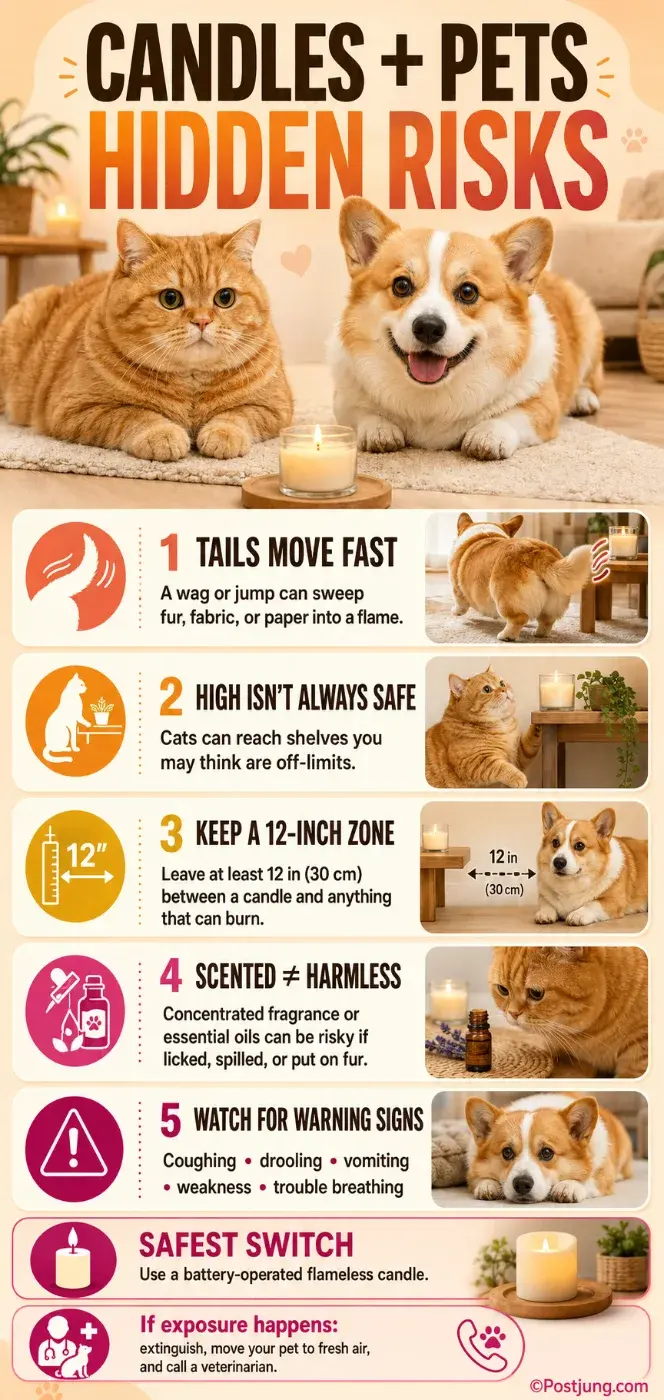
A curious paw, wagging tail, or sudden jump can turn a relaxing candle into a burn or fire hazard. Scented products may also require extra caution around sensitive animals.
Candles can make a room feel calm, but an open flame changes the safety equation when pets are nearby. Cats climb, dogs investigate unfamiliar smells, and a tail can sweep across a low table before anyone has time to react.
The safest rule is simple: a burning candle should never be accessible to a pet. That means thinking beyond whether the animal can reach it from the floor. Furniture, shelves, curtains, and the pet’s usual behavior all matter.
A candle does not have to fall to cause harm
A knocked-over candle is the most obvious danger, but it is not the only one.
Long fur, feathers, and whiskers can pass close enough to a flame to singe or ignite. Curious animals may touch hot wax or a heated glass container with their nose or paw. A pet can also bump the table, pull a tablecloth, or send nearby paper and decorations into the flame.
Cats present a particular challenge because a high shelf is not necessarily an inaccessible shelf. A candle placed above floor level may still be within jumping distance or along a route the cat regularly uses.
Dogs may be less likely to jump onto a shelf, but large dogs and enthusiastic tails can reach surprisingly high surfaces. Smaller pets may also be placed at risk if candles are used near cages, play areas, or exercise pens.
The National Fire Protection Association recommends keeping candles at least 12 inches, or 30 centimeters, from anything that can burn. It also advises using sturdy holders, extinguishing candles whenever people leave the room or go to bed, and keeping pets away from open flames.
In a home with animals, “supervised” should mean actively present and paying attention—not being elsewhere in the house while a candle continues to burn.
Scented candles raise a different question
Pet owners often see warnings about essential oils and assume every scented candle is automatically toxic. The reality is more nuanced.
A finished scented candle is not the same thing as a bottle of concentrated essential oil. The risk depends on its ingredients, concentration, how it is used, the animal’s species and health, and whether the pet touches or ingests the product.
Concentrated essential oils can be harmful to pets through ingestion, skin contact, or contamination of the coat. The ASPCA advises against applying concentrated oils directly to animals and notes that exposure can cause symptoms such as vomiting, diarrhea, weakness, unsteadiness, or low body temperature.
Candle-making supplies deserve special attention. Bottles of fragrance or essential oil, loose wax, and uncut wicks should be stored where pets cannot lick, chew, or walk through them. The ASPCA also warns that long candle wicks can cause injury if swallowed.
A pet chewing a candle may face more than a possible reaction to fragrance. Wax, wick material, metal components, decorations, or pieces of the container can create choking or digestive problems. Do not assume a candle is harmless simply because its ingredients sound natural.
Fragrance and smoke may also bother an individual animal even when poisoning is not involved. If a pet begins coughing, wheezing, drooling, vomiting, acting weak, or leaving the room whenever a product is used, extinguish the candle, move the animal to fresh air, and contact a veterinarian for guidance. Breathing difficulty requires urgent veterinary attention.
Build a safer candle setup
The best location is a stable, uncluttered surface that the pet cannot reach by walking, jumping, stretching, or wagging its tail. Keep the flame away from curtains, bedding, paper, plants, decorations, and cage covers.
Before lighting a candle, run through a quick check:
- Is the holder stable and made for candle use?
- Could a pet reach the surface from nearby furniture?
- Could a tail, leash, curtain, or tablecloth sweep through the flame?
- Are fragrance oils, matches, and lighters stored securely?
- Is someone staying in the room and able to watch the candle?
- Can the candle be extinguished immediately if the pet becomes active?
Glass containers can reduce direct access to the flame, but they are not pet-proof. The glass may become hot, crack, or be knocked over. A lid should be used only according to the manufacturer’s instructions and should not substitute for extinguishing the flame.
For households with highly curious pets, birds, animals with breathing conditions, or pets that climb everywhere, a flameless LED candle is usually the simplest option. It provides a similar visual effect without flame, hot wax, or combustion. Battery compartments should still be secured because swallowed batteries can cause severe injuries.
Plan for the moment something goes wrong
If a pet touches hot wax or suffers a burn, move it away from the hazard and contact a veterinarian promptly. Avoid applying ointments, oils, ice, or household remedies unless a veterinary professional instructs you to do so.
If the animal chews or swallows any part of a candle, keep the packaging or ingredient label. Call a veterinarian or animal poison-control service rather than waiting for symptoms or trying to make the pet vomit at home.
If a candle starts a fire, get everyone out and contact emergency services. Do not reenter a burning building to search for an animal; tell firefighters where the pet was last seen.
It also helps to include pets in the household fire plan. Keep leashes or carriers accessible, know which exits you can use, and practice moving animals safely. Smoke alarms should be working throughout the home.
Candles and pets can share a home, but only when people manage the risk. Distance, active supervision, and a stable setup matter far more than good intentions—and when those conditions cannot be guaranteed, flameless light is the safer choice.
This information is general safety guidance. A veterinarian should assess suspected burns, poisoning, ingestion, or breathing problems.
National Fire Protection Association, American Veterinary Medical Association, ASPCA Animal Poison Control Center
REFERENCES:
https://www.nfpa.org/education-and-research/home-fire-safety
https://www.avma.org/resources-tools/pet-owners/petcare/holiday-pet-safety
https://www.aspca.org/news/essentials-essential-oils-around-pets
https://www.aspca.org/pet-care/aspca-poison-control/poisonous-household-products

เขียนโดย Postjung Insights
 รู้หรือไม่? เปิดรายได้พนักงานส่งพัสดุของแต่ละแอป วันหนึ่งได้เท่าไร
 อำเภอที่มีชื่ออำเภอสั้นที่สุด 3 อำเภอเท่านั้นในประเทศไทย
 เปิดรายชื่อ 5 โรงเรียนเป้าหมาย เด็กสอบเข้าต้องเตรียมตัวให้พร้อม
 ซาบีดา” เรียกถกด่วน ปมภาพ “ชุดไทย” ถูกนำไปอ้างเป็นชุดกัมพูชา
 'สควีชชี่'ของเล่นที่กำลังเป็นไวรัลอาจถูกเจ้าหน้าที่ของสนามบินยึดได้ ตรวจสอบให้ดีก่อนนำขึ้นเครื่อง
 โรงเรียนที่มีนักเรียนมากที่สุดในไทย
 แปลปกสลาก งวด 1 ต.ค. 69 ส่องตัวเลขจากภาพปกสลากกินแบ่งรัฐบาล
 ตาราง “เด่นเหนือเด่นใต้” งวด 1 ต.ค. 69 เปิดข้อมูลตามโพย เลขไหนอยู่ตรงไหน
 หนุ่มขับ Porsche ใจหล่อสุดๆ ติดประกาศเด็กหายไว้รอบคัน..หวังช่วยเผยแพร่ข้อมูลให้ตามหาได้เร็วขึ้น
 เปิด 5 โรงเรียนหญิงล้วนเก่าแก่ของไทย ที่มีประวัติยาวนานกว่าศตวรรษ
 เรียก “ป๋อง สุพรรณ” เซียนพระดัง แจงปมมูลนิธิฯ วัดพุทไธศวรรย์
 บุ๋ม ปนัดดา” เล่าเบื้องหลังหญิงตีเนียน หลังเจออยู่กลางวงสัมภาษณ์ “หนุ่ม กรรชัย”ซาบีดา” เรียกถกด่วน ปมภาพ “ชุดไทย” ถูกนำไปอ้างเป็นชุดกัมพูชาเปิดรายชื่อ 5 โรงเรียนเป้าหมาย เด็กสอบเข้าต้องเตรียมตัวให้พร้อมหนุ่มขับ Porsche ใจหล่อสุดๆ ติดประกาศเด็กหายไว้รอบคัน..หวังช่วยเผยแพร่ข้อมูลให้ตามหาได้เร็วขึ้น
 วาบิ-ซาบิ (Wabi-Sabi) ปรัชญาญี่ปุ่นที่สอนให้เราโอบกอดความไม่สมบูรณ์แบบ
 English Edition