Foods Dogs Should Never Eat—and What to Do If They Do

Some ordinary kitchen foods can cause kidney failure, dangerously low blood sugar, or other serious problems in dogs. Knowing the hidden sources—and responding quickly—can make a critical difference.
A dog staring hopefully at your dinner may be difficult to resist. But foods that are harmless to people can affect a dog’s blood sugar, kidneys, nervous system, or red blood cells—and some dangerous ingredients are hidden in products that do not look risky.
The safest rule is simple: check every ingredient before sharing human food. This matters especially with baked goods, sauces, candy, leftovers, and anything labeled sugar-free.
Xylitol can hide in unexpected products
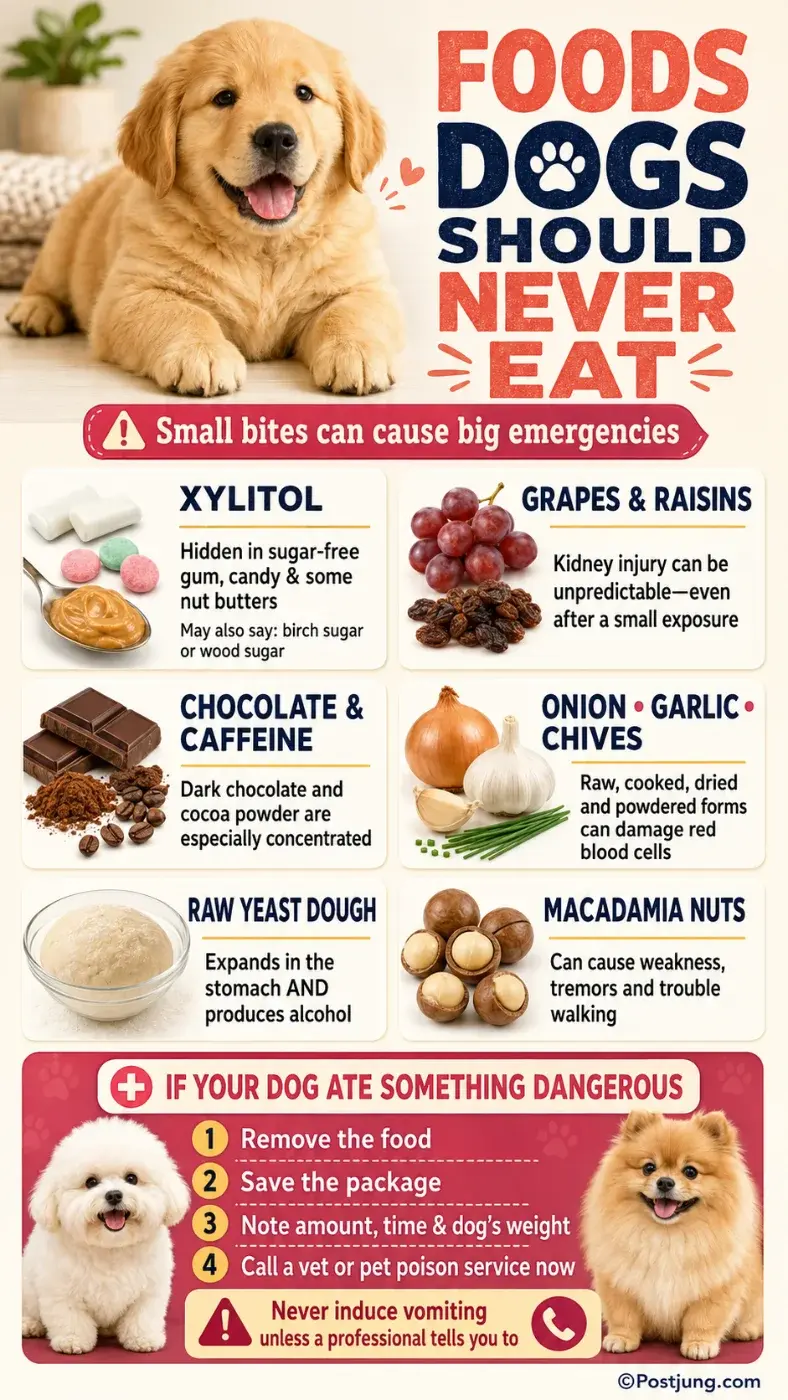
Xylitol is a sweetener used in some sugar-free gum, candy, baked goods, toothpaste, mouthwash, cough syrup, nut butters, and other products. Labels may also describe it as birch sugar, wood sugar, or birch bark extract.
In dogs, xylitol can trigger a rapid release of insulin, leading to dangerously low blood sugar. Larger exposures may also cause liver damage. Vomiting, weakness, difficulty walking, collapse, or seizures can develop quickly—sometimes before an owner realizes what the dog found.
Because the concentration varies dramatically between products, owners should not try to calculate a “safe” amount at home. Any suspected xylitol exposure warrants an immediate call to a veterinarian or animal poison-control service. U.S. Food and Drug Administration
Chocolate, coffee, and caffeine affect the nervous system
Chocolate contains theobromine and caffeine, substances dogs process much more slowly than humans. Dark chocolate, baking chocolate, and cocoa powder generally contain more of these compounds than milk chocolate, but no type should be treated as a dog snack.
Possible effects include vomiting, diarrhea, restlessness, excessive thirst, a rapid or abnormal heartbeat, tremors, and seizures. Coffee grounds, tea bags, caffeine tablets, energy products, and chocolate-covered espresso beans may be particularly concentrated.
The risk depends on the dog’s size, the product, and the amount eaten. A veterinary professional will need those details, so keep the wrapper or photograph the label.
Grapes and raisins are unpredictable
Grapes, raisins, currants, and foods containing them—such as trail mix, fruitcake, cereal, and raisin bread—have been associated with acute kidney injury in dogs.
One troubling feature is that sensitivity can be unpredictable. A dog may appear normal immediately after eating them, and another dog’s previous uneventful exposure does not prove the food is safe.
Vomiting, reduced appetite, lethargy, abdominal discomfort, or changes in thirst and urination may follow. Do not wait for symptoms before calling for help.
Onions and garlic are dangerous in every form
Onions, garlic, chives, and leeks belong to the Allium family. They can damage a dog’s red blood cells, potentially causing anemia. Raw, cooked, dried, powdered, and concentrated forms can all present a problem.
That makes seasoned foods easy to overlook. Soup, gravy, meat marinades, baby food, sauces, spice blends, and restaurant leftovers may contain onion or garlic even when no visible pieces remain.
Signs may include vomiting, weakness, pale gums, rapid breathing, an elevated heart rate, or dark urine. Some effects may not become obvious immediately, so suspected exposure still deserves professional advice.
Alcohol and raw yeast dough create a double risk
Alcoholic drinks are unsafe for dogs, but ethanol may also appear in desserts, extracts, fermented products, or spilled cocktail mixtures.
Raw bread dough made with yeast can be especially dangerous. The warm environment of the stomach allows the dough to expand while fermentation produces alcohol. This creates the combined risk of stomach distention and alcohol poisoning.
A dog that develops a swollen abdomen, repeated unproductive retching, poor coordination, unusual sleepiness, or breathing difficulty needs emergency care. Never offer alcohol intentionally, even in an amount that seems trivial.
Macadamia nuts and moldy foods belong out of reach
Macadamia nuts can cause weakness—often most noticeable in the hind legs—along with vomiting, tremors, fever, or difficulty walking. Chocolate-coated macadamias combine two hazards in one food.
Moldy food and compost can contain toxins capable of causing severe tremors or seizures. Garbage bins, fallen fruit, discarded bread, and unattended compost piles may therefore be as important to secure as the pantry.
The ASPCA also advises keeping dogs away from salty foods and excessive amounts of fatty foods. While these are not always poisonous in the same way as xylitol or grapes, they can still lead to serious illness. ASPCA Animal Poison Control Center
Some foods are hazardous without being chemically toxic
Cooked bones may splinter or become lodged in the mouth, throat, stomach, or intestines. Corn cobs, fruit pits, skewers, wrappers, and packaging can cause choking or intestinal obstruction.
Very fatty table scraps may trigger vomiting, diarrhea, or pancreatitis in susceptible dogs. Highly salted foods can also be dangerous in substantial amounts.
This distinction matters: a food does not need to contain a classic toxin to create a veterinary emergency.
What to do after a dog eats something dangerous
Remove the remaining food, prevent further access, and collect useful information. Note the product name, ingredients, approximate amount, time of exposure, and your dog’s weight. Save the package if possible.
Contact a veterinarian, emergency animal hospital, or pet poison-control service promptly. In the United States, the ASPCA Animal Poison Control Center operates around the clock at 888-426-4435; a consultation fee may apply. Readers elsewhere should use a local veterinary emergency service. ASPCA Poison Control
Do not induce vomiting unless a professional directs you to do so. The appropriate response depends on what was swallowed and the dog’s condition. Home remedies can delay effective treatment or cause additional injury.
Prevention is easier than an emergency calculation. Store dangerous foods in closed cabinets, keep bags and purses away from curious dogs, secure trash and compost, and ask guests not to share food without permission.
A pleading face does not mean a food is safe. The kinder choice may be a dog treat—or simply keeping tonight’s dinner on the human side of the table.
REFERENCES:
https://www.fda.gov/consumers/consumer-updates/paws-xylitol-its-dangerous-dogs
https://www.aspca.org/pet-care/aspca-poison-control/people-foods-avoid-feeding-your-pets
https://www.aspca.org/pet-care/aspca-poison-control

เขียนโดย Postjung Insights
 รู้หรือไม่? เปิดรายได้พนักงานส่งพัสดุของแต่ละแอป วันหนึ่งได้เท่าไร
 5 คณะที่เรียนจบมาแล้ว มีอาชีพรองรับมากกว่าที่คิด
 เปิดรายชื่อโรงเรียนในไทยที่ “ว่ายน้ำ” อยู่ในหลักสูตร เรียนจริงตั้งแต่อนุบาลถึงมัธยม
 อำเภอที่มีชื่ออำเภอสั้นที่สุด 3 อำเภอเท่านั้นในประเทศไทย
 เปิด 5 โรงเรียนหญิงล้วนเก่าแก่ของไทย ที่มีประวัติยาวนานกว่าศตวรรษ
 จุฬาฯ มหาวิทยาลัยแห่งแรกของไทย มีจุดเริ่มต้นในสมัยรัชกาลที่ 5
 โรงเรียนที่มีนักเรียนมากที่สุดในไทย
 Google ยอมรับแล้ว! Gemini AI เข้าถึงระบบบริษัทจริง 3 แห่ง ระหว่างการทดสอบความปลอดภัย
 สถิติย้อนหลัง 10 ปี ออกเลขไหนบ้างมาดูกัน
 ส่องเลข 3 สำนักพิมพ์ งวด 1 ต.ค. 69 ตัวไหนมีข้อมูลตรงกัน
 ตาราง “เด่นเหนือเด่นใต้” งวด 1 ต.ค. 69 เปิดข้อมูลตามโพย เลขไหนอยู่ตรงไหน
 ทำไมของพลาสติกเก่าบางชิ้นถึง “เหนียว” ขึ้นมาเอง ทั้งที่ไม่ได้เปื้อนอะไร?5 คณะที่เรียนจบมาแล้ว มีอาชีพรองรับมากกว่าที่คิดเปิดรายชื่อโรงเรียนในไทยที่ “ว่ายน้ำ” อยู่ในหลักสูตร เรียนจริงตั้งแต่อนุบาลถึงมัธยมGoogle ยอมรับแล้ว! Gemini AI เข้าถึงระบบบริษัทจริง 3 แห่ง ระหว่างการทดสอบความปลอดภัย
 เลขเด็ดปฏิทิน "หลวงปู่โต๊ะ" งวดวันที่ 1 ตุลาคม 69..ส่องเลย เลขไหนให้โชค!ทำไมของพลาสติกเก่าบางชิ้นถึง “เหนียว” ขึ้นมาเอง ทั้งที่ไม่ได้เปื้อนอะไร?
 อุทยานเขาใหญ่เรียกตัว “ตีนผี” หลังขับจี้ช้างป่าพ่อลูก ลั่นระยะ 50 เมตรต้องจำให้ขึ้นใจ
 English Edition