Why Flea and Tick Prevention Shouldn’t Stop in Winter

Cold weather may reduce parasite activity in some places, but it does not eliminate the risk. Consistent prevention can protect pets, homes, and the people who share them.
Flea and tick prevention is easy to associate with warm weather, wooded trails, and long afternoons outside. Yet stopping protection when temperatures fall can create gaps that allow parasites to reach pets and, in some cases, become established inside the home.
Veterinary parasite-control guidance generally recommends year-round protection. The reason is straightforward: parasite risk does not follow one universal calendar, and exposure can continue even when owners see fewer fleas or ticks.
Fleas can survive where pets live
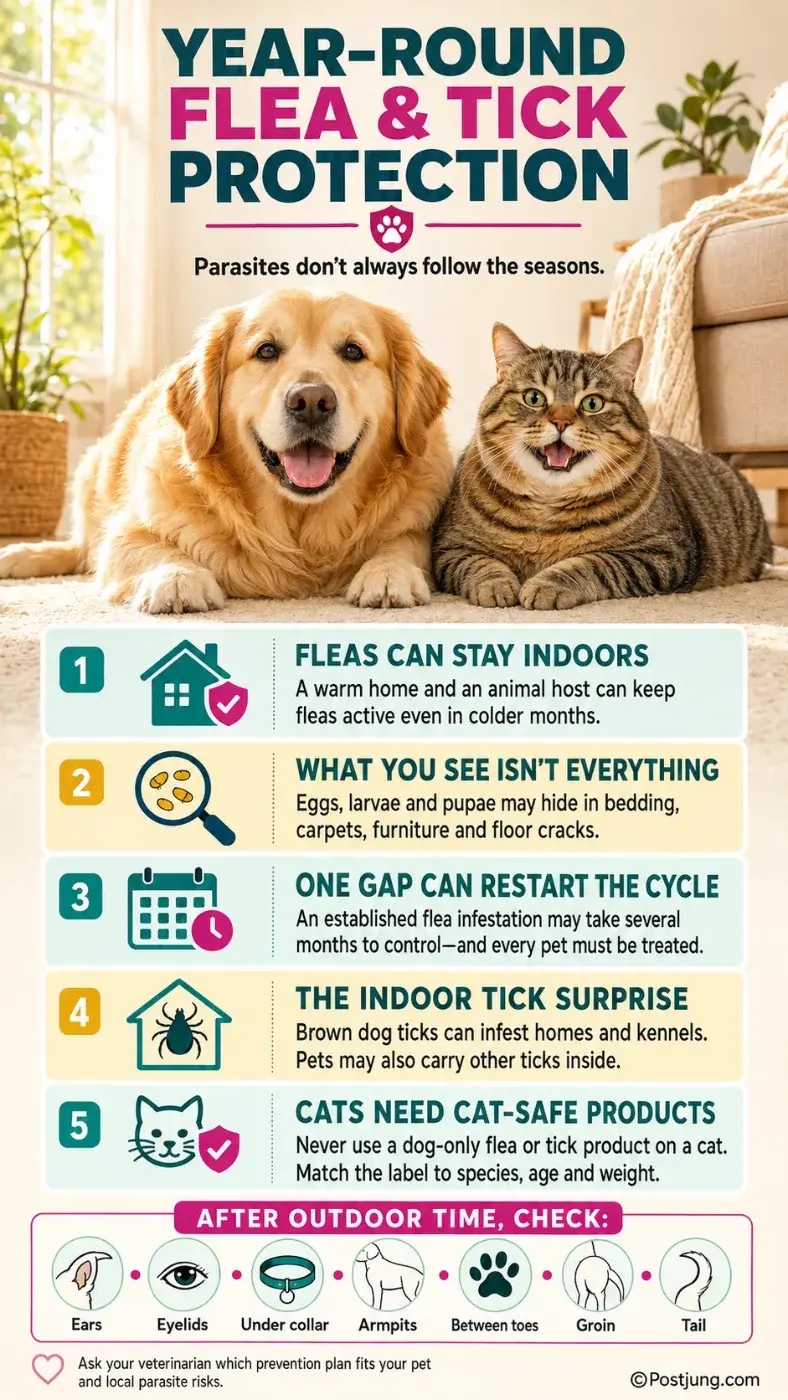
Fleas prefer warm, humid conditions, but a heated home can provide shelter during colder months. The presence of a dog, cat, or another suitable host gives adult fleas a continuing source of food.
The Centers for Disease Control and Prevention notes that fleas can survive year-round when an animal host is available. It recommends treating pets throughout the year to kill adult fleas and stop new generations from developing. (CDC)
That life cycle is what makes a seemingly minor flea problem difficult to eliminate. The fleas visible on an animal are only part of the infestation. Eggs, larvae, and pupae may be present in carpeting, bedding, furniture, floor cracks, or other protected areas.
Once that population becomes established, treating only the fleas currently visible on one pet may not be enough. The Companion Animal Parasite Council warns that controlling an established infestation can take several months and generally requires treating every pet in the household. (CAPC)
In practical terms, prevention is often easier than clearing an infestation after it spreads through the home.
Tick season is not the same everywhere
People often imagine that all ticks disappear after the first frost. Tick activity, however, depends on the species, local weather, habitat, and region.
Some ticks may become active during mild winter periods. Others can survive in protected outdoor environments, while the brown dog tick is especially notable because it can infest indoor spaces such as homes and kennels.
Dogs and cats can also carry ticks indoors after spending time in yards, parks, brush, or other vegetation. The CDC advises checking pets daily—particularly after outdoor activity—and removing attached ticks promptly. (CDC)
This matters beyond the pet itself. A tick carried indoors may later bite a person, and both animals and humans can become sick from certain tickborne pathogens.
Climate and lifestyle also change the equation. A dog living in a cold northern climate may have a different exposure pattern from one in Florida, Thailand, or another warm region where parasite activity can remain significant for much of the year. Travel can introduce additional risks that are easy to overlook.
The right prevention plan should therefore reflect where a pet lives, where it travels, and how much time it spends outside—not simply the month shown on the calendar.
Indoor pets are not automatically protected
An indoor-only cat may face less exposure than a dog that hikes through tall grass, but “lower risk” does not mean “no risk.”
Fleas can enter homes on other animals, clothing, or belongings. Dogs that go outside may bring parasites into a household shared with indoor cats. Wildlife and stray animals around porches, yards, crawl spaces, or apartment buildings can also contribute to exposure.
Ticks are less likely to establish broadly inside most homes, but a pet or person can still carry one through the door. Brown dog ticks are an important exception because they can complete their life cycle indoors.
For multi-pet households, one unprotected animal can become a weak point in the prevention plan. Every pet needs an appropriate, species-specific approach, even when their daily routines differ.
The safest product is the one suited to the individual pet
Year-round prevention does not mean using the same product for every animal. Flea and tick preventives come in several forms, including topical treatments, oral medications, sprays, shampoos, and collars. Their duration and the parasites they cover can vary.
A veterinarian can recommend an option based on:
- Whether the animal is a dog or cat
- Age, weight, and general health
- Pregnancy or nursing status
- Previous reactions or seizure history
- Other medications being used
- Local flea and tick species
- Swimming, bathing, travel, and outdoor habits
- The presence of children or other animals in the home
Never assume that a product labeled for dogs is safe for cats. Some ingredients and concentrations used in canine products may seriously harm cats. The dose must also match the animal’s weight and life stage.
The U.S. Food and Drug Administration advises owners to read the label before every application and to consult a veterinarian before treating young, elderly, sick, medicated, pregnant, nursing, or previously sensitive animals. (FDA)
Some products in the isoxazoline class have been associated with neurologic reactions in a small number of dogs and cats, including tremors, poor coordination, and seizures. These products are considered safe and effective for most pets, but the animal’s medical history should be discussed with a veterinarian.
Prevention works best as a routine
The most effective schedule is one that owners can follow correctly. Depending on the product, protection may last for weeks or months. Missing or delaying the next dose can create an opening for reinfestation.
A calendar alert, veterinary reminder, or written household schedule can help. Owners should also continue checking their pets, washing bedding, vacuuming areas where animals rest, and keeping yards less inviting to ticks.
Medication does not replace regular parasite checks, especially after time outdoors. Look around the ears, eyelids, collar, legs, toes, groin, and tail—areas where ticks can be difficult to notice beneath fur.
If fleas repeatedly return, ticks are found indoors, or a pet develops unusual itching, skin irritation, weakness, appetite changes, tremors, or other concerning symptoms, contact a veterinarian. Bring the product package or label if a reaction may be involved.
Year-round prevention is ultimately about consistency, not alarm. A plan tailored to the individual pet can prevent a seasonal assumption from turning into a household problem.
Companion Animal Parasite Council, Centers for Disease Control and Prevention, U.S. Food and Drug Administration
REFERENCES:
https://capcvet.org/articles/the-case-for-year-round-flea-and-tick-control/
https://www.cdc.gov/fleas/prevention/index.html
https://www.cdc.gov/ticks/prevention/preventing-ticks-on-pets.html
https://www.fda.gov/consumers/consumer-updates/safe-use-flea-and-tick-products-pets

เขียนโดย Postjung Insights
 ซาบีดา” เรียกถกด่วน ปมภาพ “ชุดไทย” ถูกนำไปอ้างเป็นชุดกัมพูชา
 เปิดรายชื่อ 5 โรงเรียนเป้าหมาย เด็กสอบเข้าต้องเตรียมตัวให้พร้อม
 แปลปกสลาก งวด 1 ต.ค. 69 ส่องตัวเลขจากภาพปกสลากกินแบ่งรัฐบาล
 รู้หรือไม่? เปิดรายได้พนักงานส่งพัสดุของแต่ละแอป วันหนึ่งได้เท่าไร
 ตาราง “เด่นเหนือเด่นใต้” งวด 1 ต.ค. 69 เปิดข้อมูลตามโพย เลขไหนอยู่ตรงไหน
 Ctrip แพลตฟอร์มการท่องเที่ยวของจีน เปิดขายตั๋วสำหรับทริปท่องเที่ยวอวกาศ ของ Virgin Galactic 6 วัน ในราคาประมาณ 24 ล้านบาท
 อำเภอที่มีชื่ออำเภอสั้นที่สุด 3 อำเภอเท่านั้นในประเทศไทย
 หนุ่มขับ Porsche ใจหล่อสุดๆ ติดประกาศเด็กหายไว้รอบคัน..หวังช่วยเผยแพร่ข้อมูลให้ตามหาได้เร็วขึ้น
 'สควีชชี่'ของเล่นที่กำลังเป็นไวรัลอาจถูกเจ้าหน้าที่ของสนามบินยึดได้ ตรวจสอบให้ดีก่อนนำขึ้นเครื่อง
 โรสแมรี่ แฮร์ริส ‘ป้าเมย์’ แห่ง Spider-Man ฉบับโทบีย์ แม็คไกวร์ อายุครบ 99 ปี
 โรงเรียนที่มีนักเรียนมากที่สุดในไทย
 ส่องเลข 3 สำนักพิมพ์ งวด 1 ต.ค. 69 ตัวไหนมีข้อมูลตรงกันซาบีดา” เรียกถกด่วน ปมภาพ “ชุดไทย” ถูกนำไปอ้างเป็นชุดกัมพูชาเปิดรายชื่อ 5 โรงเรียนเป้าหมาย เด็กสอบเข้าต้องเตรียมตัวให้พร้อมหนุ่มขับ Porsche ใจหล่อสุดๆ ติดประกาศเด็กหายไว้รอบคัน..หวังช่วยเผยแพร่ข้อมูลให้ตามหาได้เร็วขึ้น
 วาบิ-ซาบิ (Wabi-Sabi) ปรัชญาญี่ปุ่นที่สอนให้เราโอบกอดความไม่สมบูรณ์แบบ
 English Edition