Why Pet Shampoo Is Different From Human Shampoo
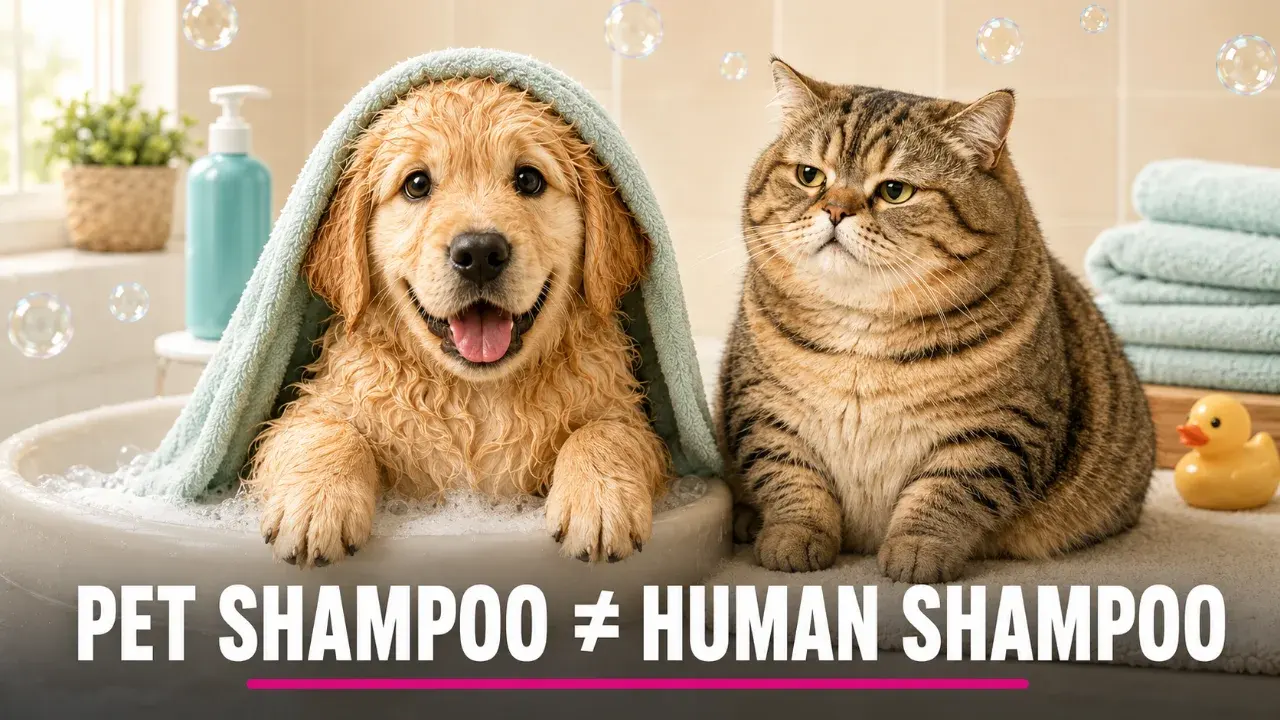
The difference goes deeper than fragrance and packaging. Pet shampoos are formulated for animal skin, coats, grooming habits, and species-specific safety needs.
A bottle of human shampoo may look like a reasonable substitute when the dog needs an unexpected bath. Both products lather, remove oil, and rinse away dirt—but they are designed for different bodies.
Pet shampoo is formulated for animal skin, not the human scalp. That distinction affects its acidity, cleansing strength, ingredients, and intended use. It also explains why a product that feels gentle on a person can leave a dog or cat itchy and uncomfortable.
Human and pet skin do not have the same chemistry
Skin has a thin protective surface commonly described as an acid mantle. It helps retain moisture and supports the skin’s normal protective functions.
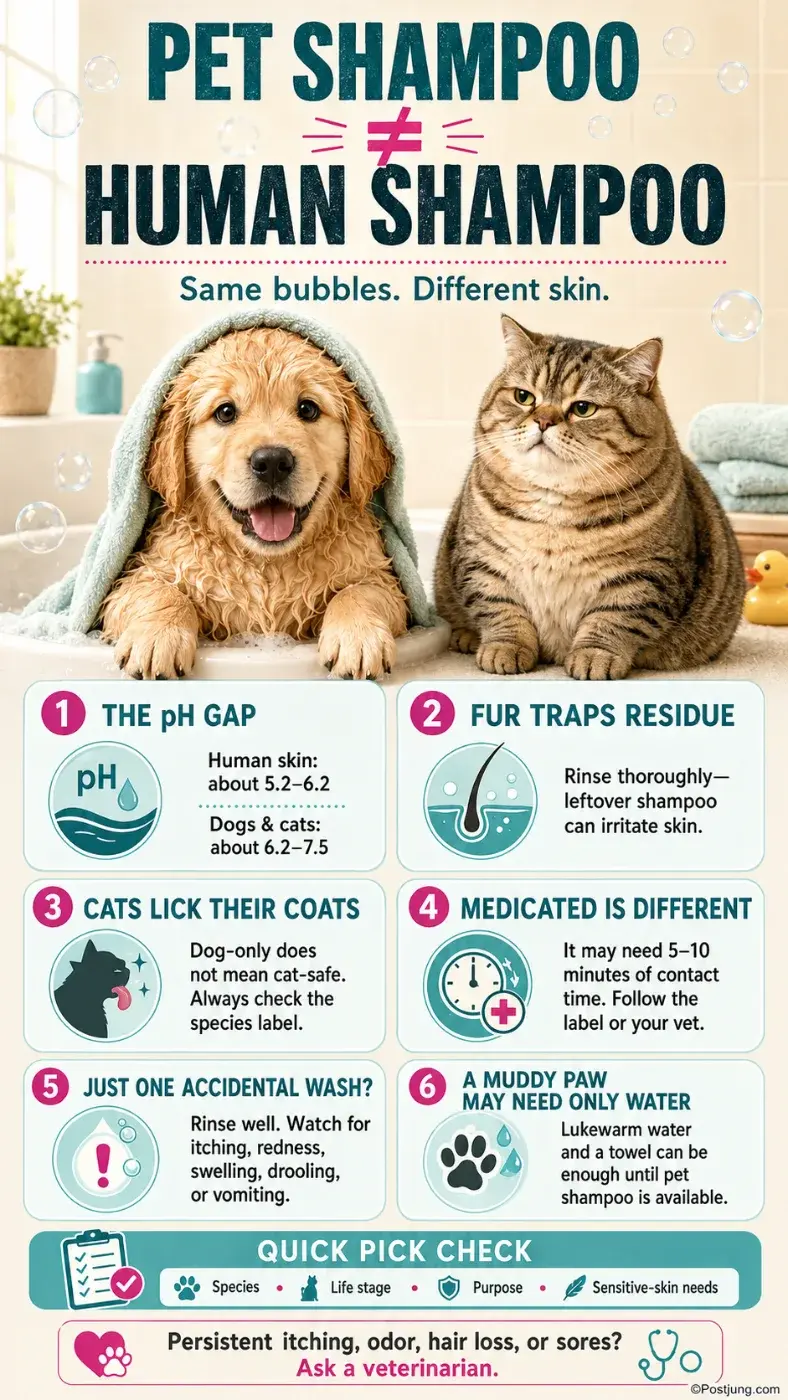
Human skin is generally more acidic than the skin of dogs and cats. VCA Animal Hospitals places human skin pH at approximately 5.2 to 6.2, while dog and cat skin is closer to neutral at roughly 6.2 to 7.5. Pet shampoo is formulated with that difference in mind.
Using a more acidic human shampoo can remove protective oils and disturb the skin’s normal environment, particularly with repeated use. Possible results include dryness, flaking, itching, or a dull and brittle coat. VCA Animal Hospitals and Texas A&M College of Veterinary Medicine both advise owners to use products intended for pets.
The issue is not pH alone. Shampoos also contain cleansing agents, fragrances, conditioners, preservatives, and sometimes active medications. A formula intended for a human scalp may clean more aggressively than an animal’s skin tolerates.
Fur changes how shampoo behaves
Human shampoo is usually designed to remove sweat, styling products, and oil from scalp hair. Pet shampoo must work through a coat that may be short, long, dense, double-layered, curly, or nearly hairless.
A thick coat can also hold product against the skin. Shampoo residue that remains trapped beneath the fur may cause irritation, which is why thorough rinsing matters nearly as much as choosing the right bottle.
Pet formulas may include conditioners or moisturizing ingredients designed to help the skin and coat without leaving excessive residue. That does not mean every product marketed for pets suits every animal, however. A heavily fragranced formula may still bother a sensitive pet, and marketing terms such as “natural” do not automatically establish safety.
The species label matters more than the front-page claims. Owners should confirm that a shampoo is intended for their animal and appropriate for its age or life stage.
Dog shampoo is not automatically safe for cats
“Pet shampoo” can sound like a universal category, but dogs and cats process and encounter topical ingredients differently. Cats also groom themselves by licking their coats, increasing the chance that residue will be swallowed.
This becomes especially important with flea-and-tick products. The U.S. Food and Drug Administration advises owners never to apply a dog-only flea or tick product to a cat and to check whether a product is labeled for the animal’s species, age, and weight. Dog-only does not mean cat-safe.
Kittens and puppies may also need products labeled specifically for young animals. VCA recommends pet-formulated shampoo for kittens rather than human or baby shampoo because feline skin differs in thickness and acidity from human skin. VCA Animal Hospitals provides additional guidance on choosing kitten shampoo, while the FDA explains species and life-stage precautions for flea-and-tick products.
Medicated shampoo is treatment, not ordinary soap
Some pet shampoos are meant for routine cleaning. Others contain active ingredients used as part of veterinary treatment for bacterial infections, yeast overgrowth, allergies, excessive scaling, or other skin disorders.
These medicated products may need to remain on the skin for several minutes before rinsing. The required contact time, bathing schedule, and amount can vary by condition and formula.
Leaving an ordinary shampoo on longer does not make it work better. Likewise, using a medicated product without knowing what is causing the skin problem may irritate the animal or delay proper treatment.
Follow the label and the veterinarian’s directions. VCA notes that medicated shampoos commonly require a contact period before being rinsed away completely, while routine shampoos can generally be rinsed immediately.
What if human shampoo was used once?
One accidental bath with human shampoo does not automatically mean a pet will become ill. Risk depends on the formula, the amount used, how thoroughly it was rinsed away, and the animal’s existing skin sensitivity.
Rinse the coat carefully with lukewarm water to remove any remaining product. Over the following hours or days, watch for persistent scratching, redness, flaky skin, swelling, unusual drooling, vomiting, or marked discomfort.
Contact a veterinarian if symptoms appear, worsen, or do not settle. If a pet swallowed shampoo or was exposed to a medicated human product, keep the container so the veterinarian can identify its ingredients.
For a dirty paw or small muddy patch, plain lukewarm water and a towel may be enough until an appropriate shampoo is available. A full bath does not always require shampoo.
How to choose a practical everyday formula
Start with a product clearly labeled for the animal’s species and life stage. For routine bathing, a mild, fragrance-free pet shampoo can be a sensible option, especially for animals with a history of sensitivity.
A veterinarian should help select products for recurring itching, hair loss, odor, sores, greasy skin, or frequent infections. Those signs can point to allergies, parasites, or another condition that bathing alone will not resolve.
Bathing frequency also varies. Coat type, activity, climate, health, and veterinary treatment plans all matter. Cats usually handle much of their own grooming and may rarely need a bath; the ASPCA notes that most cats stay relatively clean with regular brushing.
The practical lesson is simple: similar-looking bottles are not interchangeable formulas. Pet shampoo is different because the animal underneath the coat is biologically different—and choosing for that animal is safer than choosing by scent, foam, or convenience.
VCA Animal Hospitals, Texas A&M College of Veterinary Medicine, U.S. Food and Drug Administration, ASPCA
REFERENCES:
https://vcahospitals.com/resources/lifestyle-dog/supplies/true-or-false-it-s-okay-to-use-human-shampoo-on-pets
https://vetmed.tamu.edu/news/pet-talk/pet-hygiene/
https://vcahospitals.com/pediatric/kitten/prep-supplies/how-to-choose-a-kitten-shampoo
https://www.fda.gov/consumers/consumer-updates/safe-use-flea-and-tick-products-pets

เขียนโดย Postjung Insights
 เปิดรายชื่อ 5 โรงเรียนเป้าหมาย เด็กสอบเข้าต้องเตรียมตัวให้พร้อม
 โรงเรียนที่มีนักเรียนมากที่สุดในไทย
 แปลปกสลาก งวด 1 ต.ค. 69 ส่องตัวเลขจากภาพปกสลากกินแบ่งรัฐบาล
 หนุ่มขับ Porsche ใจหล่อสุดๆ ติดประกาศเด็กหายไว้รอบคัน..หวังช่วยเผยแพร่ข้อมูลให้ตามหาได้เร็วขึ้น
 Ctrip แพลตฟอร์มการท่องเที่ยวของจีน เปิดขายตั๋วสำหรับทริปท่องเที่ยวอวกาศ ของ Virgin Galactic 6 วัน ในราคาประมาณ 24 ล้านบาท
 รู้หรือไม่? เปิดรายได้พนักงานส่งพัสดุของแต่ละแอป วันหนึ่งได้เท่าไร
 ซาบีดา” เรียกถกด่วน ปมภาพ “ชุดไทย” ถูกนำไปอ้างเป็นชุดกัมพูชา
 อำเภอที่มีชื่ออำเภอสั้นที่สุด 3 อำเภอเท่านั้นในประเทศไทย
 ตาราง “เด่นเหนือเด่นใต้” งวด 1 ต.ค. 69 เปิดข้อมูลตามโพย เลขไหนอยู่ตรงไหน
 เปิด 5 โรงเรียนหญิงล้วนเก่าแก่ของไทย ที่มีประวัติยาวนานกว่าศตวรรษ
 เรียก “ป๋อง สุพรรณ” เซียนพระดัง แจงปมมูลนิธิฯ วัดพุทไธศวรรย์
 'สควีชชี่'ของเล่นที่กำลังเป็นไวรัลอาจถูกเจ้าหน้าที่ของสนามบินยึดได้ ตรวจสอบให้ดีก่อนนำขึ้นเครื่องซาบีดา” เรียกถกด่วน ปมภาพ “ชุดไทย” ถูกนำไปอ้างเป็นชุดกัมพูชาเปิดรายชื่อ 5 โรงเรียนเป้าหมาย เด็กสอบเข้าต้องเตรียมตัวให้พร้อมหนุ่มขับ Porsche ใจหล่อสุดๆ ติดประกาศเด็กหายไว้รอบคัน..หวังช่วยเผยแพร่ข้อมูลให้ตามหาได้เร็วขึ้น
 วาบิ-ซาบิ (Wabi-Sabi) ปรัชญาญี่ปุ่นที่สอนให้เราโอบกอดความไม่สมบูรณ์แบบ
 English Edition