Your Older Pet May Not Be Lazy—Pain Can Look Like Slowing Down

Sleeping longer or refusing the stairs may seem like ordinary aging. But subtle changes in movement, grooming, mood, and daily habits can reveal discomfort that deserves attention.
An older dog that stops greeting the family at the door may appear tired. A senior cat that no longer jumps onto the windowsill may seem less interested in the world.
Sometimes those changes are part of aging. But they can also be the outward signs of pain—especially when a once-familiar activity gradually becomes difficult.
Pain often appears as a change in behavior, not an obvious cry for help. Because pets cannot explain where it hurts, owners may mistake reduced movement for laziness, stubbornness, or an inevitable consequence of growing old.
Pain does not always look dramatic
A painful pet may limp, whimper, or react when touched. Chronic discomfort, however, is often quieter.
A dog with painful joints may hesitate before standing, walk more slowly, avoid stairs, shorten its usual route, or stop climbing onto furniture. Some dogs become restless at night or repeatedly shift positions because they cannot get comfortable.
Cats can be even harder to read. A cat experiencing discomfort may jump less, choose lower resting places, hide more often, groom less, or become unusually defensive when handled. Difficulty stepping into a high-sided litter box may result in accidents nearby.
These behaviors may look unrelated, but they can share one explanation: an ordinary movement has started to hurt.
The most useful question is not whether a pet still performs an activity at all. It is whether the animal now does it less often, more slowly, or differently.
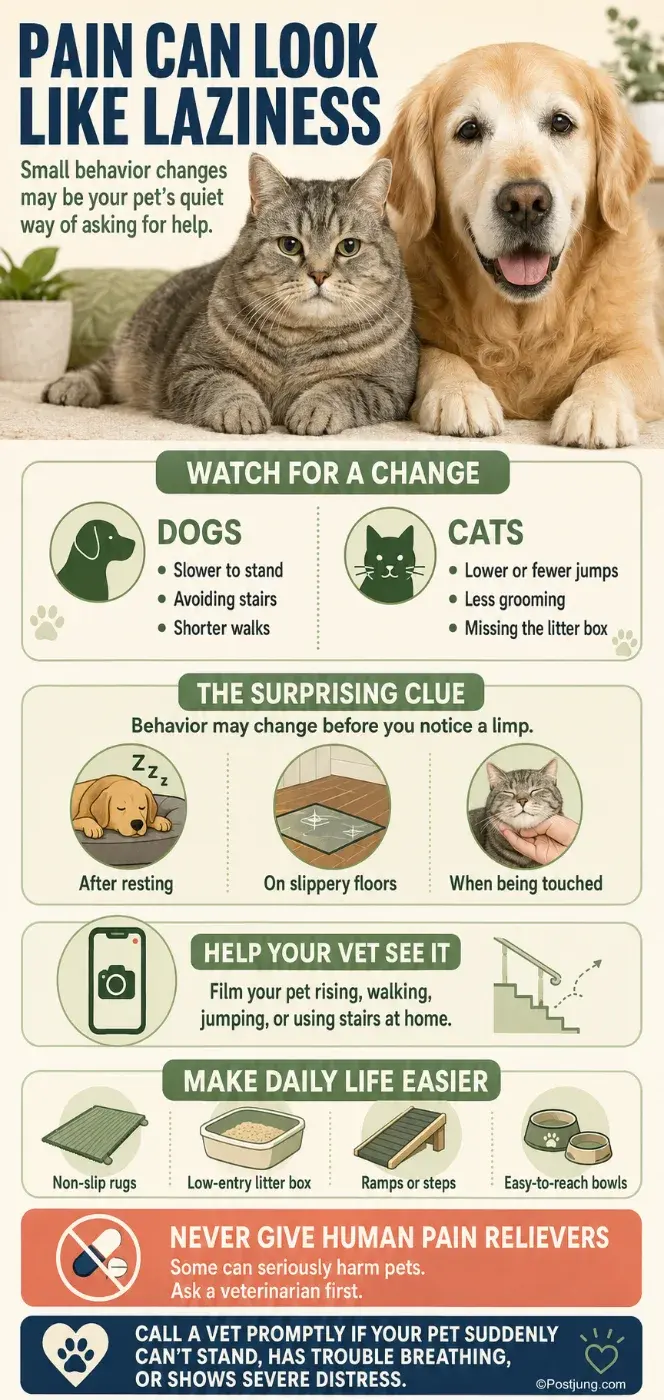
“Getting old” is not a complete diagnosis
Aging changes the body, but age alone does not explain every new habit.
Osteoarthritis is one possible source of pain in older animals. Dental disease, injuries, spinal problems, infections, and other medical conditions can also affect activity and temperament. Weakness or reluctance to move may have causes unrelated to pain, including heart, metabolic, neurologic, or cognitive problems.
That overlap is why owners should resist diagnosing a pet based on one behavior. Sleeping more does not automatically mean arthritis, just as irritability does not necessarily mean a personality problem.
A noticeable change from the pet’s normal routine matters most. A dog that has always ignored toys offers less useful information than one that suddenly abandons a favorite game. A naturally private cat is different from a social cat that begins hiding under the bed.
Pain can also alter social behavior. A friendly animal may avoid touch, growl, hiss, or snap when approached. This does not mean the pet has suddenly become “bad.” Touching, lifting, or anticipating movement may be uncomfortable or frightening.
Watch the small daily tasks
Owners see their pets in situations that cannot be fully recreated during a clinic visit. Everyday observations therefore provide valuable clues.
Changes worth noting include:
- Trouble standing after sleep
- Stiffness, limping, or an altered gait
- Hesitation before using stairs
- Reduced jumping or climbing
- Shorter walks or frequent stops
- Less interest in playing or interacting
- Difficulty finding a comfortable sleeping position
- Reduced grooming or overgrooming one area
- Changes in appetite or chewing
- Hiding, irritability, or sensitivity to touch
- Toileting accidents or difficulty entering the litter box
One isolated slow morning may not mean much. A repeated pattern—or several changes occurring together—is more informative.
Try recording short videos of the pet walking, rising, climbing stairs, or attempting a previously easy activity. Keep brief notes about when the change began, whether it is worse after rest or exercise, and how frequently it occurs.
Videos from home can give a veterinarian useful context, particularly when excitement or stress makes a pet move differently at the clinic.
Small home changes can reduce unnecessary strain
A veterinary examination should guide treatment, but owners can also make the home easier to navigate while waiting for an appointment.
Non-slip rugs may help a dog that struggles on tile or hardwood floors. Ramps or stable steps can reduce the need to jump. Food, water, bedding, and litter boxes should be easy to reach without repeated stair climbing.
For cats, a low-entry litter box and a step near a favorite resting place may preserve independence. Soft, supportive bedding in a warm and quiet location can help both dogs and cats rest more comfortably.
These changes do not identify or treat the underlying condition. They simply remove obstacles that may be making daily life harder.
Do not force a reluctant pet through strenuous exercise to “keep it active.” Movement plans should reflect the animal’s condition and veterinary advice.
Never reach into the human medicine cabinet
Seeing an animal in discomfort can make owners want to offer immediate relief. But human pain medicine can seriously harm pets.
Ibuprofen, naproxen, aspirin, acetaminophen, and other medications should not be given unless a veterinarian specifically directs their use for that individual animal. Cats are particularly vulnerable to acetaminophen, which the U.S. Food and Drug Administration warns can be fatal to them.
Medication that was prescribed for another pet—or for the same pet during an earlier illness—may also be inappropriate now. Age-related kidney, liver, digestive, and cardiovascular changes can affect which treatments are safe.
If accidental ingestion occurs, contact a veterinarian or animal poison-control service promptly rather than waiting for symptoms.
Earlier recognition can protect quality of life
A veterinary evaluation may include observing the pet’s movement, examining painful areas, reviewing behavior at home, and using diagnostic tests when needed. Treatment depends on the cause and may combine medication, weight management, rehabilitation, environmental changes, or other individualized measures.
Seek prompt veterinary care if a pet suddenly cannot stand, will not bear weight, has difficulty breathing, collapses, experiences major trauma, cries continuously, or shows severe distress.
For gradual changes, schedule an examination rather than assuming nothing can be done because the pet is old. Slowing down may be communication, not laziness. Recognizing that possibility can be the first step toward restoring comfort and helping an older companion remain engaged with daily life.
This article provides general educational information and is not a substitute for an examination or individualized advice from a veterinarian.
American Animal Hospital Association, American Veterinary Medical Association, Cornell University College of Veterinary Medicine, U.S. Food and Drug Administration
REFERENCES:
https://www.aaha.org/wp-content/uploads/2022/02/2022-aaha-pain-management-guidelines-for-dog-and-cats_updated_060622.pdf
https://www.avma.org/resources-tools/pet-owners/petcare/senior-pets
https://www.vet.cornell.edu/departments-centers-and-institutes/riney-canine-health-center/canine-health-topics/osteoarthritis
https://www.fda.gov/animal-veterinary/animal-health-literacy/get-facts-about-pain-relievers-pets

เขียนโดย Postjung Insights
 รู้หรือไม่? เปิดรายได้พนักงานส่งพัสดุของแต่ละแอป วันหนึ่งได้เท่าไร
 อำเภอที่มีชื่ออำเภอสั้นที่สุด 3 อำเภอเท่านั้นในประเทศไทย
 ซาบีดา” เรียกถกด่วน ปมภาพ “ชุดไทย” ถูกนำไปอ้างเป็นชุดกัมพูชา
 ตาราง “เด่นเหนือเด่นใต้” งวด 1 ต.ค. 69 เปิดข้อมูลตามโพย เลขไหนอยู่ตรงไหน
 เปิด 5 โรงเรียนหญิงล้วนเก่าแก่ของไทย ที่มีประวัติยาวนานกว่าศตวรรษ
 เปิดรายชื่อ 5 โรงเรียนเป้าหมาย เด็กสอบเข้าต้องเตรียมตัวให้พร้อม
 หนุ่มขับ Porsche ใจหล่อสุดๆ ติดประกาศเด็กหายไว้รอบคัน..หวังช่วยเผยแพร่ข้อมูลให้ตามหาได้เร็วขึ้น
 โรงเรียนที่มีนักเรียนมากที่สุดในไทย
 แปลปกสลาก งวด 1 ต.ค. 69 ส่องตัวเลขจากภาพปกสลากกินแบ่งรัฐบาล
 สถิติย้อนหลัง 10 ปี ออกเลขไหนบ้างมาดูกัน
 'สควีชชี่'ของเล่นที่กำลังเป็นไวรัลอาจถูกเจ้าหน้าที่ของสนามบินยึดได้ ตรวจสอบให้ดีก่อนนำขึ้นเครื่อง
 Ctrip แพลตฟอร์มการท่องเที่ยวของจีน เปิดขายตั๋วสำหรับทริปท่องเที่ยวอวกาศ ของ Virgin Galactic 6 วัน ในราคาประมาณ 24 ล้านบาทซาบีดา” เรียกถกด่วน ปมภาพ “ชุดไทย” ถูกนำไปอ้างเป็นชุดกัมพูชาเปิดรายชื่อ 5 โรงเรียนเป้าหมาย เด็กสอบเข้าต้องเตรียมตัวให้พร้อมหนุ่มขับ Porsche ใจหล่อสุดๆ ติดประกาศเด็กหายไว้รอบคัน..หวังช่วยเผยแพร่ข้อมูลให้ตามหาได้เร็วขึ้น
 วาบิ-ซาบิ (Wabi-Sabi) ปรัชญาญี่ปุ่นที่สอนให้เราโอบกอดความไม่สมบูรณ์แบบ
 English Edition