Why Cleaning Products Can Irritate Pets—and How to Use Them Safely
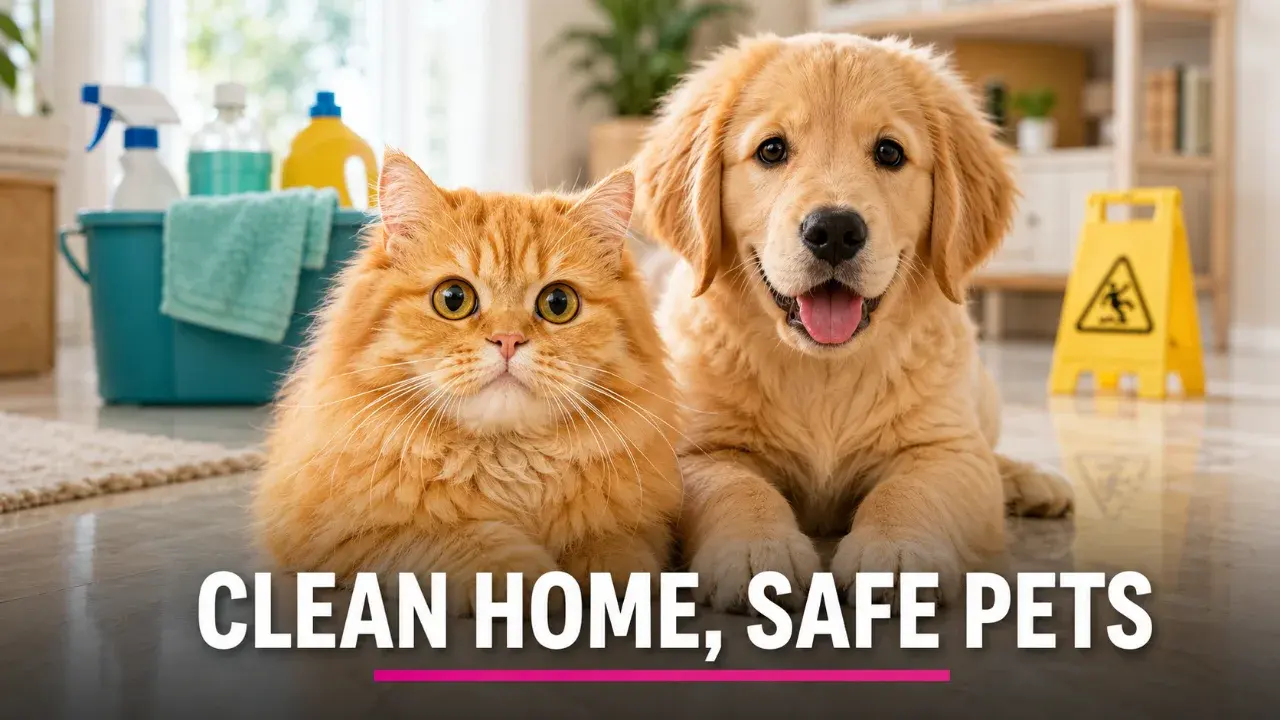
A freshly cleaned floor may still expose a pet through its paws, mouth, skin, or lungs. Understanding how these exposures happen can make everyday cleaning safer for dogs, cats, birds, and other animals.
A floor that smells freshly cleaned to a person may be an irritant-filled surface to a pet walking across it barefoot. Dogs and cats can also swallow residue while grooming, while birds may be affected by fumes that seem mild to humans.
That does not mean every household cleaner is automatically dangerous. The ASPCA says most cleaning products can be used around dogs and cats when their labels are followed. The risk depends on the ingredients, concentration, amount of exposure, route of contact, and the animal involved. ASPCA guidance
Pets experience a cleaned room differently
People generally use cleaning products with their hands protected and their faces several feet above the floor. Pets live much closer to treated surfaces.
A dog may walk through a wet patch and later lick its paws. A cat may groom residue from its coat. A curious animal might drink from a bucket, chew a detergent pod, investigate an open toilet, or lick a freshly sprayed counter.
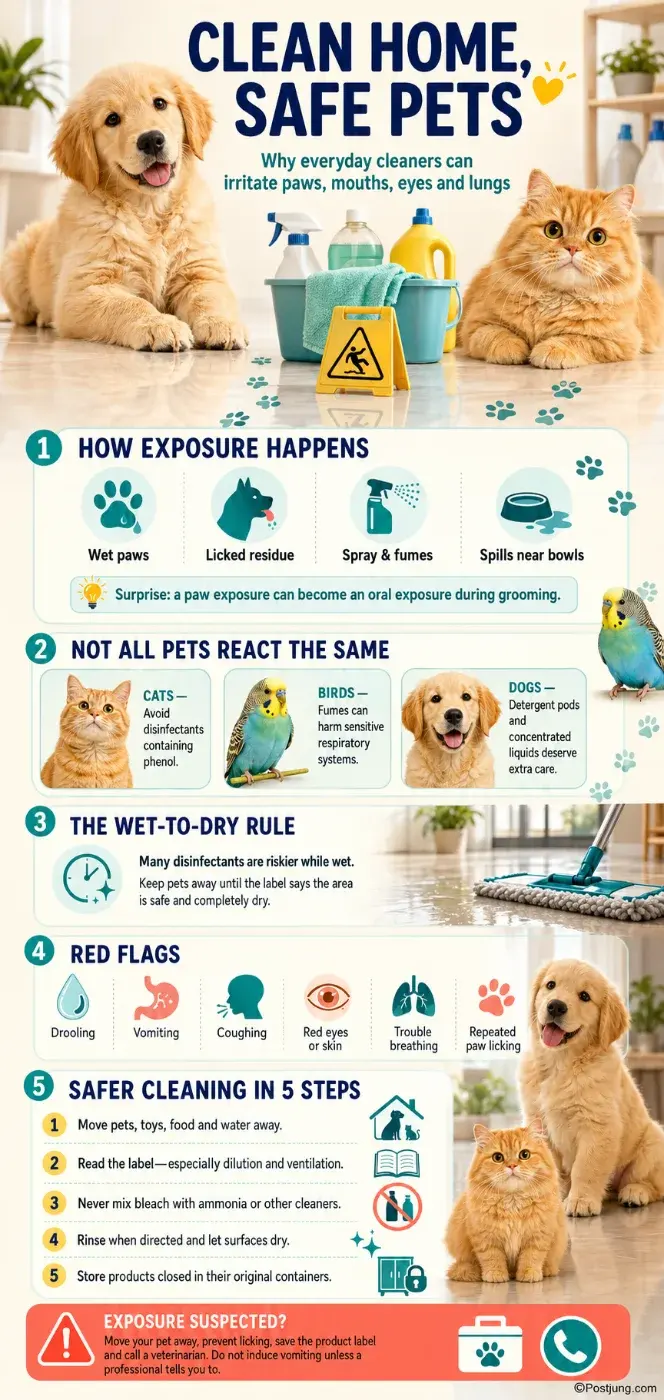
This creates several possible routes of exposure:
- Direct contact with paws, skin, eyes, or fur
- Swallowing a product or residue
- Inhaling mist, vapor, powder, or fumes
- Grooming after walking across a treated surface
- Eating or drinking from contaminated bowls
In other words, contact does not end when cleaning ends. Residue carried on paws or fur can turn an initially minor skin exposure into an oral one.
Why irritation can range from mild to serious
Cleaning products are designed to break down grease, remove stains, dissolve buildup, or kill microorganisms. Those same properties can irritate living tissue when a product is concentrated, misused, or left where an animal can reach it.
Milder exposures may cause redness, paw licking, drooling, coughing, vomiting, or stomach discomfort. Strong acids and alkalis—sometimes found in drain openers, oven cleaners, toilet cleaners, and automatic dishwasher products—can cause corrosive injuries to the mouth, skin, eyes, esophagus, or stomach.
Undiluted or highly concentrated bleach can also injure the mouth and esophagus if swallowed. Laundry detergent pods deserve particular care because their concentrated contents can be released quickly when bitten. Fabric softeners and some dryer sheets may contain cationic detergents capable of causing chemical burns.
The dose matters, but so does contact time. A wet product can pose a different risk than a dry surface, which is why waiting before allowing pets back into a cleaned area is so important.
The CDC notes that many disinfectants may be hazardous while wet but safe after drying when used exactly as directed. It also advises keeping pets away while cleaning and preventing them from licking or touching disinfectants. CDC cleaning guidance
Cats and birds may need extra precautions
Species differences matter. A product used routinely in a home with dogs may not be suitable for every other animal.
The CDC advises cat owners not to use disinfectants containing phenol, including ingredients in which “phenol” appears as part of a longer chemical name. Cats can be especially vulnerable to phenolic compounds.
Birds require another level of caution because their respiratory systems are highly sensitive to airborne substances. The ASPCA recommends obtaining veterinary guidance when using cleaning products around birds. Removing a bird from the room while spraying is not always enough if fumes spread through connected indoor spaces.
For homes with birds, good ventilation and species-specific veterinary advice are especially important. A pleasant scent is not proof of safety, and neither is a “natural” description on the front of a bottle.
Vinegar illustrates the problem with simple labels. Diluted vinegar is generally not a major concern once rinsed and dried, according to the ASPCA, but it may still irritate the digestive system if swallowed. The CDC also says there is insufficient evidence that vinegar reliably disinfects against all germs.
A safer routine takes only a few adjustments
Before cleaning, move pets, bedding, toys, food, and water bowls away from the work area. Read the entire label, including dilution, ventilation, rinsing, drying, and reentry instructions.
Never mix bleach with ammonia or other cleaners. The CDC warns that this can generate dangerous toxic gases.
During and after cleaning:
- Prevent pets from entering the area
- Ventilate as directed on the label
- Clean spills immediately
- Rinse surfaces when the instructions require it
- Wait until treated areas are completely dry
- Wash and dry pet bowls or toys according to product directions
- Return food and water only after the area is ready
- Store products closed and beyond a pet’s reach
Keep cleaners in their original containers. The U.S. Environmental Protection Agency warns that transferring chemicals into food or beverage containers increases the risk of accidental exposure and removes important emergency information found on the original label. EPA pet-safety guidance
Even products marketed as pet-friendly should be used according to their instructions. “Pet-safe” does not mean safe to drink, lick, or spray directly on an animal.
When a reaction needs urgent attention
Possible warning signs include excessive drooling, repeated vomiting, pawing at the mouth, red or painful skin, persistent coughing, unusual breathing, eye irritation, weakness, or difficulty swallowing.
Move the animal away from the product without exposing yourself. Prevent further licking and contact a veterinarian or animal poison-control service promptly. Keep the package or photograph the label so professionals can identify the ingredients and concentration.
Do not induce vomiting or give a homemade remedy unless a veterinarian or poison specialist specifically instructs you to do so. Strong or corrosive substances can cause additional injury on the way back up.
For U.S. pet owners, ASPCA Animal Poison Control is available at 888-426-4435; a consultation fee may apply. Readers elsewhere should contact a local veterinarian or regional animal poison service.
Most household cleaning does not require panic or an entirely chemical-free home. The practical goal is to control exposure while products are wet, concentrated, or accessible. A closed door, careful label reading, adequate ventilation, and a little drying time can prevent an ordinary chore from becoming a veterinary emergency.
REFERENCES:
https://www.cdc.gov/healthy-pets/about/cleaning-and-disinfecting-pet-supplies.html
https://www.aspca.org/pet-care/aspca-poison-control/poisonous-household-products
https://www.aspcapro.org/resource/ingredients-toxicities-cleaning-products
https://www.epa.gov/pets/read-label-first-protect-your-pets

เขียนโดย Postjung Insights
 รู้หรือไม่? เปิดรายได้พนักงานส่งพัสดุของแต่ละแอป วันหนึ่งได้เท่าไร
 ซาบีดา” เรียกถกด่วน ปมภาพ “ชุดไทย” ถูกนำไปอ้างเป็นชุดกัมพูชา
 โรงเรียนที่มีนักเรียนมากที่สุดในไทย
 เปิดรายชื่อ 5 โรงเรียนเป้าหมาย เด็กสอบเข้าต้องเตรียมตัวให้พร้อม
 อำเภอที่มีชื่ออำเภอสั้นที่สุด 3 อำเภอเท่านั้นในประเทศไทย
 ตาราง “เด่นเหนือเด่นใต้” งวด 1 ต.ค. 69 เปิดข้อมูลตามโพย เลขไหนอยู่ตรงไหน
 'สควีชชี่'ของเล่นที่กำลังเป็นไวรัลอาจถูกเจ้าหน้าที่ของสนามบินยึดได้ ตรวจสอบให้ดีก่อนนำขึ้นเครื่อง
 เปิด 5 โรงเรียนหญิงล้วนเก่าแก่ของไทย ที่มีประวัติยาวนานกว่าศตวรรษ
 เรียก “ป๋อง สุพรรณ” เซียนพระดัง แจงปมมูลนิธิฯ วัดพุทไธศวรรย์
 หนุ่มขับ Porsche ใจหล่อสุดๆ ติดประกาศเด็กหายไว้รอบคัน..หวังช่วยเผยแพร่ข้อมูลให้ตามหาได้เร็วขึ้น
 โรสแมรี่ แฮร์ริส ‘ป้าเมย์’ แห่ง Spider-Man ฉบับโทบีย์ แม็คไกวร์ อายุครบ 99 ปี
 แปลปกสลาก งวด 1 ต.ค. 69 ส่องตัวเลขจากภาพปกสลากกินแบ่งรัฐบาลซาบีดา” เรียกถกด่วน ปมภาพ “ชุดไทย” ถูกนำไปอ้างเป็นชุดกัมพูชาเปิดรายชื่อ 5 โรงเรียนเป้าหมาย เด็กสอบเข้าต้องเตรียมตัวให้พร้อมหนุ่มขับ Porsche ใจหล่อสุดๆ ติดประกาศเด็กหายไว้รอบคัน..หวังช่วยเผยแพร่ข้อมูลให้ตามหาได้เร็วขึ้น
 วาบิ-ซาบิ (Wabi-Sabi) ปรัชญาญี่ปุ่นที่สอนให้เราโอบกอดความไม่สมบูรณ์แบบ
 English Edition