Why Bathing Your Pet Too Often Can Do More Harm Than Good

Frequent baths may leave a pet smelling fresh, but they can also contribute to dryness, itching, and a dull coat. The right schedule depends less on the calendar than on the animal’s species, skin, coat, lifestyle, and health.
A freshly bathed pet may look cleaner and smell better, but more bathing is not always better care. Repeated washing—especially with the wrong shampoo—can remove protective oils, irritate the skin, and create an uncomfortable cycle of itching and more washing.
There is no universal schedule that works for every dog or cat. The pet’s individual needs should set the schedule, not a fixed weekly ritual borrowed from human hygiene.
Clean fur does not always mean healthy skin
A pet’s skin is a living protective barrier. Oils on the skin and coat help retain moisture and support the coat’s normal condition.
Shampoo is designed to lift away oil, dirt, and debris. That is useful when an animal is muddy, smelly, or exposed to something irritating, but washing too frequently can remove more oil than the skin comfortably replaces.
The result may be dry or flaky skin, increased scratching, redness, or a coat that feels rough and looks dull. Fragranced products and poorly rinsed shampoo can add another source of irritation.
Bathing may then become part of a frustrating loop: the pet scratches, the coat develops an odor, and the owner gives another bath without addressing the underlying problem. A persistent odor is not always a cleanliness problem. It can accompany allergies, parasites, bacterial or yeast overgrowth, ear disease, or other conditions that need veterinary attention.
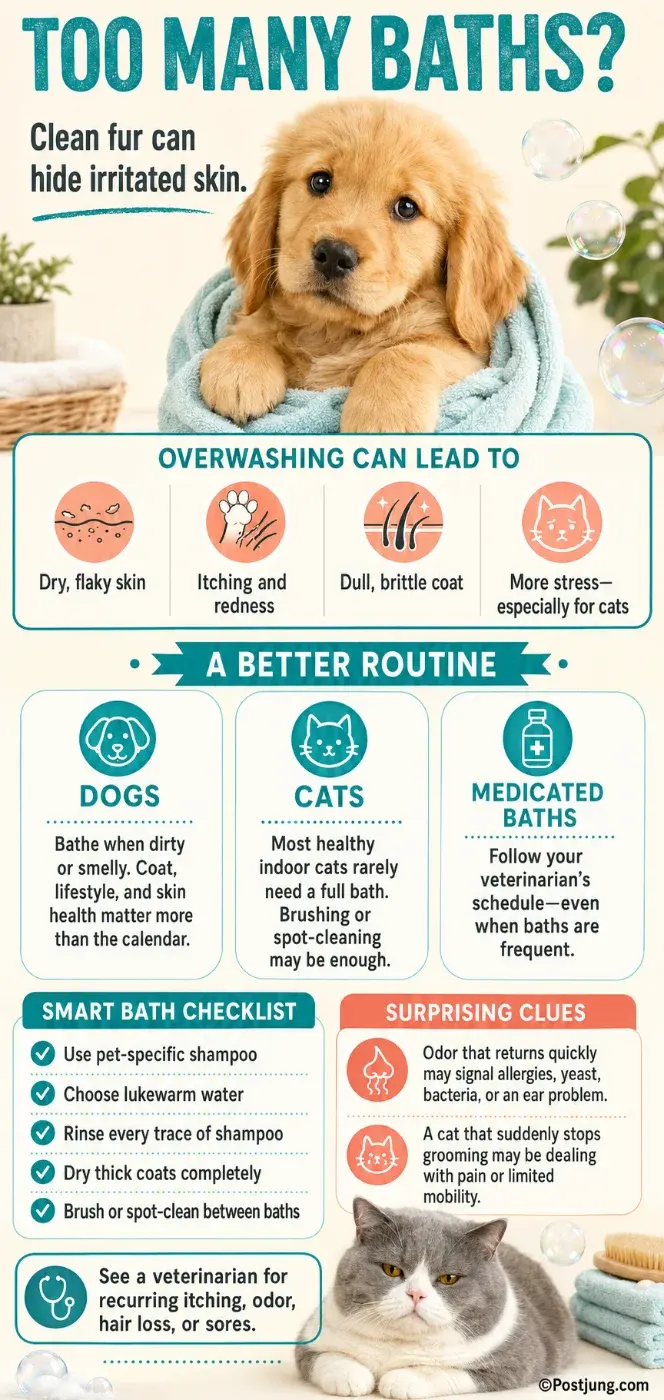
Dogs do not share one bathing schedule
A healthy indoor dog with a short coat and little exposure to mud may need only occasional baths. A dog that swims, rolls in dirt, or spends considerable time outdoors will usually need washing more often.
Coat type also matters. Non-shedding dogs often receive baths as part of regular professional grooming, while dogs with thick undercoats may benefit from bathing and thorough drying during heavy seasonal shedding. Hairless breeds have their own skin-care needs because oil is not absorbed by fur in the same way.
Some veterinary guidance suggests that healthy dogs generally should not be shampooed more than about once a month unless their lifestyle, coat, or veterinarian indicates otherwise. Other dogs can follow longer intervals, while specific medical conditions may require much more frequent bathing.
That range is why advice such as “every dog needs a weekly bath” or “dogs should almost never be bathed” is too simplistic.
A quick rinse after swimming can also serve a different purpose from a full shampoo bath. Removing salt water, chlorine, sand, or surface dirt does not always require another complete round of shampoo.
Most healthy cats handle much of the work themselves
Cats usually maintain their coats through self-grooming, so many healthy indoor cats rarely require full baths. Brushing can remove loose hair and debris without repeatedly exposing the skin to shampoo and water.
There are exceptions. A cat may need help after getting into a sticky, dirty, or potentially hazardous substance. Older cats, cats with arthritis, animals with obesity, and those with mobility or health problems may struggle to groom certain areas. Hairless cats may also require a specialized routine to manage oil buildup.
A sudden greasy coat, matting, odor, dandruff, or decline in grooming should not automatically trigger more baths. In cats, a change in coat care can be an early clue that pain, dental disease, obesity, stress, or another health problem is making normal grooming difficult.
Bathing can also be highly stressful for cats that have not been gradually accustomed to it. Spot cleaning or brushing may be the kinder solution when a full bath is unnecessary.
The product can matter as much as the frequency
Human and pet skin are not identical, and shampoos intended for people—including heavily fragranced products—may be too harsh for routine use on dogs or cats. A product labeled for one species should not automatically be assumed safe for another.
Choose a shampoo specifically formulated for the animal and follow its label. For ordinary grooming, a mild, fragrance-free pet shampoo may be preferable for sensitive skin. Avoid improvising with essential oils, household cleaners, or concentrated products unless a veterinarian has confirmed they are safe.
Use lukewarm water and rinse carefully, especially under the chest, between the legs, around skin folds, and anywhere a thick coat can trap residue. Drying matters too. Moisture held against the skin beneath dense fur or mats can contribute to discomfort and skin trouble.
More shampoo does not produce a better bath. Correct dilution, complete rinsing, and gentle drying are more important than creating large amounts of foam.
Medicated baths are an important exception
Frequent bathing is not automatically harmful. Veterinarians sometimes prescribe medicated shampoos weekly or even more often for allergies, yeast, bacterial infections, or other dermatologic conditions.
Those baths are treatment, not ordinary grooming. The shampoo may need to remain on the skin for a specified contact time, and the schedule will depend on the diagnosis and product.
Owners should not reduce a prescribed schedule simply because general grooming advice recommends fewer baths. They also should not start using a medicated shampoo repeatedly without knowing what is causing the symptoms.
Watch the pet, not just the calendar
Reconsider the routine if bathing is followed by:
- Increased scratching, licking, or chewing
- Redness, flakes, bumps, or irritated skin
- A dry, brittle, or unusually greasy coat
- Persistent odor that quickly returns
- Hair loss, sores, or recurring ear trouble
- Significant fear or distress during bath time
These signs do not prove that bathing caused the problem, but they justify pausing and asking a veterinarian whether the product, technique, frequency, or an underlying condition is responsible.
A sensible routine has a simple goal: remove what should not be on the pet without repeatedly disrupting what protects the skin. Healthy skin matters more than a permanent shampoo scent.
This information is general guidance, not a diagnosis. Pets with persistent itching, odor, hair loss, sores, or sudden coat changes should be examined by a veterinarian.
REFERENCES:
https://vcahospitals.com/resources/conditions-dog/skin-coat/true-or-false-bathing-your-pet-once-a-week-can-dry-out-their-skin-and-coat
https://vcahospitals.com/know-your-pet/grooming-and-coat-care-for-your-dog
https://vcahospitals.com/know-your-pet/how-to-bathe-dogs-with-medicated-shampoo
https://www.merckvetmanual.com/integumentary-system/atopic-skin-conditions-in-dogs-and-cats/atopic-dermatitis-in-dogs

เขียนโดย Postjung Insights
 อำเภอที่มีชื่ออำเภอสั้นที่สุด 3 อำเภอเท่านั้นในประเทศไทย
 รู้หรือไม่? เปิดรายได้พนักงานส่งพัสดุของแต่ละแอป วันหนึ่งได้เท่าไร
 ซาบีดา” เรียกถกด่วน ปมภาพ “ชุดไทย” ถูกนำไปอ้างเป็นชุดกัมพูชา
 แปลปกสลาก งวด 1 ต.ค. 69 ส่องตัวเลขจากภาพปกสลากกินแบ่งรัฐบาล
 โรงเรียนที่มีนักเรียนมากที่สุดในไทย
 เปิดรายชื่อ 5 โรงเรียนเป้าหมาย เด็กสอบเข้าต้องเตรียมตัวให้พร้อม
 โรสแมรี่ แฮร์ริส ‘ป้าเมย์’ แห่ง Spider-Man ฉบับโทบีย์ แม็คไกวร์ อายุครบ 99 ปี
 Ctrip แพลตฟอร์มการท่องเที่ยวของจีน เปิดขายตั๋วสำหรับทริปท่องเที่ยวอวกาศ ของ Virgin Galactic 6 วัน ในราคาประมาณ 24 ล้านบาท
 ตาราง “เด่นเหนือเด่นใต้” งวด 1 ต.ค. 69 เปิดข้อมูลตามโพย เลขไหนอยู่ตรงไหน
 หนุ่มขับ Porsche ใจหล่อสุดๆ ติดประกาศเด็กหายไว้รอบคัน..หวังช่วยเผยแพร่ข้อมูลให้ตามหาได้เร็วขึ้น
 ส่องเลข 3 สำนักพิมพ์ งวด 1 ต.ค. 69 ตัวไหนมีข้อมูลตรงกัน
 เปิด 5 โรงเรียนหญิงล้วนเก่าแก่ของไทย ที่มีประวัติยาวนานกว่าศตวรรษซาบีดา” เรียกถกด่วน ปมภาพ “ชุดไทย” ถูกนำไปอ้างเป็นชุดกัมพูชาเปิดรายชื่อ 5 โรงเรียนเป้าหมาย เด็กสอบเข้าต้องเตรียมตัวให้พร้อมหนุ่มขับ Porsche ใจหล่อสุดๆ ติดประกาศเด็กหายไว้รอบคัน..หวังช่วยเผยแพร่ข้อมูลให้ตามหาได้เร็วขึ้น
 วาบิ-ซาบิ (Wabi-Sabi) ปรัชญาญี่ปุ่นที่สอนให้เราโอบกอดความไม่สมบูรณ์แบบ
 English Edition