Why Feeding Your Dog Table Scraps Can Create Bad Habits
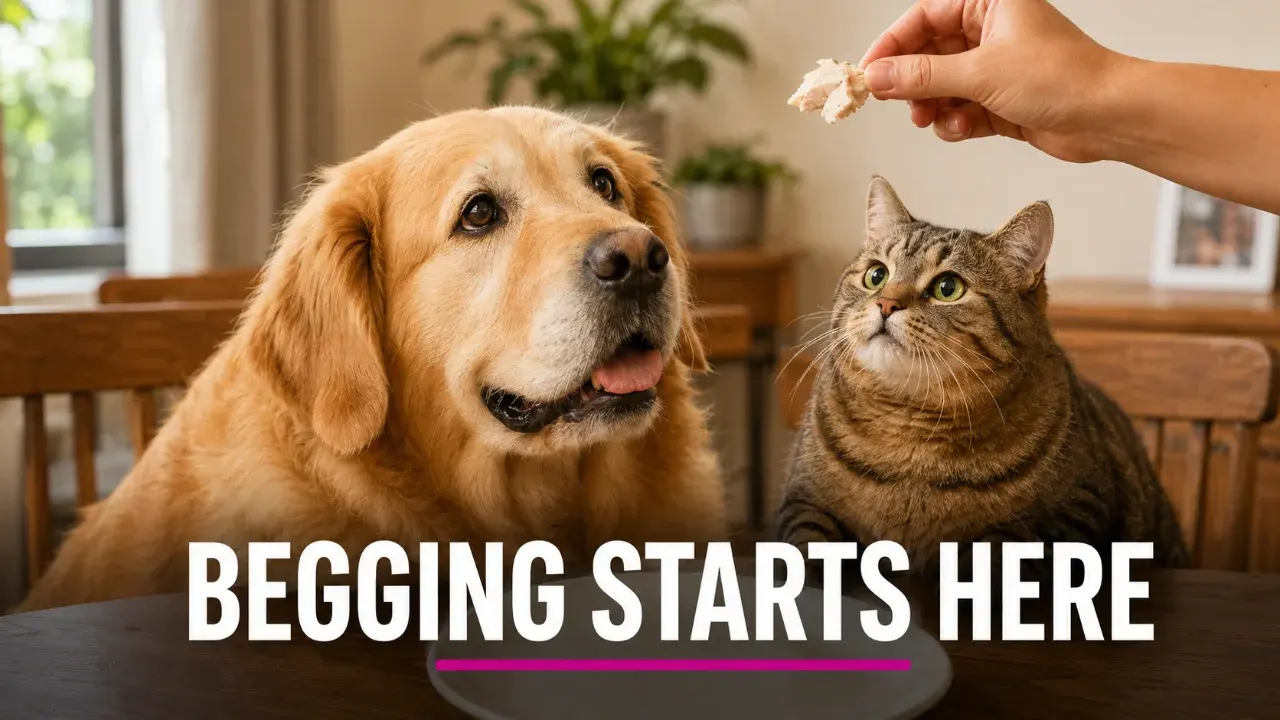
SHORT DECK:A bite from your plate may seem harmless, but it can teach your dog that staring, whining, or pawing eventually pays off. The problem is not simply sharing food—it is when and how the food is given.
A dog staring at your dinner is not necessarily hungry. More often, the dog has learned that waiting beside the table can produce a reward.
One small handout may feel like an affectionate gesture. Repeated often enough, however, it can turn mealtimes into a nightly negotiation involving staring, whining, barking, pawing, or jumping.
The food itself is only part of the issue. Your response teaches the habit.
Dogs repeat what gets rewarded
Dogs are quick to notice patterns. If sitting beside a person’s chair occasionally results in chicken, rice, or another tasty morsel, returning to that spot makes perfect sense.
The reward does not have to arrive every time. An occasional success can be enough to keep a dog trying, particularly when different people in the household follow different rules.
A dog may be ignored by one person but rewarded by another. It may also learn that quiet staring does not work, while a louder whine or a paw on someone’s leg does.
This is why giving in “just this once” can be more influential than it appears. The dog does not understand the exception. It learns that persistence sometimes produces food.
Even scolding can provide attention. For a dog seeking interaction as well as food, eye contact, conversation, or being pushed gently away may still make the behavior worthwhile.
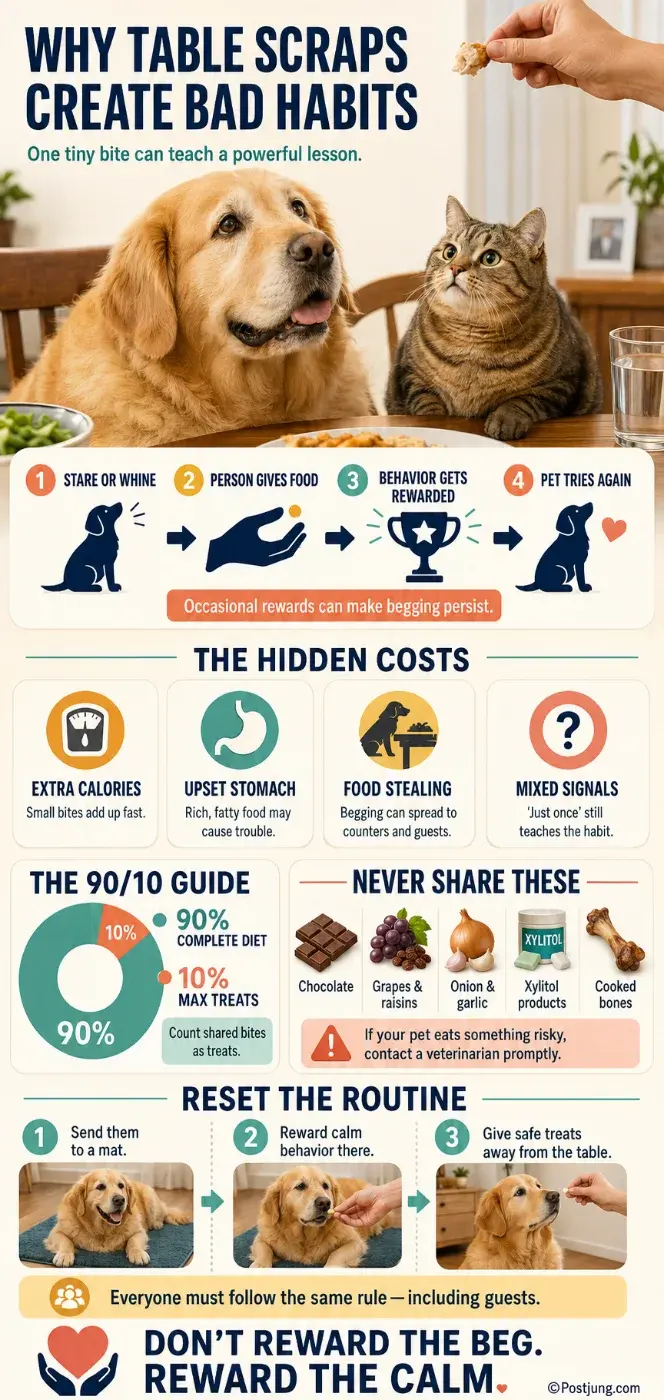
Table scraps can change more than table manners
Begging is the most visible consequence, but access to human meals may encourage other unwanted behavior.
A dog that expects food wherever people eat may begin hovering around kitchen counters, following guests, searching dropped bags, or trying to steal unattended plates. Children can be especially easy targets because they hold food lower and drop it more often.
This does not mean a dog has become “bad” or disobedient. The animal is responding to a pattern that people helped create.
The nutritional consequences can be less obvious. Uncounted bites add calories outside the dog’s measured meals, while rich or fatty leftovers may cause digestive upset. VCA Animal Hospitals recommends limiting treats to no more than 10% of a pet’s daily calories and warns that some scraps contain ingredients that are unsafe for dogs. VCA Animal Hospitals
Some familiar foods require particular caution. Grapes, raisins, onions, garlic, chocolate, products containing xylitol, and certain other human foods can be dangerous to dogs. The ASPCA also advises owners to keep onions, garlic, grapes, and raisins away from pets. ASPCA
Bones, skewers, wrappers, and heavily seasoned leftovers can present additional risks. A plate that looks harmless to a person may not be harmless to a pet.
Sharing food is not automatically the problem
There is an important distinction between offering a small piece of suitable food and feeding a dog directly from the table while it begs.
A veterinarian-approved bite can be given later, placed in the dog’s bowl, or used as a reward for calm behavior away from the dining area. The dog still gets something enjoyable, but hovering beside a person’s plate is not what earns it.
Timing and location shape the lesson.
Owners should also account for shared food as part of the pet’s daily intake. A piece that seems tiny to a person may represent a meaningful number of calories for a small dog.
Dogs with allergies, digestive disorders, pancreatitis, weight problems, or prescription diets may need stricter limits. Their veterinarian can advise which foods and portions are appropriate.
Replace begging with a behavior you want
Simply refusing scraps may eventually reduce begging, but teaching an alternative gives the dog a clearer answer.
A practical option is a “place” routine. Before the human meal begins, ask the dog to settle on a bed or mat a short distance from the table. Reward calm behavior in that location with part of the dog’s regular food or a suitable treat.
The reward should be delivered at the mat, not beside the table. Over time, the dog learns that relaxing in its own space is more productive than watching every forkful.
A food-dispensing toy, slow feeder, or the dog’s own scheduled meal can provide another appropriate activity. Battersea recommends consistent household rules, ignoring begging, teaching a settling behavior, and using the dog’s own food as a mealtime distraction. Battersea
If begging has worked for a long time, it may briefly become more intense when rewards stop. The dog may stare longer, whine louder, or try an old behavior with extra enthusiasm. Giving food at that moment teaches the dog that escalating was successful.
Everyone in the home must follow the same rule. Guests and children should know it too.
Avoid punishment or intimidation. Calm management and rewarding an incompatible behavior are more useful than frightening a dog for doing something people previously encouraged.
A better way to show affection
Food is an easy way to express love, but it is not the only one. A short walk, play session, grooming, training game, or quiet attention can offer connection without adding calories or turning dinner into a contest.
If sharing food is part of the relationship, make it deliberate: choose a dog-safe item, keep the portion small, and offer it away from the table after calm behavior.
The goal is not to make meals joyless. It is to give the dog a predictable rule: begging never controls the menu.
Pet food needs vary with size, age, health, and activity level. Owners who are uncertain about a food, portion, or sudden change in appetite should consult a veterinarian rather than relying on a general list.
REFERENCES:
https://vcahospitals.com/pediatric/puppy/health-wellness/health-risks-for-obese-dogs
https://www.aspca.org/news/healthy-safe-snacks-help-your-pet-slim-down
https://www.battersea.org.uk/pet-advice/dog-advice/how-stop-your-dog-begging-food
https://www.petmd.com/dog/behavior/how-to-stop-a-dog-from-begging

เขียนโดย Postjung Insights
 รู้หรือไม่? เปิดรายได้พนักงานส่งพัสดุของแต่ละแอป วันหนึ่งได้เท่าไร
 แปลปกสลาก งวด 1 ต.ค. 69 ส่องตัวเลขจากภาพปกสลากกินแบ่งรัฐบาล
 'สควีชชี่'ของเล่นที่กำลังเป็นไวรัลอาจถูกเจ้าหน้าที่ของสนามบินยึดได้ ตรวจสอบให้ดีก่อนนำขึ้นเครื่อง
 เปิดรายชื่อ 5 โรงเรียนเป้าหมาย เด็กสอบเข้าต้องเตรียมตัวให้พร้อม
 ซาบีดา” เรียกถกด่วน ปมภาพ “ชุดไทย” ถูกนำไปอ้างเป็นชุดกัมพูชา
 หนุ่มขับ Porsche ใจหล่อสุดๆ ติดประกาศเด็กหายไว้รอบคัน..หวังช่วยเผยแพร่ข้อมูลให้ตามหาได้เร็วขึ้น
 อำเภอที่มีชื่ออำเภอสั้นที่สุด 3 อำเภอเท่านั้นในประเทศไทย
 เปิด 5 โรงเรียนหญิงล้วนเก่าแก่ของไทย ที่มีประวัติยาวนานกว่าศตวรรษ
 โรสแมรี่ แฮร์ริส ‘ป้าเมย์’ แห่ง Spider-Man ฉบับโทบีย์ แม็คไกวร์ อายุครบ 99 ปี
 Ctrip แพลตฟอร์มการท่องเที่ยวของจีน เปิดขายตั๋วสำหรับทริปท่องเที่ยวอวกาศ ของ Virgin Galactic 6 วัน ในราคาประมาณ 24 ล้านบาท
 สถิติย้อนหลัง 10 ปี ออกเลขไหนบ้างมาดูกัน
 โรงเรียนที่มีนักเรียนมากที่สุดในไทยซาบีดา” เรียกถกด่วน ปมภาพ “ชุดไทย” ถูกนำไปอ้างเป็นชุดกัมพูชาเปิดรายชื่อ 5 โรงเรียนเป้าหมาย เด็กสอบเข้าต้องเตรียมตัวให้พร้อมหนุ่มขับ Porsche ใจหล่อสุดๆ ติดประกาศเด็กหายไว้รอบคัน..หวังช่วยเผยแพร่ข้อมูลให้ตามหาได้เร็วขึ้น
 วาบิ-ซาบิ (Wabi-Sabi) ปรัชญาญี่ปุ่นที่สอนให้เราโอบกอดความไม่สมบูรณ์แบบ
 English Edition