Why Human Medication Must Stay Away From Children and Pets
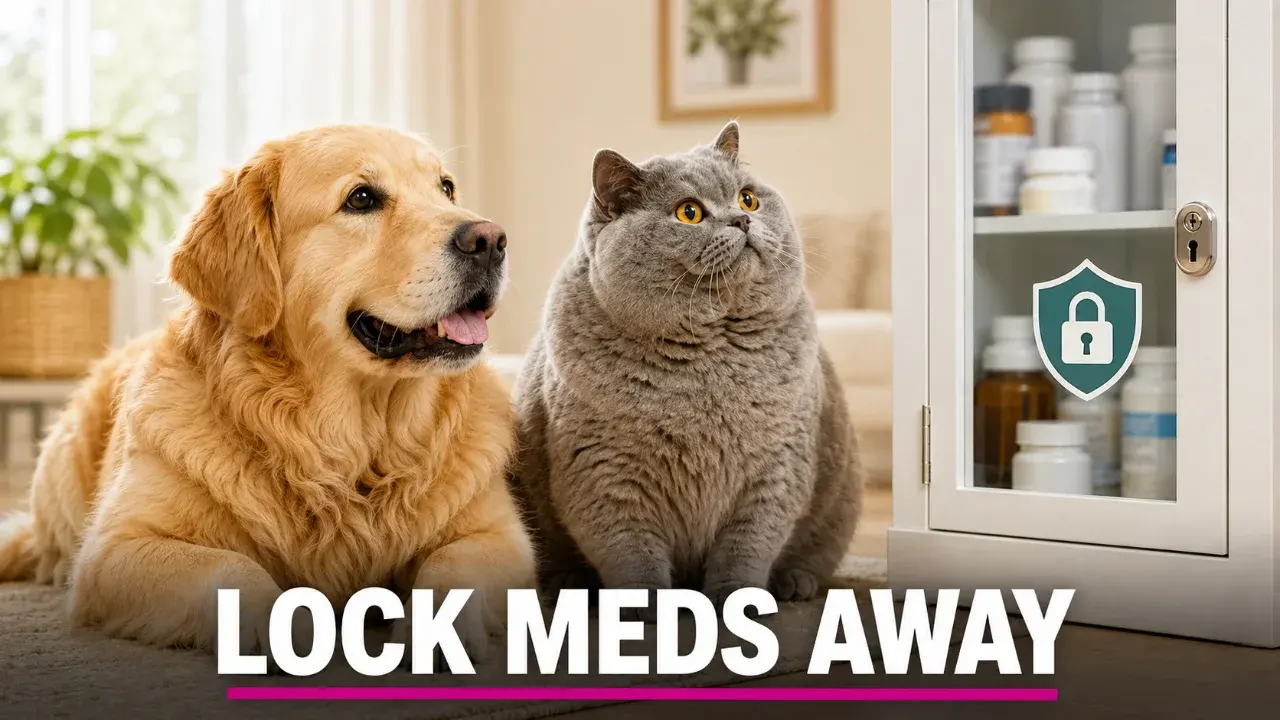
A closed bottle on a counter may look secure, but children and pets can reach medicine in ways adults rarely anticipate. Safer storage begins with recognizing the overlooked places where exposure happens.
A pill dropped beside the bed or a bottle left inside a visitor’s purse can become a serious household hazard. Young children explore with their hands and mouths, while pets may chew through containers or swallow medicine that smells interesting.
The safest rule is simple: store every medicine out of sight and securely out of reach—after every use, without exception.
That rule applies to prescription drugs, over-the-counter products, vitamins, supplements, gummies, medicated creams, inhalers, patches, and medicine intended for pets.
A safety cap is only one layer of protection
Child-resistant packaging can slow access, but it cannot replace secure storage. The U.S. Centers for Disease Control and Prevention warns that children may still be able to open containers with safety caps.
The U.S. Food and Drug Administration also notes that packaging designed to resist children may offer little protection against an animal willing to chew through plastic bottles, boxes, or blister packs.
In other words, a closed container is not necessarily a secure container.
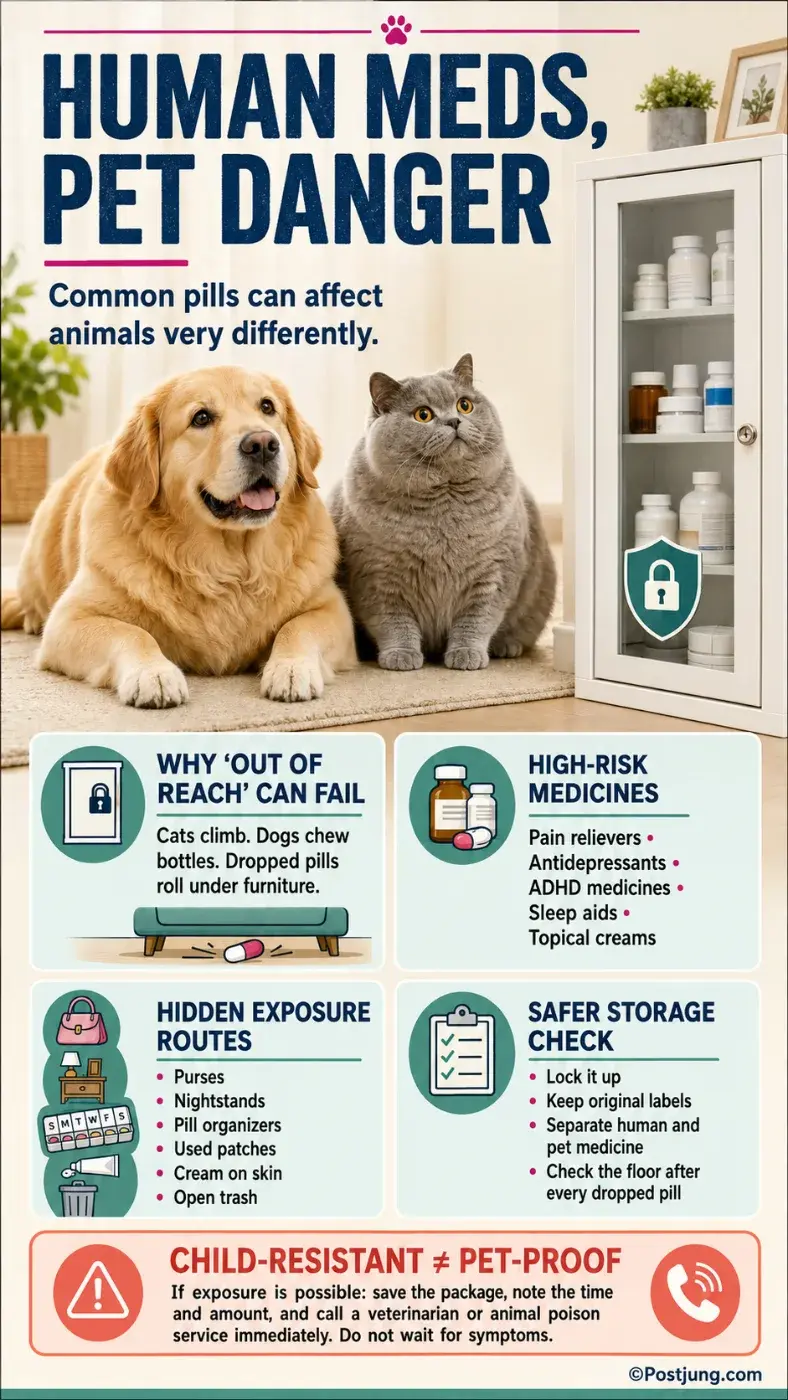
Medicine should be kept in a locked cabinet or another enclosed location that children cannot see or reach. The location should also account for pets that climb, jump, knock objects down, open loosely closed cupboards, or investigate bags.
Bathroom counters, kitchen shelves, nightstands, and the top of a refrigerator may appear high enough. For a determined cat, climbing child, or large dog, they may not be.
The overlooked places where exposure happens
Not every incident begins in a medicine cabinet. Pills and medical products often become accessible during ordinary routines.
A tablet may roll beneath a chair after being dropped. A weekly pill organizer may remain beside the bed. Guests may leave medication in a purse, backpack, suitcase, or coat pocket. A used patch, empty tube, or applicator may be placed in an open trash can.
Even vitamins and supplements deserve the same precautions. Gummies can look and taste like candy, making them particularly attractive to children.
Topical medicines create another route of exposure. A pet may lick a tube, treated skin, discarded gloves, clothing, bedding, or residue left on furniture. The FDA has issued specific warnings about topical fluorouracil, a prescription medicine used for certain human skin conditions, because exposure can be fatal to pets.
After applying any medicated cream, wash your hands, follow the product instructions, and prevent children and animals from contacting the treated area. Dispose of applicators and empty containers where they cannot be retrieved.
Human medicine is not a shortcut for treating a pet
A drug that is familiar and widely used by people is not automatically safe for animals. Differences in body size and metabolism mean that a human dose—or even part of one—may affect a pet very differently.
The FDA reports that pets frequently get into medications intended for people. Common pain relievers such as ibuprofen and naproxen are among the human drugs often involved.
Owners should never give a pet human medication without veterinary direction. That includes familiar pain relievers, cold medicines, sleep products, and leftover prescriptions.
Pet medicine should also be stored separately from human medicine. Similar bottles, rushed mornings, and multiple household members can lead to the wrong drug being given to a person or animal.
Keep each product in its original labeled container. Separating medications by person and pet can further reduce mix-ups.
Build storage around real household behavior
Safe storage works best when it is convenient enough to use every day.
Choose one secure location for routine medication and return each item immediately after taking it. Avoid leaving a bottle out as a reminder; use a phone alarm or written schedule instead.
Other useful habits include:
- Relocking the cap until it clicks or cannot turn further
- Checking the floor whenever a pill is dropped
- Keeping purses, backpacks, and overnight bags off the floor
- Asking visitors to secure any medicine they bring
- Separating human and veterinary products
- Keeping a list of current medicines for each household member
- Regularly removing expired or unwanted products
Drug take-back programs are the preferred disposal option for most unused medicines in the United States. Disposal rules differ elsewhere, so readers outside the U.S. should check local pharmacy or health authority guidance rather than flushing or discarding a product without instructions.
If exposure may have happened, act promptly
Do not wait for obvious symptoms if a child or pet may have swallowed, chewed, licked, or otherwise contacted medicine. Some effects may not appear immediately.
Remove any remaining product from reach and keep the packaging. Be ready to provide the medicine’s name and strength, the possible amount involved, the time of exposure, and the child’s or animal’s approximate weight.
For a child or adult in the United States, contact Poison Control at 1-800-222-1222. Call emergency services immediately if the person is unconscious, having difficulty breathing, experiencing a seizure, or showing another life-threatening symptom.
For a pet, contact a veterinarian, emergency animal hospital, or animal poison control service. Readers outside the United States should use their local poison center, emergency number, medical service, or veterinary emergency provider.
Minutes can matter after a suspected exposure, so keep the appropriate numbers saved in your phone before an accident occurs.
Medicine is part of everyday life, which is exactly why it can fade into the background. A securely closed cabinet, a quick floor check, and the habit of putting every product away immediately can prevent a routine dose from becoming an emergency.
This information supports general household safety and does not replace guidance from a physician, pharmacist, veterinarian, poison center, or emergency professional.
U.S. Centers for Disease Control and Prevention, U.S. Food and Drug Administration
REFERENCES:
https://www.cdc.gov/medication-safety/protect/index.html
https://www.fda.gov/animal-veterinary/animal-health-literacy/properly-store-medications-keep-your-pet-safe
https://www.fda.gov/animal-veterinary/animal-health-literacy/dont-expose-pets-prescription-topical-fluorouracil-medicine-people
https://www.fda.gov/consumers/consumer-updates/where-and-how-dispose-unused-medicines

เขียนโดย Postjung Insights
 อำเภอที่มีชื่ออำเภอสั้นที่สุด 3 อำเภอเท่านั้นในประเทศไทย
 หัวลูกศรหินย้อนเวลา 80,000 ปี ในเอเชียกลาง… หลักฐานใหม่ชี้ โฮโม เซเปียนส์ อาจเคยบุกยุโรปเร็วขึ้นนับหมื่นปี!
 ถ้าไม่กลัวเหนื่อย 7 อาชีพที่ตลาดยังต้องการ และค่าทักษะไปถึง 800 บาท/วัน
 อินฟลูเอนเซอร์สาวผู้สร้างคอนเทนต์สำหรับผู้ใหญ่และมีรายได้ต่อปีกว่า 33 ล้านบาท ตัดสินใจเปลี่ยนอาชีพมาเป็นแพทย์แทน
 แปลปกสลาก งวด 1 ต.ค. 69 ส่องตัวเลขจากภาพปกสลากกินแบ่งรัฐบาล
 โรงเรียนที่มีนักเรียนมากที่สุดในไทย
 รู้หรือไม่? เปิดรายได้พนักงานส่งพัสดุของแต่ละแอป วันหนึ่งได้เท่าไร
 ฝูงลิงญี่ปุ่นนับสิบรุมล้อมและโจมตีชายคนหนึ่งในคานากาวะ
 เปิด 5 โรงเรียนหญิงล้วนเก่าแก่ของไทย ที่มีประวัติยาวนานกว่าศตวรรษ
 ตึกยาวสวนกุหลาบฯ อายุเกิน 100 ปี ทำไมยังใช้เป็นห้องเรียนมาถึงวันนี้
 ส่องเลข 3 สำนักพิมพ์ งวด 1 ต.ค. 69 ตัวไหนมีข้อมูลตรงกัน
 ยูเครนขอจัดการประชุมสุดยอดกับญี่ปุ่นเปิด 5 โรงเรียนหญิงล้วนเก่าแก่ของไทย ที่มีประวัติยาวนานกว่าศตวรรษหัวลูกศรหินย้อนเวลา 80,000 ปี ในเอเชียกลาง… หลักฐานใหม่ชี้ โฮโม เซเปียนส์ อาจเคยบุกยุโรปเร็วขึ้นนับหมื่นปี!ถ้าไม่กลัวเหนื่อย 7 อาชีพที่ตลาดยังต้องการ และค่าทักษะไปถึง 800 บาท/วัน
 ทำไมแผนที่ส่วนใหญ่เอาทิศเหนือไว้ด้านบน ทั้งที่โลกไม่มี “ด้านบน” จริง ๆ?
 English Edition