Why Preventive Care Often Costs Less Than Waiting for a Crisis
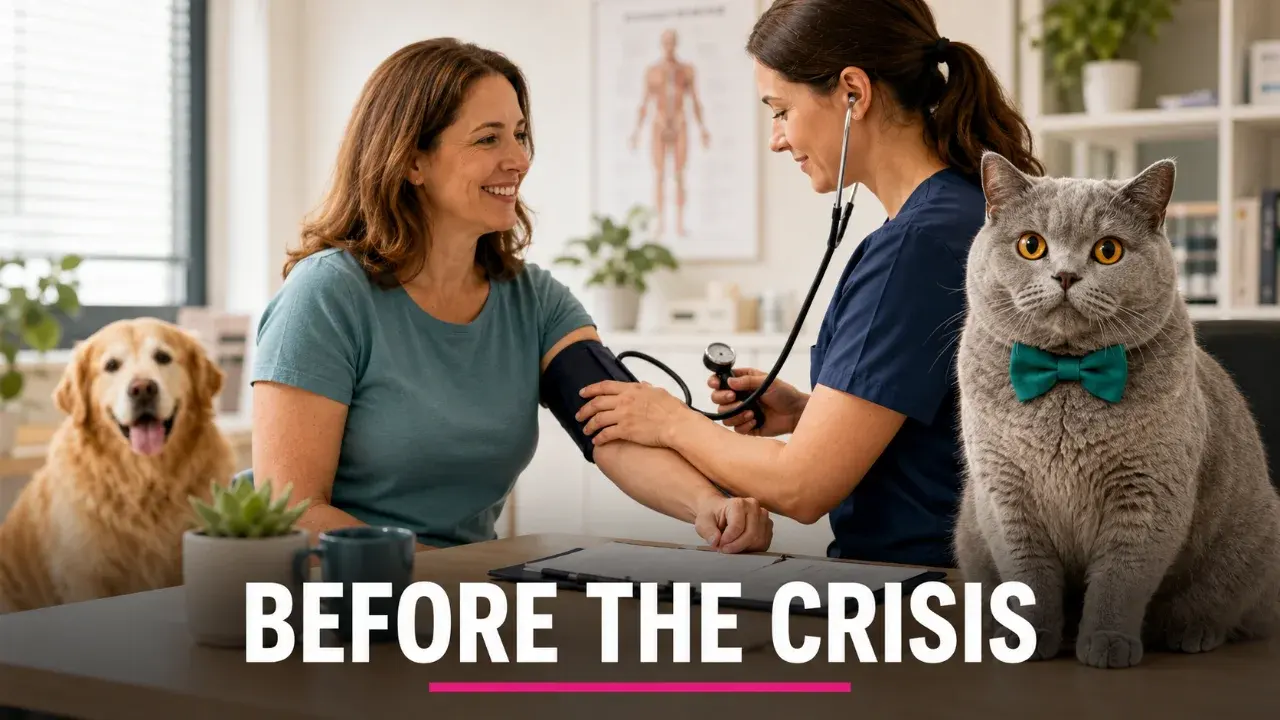
Routine screenings, vaccinations, and ongoing primary care can catch manageable problems before they require hospitalization. The financial case is strong—but more nuanced than “every test saves money.”
A routine appointment may feel easy to postpone, especially when nothing seems wrong. But many of the costliest medical episodes begin as manageable risks that go unnoticed or untreated until they become emergencies.
That is the central advantage of preventive care: small interventions can interrupt a much more expensive chain of events.
Preventive care includes vaccinations, evidence-based screenings, counseling, and regular monitoring of risks such as high blood pressure. It also overlaps with primary care that helps people manage established conditions before complications develop.
A crisis creates costs far beyond one hospital bill
Crisis care begins after a problem has become urgent or severe. It may involve an ambulance, emergency department evaluation, advanced imaging, surgery, hospitalization, intensive care, rehabilitation, or long-term medication.
The bill is only part of the burden. A serious health episode can also mean lost work, transportation expenses, unpaid caregiving, disability, and weeks or months of recovery.
Preventive care generally works earlier in that sequence. A vaccination may prevent an infection. A recommended screening can identify certain diseases before symptoms appear. Regular monitoring can reveal that a chronic condition is worsening while treatment can still be adjusted in an outpatient setting.
The difference is not simply “cheap appointment versus expensive hospital.” It is early control versus late-stage complexity.
Data from the U.S. Agency for Healthcare Research and Quality illustrate the scale of that complexity. In 2017, approximately 3.5 million adult inpatient stays were classified as potentially preventable, accounting for $33.7 billion in hospital costs. Most of those stays involved chronic conditions.
“Potentially preventable” does not mean every hospitalization could have been avoided by an individual patient. Access to care, insurance, housing, transportation, medication prices, environmental conditions, and the quality of local health services all influence whether people receive timely treatment.
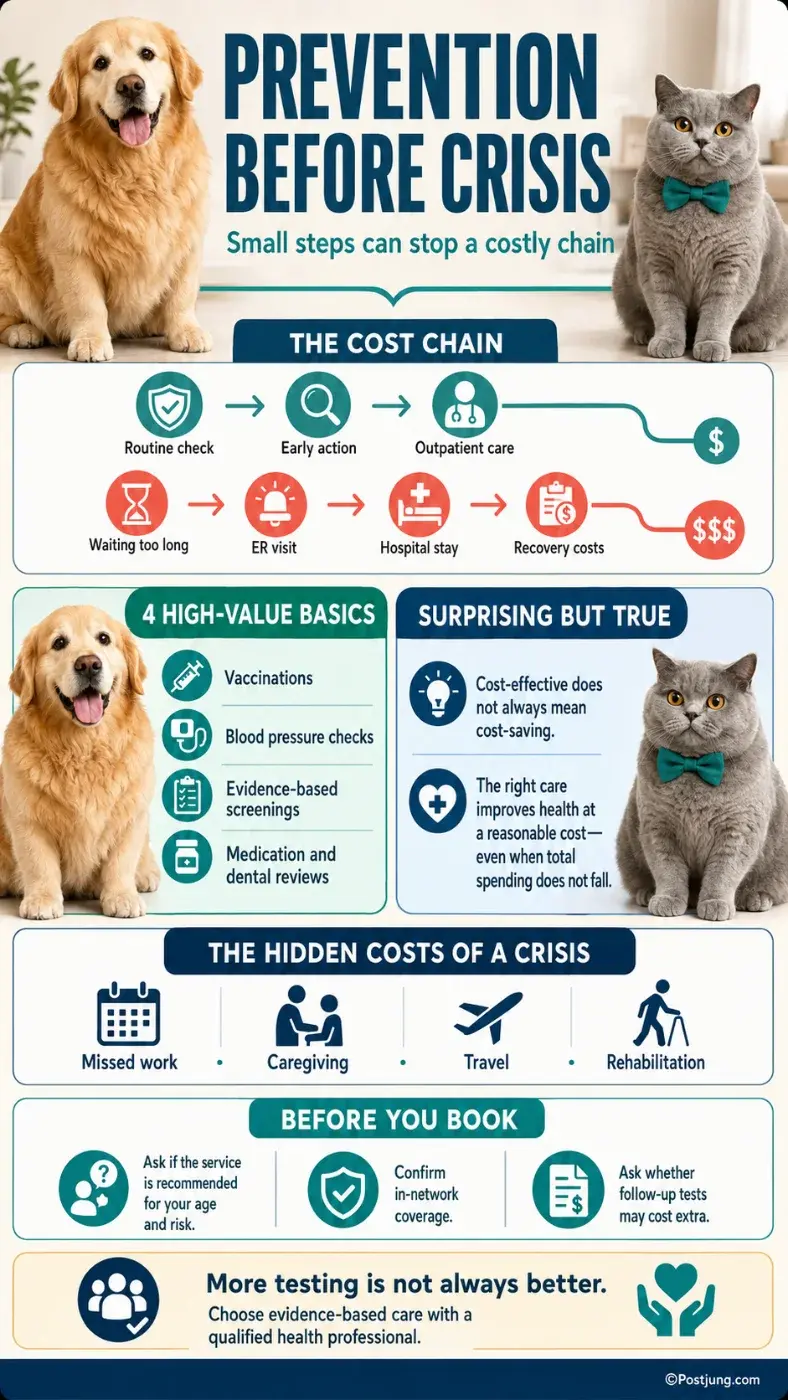
Chronic conditions make early management especially valuable
Heart disease, cancer, diabetes, and other chronic conditions account for a large share of illness and medical spending. The U.S. Centers for Disease Control and Prevention reports that 90% of the nation’s $5.3 trillion in annual health expenditures is associated with people who have chronic or mental health conditions.
That statistic does not mean 90% of spending is preventable. Some diseases occur despite healthy behavior and appropriate medical care. It does show why preventing complications and managing conditions consistently can have such a large economic impact.
Consider high blood pressure. It often produces no obvious symptoms, yet routine measurement can identify it before it contributes to more serious problems. The affordable step is not merely taking a reading; it is using that information appropriately through follow-up, lifestyle support, and medication when clinically indicated.
The same principle applies after a diagnosis. Preventive care is not limited to healthy people. For someone living with diabetes, asthma, or heart disease, preventing the next complication is part of prevention too.
Cost-effective does not always mean cost-saving
There is an important limitation to the familiar claim that prevention is always cheaper: not every preventive service reduces total medical spending.
Screening large numbers of people costs money. Some results lead to follow-up tests, and some interventions help people live longer while continuing to require health care. A service can therefore increase overall spending while still providing substantial health benefits at a reasonable cost.
Health economists describe this as the difference between “cost-saving” and “cost-effective.” A cost-saving intervention prevents more spending than it costs. A cost-effective intervention may add costs, but the improvement in health and quality of life is considered worth the investment.
This distinction matters because more testing is not automatically better prevention. Screening people who are unlikely to benefit can produce false alarms, unnecessary procedures, overdiagnosis, anxiety, and additional expenses.
Evidence-based recommendations therefore consider age, symptoms, family history, pregnancy, lifestyle, previous results, and other risk factors. The right preventive plan for one person may be inappropriate for another.
Insurance coverage can help—but check the details
In the United States, most Marketplace health plans and many other insurance plans cover specified preventive services without copayments or coinsurance. Coverage commonly depends on receiving the service from an in-network provider and meeting the plan’s eligibility requirements.
A preventive visit can also become partly diagnostic. For example, discussing a new symptom, ordering a service outside the covered schedule, or using an out-of-network laboratory may generate charges.
Before an appointment, patients can ask their insurer and medical office:
- Is this service covered as preventive care for someone of my age and risk profile?
- Must I use an in-network clinician, imaging center, or laboratory?
- Will any part of the visit be billed separately?
- What follow-up costs could arise if the result is abnormal?
Health systems and coverage rules vary widely outside the United States, but the underlying question remains useful: Which proven services are available before a problem becomes urgent?
The best prevention is targeted, not excessive
An effective preventive plan does not require ordering every available test. It begins with a clinician reviewing personal and family history, current conditions, medications, vaccinations, and risk factors.
Regular dental care, recommended immunizations, appropriate cancer screenings, blood pressure checks, and support for quitting tobacco are common examples. The appropriate services and timing depend on the individual.
Prevention also extends beyond the clinic. Reliable access to nutritious food, safe places to exercise, clean air, stable housing, paid time off, and affordable medication can determine whether people are able to protect their health in the first place.
Preventive care cannot eliminate every emergency, and becoming ill is not evidence that someone failed to take care of themselves. Its real value is more measured: it improves the odds that risks will be found earlier, conditions will remain manageable, and fewer people will reach the hospital with problems that might have been addressed sooner.
Individual screening and treatment decisions should be made with a qualified health professional using current recommendations and personal risk factors.
KEY TAKEAWAYS:
- Early detection and routine management can prevent some conditions from progressing to expensive emergencies.
- Crisis care often creates indirect costs through missed work, caregiving, disability, and recovery.
- Cost-effective preventive care provides worthwhile health benefits but may not always reduce total spending.
- Screening should be based on evidence and personal risk rather than a “more tests are better” approach.
- Insurance coverage varies, so patients should confirm network and billing requirements in advance.
SOURCES:
Centers for Disease Control and Prevention, Agency for Healthcare Research and Quality, HealthCare.gov, U.S. Preventive Services Task Force, World Health Organization, The New England Journal of Medicine
REFERENCES:
CDC — Health and Economic Costs of Chronic Conditions
AHRQ — Potentially Preventable Inpatient Stays
HealthCare.gov — Preventive Health Services
USPSTF — Evidence-Based Preventive Care Recommendations

เขียนโดย Postjung Insights
 เปิด 5 โรงเรียนหญิงล้วนเก่าแก่ของไทย ที่มีประวัติยาวนานกว่าศตวรรษ
 ซาบีดา” เรียกถกด่วน ปมภาพ “ชุดไทย” ถูกนำไปอ้างเป็นชุดกัมพูชา
 รู้หรือไม่? เปิดรายได้พนักงานส่งพัสดุของแต่ละแอป วันหนึ่งได้เท่าไร
 เปิดรายชื่อ 5 โรงเรียนเป้าหมาย เด็กสอบเข้าต้องเตรียมตัวให้พร้อม
 ส่องเลข 3 สำนักพิมพ์ งวด 1 ต.ค. 69 ตัวไหนมีข้อมูลตรงกัน
 เปิดรายชื่อ 5 โรงเรียนเอกชนขนาดใหญ่ นักเรียนกว่า 5,000 คนทุกแห่ง
 แปลปกสลาก งวด 1 ต.ค. 69 ส่องตัวเลขจากภาพปกสลากกินแบ่งรัฐบาล
 อำเภอที่มีชื่ออำเภอสั้นที่สุด 3 อำเภอเท่านั้นในประเทศไทย
 ราคาทองวันนี้ 21 ก.ย. 69 อัปเดตตลาดทองคำ ทองรูปพรรณแตะ 69,750 บาท
 โรงเรียนที่มีนักเรียนมากที่สุดในไทย
 หนุ่มขับ Porsche ใจหล่อสุดๆ ติดประกาศเด็กหายไว้รอบคัน..หวังช่วยเผยแพร่ข้อมูลให้ตามหาได้เร็วขึ้น
 ตาราง “เด่นเหนือเด่นใต้” งวด 1 ต.ค. 69 เปิดข้อมูลตามโพย เลขไหนอยู่ตรงไหน
 เปิด 5 สินค้าส่งออกของลาวที่คนไทยอาจคาดไม่ถึง หนึ่งในนั้นทำเงินเกือบ 1 พันล้านดอลลาร์ราคาทองวันนี้ 21 ก.ย. 69 อัปเดตตลาดทองคำ ทองรูปพรรณแตะ 69,750 บาทเปิดรายชื่อ 5 โรงเรียนเอกชนขนาดใหญ่ นักเรียนกว่า 5,000 คนทุกแห่งซาบีดา” เรียกถกด่วน ปมภาพ “ชุดไทย” ถูกนำไปอ้างเป็นชุดกัมพูชาเปิดรายชื่อ 5 โรงเรียนเป้าหมาย เด็กสอบเข้าต้องเตรียมตัวให้พร้อมหนุ่มขับ Porsche ใจหล่อสุดๆ ติดประกาศเด็กหายไว้รอบคัน..หวังช่วยเผยแพร่ข้อมูลให้ตามหาได้เร็วขึ้น
 English Edition