Why Some Dogs Are Terrified of Thunderstorms
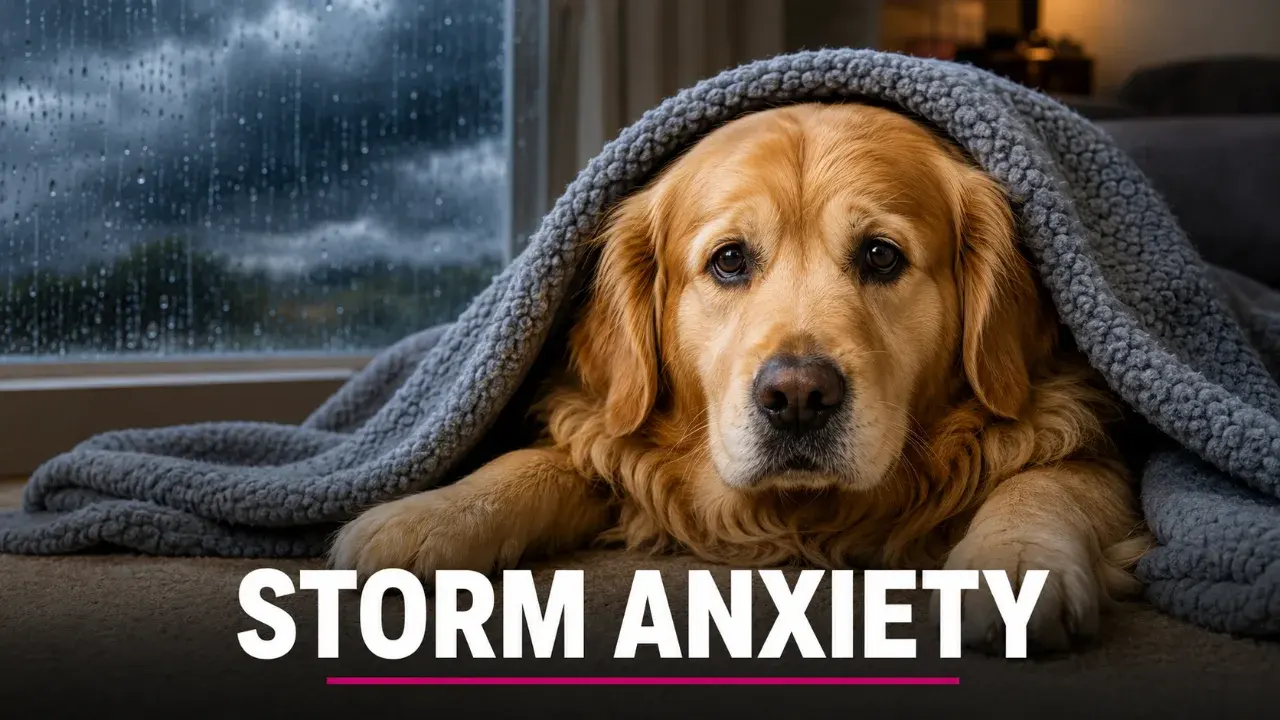
Thunder is only part of the problem. A fearful dog may react to lightning, wind, rain, shifting air pressure, and clues that predict the next frightening boom.
A thunderstorm can turn an otherwise relaxed dog into a trembling, panting escape artist. The reaction is not stubbornness or bad behavior—it is a genuine fear response that may involve much more than the sound of thunder.
Some dogs hide under furniture. Others pace, whine, drool, cling to their owners, scratch at doors, or try to flee. In severe cases, a frightened dog may damage a room or injure itself while searching for safety.
A storm is more than one loud noise
Thunder is sudden, powerful, and difficult to predict. A dog cannot see where it comes from or know when the next crash will arrive, making the experience very different from a steady household sound.
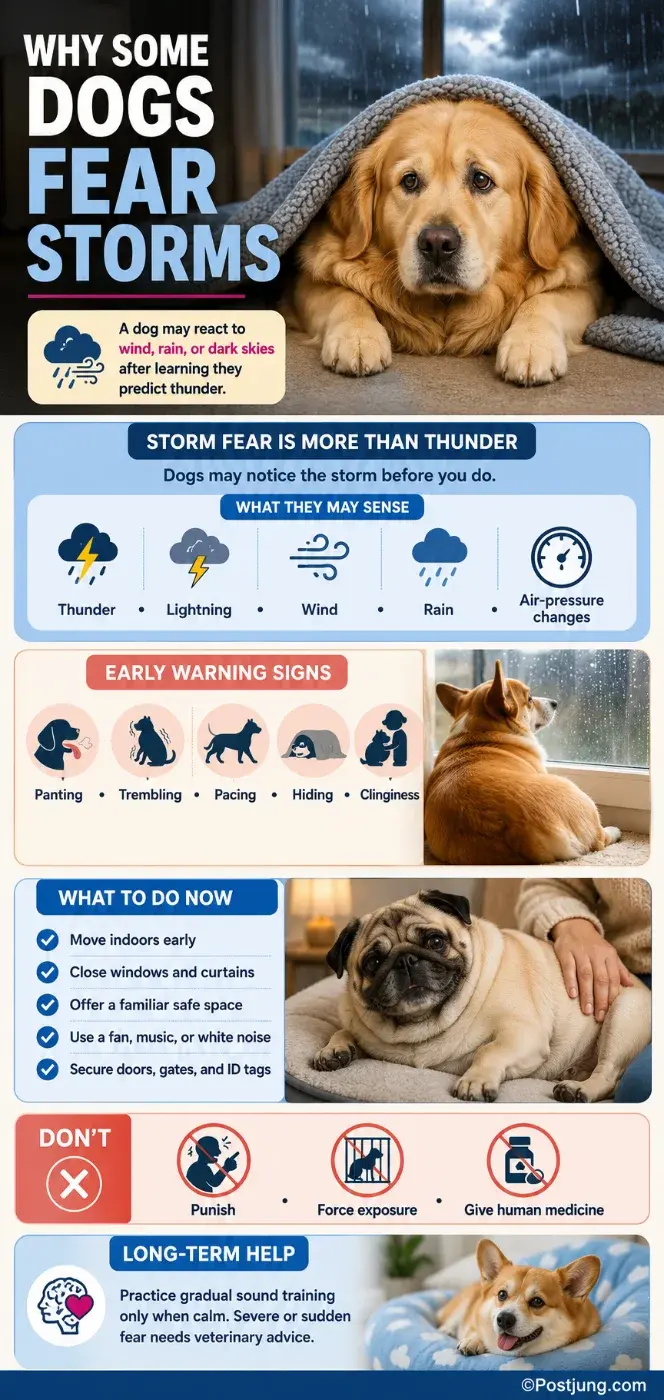
But thunder may be only one trigger. Storms also bring flashes of lightning, heavy rain, gusting wind, darkening skies, and changes in air pressure. A dog may learn that these quieter signals predict something frightening.
That helps explain why some dogs become restless before their owners hear thunder. They are not necessarily predicting the weather in a mysterious way. They may simply notice environmental cues earlier than the people around them.
Once those cues become associated with fear, the response can spread. A dog initially frightened only by thunder may eventually become anxious when rain begins, clouds gather, or wind rattles a window.
Why one dog panics while another sleeps
There is rarely one simple explanation for thunderstorm fear.
A frightening experience during a previous storm may create a lasting association. Limited exposure to different sounds during early development can also leave some dogs less prepared to cope with unfamiliar noise.
Temperament matters, too. A dog that is generally cautious or sensitive to sound may react more intensely than a confident dog living in the same home. Individual biology and inherited tendencies may also influence how strongly a dog responds to stressful events.
Fear can appear or worsen later in life. Cornell University’s veterinary guidance notes that underlying illness and age-related changes may contribute to increasing anxiety. A dog that suddenly develops storm fear—especially an older dog—may therefore need a veterinary examination rather than being treated as merely “nervous.”
Previous behavior also does not guarantee future behavior. Repeated distress can strengthen the association between storms and danger, so a mild reaction may become more severe over time if the dog repeatedly experiences storms without effective support.
The body enters survival mode
Storm-related fear can produce physical as well as behavioral signs. Veterinary references describe rapid breathing, increased heart rate, excessive salivation, digestive upset, trembling, vocalizing, and a lowered body posture among possible signs of acute fear.
A dog in this state is not making a calm decision to ignore commands. Its fight-or-flight system has taken over.
Punishment, scolding, or forcing the dog to remain near a window can make the experience worse. It may add a second frightening event—the owner’s reaction—to an already overwhelming situation.
You also do not need to ignore a frightened dog out of concern that calm attention will “reward” fear. Cornell’s guidance recommends staying with fearful dogs when possible and providing comfort and a secure environment. Let the dog choose whether to remain close, hide, or settle in its usual safe place.
What helps during an active storm
Move the dog indoors before conditions become intense, and secure doors, windows, gates, and pet flaps. Fearful dogs can behave unpredictably, even if they have never attempted to escape before.
Prepare a quiet retreat in an interior room with few or no windows. Add familiar bedding, close curtains, and use a fan, television, music, or white noise to soften outside sounds. A food-filled toy or long-lasting treat may help if the dog remains calm enough to eat.
Never force a dog into an unfamiliar hiding place. A crate may comfort a dog that already views it as a safe resting area, but confining a panicked dog in a crate it fears could increase distress or cause injury.
Outdoor bathroom breaks should happen before the storm when possible. During severe weather, keep the dog leashed even inside a fenced yard and make sure its identification and microchip details are current.
Long-term improvement happens between storms
Behavior work is usually most effective when the real trigger is absent. Systematic desensitization may begin with a thunder recording played so quietly that the dog notices it without becoming distressed. The sound is then paired with something positive, such as treats or play, and increased very gradually over multiple sessions.
The goal is not to make the dog endure fear until it “gets used to it.” Training must remain below the dog’s panic threshold. If the dog trembles, hides, refuses food, or tries to escape, the session is too difficult.
Recordings also cannot reproduce every part of a real storm, including wind, lightning, rain, and pressure changes. Desensitization may help, but it is not a guaranteed cure.
Dogs with severe reactions may need a treatment plan combining environmental management, behavior modification, and prescription medication. In May 2026, the U.S. Food and Drug Administration approved another prescription option for canine noise aversion, reinforcing that this is a recognized behavioral health problem—not a discipline failure.
Medication choice, timing, and safety depend on the individual dog. Do not give human sedatives or leftover pet medication without veterinary instructions.
A veterinary professional should be consulted if fear is intensifying, appears suddenly, causes destructive escape attempts, prevents normal recovery after storms, or seriously affects the dog’s quality of life. With preparation and appropriate treatment, many dogs can become safer and considerably less distressed when the sky turns dark.
Cornell University College of Veterinary Medicine, Merck Veterinary Manual, U.S. Food and Drug Administration
REFERENCES:
https://www.vet.cornell.edu/departments-centers-and-institutes/riney-canine-health-center/canine-health-topics/fear-fireworks-and-thunderstorms
https://www.merckvetmanual.com/behavior/behavior-of-dogs/behavior-problems-of-dogs
https://www.fda.gov/animal-veterinary/cvm-updates/fda-approves-first-drug-treat-noise-aversion-and-separation-anxiety-dogs

เขียนโดย Postjung Insights
 รู้หรือไม่? เปิดรายได้พนักงานส่งพัสดุของแต่ละแอป วันหนึ่งได้เท่าไร
 เปิดรายชื่อ 5 โรงเรียนเป้าหมาย เด็กสอบเข้าต้องเตรียมตัวให้พร้อม
 ซาบีดา” เรียกถกด่วน ปมภาพ “ชุดไทย” ถูกนำไปอ้างเป็นชุดกัมพูชา
 โรงเรียนที่มีนักเรียนมากที่สุดในไทย
 แปลปกสลาก งวด 1 ต.ค. 69 ส่องตัวเลขจากภาพปกสลากกินแบ่งรัฐบาล
 ตาราง “เด่นเหนือเด่นใต้” งวด 1 ต.ค. 69 เปิดข้อมูลตามโพย เลขไหนอยู่ตรงไหน
 Ctrip แพลตฟอร์มการท่องเที่ยวของจีน เปิดขายตั๋วสำหรับทริปท่องเที่ยวอวกาศ ของ Virgin Galactic 6 วัน ในราคาประมาณ 24 ล้านบาท
 อำเภอที่มีชื่ออำเภอสั้นที่สุด 3 อำเภอเท่านั้นในประเทศไทย
 หนุ่มขับ Porsche ใจหล่อสุดๆ ติดประกาศเด็กหายไว้รอบคัน..หวังช่วยเผยแพร่ข้อมูลให้ตามหาได้เร็วขึ้น
 เปิด 5 โรงเรียนหญิงล้วนเก่าแก่ของไทย ที่มีประวัติยาวนานกว่าศตวรรษ
 สถิติย้อนหลัง 10 ปี ออกเลขไหนบ้างมาดูกัน
 เรียก “ป๋อง สุพรรณ” เซียนพระดัง แจงปมมูลนิธิฯ วัดพุทไธศวรรย์ซาบีดา” เรียกถกด่วน ปมภาพ “ชุดไทย” ถูกนำไปอ้างเป็นชุดกัมพูชาเปิดรายชื่อ 5 โรงเรียนเป้าหมาย เด็กสอบเข้าต้องเตรียมตัวให้พร้อมหนุ่มขับ Porsche ใจหล่อสุดๆ ติดประกาศเด็กหายไว้รอบคัน..หวังช่วยเผยแพร่ข้อมูลให้ตามหาได้เร็วขึ้น
 วาบิ-ซาบิ (Wabi-Sabi) ปรัชญาญี่ปุ่นที่สอนให้เราโอบกอดความไม่สมบูรณ์แบบ
 English Edition