Why Dogs Put Their Head on Your Lap—and What They May Be Asking For
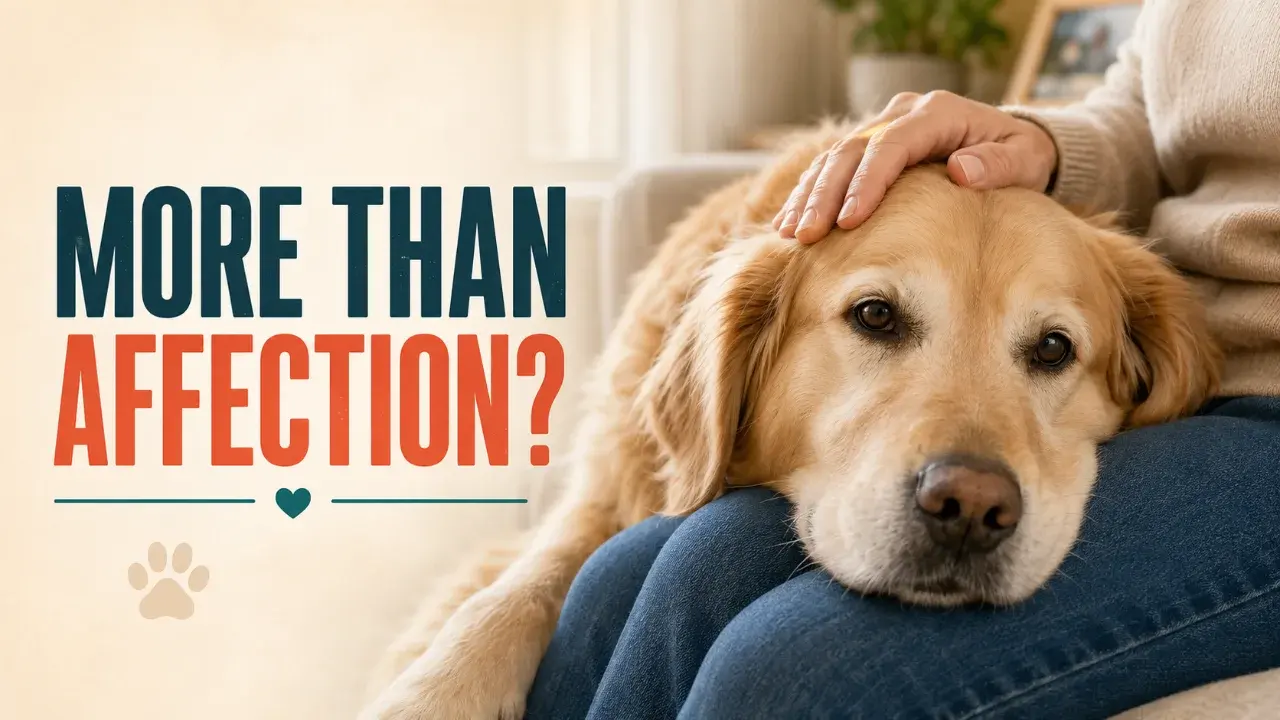
A dog’s heavy head on your lap may express affection, request attention, or seek reassurance. The rest of the body helps reveal what the gesture means in that moment.
Your dog walks over, looks up at you, and gently places their head on your lap. It feels unmistakably affectionate—and often it is. But dogs do not use this gesture as a single sentence with one fixed translation.
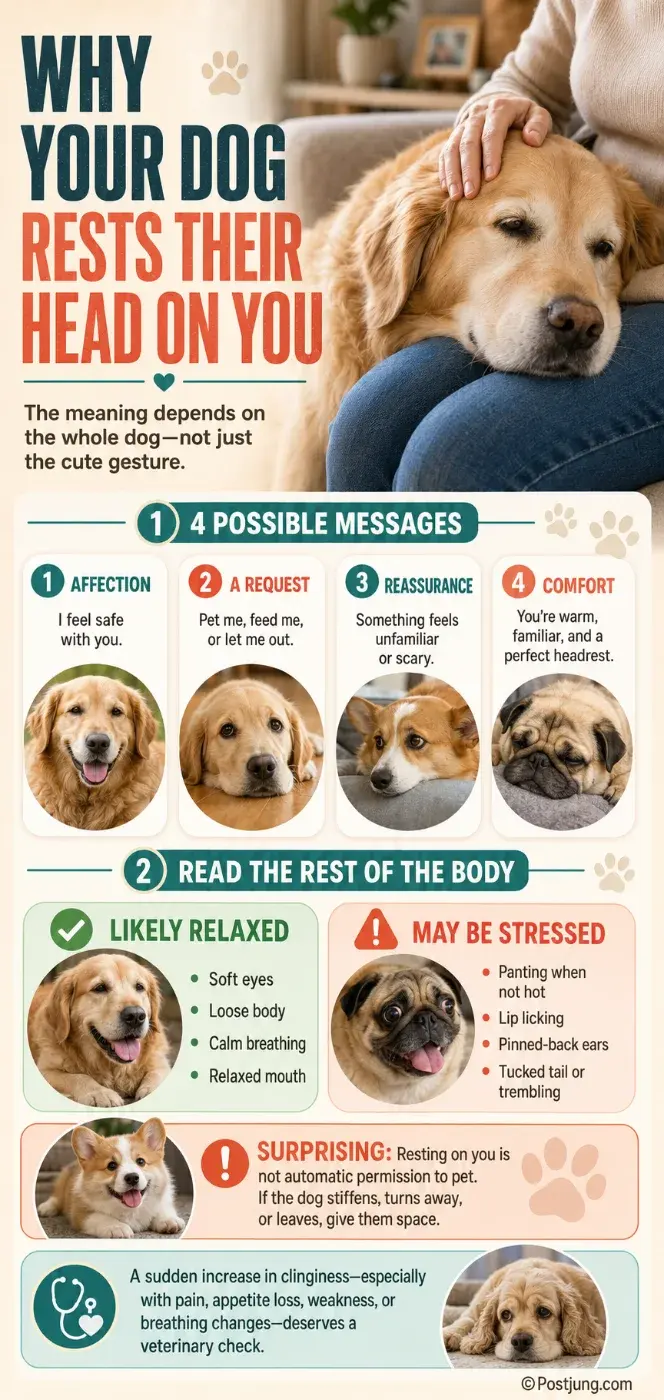
Depending on the situation, that resting head can mean “I feel safe with you,” “Please pet me,” “I need something,” or even “I’m worried.” The best interpretation comes from looking beyond the head and reading the dog’s entire body.
It can be a quiet expression of closeness
Dogs are social animals, and many seek physical contact with people they trust. Resting their head on you allows them to stay close without the energy of climbing onto your lap or demanding active play.
If your dog has soft eyes, relaxed ears, loose facial muscles, and a comfortable body, the gesture probably reflects contentment. A slow sigh, sleepy expression, or settling down beside you strengthens that interpretation.
It may not be the canine equivalent of a human hug, but it can still be a meaningful sign that your dog feels secure in your presence.
Your dog may have learned that it works
Dogs are excellent observers of cause and effect. If placing a head on your lap reliably leads to petting, conversation, treats, or a walk, your dog may repeat the behavior because it gets results.
This does not make the gesture insincere. Affection and learned behavior can exist together. Your dog may genuinely enjoy being close while also knowing that this particular move is difficult for you to resist.
Watch what happens next. A dog that glances toward the door may want to go outside. One that looks toward the kitchen could be anticipating food. A dog that nudges your hand may be making a fairly direct request for attention.
Sometimes your lap feels like a safe place
A dog may seek contact when something feels unfamiliar or unsettling. Thunder, fireworks, visitors, construction noise, travel, or a change in routine can make some dogs move closer to their trusted person.
In that context, a head on your lap may be a request for reassurance rather than simple relaxation.
Look for accompanying signs such as panting when the room is not hot, repeated lip licking, yawning, pacing, pinned-back ears, a tucked tail, trembling, or difficulty settling. Veterinary behavior resources emphasize that individual signals can be ambiguous; posture, surroundings, and the dog’s normal behavior must be considered together.
If your dog seems frightened, remain calm and give them the option to stay near you. Avoid forcing an embrace or holding the dog in place. Some dogs find close restraint comforting, but others feel trapped by it.
The weight and warmth may simply feel good
Your lap is warm, familiar, and usually positioned at a convenient height. For a tired dog, it can function as a comfortable headrest with the added benefit of being close to a favorite person.
This explanation is especially likely when the dog approaches during a quiet routine—such as watching television or reading—and soon begins to doze.
Scent may also contribute to the comfort of proximity. Dogs experience their environment heavily through smell, so resting against a familiar person places them beside a scent associated with home and safety.
Read the whole dog, not just the cute part
No isolated gesture can reveal exactly what a dog is thinking. A lowered head, for example, can occur during relaxation, uncertainty, or an attempt to avoid conflict. That is why canine body-language guidance recommends looking at the eyes, ears, mouth, tail, posture, movement, and immediate situation together.
Signs that generally support a relaxed interpretation include:
- A loose, wiggly, or resting body
- Soft eyes and natural blinking
- A relaxed mouth and facial muscles
- Ears held in their usual position
- Calm breathing
- The freedom to move away without hesitation
Signs that suggest caution or discomfort include:
- A suddenly stiff or frozen body
- Hard staring or showing the whites of the eyes
- Repeated lip licking or yawning outside a sleepy context
- Ears tightly pulled back
- A tucked tail, trembling, whining, or panting
- Moving away when touched
If the dog stiffens, turns away, or leaves when you begin petting, respect that response. Resting on you is not automatic permission to touch every part of the dog’s body.
When a new behavior deserves attention
A familiar, relaxed lap-resting habit is generally not concerning. A sudden increase in clinginess, however, can sometimes accompany fear, pain, illness, cognitive changes, or another source of distress.
The head placement itself does not diagnose a medical problem. The meaningful clue is a change from your dog’s normal pattern—especially when combined with reduced appetite, unusual fatigue, restlessness, vocalizing, limping, breathing changes, disorientation, or sensitivity to touch.
Contact a veterinarian if the behavior appears abruptly and your dog also seems physically unwell or markedly different. Urgent symptoms such as breathing difficulty, collapse, severe weakness, or significant pain require prompt veterinary care.
How should you respond?
Start by observing before reacting. Notice what was happening immediately before the dog approached and what the rest of the body is communicating.
If your dog looks relaxed and enjoys touch, gentle petting may be exactly what they wanted. If they appear worried, calmly reduce the source of stress when possible and offer a quiet place to settle. If the gesture seems connected to a practical need, check whether it is time for a bathroom break, water, exercise, or the dog’s usual routine.
And if you do not want head nudging to become the default way your dog demands something, avoid rewarding it every time. Wait for a calmer behavior—such as sitting nearby—then provide attention. Consistency helps the dog learn which approach works.
A dog’s head on your lap is often a tender sign of trust, but its real meaning lives in the moment surrounding it. The more closely you observe your dog’s individual patterns, the better you will understand whether they are sharing affection, making a request, or asking you to help them feel safe.
VCA Animal Hospitals, Best Friends Animal Society, Veterinary Partner
REFERENCES:
https://vcahospitals.com/know-your-pet/canine-communication---interpreting-dog-language
https://bestfriends.org/pet-care-resources/dog-body-language-signs-comfort-stress-and-more
https://veterinarypartner.vin.com/default.aspx?id=11150770&pid=19239

เขียนโดย Postjung Insights
 รู้หรือไม่? เปิดรายได้พนักงานส่งพัสดุของแต่ละแอป วันหนึ่งได้เท่าไร
 อำเภอที่มีชื่ออำเภอสั้นที่สุด 3 อำเภอเท่านั้นในประเทศไทย
 เปิด 5 โรงเรียนหญิงล้วนเก่าแก่ของไทย ที่มีประวัติยาวนานกว่าศตวรรษ
 ตาราง “เด่นเหนือเด่นใต้” งวด 1 ต.ค. 69 เปิดข้อมูลตามโพย เลขไหนอยู่ตรงไหน
 หัวลูกศรหินย้อนเวลา 80,000 ปี ในเอเชียกลาง… หลักฐานใหม่ชี้ โฮโม เซเปียนส์ อาจเคยบุกยุโรปเร็วขึ้นนับหมื่นปี!
 แปลปกสลาก งวด 1 ต.ค. 69 ส่องตัวเลขจากภาพปกสลากกินแบ่งรัฐบาล
 โรงเรียนที่มีนักเรียนมากที่สุดในไทย
 ฝูงลิงญี่ปุ่นนับสิบรุมล้อมและโจมตีชายคนหนึ่งในคานากาวะ
 6 จุดหมายดังติดโผ นักท่องเที่ยวเจอ ไม่เป็นมิตร เมืองในฝันก็ไม่รอด เหตุผลคืออะไร
 ถ้าไม่กลัวเหนื่อย 7 อาชีพที่ตลาดยังต้องการ และค่าทักษะไปถึง 800 บาท/วัน
 อินฟลูเอนเซอร์สาวผู้สร้างคอนเทนต์สำหรับผู้ใหญ่และมีรายได้ต่อปีกว่า 33 ล้านบาท ตัดสินใจเปลี่ยนอาชีพมาเป็นแพทย์แทน
 ยูเครนขอจัดการประชุมสุดยอดกับญี่ปุ่นเปิด 5 โรงเรียนหญิงล้วนเก่าแก่ของไทย ที่มีประวัติยาวนานกว่าศตวรรษหัวลูกศรหินย้อนเวลา 80,000 ปี ในเอเชียกลาง… หลักฐานใหม่ชี้ โฮโม เซเปียนส์ อาจเคยบุกยุโรปเร็วขึ้นนับหมื่นปี!ถ้าไม่กลัวเหนื่อย 7 อาชีพที่ตลาดยังต้องการ และค่าทักษะไปถึง 800 บาท/วัน
 ทำไมแผนที่ส่วนใหญ่เอาทิศเหนือไว้ด้านบน ทั้งที่โลกไม่มี “ด้านบน” จริง ๆ?
 English Edition