How Much Should New Pet Owners Budget for Vet Care?

The first year can bring exams, vaccines, preventive medication, and one-time procedures—plus emergencies no owner can predict. A realistic plan separates expected care from a dedicated financial safety net.
The adoption fee is rarely the last major expense of bringing home a pet. Exams, vaccines, parasite prevention, dental care, and unexpected illnesses can quickly turn a joyful first year into a financial squeeze.
The most useful plan is not one perfect dollar figure. It is a budget with separate layers, built around your pet’s age, health history, species, lifestyle, and local veterinary prices.
Start with an initial health-care estimate
Schedule a veterinary appointment soon after bringing your pet home, particularly if its medical history is incomplete. Ask the clinic what the first visit may include and request estimated prices before the appointment.
A newly adopted dog or cat may need a physical examination, vaccinations, parasite screening, deworming, preventives, diagnostic tests, or follow-up treatment. Some animals will already have received several of these services through a shelter or responsible breeder, so bring every available medical record.
The American Veterinary Medical Association recommends preventive care tailored to the individual animal. That may include physical examinations, vaccination, parasite control, dental care, nutrition, and screening based on age and health risks.
As a current U.S. reference point, CareCredit’s veterinary cost guide lists routine visits at approximately $70 to $174 for dogs and $53 to $124 for cats. Those figures are only broad national estimates. Vaccines, medication, laboratory work, imaging, and treatment generally cost extra, while prices can differ significantly by region and type of clinic.
Rather than copying a national average into your budget, call two or three local practices and ask for the price of a new-patient exam and the services commonly recommended for an animal like yours.
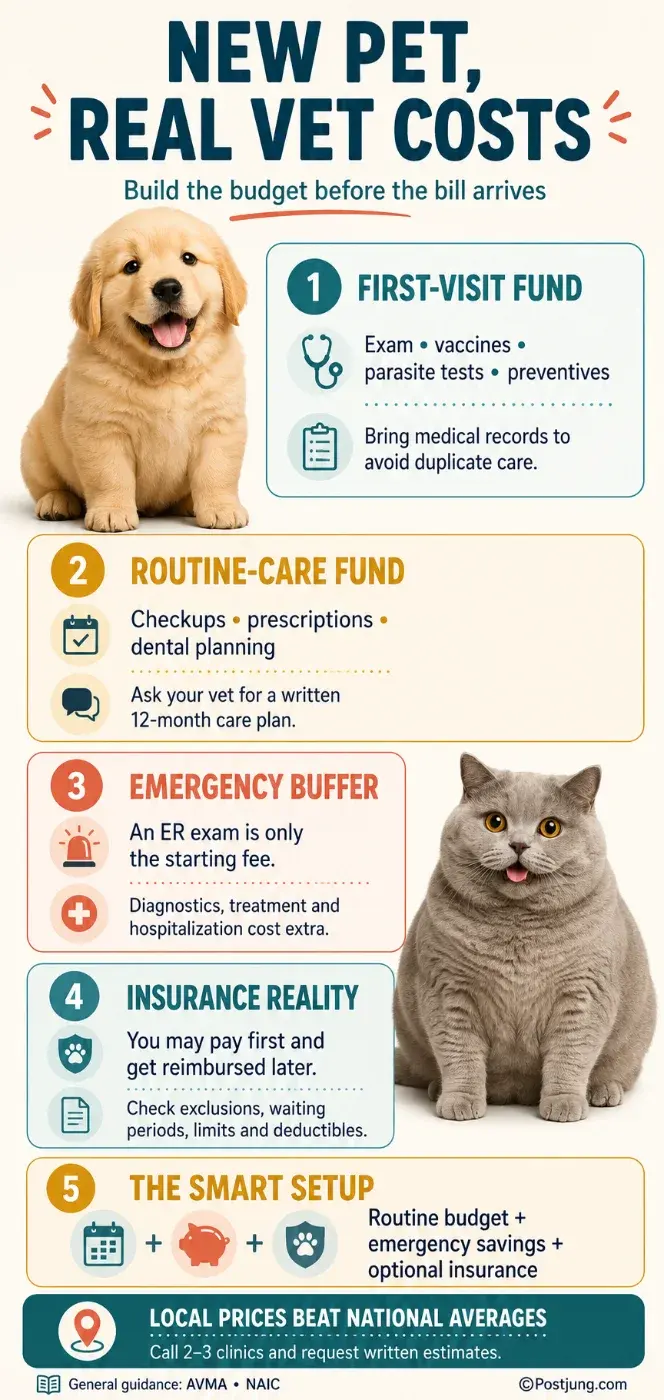
Separate recurring care from first-year costs
A useful veterinary budget has at least four categories:
- Routine examinations and recommended vaccinations
- Parasite prevention and ongoing prescriptions
- Predictable procedures, such as spaying, neutering, microchipping, or dental treatment
- Unexpected illness, injury, and emergency care
Puppies and kittens may require several visits while completing their initial vaccination schedules. Adult rescue animals may arrive with dental disease, skin problems, ear infections, or other conditions needing follow-up care. Senior pets may require more frequent examinations or diagnostic testing.
Vaccines are not identical for every pet. Veterinarians consider factors such as age, location, travel, exposure to other animals, and disease risk. Parasite prevention also varies: a dog in a heartworm-endemic area may have different needs from an indoor cat living in a high-rise apartment.
Dental care deserves its own line in the budget. A dental procedure may involve anesthesia, monitoring, cleaning, imaging, and extractions when necessary. It should not be treated as a small add-on to an ordinary wellness visit.
Ask your veterinarian for a written 12-month care plan after the first examination. It can show which services are due soon, which can be scheduled later, and which depend on examination or test results.
Create an emergency fund before an emergency happens
An emergency examination fee represents only the beginning of an urgent-care bill. Blood tests, X-rays, ultrasound, medication, surgery, specialist treatment, or hospitalization can raise the total substantially.
There is no emergency-fund amount that protects every household from every possible bill. A practical starting goal is enough to cover your local emergency clinic’s examination fee and an initial round of diagnostics. Continue adding to the fund until it could absorb a larger expense without disrupting rent, food, or other essential household costs.
Keep the money in a separate, accessible savings account. Even a modest automatic contribution every payday creates more protection than relying entirely on whatever remains in a checking account.
Also identify the nearest regular clinic and 24-hour emergency hospital before you need them. Save their phone numbers and ask whether they require deposits, accept payment plans, or work with outside financing providers.
Do not assume payment arrangements will be available. The AVMA notes that some clinics offer payment plans, deferred payments, or credit options, but not every practice can do so.
Insurance can help, but it does not replace savings
Pet insurance may reduce the financial impact of certain accidents and illnesses, but owners need to read the policy rather than compare premiums alone.
The National Association of Insurance Commissioners advises consumers to examine deductibles, reimbursement percentages, annual or per-condition limits, waiting periods, and exclusions. Most policies operate through reimbursement, meaning the owner may have to pay the veterinarian first and file a claim afterward.
Pre-existing conditions are commonly excluded. Routine examinations, vaccines, dental cleanings, and preventive treatment may also be excluded unless separate wellness benefits are purchased.
Before enrolling, ask:
- What counts as a pre-existing condition?
- Are hereditary or congenital conditions covered?
- Is the deductible annual or per incident?
- Does the policy reimburse the invoice or a preset benefit schedule?
- Are examination fees, prescriptions, dental illness, and rehabilitation covered?
- How much would you still need to pay upfront?
The safest approach is often insurance plus accessible savings, rather than treating the two as interchangeable.
If the budget is already tight, talk to the clinic early
Veterinary teams can often explain which services are most time-sensitive and whether medically appropriate alternatives exist. Ask for a written estimate, request clarification about each item, and tell the clinic about financial constraints before treatment begins.
Local shelters, humane organizations, veterinary schools, nonprofit clinics, and community programs may provide reduced-cost vaccinations or spay-and-neuter services. Eligibility, availability, and the scope of care vary, so these programs should be researched before an urgent need arises.
A wellness package may make routine expenses easier to predict, but it is not necessarily insurance. Confirm exactly what is included, whether unused services expire, and whether the agreement renews automatically.
The real goal is not to predict every bill. It is to make sure routine care has a place in the monthly budget and an unexpected diagnosis does not become the first time the household thinks about veterinary costs.
Veterinary recommendations and prices vary by animal and location. Owners should obtain individualized guidance and current estimates from a licensed veterinarian before making health-care or insurance decisions.
American Veterinary Medical Association, National Association of Insurance Commissioners, CareCredit, ASPCA
REFERENCES:
https://www.avma.org/resources/pet-owners/petcare/preventive-pet-healthcare
https://www.avma.org/resources-tools/pet-owners/petcare/financial-assistance-veterinary-care-costs
https://content.naic.org/insurance-topics/pet-insurance
https://www.carecredit.com/vetmed/costs/

เขียนโดย Postjung Insights
 อำเภอที่มีชื่ออำเภอสั้นที่สุด 3 อำเภอเท่านั้นในประเทศไทย
 เปิดรายชื่อโรงเรียนในไทยที่ “ว่ายน้ำ” อยู่ในหลักสูตร เรียนจริงตั้งแต่อนุบาลถึงมัธยม
 ตาราง “เด่นเหนือเด่นใต้” งวด 1 ต.ค. 69 เปิดข้อมูลตามโพย เลขไหนอยู่ตรงไหน
 เปิด 5 โรงเรียนหญิงล้วนเก่าแก่ของไทย ที่มีประวัติยาวนานกว่าศตวรรษ
 5 คณะที่เรียนจบมาแล้ว มีอาชีพรองรับมากกว่าที่คิด
 สถิติย้อนหลัง 10 ปี ออกเลขไหนบ้างมาดูกัน
 จุฬาฯ มหาวิทยาลัยแห่งแรกของไทย มีจุดเริ่มต้นในสมัยรัชกาลที่ 5
 รู้หรือไม่? เปิดรายได้พนักงานส่งพัสดุของแต่ละแอป วันหนึ่งได้เท่าไร
 Google ยอมรับแล้ว! Gemini AI เข้าถึงระบบบริษัทจริง 3 แห่ง ระหว่างการทดสอบความปลอดภัย
 โรงเรียนที่มีนักเรียนมากที่สุดในไทย
 เลขเด็ดปฏิทิน "หลวงปู่โต๊ะ" งวดวันที่ 1 ตุลาคม 69..ส่องเลย เลขไหนให้โชค!
 อุทยานเขาใหญ่เรียกตัว “ตีนผี” หลังขับจี้ช้างป่าพ่อลูก ลั่นระยะ 50 เมตรต้องจำให้ขึ้นใจ5 คณะที่เรียนจบมาแล้ว มีอาชีพรองรับมากกว่าที่คิดเปิดรายชื่อโรงเรียนในไทยที่ “ว่ายน้ำ” อยู่ในหลักสูตร เรียนจริงตั้งแต่อนุบาลถึงมัธยมGoogle ยอมรับแล้ว! Gemini AI เข้าถึงระบบบริษัทจริง 3 แห่ง ระหว่างการทดสอบความปลอดภัยเลขเด็ดปฏิทิน "หลวงปู่โต๊ะ" งวดวันที่ 1 ตุลาคม 69..ส่องเลย เลขไหนให้โชค!
 ทำไมของพลาสติกเก่าบางชิ้นถึง “เหนียว” ขึ้นมาเอง ทั้งที่ไม่ได้เปื้อนอะไร?อุทยานเขาใหญ่เรียกตัว “ตีนผี” หลังขับจี้ช้างป่าพ่อลูก ลั่นระยะ 50 เมตรต้องจำให้ขึ้นใจ
 English Edition