Why Cats Choose the Faucet Over Their Water Bowl
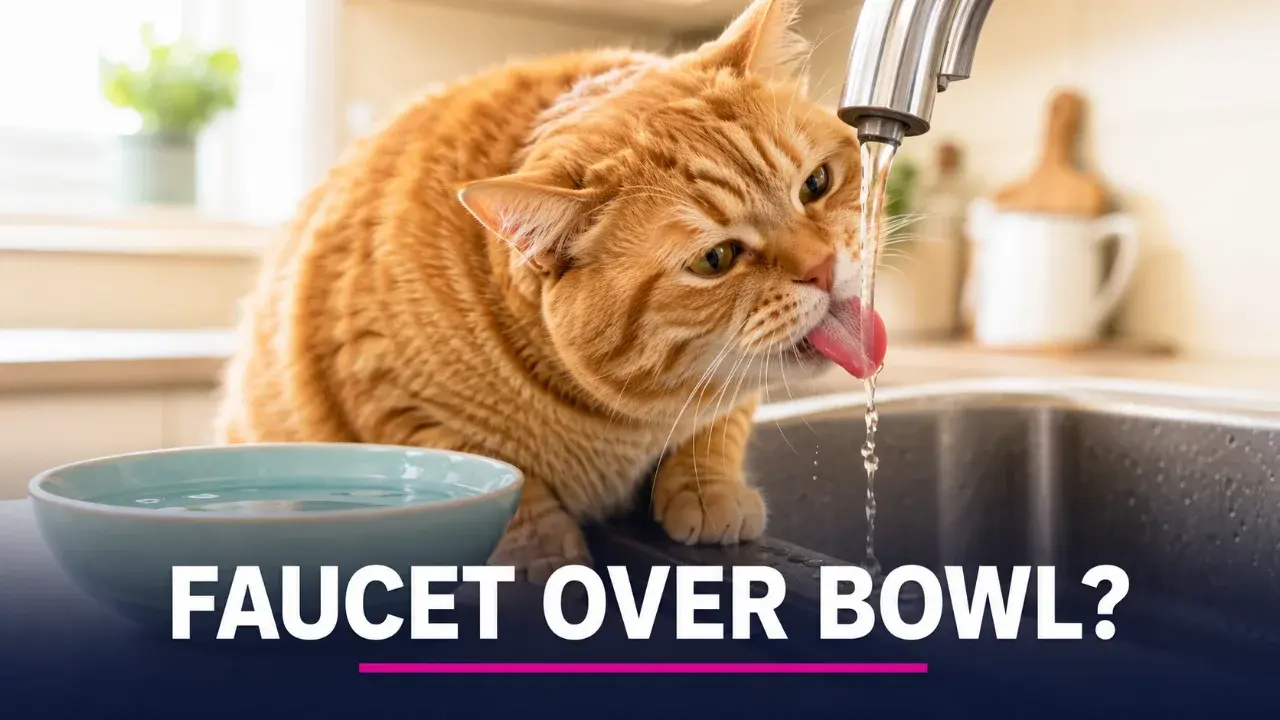
Running water can be more noticeable and appealing, but the faucet itself may not be the whole story. Bowl shape, freshness, location, and even household tension can influence where a cat chooses to drink.
A cat waiting beside the sink may seem oddly demanding when a full water bowl is only a few feet away. But the faucet offers several things a bowl may not: movement, sound, freshly delivered water, and a drinking spot the cat finds more comfortable.
There is no single explanation that applies to every cat. Faucet drinking is usually a preference, not a rule, and the best clue may be found by examining the water bowl and its surroundings.
Moving water is difficult to ignore
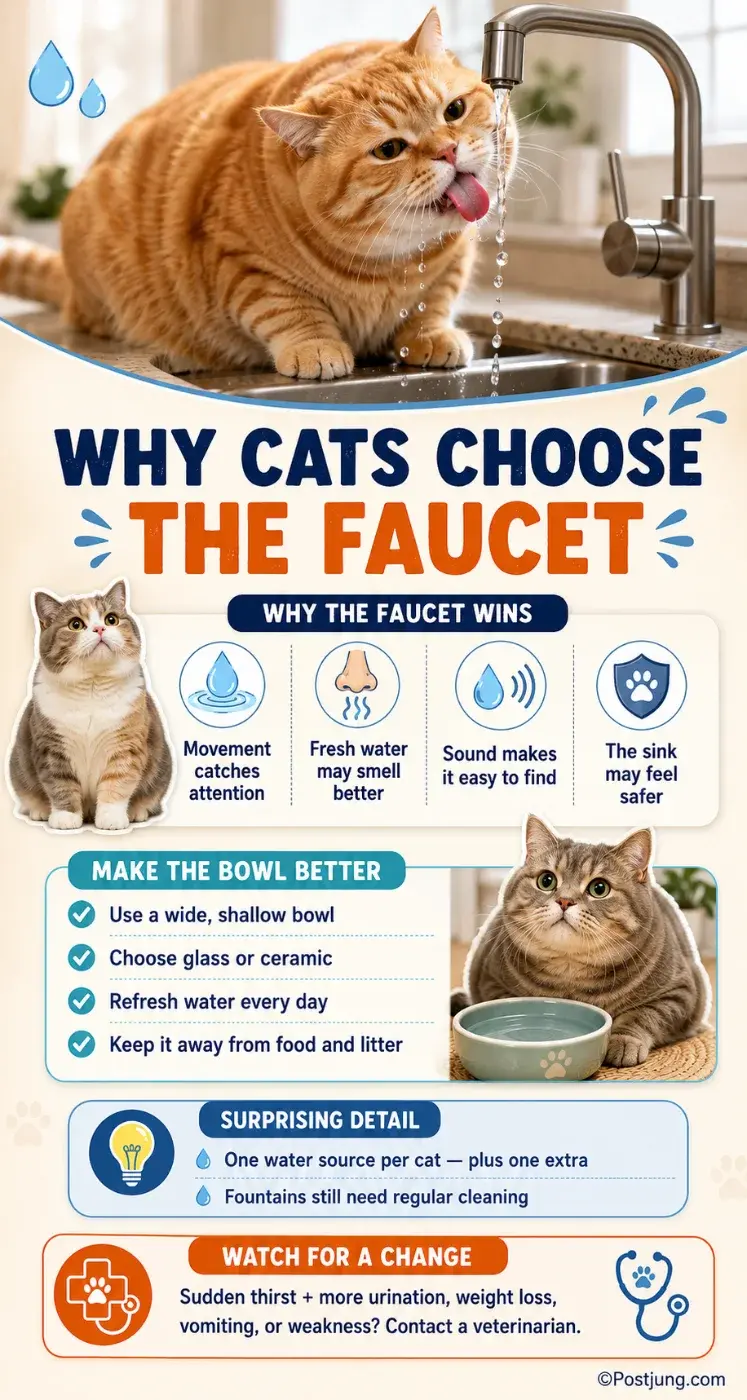
A thin stream from a faucet moves, sparkles, and makes noise. Those features can attract a curious cat more readily than an unmoving surface in a bowl.
Some cats simply enjoy interacting with flowing water. They may watch it, paw at it, or lick droplets from the sink before drinking. The faucet can become both a water source and a small piece of environmental enrichment.
Running water may also feel newly available each time the tap opens. Water that has been sitting out can collect dust, fur, food particles, or odors, particularly in a busy home. Even when the bowl looks acceptable to a person, a cat may find the fresh stream more appealing.
This does not mean cats instinctively know that running water is always safer. Household faucets are not automatically cleaner than a properly maintained bowl, and moving water can still contain substances a cat dislikes. The preference is better understood as a combination of sensory appeal, individual experience, and the alternatives available.
The problem may be the bowl, not the water
Cats can be particular about the container from which they drink. International Cat Care recommends experimenting with bowl design because many cats prefer wide, shallow containers that allow them to drink without lowering their heads deeply or pressing their whiskers against the sides.
Material may matter, too. Ceramic and glass are commonly recommended because scratched plastic can retain odors and residue. Some cats may dislike the reflections, temperature, or noise produced by a metal bowl, although preferences vary.
A bowl that looks clean can still develop a film around its interior. Washing it regularly and replacing the water daily can make a noticeable difference. Fountains also need frequent cleaning because pumps, filters, and narrow channels can accumulate debris or microbial growth.
A fountain is not maintenance-free simply because the water moves.
The water’s temperature and taste may influence the choice as well. Trying fresh room-temperature water, or filtered water if the household supply has a noticeable odor, can help identify a preference. Owners should avoid flavored drinks, milk, or unapproved additives as substitutes for plain drinking water.
Location can make a good bowl unappealing
Placing a water bowl beside the food dish may seem convenient, but some cats prefer their drinking water in a separate location. A bowl beside a litter box, washing machine, busy hallway, or noisy appliance may also feel unpleasant or exposed.
In homes with multiple cats, access can be an even bigger issue. One cat does not have to openly attack another to influence its behavior. Quiet staring, blocking a doorway, or occupying the area around a shared bowl can make a less-confident cat seek water elsewhere.
Providing several water stations in different quiet locations gives each cat more choice. Guidance from feline specialists commonly recommends one water source per cat, plus an additional source, distributed around the home rather than clustered together.
Older cats and those with arthritis may find it uncomfortable to crouch over a low bowl. A stable, slightly elevated container may be easier to use. Any change should be introduced gradually so the cat can choose between the familiar setup and the new one.
How to make the bowl more inviting
A faucet-loving cat does not necessarily need to be stopped, provided the water is safe and the cat is supervised around the sink. Leaving a tap running continuously, however, wastes water and may create access problems when no one is home.
A circulating pet fountain can reproduce some of the faucet’s movement. Choose one that is easy to dismantle and clean, then follow its filter and sanitation instructions carefully. Some cats like fountains immediately; others avoid the sound or unfamiliar shape.
Owners can also try a simpler experiment:
- Place wide ceramic or glass bowls in two or three quiet locations.
- Keep water away from litter boxes and, where possible, separate from food.
- Fill bowls sufficiently so the cat does not need to reach deeply.
- Wash the containers and replace the water every day.
- Offer both still and moving water, then observe the cat’s preference.
- Keep water easy to reach on every floor used by the cat.
Wet food can contribute substantially to a cat’s total water intake, which is why a cat eating canned food may visit the bowl less often than one eating mostly dry food. The amount seen disappearing from a bowl is therefore only part of the hydration picture.
When faucet visits deserve closer attention
A long-standing fascination with dripping water is often harmless. A sudden change is more important.
If a cat begins drinking much more than usual, repeatedly demands the faucet, urinates more often, loses weight, changes appetite, vomits, or appears weak, the behavior should not be dismissed as a new quirk. Increased thirst can accompany conditions including kidney disease, diabetes, and hyperthyroidism.
Likewise, reduced drinking paired with lethargy, poor appetite, dry gums, vomiting, or diarrhea may signal dehydration or illness.
A clear change from the cat’s normal pattern matters more than the drinking location itself. Owners who notice one should record what they are seeing and contact a veterinarian rather than trying to diagnose the cause at home.
For many healthy cats, the faucet is simply the most interesting water station in the house. Improving the bowl’s design, cleanliness, and placement may reveal what the cat was seeking all along: comfortable access to water that feels fresh and safe.
Cornell Feline Health Center, International Cat Care, American Association of Feline Practitioners
REFERENCES:
https://www.vet.cornell.edu/departments-centers-and-institutes/cornell-feline-health-center/health-information/feline-health-topics/hydration
https://icatcare.org/articles/how-to-encourage-your-cat-to-drink
https://icatcare.org/articles/increased-thirst-and-drinking
https://catvets.com/resource/chronic-pain-toolkit-patient-support/

เขียนโดย Postjung Insights
 รู้หรือไม่? เปิดรายได้พนักงานส่งพัสดุของแต่ละแอป วันหนึ่งได้เท่าไร
 5 คณะที่เรียนจบมาแล้ว มีอาชีพรองรับมากกว่าที่คิด
 โรงเรียนที่มีนักเรียนมากที่สุดในไทย
 Google ยอมรับแล้ว! Gemini AI เข้าถึงระบบบริษัทจริง 3 แห่ง ระหว่างการทดสอบความปลอดภัย
 สถิติย้อนหลัง 10 ปี ออกเลขไหนบ้างมาดูกัน
 อำเภอที่มีชื่ออำเภอสั้นที่สุด 3 อำเภอเท่านั้นในประเทศไทย
 เปิด 5 โรงเรียนหญิงล้วนเก่าแก่ของไทย ที่มีประวัติยาวนานกว่าศตวรรษ
 จุฬาฯ มหาวิทยาลัยแห่งแรกของไทย มีจุดเริ่มต้นในสมัยรัชกาลที่ 5
 เปิดรายชื่อโรงเรียนในไทยที่ “ว่ายน้ำ” อยู่ในหลักสูตร เรียนจริงตั้งแต่อนุบาลถึงมัธยม
 ทำไมของพลาสติกเก่าบางชิ้นถึง “เหนียว” ขึ้นมาเอง ทั้งที่ไม่ได้เปื้อนอะไร?
 ตาราง “เด่นเหนือเด่นใต้” งวด 1 ต.ค. 69 เปิดข้อมูลตามโพย เลขไหนอยู่ตรงไหน
 โรงเรียนเพียงแห่งเดียวของประเทศไทย ที่อยู่มาตั้งแต่ยุครัชกาลที่ 45 คณะที่เรียนจบมาแล้ว มีอาชีพรองรับมากกว่าที่คิดเปิดรายชื่อโรงเรียนในไทยที่ “ว่ายน้ำ” อยู่ในหลักสูตร เรียนจริงตั้งแต่อนุบาลถึงมัธยมGoogle ยอมรับแล้ว! Gemini AI เข้าถึงระบบบริษัทจริง 3 แห่ง ระหว่างการทดสอบความปลอดภัย
 เลขเด็ดปฏิทิน "หลวงปู่โต๊ะ" งวดวันที่ 1 ตุลาคม 69..ส่องเลย เลขไหนให้โชค!ทำไมของพลาสติกเก่าบางชิ้นถึง “เหนียว” ขึ้นมาเอง ทั้งที่ไม่ได้เปื้อนอะไร?
 อุทยานเขาใหญ่เรียกตัว “ตีนผี” หลังขับจี้ช้างป่าพ่อลูก ลั่นระยะ 50 เมตรต้องจำให้ขึ้นใจ
 English Edition