Why Rawhide Dog Treats Remain So Controversial
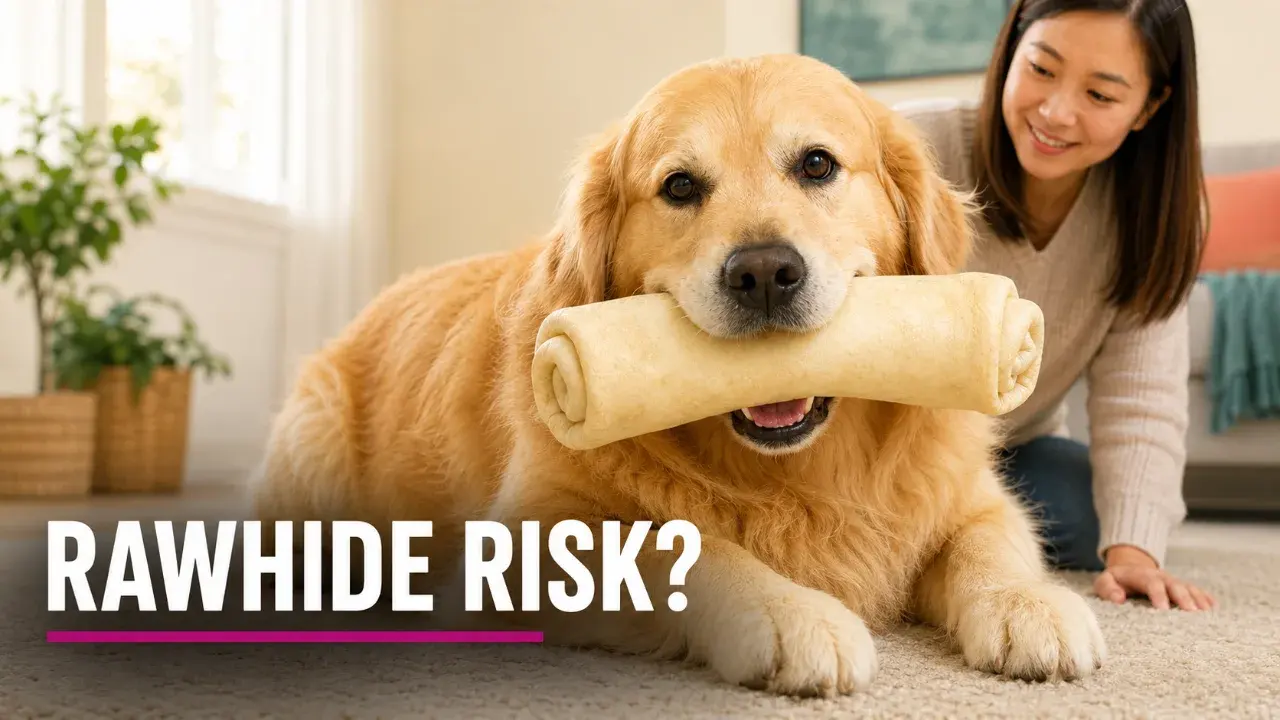
Rawhide can satisfy a dog’s urge to chew, but large swallowed pieces may cause choking or an intestinal blockage. The safest decision depends as much on the dog as it does on the treat.
Rawhide chews occupy an awkward place in the pet aisle. They can keep some dogs entertained and may provide a mechanical cleaning effect as the dog chews, yet they can also become dangerous when softened pieces are swallowed.
That tension explains why veterinarians and dog owners do not always agree about them. Rawhide is not risk-free, but the level of risk varies considerably from one dog and product to another.
Rawhide is animal skin, not a bone
Despite its bone-like shapes, rawhide is generally made from the inner layer of animal hide. It may be rolled, pressed, knotted, flavored, or formed into familiar shapes before being dried and sold as a chew.
A dog’s saliva gradually softens the material. A patient, gentle chewer may wear down a suitable rawhide slowly. An aggressive chewer, however, may tear off a large strip or swallow an end once it becomes soft.
That difference in chewing style is central to the debate. The same treat that lasts safely under supervision for one dog could become a choking or gastrointestinal hazard for another.
Choking and blockages are the main concerns
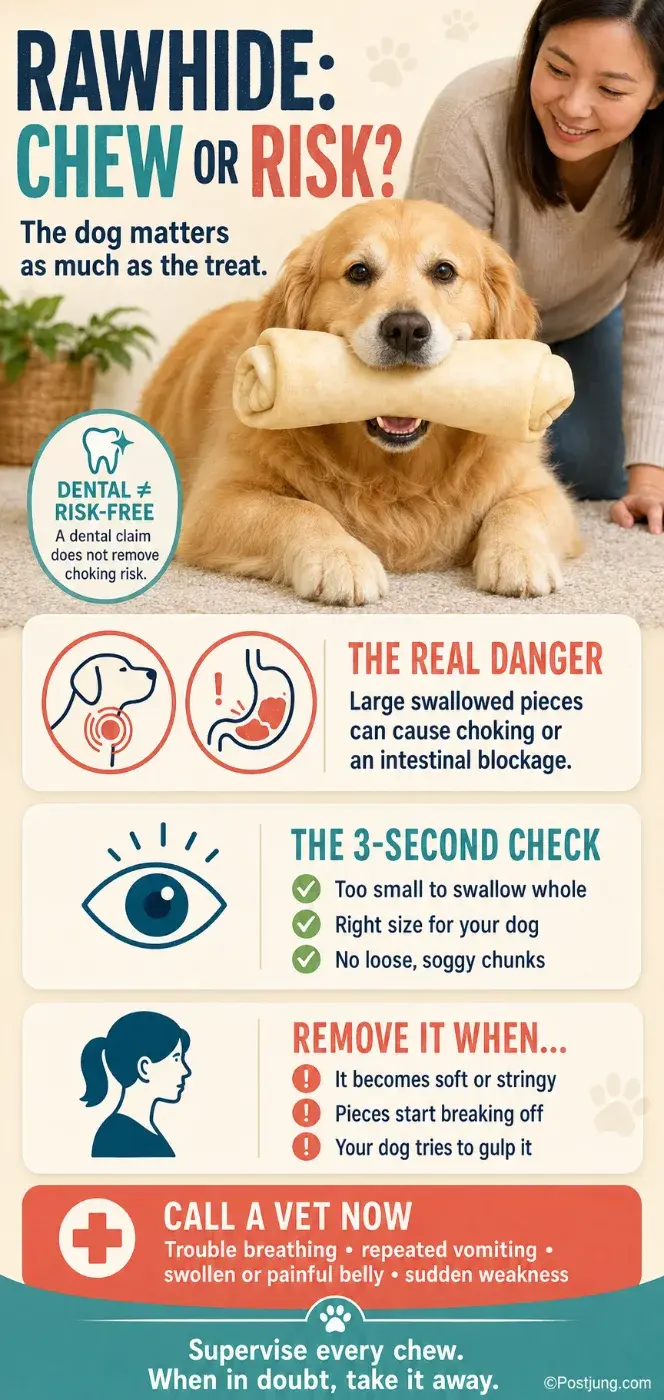
Cornell University’s veterinary guidance warns that rawhide and other hard chew objects can present risks of dental injury, gastrointestinal damage, or obstruction. Cornell also notes specifically that rawhide treats may cause choking or intestinal blockage when they are difficult to digest.
A swallowed piece can become lodged in the throat, stomach, or intestines. The outcome depends on its size, shape, location, and whether it can move through the digestive tract.
Powerful gulpers deserve extra caution. Dogs that quickly break treats apart, attempt to swallow chews whole, guard objects, or resist having treats removed may not be good candidates for rawhide.
Possible signs of an obstruction include repeated vomiting, appetite loss, weakness, abdominal discomfort, bloating, diarrhea, dehydration, whining, or a hunched posture. Choking may cause gagging, frantic behavior, difficulty breathing, pawing at the mouth, or blue-tinged gums.
Difficulty breathing is an emergency. Owners should also contact a veterinarian promptly if a dog swallows a large rawhide piece or develops persistent digestive symptoms afterward rather than waiting to see whether the problem resolves.
Processing and product quality add another concern
“Rawhide” describes a broad product category rather than one standardized item. Products can differ in their source material, thickness, shape, processing, additives, flavor coatings, and manufacturing controls.
The U.S. Food and Drug Administration treats rawhide chews as animal food within its guidance for identifying and controlling biological, chemical, and physical hazards during production. This does not mean every rawhide contains a dangerous contaminant. It does mean that manufacturing quality still matters, just as it does with other edible pet products.
Owners can check the package for the manufacturer, country of origin, ingredient information, size recommendations, feeding directions, and lot details. Unlabeled products or loose chews with no traceable manufacturer provide less information if a quality or recall issue emerges.
Hands should be washed after handling animal-based treats, and chews should not be allowed to sit on surfaces used for human food preparation.
Rawhide may have dental value—but it is not a toothbrush
Chewing creates friction against the teeth, so some specially designed products may help reduce plaque or tartar. That does not make every rawhide a proven dental product, nor can a chew treat replace veterinary dental care and regular toothbrushing.
The Veterinary Oral Health Council maintains a list of products that have met its requirements for specific plaque- or tartar-control claims. The list includes a limited number of rawhide-based products as well as edible dental chews, diets, water additives, gels, toothpastes, brushes, and wipes.
A VOHC seal addresses the product’s demonstrated dental claim. Owners must still follow sizing instructions and supervise chewing because dental acceptance does not eliminate choking risk.
Supervision means actively watching
Giving a dog rawhide while leaving the house defeats one of the most important safeguards. Active supervision means watching how the material changes and intervening before the dog swallows an unsafe piece.
Choose a chew that cannot fit entirely inside the dog’s mouth and follow the weight range on the package. Remove it when it becomes small enough to swallow whole, develops loose chunks, or turns into a soft strip that the dog could gulp.
Discard damaged or heavily soiled chews. Owners should not try to forcefully pull a guarded chew from a dog’s mouth; trading it for a higher-value treat can be safer, and resource-guarding behavior may require guidance from a qualified trainer or veterinary behavior professional.
A dog trying rawhide for the first time should be observed especially closely. Vomiting, diarrhea, unusual gas, or stomach discomfort may indicate that the product does not agree with that dog.
Alternatives need scrutiny too
Replacing rawhide with the hardest available antler, hoof, bone, nylon object, or other chew does not automatically improve safety. Very hard objects may fracture teeth, while pieces from many chew products can still be swallowed.
Cornell veterinary guidance describes a useful “thumbnail test”: owners should be able to make a slight dent in a chew with a fingernail. This is not a guarantee, but it may help rule out objects hard enough to threaten teeth.
Rubber food-dispensing toys, appropriately sized edible dental chews, or veterinarian-recommended products may suit some dogs better. The right option depends on the dog’s size, age, dental condition, diet, allergies, and chewing habits.
The controversy is therefore less about declaring all rawhide good or bad. It is about recognizing that no chew should be treated as harmless. For dogs that shred and gulp, avoiding rawhide may be the sensible choice. For gentler chewers, a properly sized, traceable product used under close supervision may carry a different risk profile.
A veterinarian who knows the dog’s teeth, digestive history, and behavior can help owners make that distinction.
Cornell University College of Veterinary Medicine, U.S. Food and Drug Administration, Veterinary Oral Health Council, VCA Animal Hospitals
REFERENCES:
https://www.vet.cornell.edu/departments-centers-and-institutes/riney-canine-health-center/canine-health-information/dental-disease-and-home-dental-care
https://www.vet.cornell.edu/departments-centers-and-institutes/riney-canine-health-center/canine-health-topics/holiday-hazards-dogs
https://www.fda.gov/media/110477/download
https://vohc.org/accepted-products/

เขียนโดย Postjung Insights
 โรงเรียนที่มีนักเรียนมากที่สุดในไทย
 อำเภอที่มีชื่ออำเภอสั้นที่สุด 3 อำเภอเท่านั้นในประเทศไทย
 ตาราง “เด่นเหนือเด่นใต้” งวด 1 ต.ค. 69 เปิดข้อมูลตามโพย เลขไหนอยู่ตรงไหน
 รู้หรือไม่? เปิดรายได้พนักงานส่งพัสดุของแต่ละแอป วันหนึ่งได้เท่าไร
 Google ยอมรับแล้ว! Gemini AI เข้าถึงระบบบริษัทจริง 3 แห่ง ระหว่างการทดสอบความปลอดภัย
 สถิติย้อนหลัง 10 ปี ออกเลขไหนบ้างมาดูกัน
 เปิด 5 โรงเรียนหญิงล้วนเก่าแก่ของไทย ที่มีประวัติยาวนานกว่าศตวรรษ
 5 คณะที่เรียนจบมาแล้ว มีอาชีพรองรับมากกว่าที่คิด
 เปิดรายชื่อโรงเรียนในไทยที่ “ว่ายน้ำ” อยู่ในหลักสูตร เรียนจริงตั้งแต่อนุบาลถึงมัธยม
 จุฬาฯ มหาวิทยาลัยแห่งแรกของไทย มีจุดเริ่มต้นในสมัยรัชกาลที่ 5
 โรงเรียนเพียงแห่งเดียวของประเทศไทย ที่อยู่มาตั้งแต่ยุครัชกาลที่ 4
 ส่องเลข 3 สำนักพิมพ์ งวด 1 ต.ค. 69 ตัวไหนมีข้อมูลตรงกัน5 คณะที่เรียนจบมาแล้ว มีอาชีพรองรับมากกว่าที่คิดเปิดรายชื่อโรงเรียนในไทยที่ “ว่ายน้ำ” อยู่ในหลักสูตร เรียนจริงตั้งแต่อนุบาลถึงมัธยมGoogle ยอมรับแล้ว! Gemini AI เข้าถึงระบบบริษัทจริง 3 แห่ง ระหว่างการทดสอบความปลอดภัย
 เลขเด็ดปฏิทิน "หลวงปู่โต๊ะ" งวดวันที่ 1 ตุลาคม 69..ส่องเลย เลขไหนให้โชค!
 ทำไมของพลาสติกเก่าบางชิ้นถึง “เหนียว” ขึ้นมาเอง ทั้งที่ไม่ได้เปื้อนอะไร?
 อุทยานเขาใหญ่เรียกตัว “ตีนผี” หลังขับจี้ช้างป่าพ่อลูก ลั่นระยะ 50 เมตรต้องจำให้ขึ้นใจ
 English Edition