Why Pet Fountains Need More Cleaning Than Owners Realize
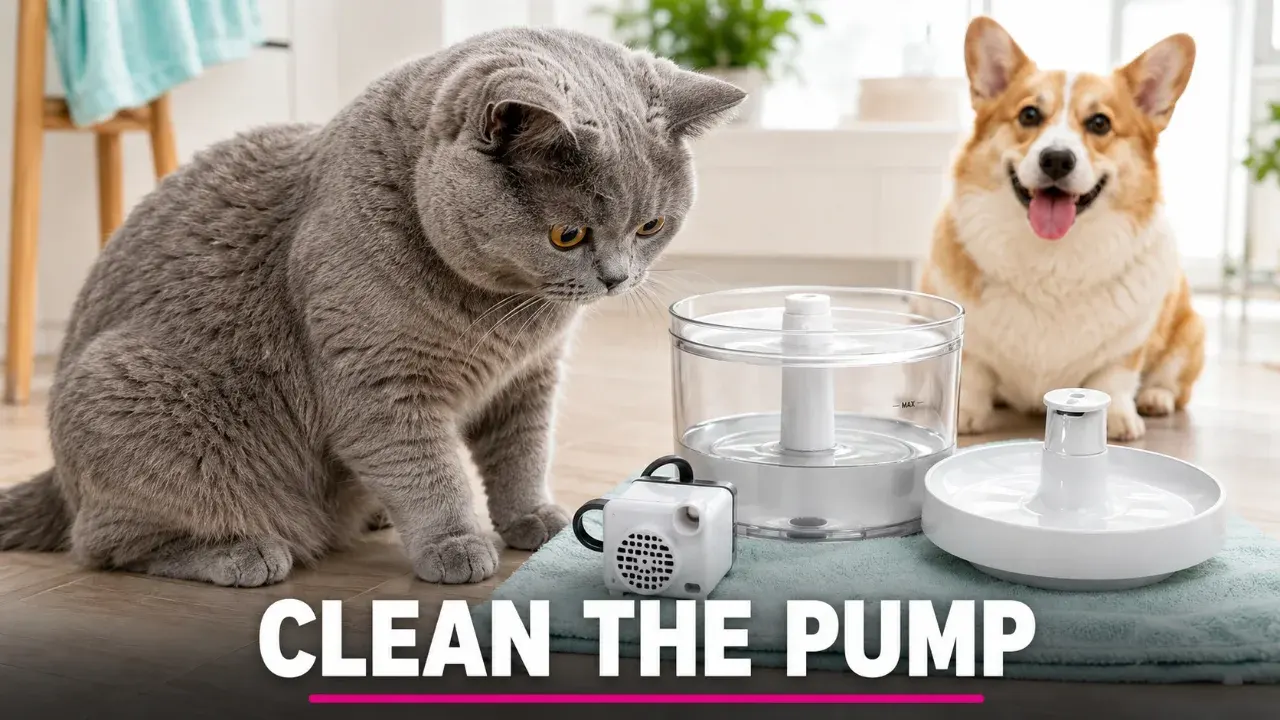
Moving water can look fresh while saliva, food particles, hair, and mineral deposits collect inside the fountain. The pump and narrow crevices are often where the real cleaning work begins.
A pet fountain may look cleaner than an ordinary bowl because the water moves continuously and passes through a filter. But circulation is not the same as washing. Beneath the lid, residue can collect around the pump, filter housing, seams, and narrow channels that owners rarely see.
The result is an appliance that may require more attention than its sleek design suggests. Clear water is not proof of a clean fountain.
A fountain has more places for residue to hide
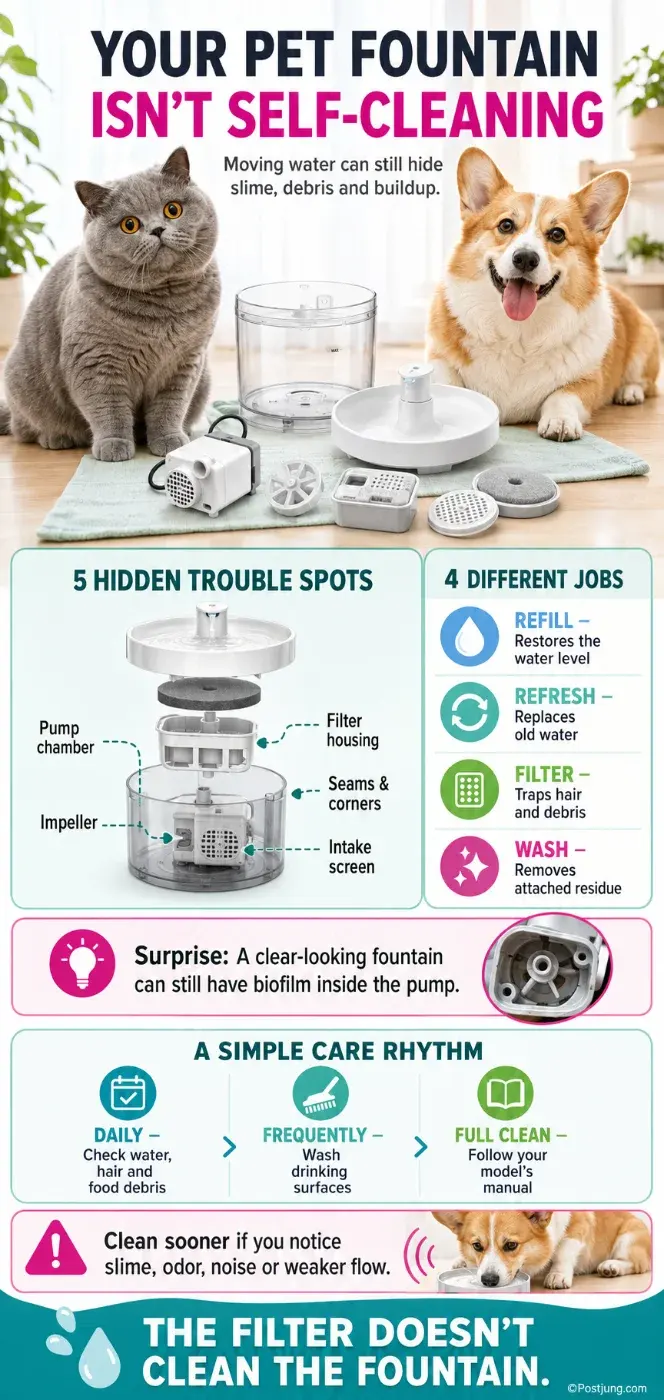
A basic water bowl has one exposed surface. A fountain adds a reservoir, drinking tray, pump, intake screen, filter compartment, tubing, corners, and removable fittings.
Each time a cat or dog drinks, saliva and tiny particles from the mouth enter the water. Hair, dust, and bits of food may also fall into the basin. The pump then moves that water through the rest of the unit.
Refilling the reservoir can dilute visible debris, but it does not remove material already attached to the surfaces. Topping up old water is therefore different from emptying and washing the fountain.
This is also why wiping only the drinking tray is incomplete. The upper surface may appear spotless while the pump housing or intake holds slippery residue.
That slippery coating has a name
The slick layer sometimes found in a water container may be biofilm—a community of microorganisms attached to a damp surface within a protective, glue-like material.
The Centers for Disease Control and Prevention describes biofilm as a slimy substance that helps germs stick to wet surfaces and makes them harder to remove. A quick rinse may leave that attached layer behind. Physical washing and scrubbing are needed to lift residue from the surface. (CDC)
Finding slime does not automatically mean a pet is ill or that the fountain contains a particular pathogen. It means the unit needs a more thorough cleaning, including the concealed water-contact parts.
Odor, visible film, floating debris, reduced water flow, or a noisier pump are other signs that maintenance should not be postponed.
Filters cannot do the whole job
Pet-fountain filters commonly trap hair and debris or help reduce unwanted tastes and odors. They are useful, but a filter does not wash the reservoir or pump.
A dirty filter can also restrict water flow. Leaving the same cartridge in place beyond the manufacturer’s replacement schedule may undermine the reason for using it.
Filter care varies by model. Some cartridges must be rinsed or soaked before installation, while others cannot be washed and reused. Owners should follow the instructions for their exact fountain rather than applying one universal replacement interval.
Changing the filter without cleaning the fountain is only half the job. Cleaning the fountain while continuing to use an overdue filter creates the opposite problem.
A realistic cleaning routine
Public-health guidance provides a useful baseline: the CDC recommends cleaning water bowls every day, while the FDA also advises washing pet water bowls daily. A fountain is not identical to an open bowl, so its manufacturer’s directions should guide disassembly, dishwasher use, pump maintenance, and filter replacement. (CDC, FDA)
A practical routine includes:
- Check the water daily. Remove hair or food, keep the pump adequately submerged, and replace visibly dirty water.
- Wash accessible drinking surfaces frequently rather than merely adding fresh water.
- At the interval specified in the manual, unplug and completely disassemble the fountain.
- Wash water-contact parts with dish soap and water, using a small brush for seams, corners, tubes, and openings.
- Open and clean the pump only as the manufacturer directs. The impeller chamber is easy to overlook.
- Rinse thoroughly so no detergent remains, then reassemble with clean hands.
- Replace or maintain the filter according to the product instructions.
Some brands recommend a full cleaning at least weekly, but schedules differ by fountain. Multiple pets, warm indoor conditions, heavy shedding, food near the fountain, and a pet that drops food into the water may make more frequent cleaning sensible.
The manual’s schedule is a starting point, not permission to ignore visible dirt.
Never submerge a power adapter or any electrical component that the instructions identify as non-washable. Dishwasher-safe claims also may apply to the basin but not the motor, cord, filter housing, or other parts.
Cleaning and disinfecting are not the same
Routine cleaning with soap and water removes dirt and much of the microbial material from a surface. Disinfection is an additional step that may be appropriate when a pet is sick, someone in the household is at higher risk of serious infection, or a veterinarian recommends it.
Use only a method compatible with the fountain and follow the disinfectant label precisely. Never improvise chemical mixtures, and rinse food- or water-contact components as directed before allowing a pet to use them.
The CDC says dog and cat bowls can be hand-washed in a kitchen sink, but the sink and surrounding area should be cleaned afterward to reduce cross-contamination. Washing hands after handling pet supplies is another simple precaution. (CDC)
Choose a fountain you will actually take apart
Capacity, quiet operation, and appearance matter, but cleanability deserves equal weight. Before buying, check whether the pump opens, whether narrow passages can be reached with a brush, and whether replacement filters are readily available.
Smooth, removable components generally make maintenance less frustrating. A complicated fountain that owners avoid dismantling may be less practical than a simpler model cleaned consistently.
A fountain can encourage some pets to drink, but it is still a reusable drinking vessel—not a self-cleaning water supply. The hidden pump deserves as much attention as the visible bowl.
Centers for Disease Control and Prevention, U.S. Food and Drug Administration, PetSafe
REFERENCES:
https://www.cdc.gov/healthy-pets/about/cleaning-and-disinfecting-pet-supplies.html
https://www.cdc.gov/drinking-water/prevention/preventing-waterborne-germs-at-home.html
https://www.fda.gov/animal-veterinary/animal-health-literacy/proper-storage-pet-food-treats
https://www.petsafe.com/shop/fountains-and-feeders/fountains/

เขียนโดย Postjung Insights
 Google ยอมรับแล้ว! Gemini AI เข้าถึงระบบบริษัทจริง 3 แห่ง ระหว่างการทดสอบความปลอดภัย
 5 คณะที่เรียนจบมาแล้ว มีอาชีพรองรับมากกว่าที่คิด
 เลขเด็ดปฏิทิน "หลวงปู่โต๊ะ" งวดวันที่ 1 ตุลาคม 69..ส่องเลย เลขไหนให้โชค!
 รู้หรือไม่? เปิดรายได้พนักงานส่งพัสดุของแต่ละแอป วันหนึ่งได้เท่าไร
 โรงเรียนที่มีนักเรียนมากที่สุดในไทย
 ตาราง “เด่นเหนือเด่นใต้” งวด 1 ต.ค. 69 เปิดข้อมูลตามโพย เลขไหนอยู่ตรงไหน
 อำเภอที่มีชื่ออำเภอสั้นที่สุด 3 อำเภอเท่านั้นในประเทศไทย
 เปิดรายชื่อโรงเรียนในไทยที่ “ว่ายน้ำ” อยู่ในหลักสูตร เรียนจริงตั้งแต่อนุบาลถึงมัธยม
 เปิด 5 โรงเรียนหญิงล้วนเก่าแก่ของไทย ที่มีประวัติยาวนานกว่าศตวรรษ
 อุทยานเขาใหญ่เรียกตัว “ตีนผี” หลังขับจี้ช้างป่าพ่อลูก ลั่นระยะ 50 เมตรต้องจำให้ขึ้นใจ
 สถิติย้อนหลัง 10 ปี ออกเลขไหนบ้างมาดูกัน
 จุฬาฯ มหาวิทยาลัยแห่งแรกของไทย มีจุดเริ่มต้นในสมัยรัชกาลที่ 55 คณะที่เรียนจบมาแล้ว มีอาชีพรองรับมากกว่าที่คิดเปิดรายชื่อโรงเรียนในไทยที่ “ว่ายน้ำ” อยู่ในหลักสูตร เรียนจริงตั้งแต่อนุบาลถึงมัธยมGoogle ยอมรับแล้ว! Gemini AI เข้าถึงระบบบริษัทจริง 3 แห่ง ระหว่างการทดสอบความปลอดภัยเลขเด็ดปฏิทิน "หลวงปู่โต๊ะ" งวดวันที่ 1 ตุลาคม 69..ส่องเลย เลขไหนให้โชค!
 ทำไมของพลาสติกเก่าบางชิ้นถึง “เหนียว” ขึ้นมาเอง ทั้งที่ไม่ได้เปื้อนอะไร?อุทยานเขาใหญ่เรียกตัว “ตีนผี” หลังขับจี้ช้างป่าพ่อลูก ลั่นระยะ 50 เมตรต้องจำให้ขึ้นใจ
 English Edition