Why Healthy Weight Matters More as Pets Get Older
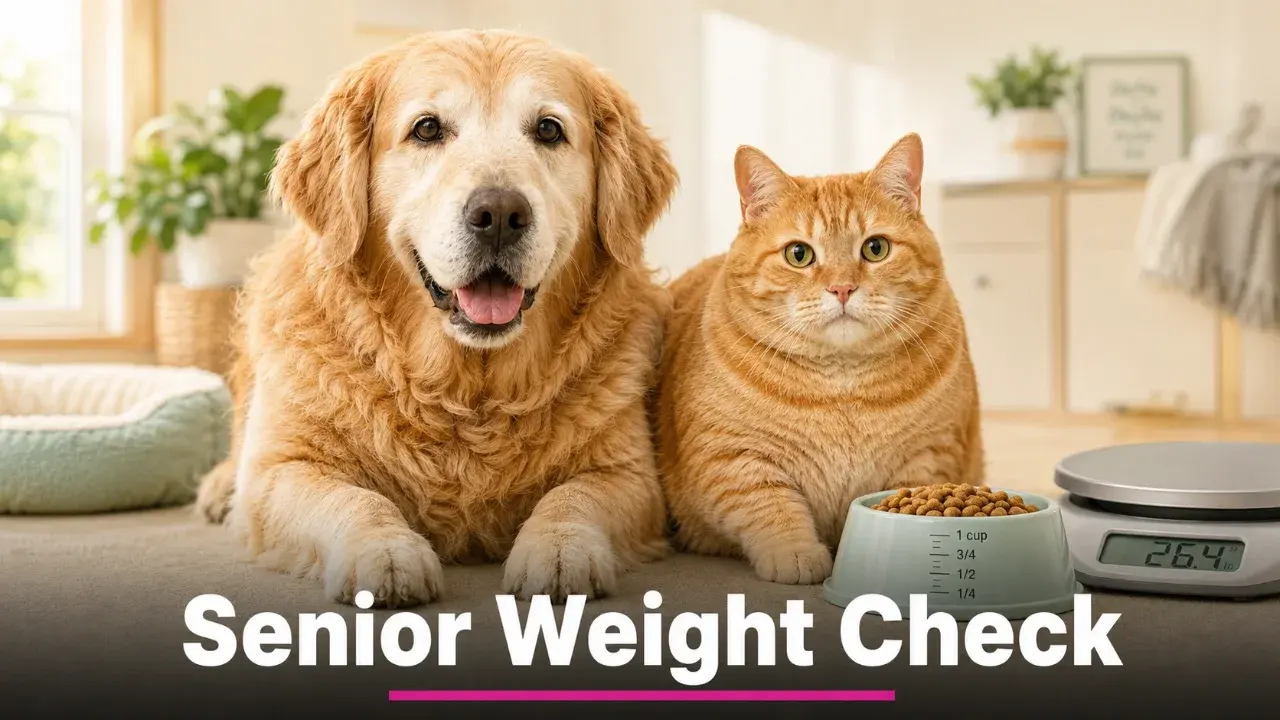
Extra pounds can make movement harder for an aging dog or cat, but unexpected weight loss may be just as concerning. The goal is not simply a lower number—it is preserving mobility, muscle, and quality of life.
A few extra pounds may affect an older pet more than they did in younger years. Aging joints, declining muscle mass, and chronic health conditions can leave senior dogs and cats with less room to absorb the physical burden of excess weight.
But weight control is not just about preventing obesity. Unexpected weight loss can also be a warning sign, while a stable number on the scale may conceal gradual muscle loss.
That makes weight management in later life a balancing act: maintaining enough nutrition to protect lean tissue without allowing excess body fat to make movement and existing health problems harder to manage.
Extra weight can create a difficult cycle
A heavier pet must place more force on its joints with every step. For an older animal already experiencing arthritis or reduced mobility, that additional load can make walking, climbing stairs, jumping, or even getting up from the floor more difficult.
Less comfortable movement may lead to less activity. With fewer calories being used, the pet may gain more weight, lose fitness, and become increasingly reluctant to move.
This pattern is easy to mistake for normal aging. A dog that no longer wants a long walk or a cat that stops jumping onto a favorite windowsill may not simply be “slowing down.” Pain, excess weight, muscle weakness, or a combination of these factors could be involved.
Veterinary guidance generally treats nutrition and weight as part of a pet’s overall medical assessment rather than as a cosmetic issue. The goal is comfortable function, not a perfect-looking body.
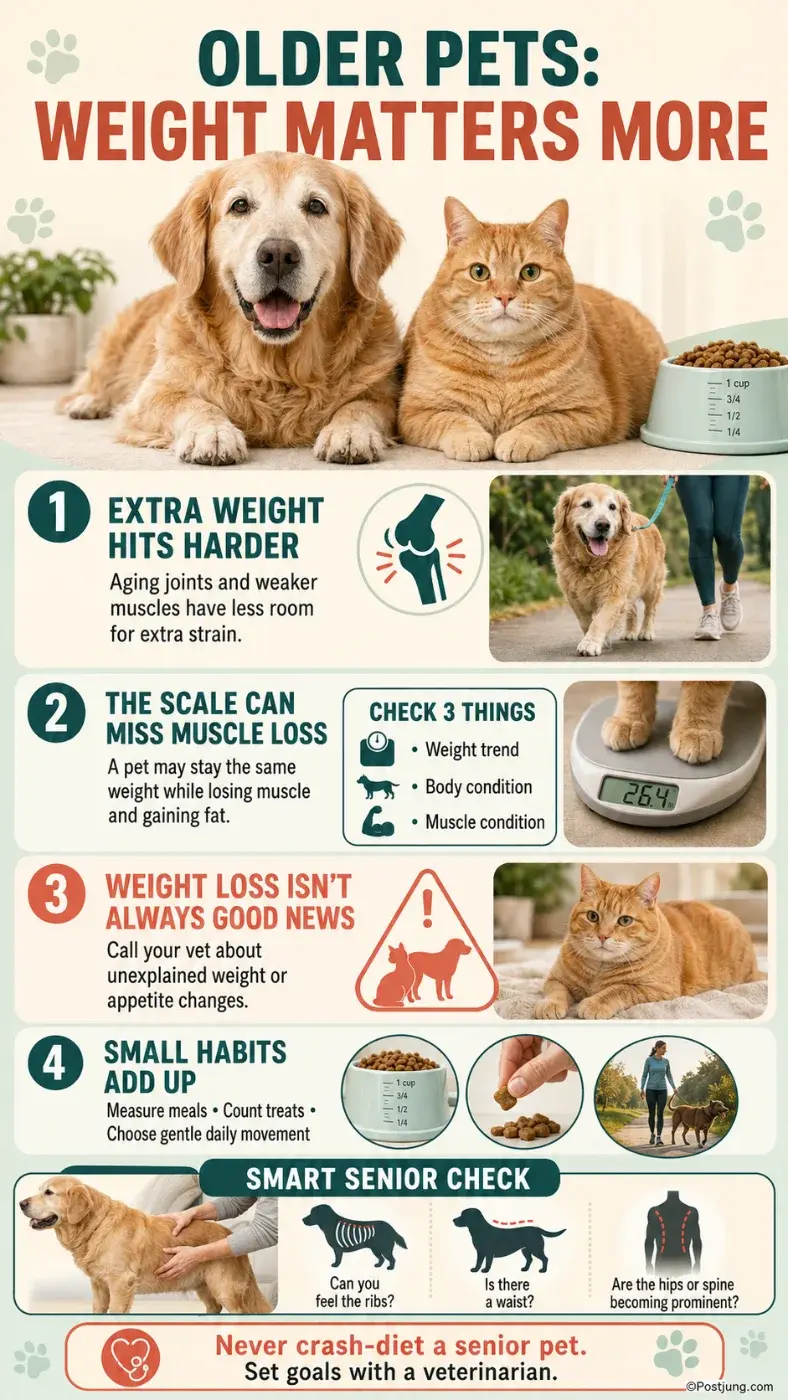
The number on the scale does not tell the whole story
Body weight is useful, especially when tracked over time, but it cannot show whether a pet’s weight comes primarily from fat or lean tissue.
Older animals can lose muscle as they age. In some cases, an overweight dog or cat may still have reduced muscle along the back, hips, shoulders, or hind legs. The scale may barely change because body fat masks the loss.
Veterinary teams therefore use more than weight alone. A body condition score estimates fat coverage by examining features such as the ribs, waist, and abdominal profile. A muscle condition assessment looks for tissue loss in specific areas of the body.
Owners can perform simple observations at home. A pet at a healthy body condition will generally have ribs that can be felt without pressing through a thick layer of fat and a visible waist when viewed from above. Breed, coat, and body shape can make visual judgment difficult, so hands-on assessment matters.
Weight, body fat, and muscle should be evaluated together.
Weight loss is not automatically good news
If an overweight pet becomes lighter after measured portions and a veterinarian-approved plan, that may be expected. Unplanned weight loss is different.
A senior pet that is losing weight despite eating normally—or eating more than usual—should be evaluated. Changes in thirst, urination, appetite, digestion, coat condition, behavior, or energy can provide important clues.
Dental pain may make eating uncomfortable. Kidney disease, diabetes, thyroid disorders, gastrointestinal problems, cancer, and other conditions may also affect body weight or muscle. The possible causes differ between dogs and cats, and a scale cannot identify which one is responsible.
A sudden increase in weight also deserves attention, particularly if accompanied by abdominal swelling, difficulty breathing, weakness, or swelling in the limbs. Not every increase reflects body fat.
For this reason, an unexplained trend matters more than one isolated measurement.
Senior pets should not be placed on crash diets
Rapid or poorly planned calorie restriction can leave an older pet short of essential nutrients and may accelerate the loss of lean tissue. Cats require particular caution because prolonged inadequate food intake can lead to serious complications.
A safer plan begins with the pet’s current food, treats, medical history, activity level, body condition, and muscle condition. The veterinarian can then determine whether weight loss, weight maintenance, or nutritional support is the appropriate goal.
Protein needs also require individual judgment. Older pets need adequate nutrition to help preserve muscle, but animals with certain medical conditions may need a specially formulated diet. Owners should not sharply restrict protein or switch to a therapeutic food without veterinary guidance.
The words “senior,” “light,” and “weight control” on food packaging do not guarantee that a product is right for every older animal. Calorie density, nutrient balance, portion size, and the pet’s health all matter.
Small household habits make a measurable difference
Portion drift is common. A scoop filled slightly above the line at every meal can add up, especially for a small dog or cat. Measuring food with a kitchen scale is usually more consistent than estimating with a cup.
Treats, table scraps, dental chews, food used for medication, and meals provided by different family members should all be counted. A shared feeding record can prevent accidental double meals.
Movement remains useful when it is adapted to the animal. Short, comfortable walks may suit an older dog better than one demanding outing. Cats may respond to brief play sessions, low climbing surfaces, food puzzles, or toys that encourage gentle movement.
Exercise should not be forced through obvious pain or breathing difficulty. Changes such as slipping, limping, hesitation on stairs, or struggling to rise should be discussed with a veterinarian.
Regular weigh-ins under similar conditions make trends easier to see. For pets that are difficult to weigh at home, veterinary visits provide an opportunity to record weight and reassess body and muscle condition.
A healthy senior body is not necessarily a thin one
Healthy weight management is not about making every aging pet slimmer. Some senior animals need to lose fat; others need help maintaining weight and muscle. The right target depends on the individual pet.
Owners are in the best position to notice gradual changes because they see the animal every day. Photos taken from above and from the side, notes about appetite and movement, and repeated weight measurements can reveal patterns that memory alone may miss.
The most useful question is not simply, “How much does my pet weigh?” It is: Is my pet maintaining the body condition and strength needed for a comfortable life?
This information is general and cannot replace an individual veterinary assessment. Any unexplained weight change, appetite change, muscle loss, or decline in mobility should be discussed with a veterinarian.
American Animal Hospital Association, World Small Animal Veterinary Association
REFERENCES:
https://www.aaha.org/resources/2021-aaha-nutrition-and-weight-management-guidelines/home/
https://www.aaha.org/resources/2023-aaha-senior-care-guidelines-for-dogs-and-cats/home/
https://wsava.org/global-guidelines/global-nutrition-guidelines/

เขียนโดย Postjung Insights
 รู้หรือไม่? เปิดรายได้พนักงานส่งพัสดุของแต่ละแอป วันหนึ่งได้เท่าไร
 โรงเรียนที่มีนักเรียนมากที่สุดในไทย
 ตาราง “เด่นเหนือเด่นใต้” งวด 1 ต.ค. 69 เปิดข้อมูลตามโพย เลขไหนอยู่ตรงไหน
 เปิดรายชื่อโรงเรียนในไทยที่ “ว่ายน้ำ” อยู่ในหลักสูตร เรียนจริงตั้งแต่อนุบาลถึงมัธยม
 เลขเด็ดปฏิทิน "หลวงปู่โต๊ะ" งวดวันที่ 1 ตุลาคม 69..ส่องเลย เลขไหนให้โชค!
 สถิติย้อนหลัง 10 ปี ออกเลขไหนบ้างมาดูกัน
 เปิด 5 โรงเรียนหญิงล้วนเก่าแก่ของไทย ที่มีประวัติยาวนานกว่าศตวรรษ
 5 คณะที่เรียนจบมาแล้ว มีอาชีพรองรับมากกว่าที่คิด
 ทำไมของพลาสติกเก่าบางชิ้นถึง “เหนียว” ขึ้นมาเอง ทั้งที่ไม่ได้เปื้อนอะไร?
 อำเภอที่มีชื่ออำเภอสั้นที่สุด 3 อำเภอเท่านั้นในประเทศไทย
 Google ยอมรับแล้ว! Gemini AI เข้าถึงระบบบริษัทจริง 3 แห่ง ระหว่างการทดสอบความปลอดภัย
 ถ้าไม่กลัวเหนื่อย 7 อาชีพที่ตลาดยังต้องการ และค่าทักษะไปถึง 800 บาท/วัน5 คณะที่เรียนจบมาแล้ว มีอาชีพรองรับมากกว่าที่คิดเปิดรายชื่อโรงเรียนในไทยที่ “ว่ายน้ำ” อยู่ในหลักสูตร เรียนจริงตั้งแต่อนุบาลถึงมัธยมGoogle ยอมรับแล้ว! Gemini AI เข้าถึงระบบบริษัทจริง 3 แห่ง ระหว่างการทดสอบความปลอดภัยเลขเด็ดปฏิทิน "หลวงปู่โต๊ะ" งวดวันที่ 1 ตุลาคม 69..ส่องเลย เลขไหนให้โชค!ทำไมของพลาสติกเก่าบางชิ้นถึง “เหนียว” ขึ้นมาเอง ทั้งที่ไม่ได้เปื้อนอะไร?
 อุทยานเขาใหญ่เรียกตัว “ตีนผี” หลังขับจี้ช้างป่าพ่อลูก ลั่นระยะ 50 เมตรต้องจำให้ขึ้นใจ
 English Edition