How to Help Your Cat Adjust to a New Apartment
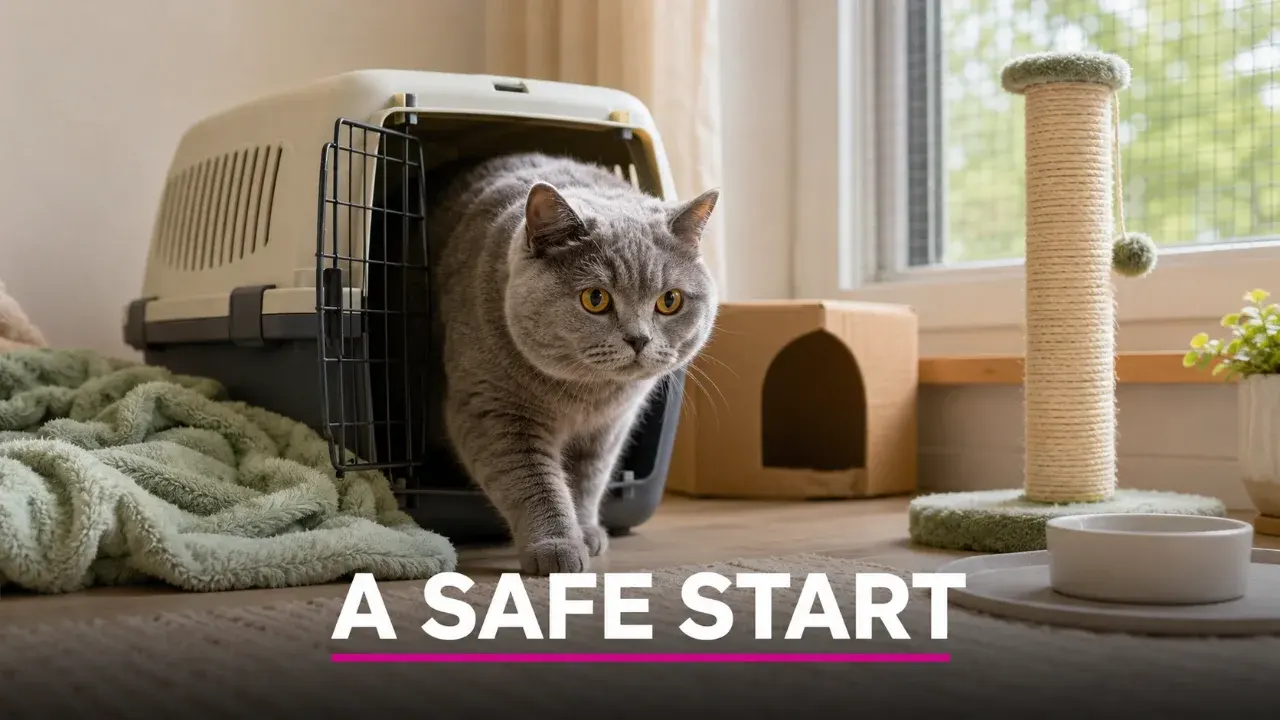
A smaller home can still feel enormous and unfamiliar to a cat. Start with one secure room, preserve familiar routines, and let your cat decide when it is ready to explore.
A new apartment may look like a fresh start to you, but to a cat, it arrives as a maze of unfamiliar smells, sounds, and hiding places. The best way to make the transition easier is surprisingly simple: make the new world smaller at first.
Instead of immediately giving your cat access to every room, begin with a quiet home base stocked with familiar essentials. From there, your cat can explore the apartment gradually and on its own terms.
Prepare the apartment before opening the carrier
Before your cat arrives, inspect the apartment from a feline point of view.
Secure every window with a snug, sturdy screen. Childproof window guards are not enough because cats may slip through the gaps. Balconies should remain inaccessible unless they are fully enclosed with a barrier designed to prevent escapes and falls.
Check behind appliances, inside cabinets, beneath reclining furniture, and around utility openings. Block any space where your cat could become trapped or reach electrical cords, chemicals, medications, pest-control products, or toxic plants.
Make sure everyone involved in the move understands one rule: exterior doors must not be left standing open. A frightened cat can bolt quickly, even if it has never tried to escape before.
Update your cat’s microchip registration and identification tag with the new address and phone number. Keep a recent photo available as an additional precaution.
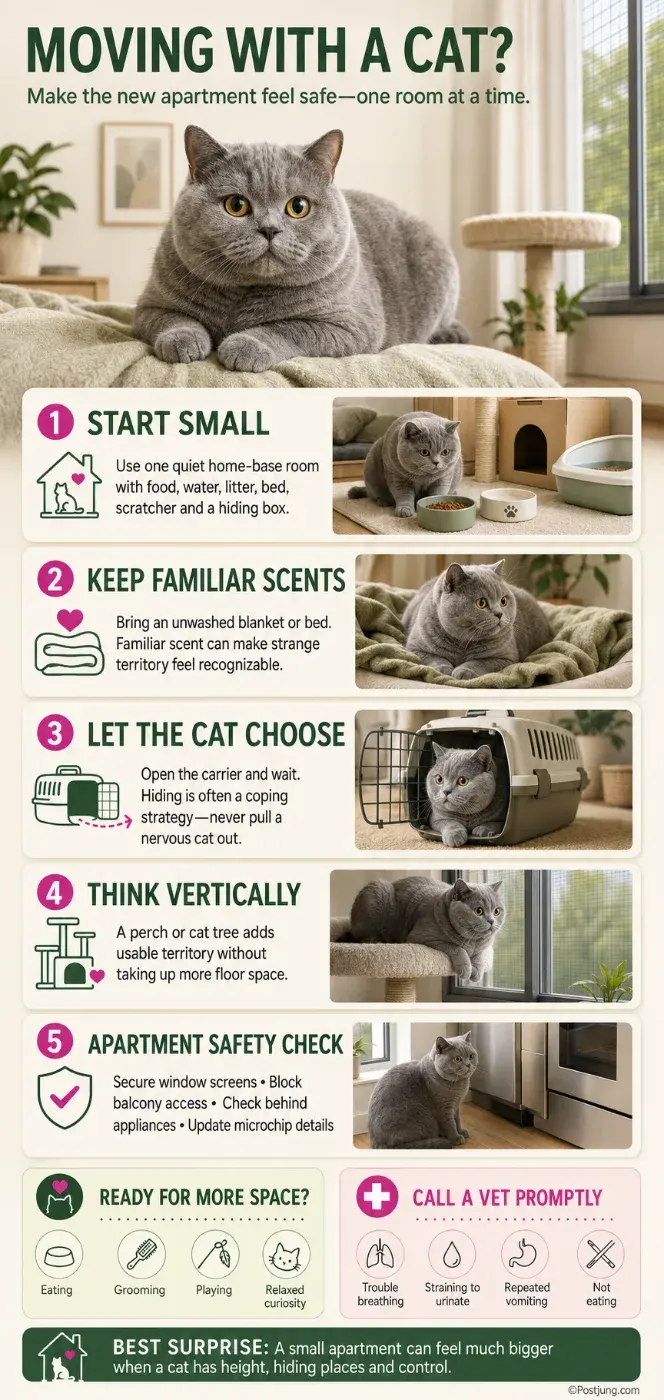
Turn one quiet room into a home base
Choose a bedroom, bathroom, or other low-traffic room that can be closed securely. Place food, water, a litter box, bedding, toys, a scratching surface, a perch, and at least one safe hiding place inside.
Keep food and water away from the litter box. A cardboard box placed on its side can provide an inexpensive retreat, while a familiar blanket or unwashed bed carries reassuring scents from the previous home.
Open the carrier and allow your cat to come out voluntarily. Do not pull it out or tip the carrier forward. Leaving the carrier in the room also gives your cat another recognizable hiding place.
The Ohio State University’s Indoor Pet Initiative describes this type of refuge as a quiet area containing the resources a cat needs to feel safe. The ASPCA similarly recommends letting a pet adjust to one “home base” room before gradually introducing the rest of the home.
Hiding is often a coping strategy, not a sign that the move has failed. Sit quietly nearby, speak softly, or offer a favorite toy, but avoid repeatedly reaching into the hiding place.
Keep familiar routines as steady as possible
Try to preserve the feeding schedule, litter type, food, and daily play routine your cat already knows. Familiar patterns can provide predictability when nearly everything else has changed.
This is not the ideal moment to introduce a new diet, heavily scented litter, unfamiliar furniture, and a different feeding schedule all at once. If a change is necessary, make it gradually whenever possible.
Apartment noises can also be unsettling. Elevators, footsteps in hallways, plumbing, nearby dogs, construction, and traffic may sound much louder to a cat in an unfamiliar territory.
A fan, quiet radio, or other low-level background sound may soften sudden noises. Avoid loud music, strong fragrances, and scented cleaning products around the cat’s home base.
Let your cat set the pace
Some cats begin investigating within hours. Others need several days or longer before they feel comfortable leaving their refuge. There is no universal adjustment deadline.
Signs that your cat may be ready for more space include eating normally, using the litter box, grooming, playing, resting in exposed areas, and approaching the door with relaxed curiosity.
When those behaviors appear, open access to one additional room during a quiet period. Keep the home-base door available so your cat can retreat. Add rooms gradually rather than turning the entire apartment into unfamiliar territory at once.
Do not carry a nervous cat from room to room as an “introduction.” Voluntary exploration gives the animal more control over the experience.
If another pet lives in the apartment, keep the animals separated initially. Their introduction should be a distinct, gradual process involving separate resources and controlled exposure—not a face-to-face meeting on moving day.
Make a small apartment feel larger
Cats experience space vertically as well as horizontally. A window perch behind a secure screen, cat tree, sturdy shelf, or elevated resting spot can increase usable territory without taking up much floor space.
Provide places for scratching, hiding, climbing, watching, and playing. In a studio apartment, furniture placement can create small functional zones even when separate rooms are unavailable.
A covered bed or box can serve as the refuge, while a perch on the opposite side of the apartment creates an observation point. Food, water, litter, and resting areas should not all be crowded into one corner if the layout allows more separation.
Vertical territory can transform a small home by giving a cat choices about distance, height, and privacy.
Interactive play can also reduce tension and create positive associations with the new setting. Short sessions with a wand toy are often less overwhelming than prolonged attention. End the session with a small meal or treat if that fits your cat’s normal diet.
Know when hiding may signal a problem
Temporary withdrawal is common after a move, but behavioral changes can also accompany illness. Pay attention to whether your cat is eating, drinking, urinating, defecating, and moving normally.
Contact a veterinarian promptly if your cat has difficulty breathing, repeatedly vomits, strains or cannot urinate, appears injured, or becomes unusually weak. A cat that stops eating also deserves timely veterinary advice, especially if it has an existing medical condition.
Persistent litter-box avoidance, aggression, overgrooming, or fear that does not gradually improve should not be punished. A veterinarian can first rule out medical causes and may recommend a qualified feline behavior professional if needed.
The goal is not to make your cat explore on your schedule. It is to create enough safety, familiarity, and choice that curiosity eventually takes over. Confidence grows when the cat remains in control.
The Ohio State University Indoor Pet Initiative, ASPCA, Feline Veterinary Medical Association
REFERENCES:
https://indoorpet.osu.edu/cats/feline-life-stressors/new-environments
https://indoorpet.osu.edu/cats/basic-indoor-cat-needs/refuge
https://www.aspca.org/pet-care/general-pet-care/moving-your-pet
https://www.aspca.org/news/high-rise-syndrome-lifesaving-tips-cat-parents

เขียนโดย Postjung Insights
 รู้หรือไม่? เปิดรายได้พนักงานส่งพัสดุของแต่ละแอป วันหนึ่งได้เท่าไร
 อำเภอที่มีชื่ออำเภอสั้นที่สุด 3 อำเภอเท่านั้นในประเทศไทย
 เปิดรายชื่อโรงเรียนในไทยที่ “ว่ายน้ำ” อยู่ในหลักสูตร เรียนจริงตั้งแต่อนุบาลถึงมัธยม
 โรงเรียนที่มีนักเรียนมากที่สุดในไทย
 5 คณะที่เรียนจบมาแล้ว มีอาชีพรองรับมากกว่าที่คิด
 Google ยอมรับแล้ว! Gemini AI เข้าถึงระบบบริษัทจริง 3 แห่ง ระหว่างการทดสอบความปลอดภัย
 เปิด 5 โรงเรียนหญิงล้วนเก่าแก่ของไทย ที่มีประวัติยาวนานกว่าศตวรรษ
 สถิติย้อนหลัง 10 ปี ออกเลขไหนบ้างมาดูกัน
 โรงเรียนเพียงแห่งเดียวของประเทศไทย ที่อยู่มาตั้งแต่ยุครัชกาลที่ 4
 เลขเด็ดปฏิทิน "หลวงปู่โต๊ะ" งวดวันที่ 1 ตุลาคม 69..ส่องเลย เลขไหนให้โชค!
 ทำไมของพลาสติกเก่าบางชิ้นถึง “เหนียว” ขึ้นมาเอง ทั้งที่ไม่ได้เปื้อนอะไร?
 แปลปกสลาก งวด 1 ต.ค. 69 ส่องตัวเลขจากภาพปกสลากกินแบ่งรัฐบาล5 คณะที่เรียนจบมาแล้ว มีอาชีพรองรับมากกว่าที่คิดเปิดรายชื่อโรงเรียนในไทยที่ “ว่ายน้ำ” อยู่ในหลักสูตร เรียนจริงตั้งแต่อนุบาลถึงมัธยมGoogle ยอมรับแล้ว! Gemini AI เข้าถึงระบบบริษัทจริง 3 แห่ง ระหว่างการทดสอบความปลอดภัยเลขเด็ดปฏิทิน "หลวงปู่โต๊ะ" งวดวันที่ 1 ตุลาคม 69..ส่องเลย เลขไหนให้โชค!ทำไมของพลาสติกเก่าบางชิ้นถึง “เหนียว” ขึ้นมาเอง ทั้งที่ไม่ได้เปื้อนอะไร?
 อุทยานเขาใหญ่เรียกตัว “ตีนผี” หลังขับจี้ช้างป่าพ่อลูก ลั่นระยะ 50 เมตรต้องจำให้ขึ้นใจ
 English Edition