Why Professional Pet Dental Cleaning Can Cost So Much
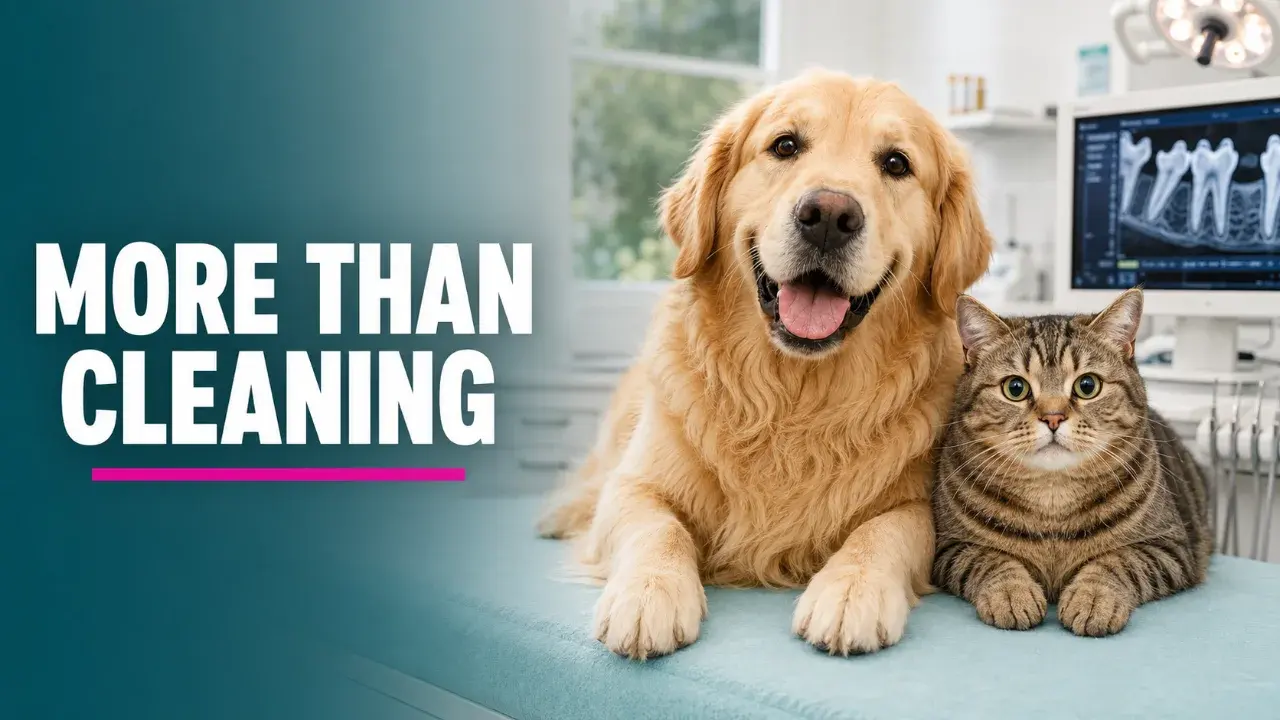
A veterinary dental procedure involves much more than removing visible tartar. Anesthesia, monitoring, dental X-rays, treatment below the gumline, and possible extractions can all affect the final bill.
A professional dental cleaning for a dog or cat can produce an unexpectedly large veterinary bill. The reason is simple: it is not the pet equivalent of a quick cosmetic cleaning at a grooming salon.
It is a medical procedure that may combine a physical examination, anesthesia, patient monitoring, dental X-rays, cleaning above and below the gumline, polishing, pain control, and treatment of diseased teeth.
In other words, the visible tartar is only part of the problem.
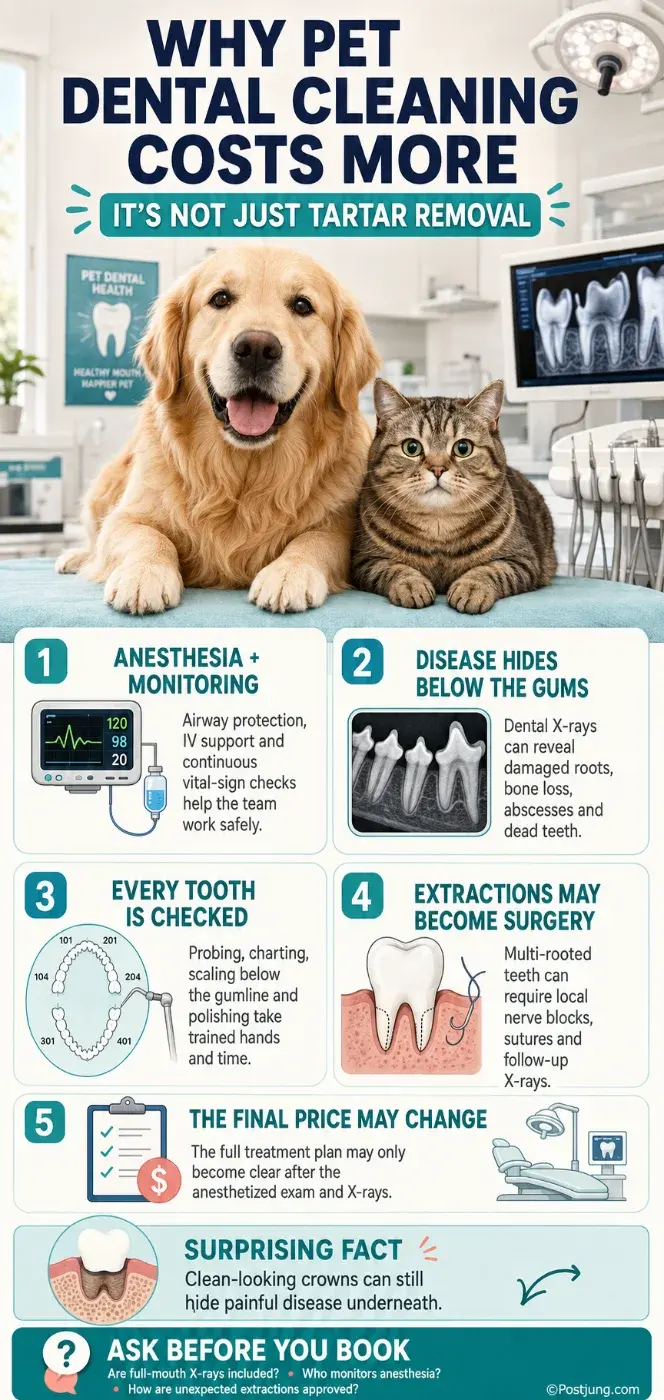
Pets usually need general anesthesia
People understand why they must remain still while a dentist works inside their mouth. Dogs and cats do not—and even a normally gentle pet may move suddenly when frightened or uncomfortable.
General anesthesia allows the veterinary team to examine every tooth, clean beneath the gumline, take properly positioned dental X-rays, and use sharp instruments without causing unnecessary fear or pain.
Anesthesia also creates several additional tasks and expenses. Depending on the patient and veterinary practice, these may include pre-anesthetic testing, an intravenous catheter, medications, airway protection through an endotracheal tube, fluids, and continuous monitoring of vital signs.
A trained team member must watch the patient during the procedure and recovery. Older pets and animals with existing medical conditions may require additional tests or individualized precautions.
Much of dental disease is hidden
A dog or cat may have relatively clean-looking tooth crowns while disease develops below the gums. Problems can include bone loss, damaged roots, periodontal pockets, abscesses, fractured teeth, and dead teeth.
Dental X-rays help veterinarians evaluate areas that cannot be assessed by looking at the mouth alone. Cornell University College of Veterinary Medicine describes full-mouth X-rays, dental probing, charting, scaling, and polishing as parts of a definitive dental evaluation and treatment process.
This is one reason a dental bill can be higher than owners expect: healthy-looking teeth can hide painful disease.
Cats present an especially important example. Tooth resorption can destroy parts of a tooth and may be difficult to evaluate fully without probing and X-rays. A cat may also continue eating despite oral pain, so the seriousness of the condition is not always obvious at home.
“Cleaning” may become dental surgery
Removing plaque and calculus is generally more predictable than treating advanced disease. If X-rays reveal a badly damaged or infected tooth, extraction may be the most appropriate treatment.
An extraction is not simply a matter of pulling a tooth. Some teeth have multiple or curved roots and may require surgical removal, specialized instruments, local anesthetic blocks, sutures, additional X-rays, and postoperative medication.
The number, position, and condition of the affected teeth can therefore change the procedure’s duration and cost considerably.
This also explains why a clinic may provide a range rather than one guaranteed price. The American Animal Hospital Association notes that the complete treatment plan and cost cannot always be determined until the mouth and dental radiographs have been evaluated under anesthesia.
The estimate may change because new disease is discovered, not because an ordinary cleaning suddenly became more expensive without explanation.
Equipment, supplies, and professional time add up
Veterinary dentistry requires equipment designed for animal patients, including dental radiography systems, ultrasonic scalers, polishing tools, extraction instruments, anesthesia machines, and monitoring devices.
The bill also supports the time and expertise of several people. A veterinarian diagnoses disease and performs medical or surgical treatment, while veterinary technicians or nurses may assist with anesthesia, monitoring, imaging, charting, cleaning, and recovery.
Disposable supplies, sterilization, medication, laboratory testing, and maintenance of specialized equipment contribute further costs.
Fees vary by location, clinic type, the pet’s health, and the amount of treatment needed. A referral dental specialist may also charge differently from a general veterinary practice, especially when advanced surgery or root canal treatment is required.
Why a cheaper awake cleaning is not equivalent
Anesthesia-free scaling may make the visible surfaces of the teeth appear cleaner, but it cannot provide the same examination or treatment.
The American Veterinary Medical Association and American Veterinary Dental College explain that an awake animal cannot safely undergo complete dental X-rays, periodontal probing, or thorough cleaning beneath the gums—the area where much dental disease occurs.
Removing only visible buildup can therefore create cleaner-looking teeth without confirming a healthy mouth.
Owners who are worried about anesthesia should discuss the individual patient’s risks with their veterinarian rather than assuming an awake procedure offers equivalent care. The appropriate precautions depend on the animal’s age, medical history, examination findings, and planned treatment.
Questions to ask before the procedure
A clear written estimate can help prevent confusion. Owners may want to ask:
- Does the estimate include pre-anesthetic testing and intravenous fluids?
- Are full-mouth dental X-rays included?
- Who will monitor the pet while it is anesthetized?
- Does the estimate include pain medication and local nerve blocks?
- How will the clinic handle unexpected extractions?
- Will someone contact me before costs exceed an agreed limit?
- Are follow-up visits or take-home medications included?
- Could extensive treatment be divided into stages if medically appropriate?
Some clinics use tiered estimates showing the expected cost of cleaning alone and possible totals if extractions become necessary. Others request advance authorization up to a specified limit.
Prevention may reduce future treatment
Home care cannot repair an infected root or reverse advanced periodontal destruction, but it can help slow plaque accumulation.
Veterinarians may recommend brushing with pet-safe toothpaste, appropriate dental diets, or dental products suited to the individual animal. Human toothpaste should not be used unless a veterinarian specifically approves its ingredients for that pet.
Regular oral examinations can also identify problems before they require more extensive treatment. Bad breath, bleeding gums, drooling, difficulty eating, dropping food, facial swelling, or pawing at the mouth deserve veterinary attention.
Ultimately, a pet dental bill pays for diagnosis and treatment, not just whiter teeth. Understanding what the procedure includes makes it easier to compare estimates fairly and decide what care a pet actually needs.
KEY TAKEAWAYS:
Professional pet dentistry commonly requires anesthesia, monitoring, dental X-rays, and cleaning below the gumline.
The full extent of dental disease may not be visible until the pet is anesthetized and radiographs are taken.
Extractions, pain control, surgical supplies, and longer anesthesia time can substantially affect the final cost.
Anesthesia-free scaling does not provide an equivalent examination or treatment.
Owners should request an itemized estimate and agree in advance on how unexpected treatment will be authorized.
American Veterinary Medical Association, American Animal Hospital Association, American Veterinary Dental College, Cornell University College of Veterinary Medicine
REFERENCES:
American Veterinary Medical Association — Pet dental care
American Animal Hospital Association — Dental care guidelines
American Veterinary Dental College — Professional veterinary dental cleaning
Cornell University — Dentistry and oral surgery

เขียนโดย Postjung Insights
 เปิดรายชื่อโรงเรียนในไทยที่ “ว่ายน้ำ” อยู่ในหลักสูตร เรียนจริงตั้งแต่อนุบาลถึงมัธยม
 โรงเรียนที่มีนักเรียนมากที่สุดในไทย
 5 คณะที่เรียนจบมาแล้ว มีอาชีพรองรับมากกว่าที่คิด
 รู้หรือไม่? เปิดรายได้พนักงานส่งพัสดุของแต่ละแอป วันหนึ่งได้เท่าไร
 จุฬาฯ มหาวิทยาลัยแห่งแรกของไทย มีจุดเริ่มต้นในสมัยรัชกาลที่ 5
 ตาราง “เด่นเหนือเด่นใต้” งวด 1 ต.ค. 69 เปิดข้อมูลตามโพย เลขไหนอยู่ตรงไหน
 อำเภอที่มีชื่ออำเภอสั้นที่สุด 3 อำเภอเท่านั้นในประเทศไทย
 เลขเด็ดปฏิทิน "หลวงปู่โต๊ะ" งวดวันที่ 1 ตุลาคม 69..ส่องเลย เลขไหนให้โชค!
 เปิด 5 โรงเรียนหญิงล้วนเก่าแก่ของไทย ที่มีประวัติยาวนานกว่าศตวรรษ
 ทำไมของพลาสติกเก่าบางชิ้นถึง “เหนียว” ขึ้นมาเอง ทั้งที่ไม่ได้เปื้อนอะไร?
 ดอลลาร์จะล่มสลายจริงไหม?
 Google ยอมรับแล้ว! Gemini AI เข้าถึงระบบบริษัทจริง 3 แห่ง ระหว่างการทดสอบความปลอดภัย5 คณะที่เรียนจบมาแล้ว มีอาชีพรองรับมากกว่าที่คิดเปิดรายชื่อโรงเรียนในไทยที่ “ว่ายน้ำ” อยู่ในหลักสูตร เรียนจริงตั้งแต่อนุบาลถึงมัธยมGoogle ยอมรับแล้ว! Gemini AI เข้าถึงระบบบริษัทจริง 3 แห่ง ระหว่างการทดสอบความปลอดภัยเลขเด็ดปฏิทิน "หลวงปู่โต๊ะ" งวดวันที่ 1 ตุลาคม 69..ส่องเลย เลขไหนให้โชค!ทำไมของพลาสติกเก่าบางชิ้นถึง “เหนียว” ขึ้นมาเอง ทั้งที่ไม่ได้เปื้อนอะไร?
 อุทยานเขาใหญ่เรียกตัว “ตีนผี” หลังขับจี้ช้างป่าพ่อลูก ลั่นระยะ 50 เมตรต้องจำให้ขึ้นใจ
 English Edition