Why Cooked Bones Are Dangerous for Dogs
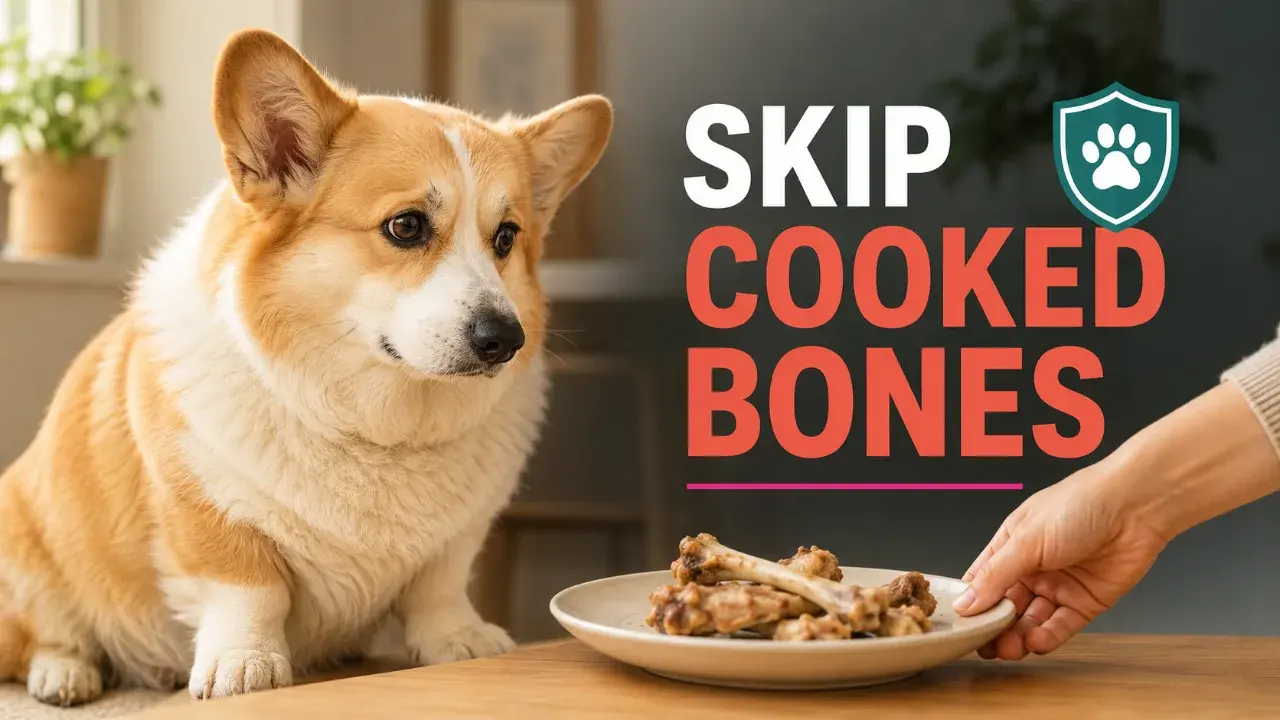
A leftover chicken wing or steak bone may look like a natural treat, but cooking can make bones brittle enough to splinter. Those fragments can cause choking, painful injuries, or dangerous digestive blockages.
Dogs and bones may seem like a natural combination, but leftovers from the dinner table can create a veterinary emergency. Cooked bones can break into sharp fragments, injuring a dog’s mouth, throat, stomach, or intestines.
Chicken and turkey bones are familiar concerns, but they are not the only ones. Cooked pork ribs, steak bones, lamb bones, and other leftovers can also crack or splinter when a dog chews them.
Cooking changes how a bone breaks
Heat removes moisture and changes the physical structure of a bone. Instead of bending or being gradually worn down, a cooked bone may become brittle and fracture into pointed pieces.
A dog’s jaw can exert substantial pressure, so even a bone that feels solid in a person’s hand may split during chewing. The resulting pieces may have sharp edges that cut the tongue, gums, cheeks, or roof of the mouth.
Hard bones can cause another painful problem: fractured teeth. A broken tooth may expose sensitive tissue inside the tooth and require veterinary dental treatment.
Size does not reliably determine safety. A small fragment can become lodged in the throat, while a larger piece may be swallowed whole and become trapped farther down the digestive tract.
The danger does not end after swallowing
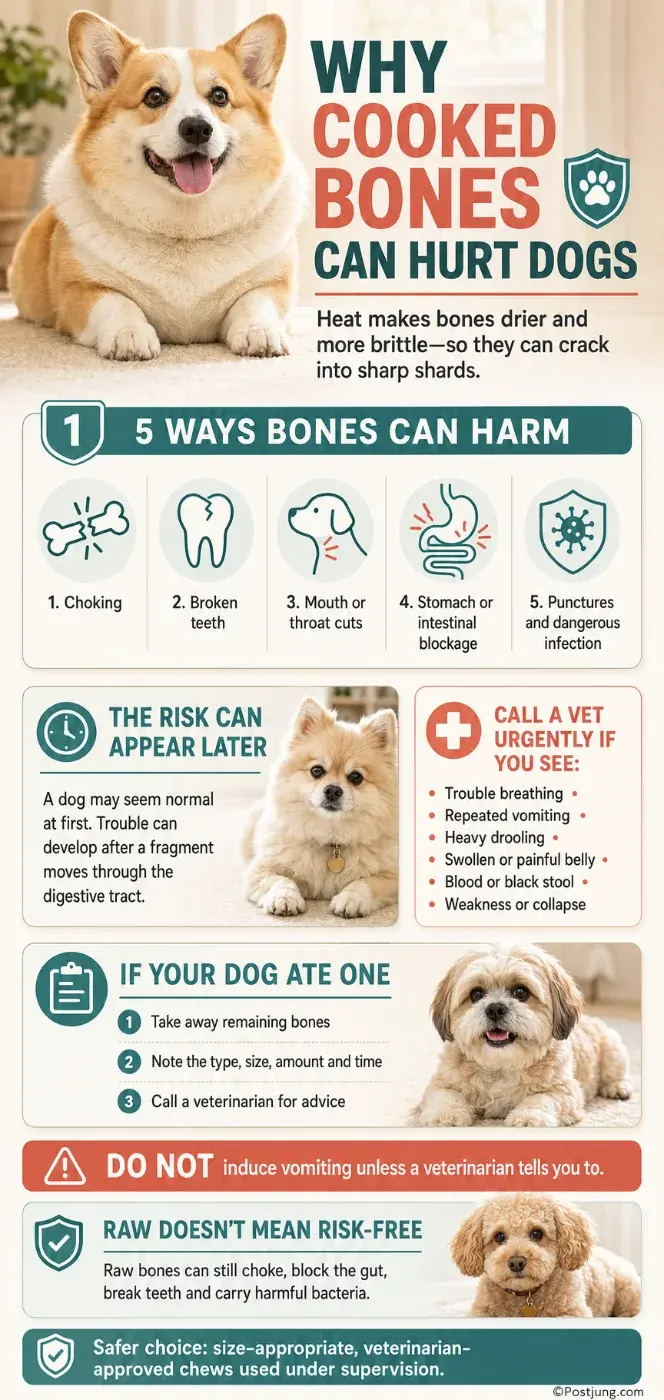
A bone fragment can become stuck in the esophagus, the tube connecting the mouth to the stomach. This may cause gagging, repeated swallowing, drooling, regurgitation, or difficulty breathing.
If it reaches the stomach, it may remain there and cause irritation or repeated vomiting. Pieces that continue into the intestines can accumulate or become lodged, creating an obstruction.
An intestinal blockage is a medical emergency. Food, fluid, and gas cannot move normally through the digestive tract, and the affected section of intestine may lose its blood supply. Removing the obstruction may require endoscopy or surgery.
Sharp fragments can also puncture the stomach or intestinal wall. Digestive contents may then leak into the abdomen, leading to severe inflammation or infection known as peritonitis.
Even fragments that reach the colon can create trouble. They may collect into a hard mass, causing constipation, straining, pain, or injury to the rectum as they pass.
Some dogs appear fine at first
Not every dog that swallows a cooked bone develops a complication. Some pieces pass through the digestive tract without causing an obvious problem.
That uncertainty is precisely why owners should not assume everything is safe simply because the dog is behaving normally. Signs of an obstruction or internal injury may develop later.
Contact a veterinarian after discovering that your dog swallowed a cooked bone. Useful details include the type and approximate size of the bone, how much may have been eaten, when it happened, and the dog’s size and current behavior.
Seek urgent veterinary care if the dog has difficulty breathing, is choking, repeatedly retches, collapses, or develops pale or bluish gums. Other warning signs include:
- Repeated vomiting or regurgitation
- Heavy drooling or persistent gagging
- Refusal to eat or drink
- Abdominal swelling, tenderness, or unusual posture
- Lethargy, weakness, or restlessness
- Straining or being unable to pass stool
- Blood in vomit or stool
- Black, tarry stool
Do not induce vomiting unless a veterinarian specifically instructs you to do so. Bringing a sharp object back through the esophagus may cause additional injury or allow it to become lodged. Home remedies intended to “cushion” a bone are also not substitutes for professional guidance.
Raw bones are not automatically safe
The warning about cooked bones sometimes leads owners to conclude that raw bones are harmless. That is an oversimplification.
Raw bones may be less brittle than cooked ones, but they can still break teeth, cause choking, become stuck, or obstruct the digestive tract. Raw animal products may also carry bacteria such as Salmonella, creating risks for dogs and for people who handle the food, bowls, or contaminated surfaces.
Veterinary guidance on particular bone products and raw diets can vary. A dog’s size, chewing style, dental condition, medical history, and household circumstances all matter. Owners considering any bone should first discuss the choice with their veterinarian.
Safer ways to satisfy the urge to chew
Chewing is normal canine behavior. It may provide stimulation, relieve boredom, and help a dog settle, but the object needs to match the individual animal.
Look for veterinarian-approved chew toys or treats that are appropriately sized and designed for dogs. Avoid anything small enough to swallow whole, and supervise chewing so a damaged toy or large loose piece can be removed.
No chew is completely risk-free. A practical rule is to inspect toys regularly, discard products that crack or shed pieces, and select alternatives that do not feel excessively hard against the teeth.
Prevention matters most around family meals. Keep serving platters away from the edge of tables, clear plates promptly, and use a trash container with a secure lid. Guests and children should also know that a table scrap is not always a safe treat.
Cooked bones are especially tempting because they smell like the meat and sauces served with them. To a dog, an unattended plate or full trash bag may be irresistible. Removing access is far more dependable than expecting the dog to ignore it.
A bone does not need to cause immediate choking to be dangerous. The safest approach is simple: keep cooked bones out of reach, offer suitable alternatives, and contact a veterinarian when accidental ingestion occurs.
This information is general and cannot determine the risk for an individual dog. A veterinarian can assess the type of bone, the amount swallowed, the dog’s size, and any developing symptoms.
U.S. Food and Drug Administration, American Veterinary Medical Association, VCA Animal Hospitals, American Kennel Club
REFERENCES:
https://www.fda.gov/animal-veterinary/animal-health-literacy/take-oh-no-out-your-and-your-pets-holiday-ho-ho-ho
https://www.avma.org/resources-tools/pet-owners/petcare/household-hazards
https://vcahospitals.com/know-your-pet/why-bones-are-not-safe-for-dogs
https://www.akc.org/expert-advice/health/what-to-do-dog-eats-chicken-bone/

เขียนโดย Postjung Insights
 อำเภอที่มีชื่ออำเภอสั้นที่สุด 3 อำเภอเท่านั้นในประเทศไทย
 โรงเรียนที่มีนักเรียนมากที่สุดในไทย
 รู้หรือไม่? เปิดรายได้พนักงานส่งพัสดุของแต่ละแอป วันหนึ่งได้เท่าไร
 Google ยอมรับแล้ว! Gemini AI เข้าถึงระบบบริษัทจริง 3 แห่ง ระหว่างการทดสอบความปลอดภัย
 5 คณะที่เรียนจบมาแล้ว มีอาชีพรองรับมากกว่าที่คิด
 สถิติย้อนหลัง 10 ปี ออกเลขไหนบ้างมาดูกัน
 เปิดรายชื่อโรงเรียนในไทยที่ “ว่ายน้ำ” อยู่ในหลักสูตร เรียนจริงตั้งแต่อนุบาลถึงมัธยม
 ทำไมของพลาสติกเก่าบางชิ้นถึง “เหนียว” ขึ้นมาเอง ทั้งที่ไม่ได้เปื้อนอะไร?
 เลขเด็ดปฏิทิน "หลวงปู่โต๊ะ" งวดวันที่ 1 ตุลาคม 69..ส่องเลย เลขไหนให้โชค!
 ตาราง “เด่นเหนือเด่นใต้” งวด 1 ต.ค. 69 เปิดข้อมูลตามโพย เลขไหนอยู่ตรงไหน
 เปิด 5 โรงเรียนหญิงล้วนเก่าแก่ของไทย ที่มีประวัติยาวนานกว่าศตวรรษ
 แปลปกสลาก งวด 1 ต.ค. 69 ส่องตัวเลขจากภาพปกสลากกินแบ่งรัฐบาล5 คณะที่เรียนจบมาแล้ว มีอาชีพรองรับมากกว่าที่คิดเปิดรายชื่อโรงเรียนในไทยที่ “ว่ายน้ำ” อยู่ในหลักสูตร เรียนจริงตั้งแต่อนุบาลถึงมัธยมGoogle ยอมรับแล้ว! Gemini AI เข้าถึงระบบบริษัทจริง 3 แห่ง ระหว่างการทดสอบความปลอดภัยเลขเด็ดปฏิทิน "หลวงปู่โต๊ะ" งวดวันที่ 1 ตุลาคม 69..ส่องเลย เลขไหนให้โชค!ทำไมของพลาสติกเก่าบางชิ้นถึง “เหนียว” ขึ้นมาเอง ทั้งที่ไม่ได้เปื้อนอะไร?
 อุทยานเขาใหญ่เรียกตัว “ตีนผี” หลังขับจี้ช้างป่าพ่อลูก ลั่นระยะ 50 เมตรต้องจำให้ขึ้นใจ
 English Edition