Why Mats in Your Pet’s Fur Can Become Painful—and Dangerous
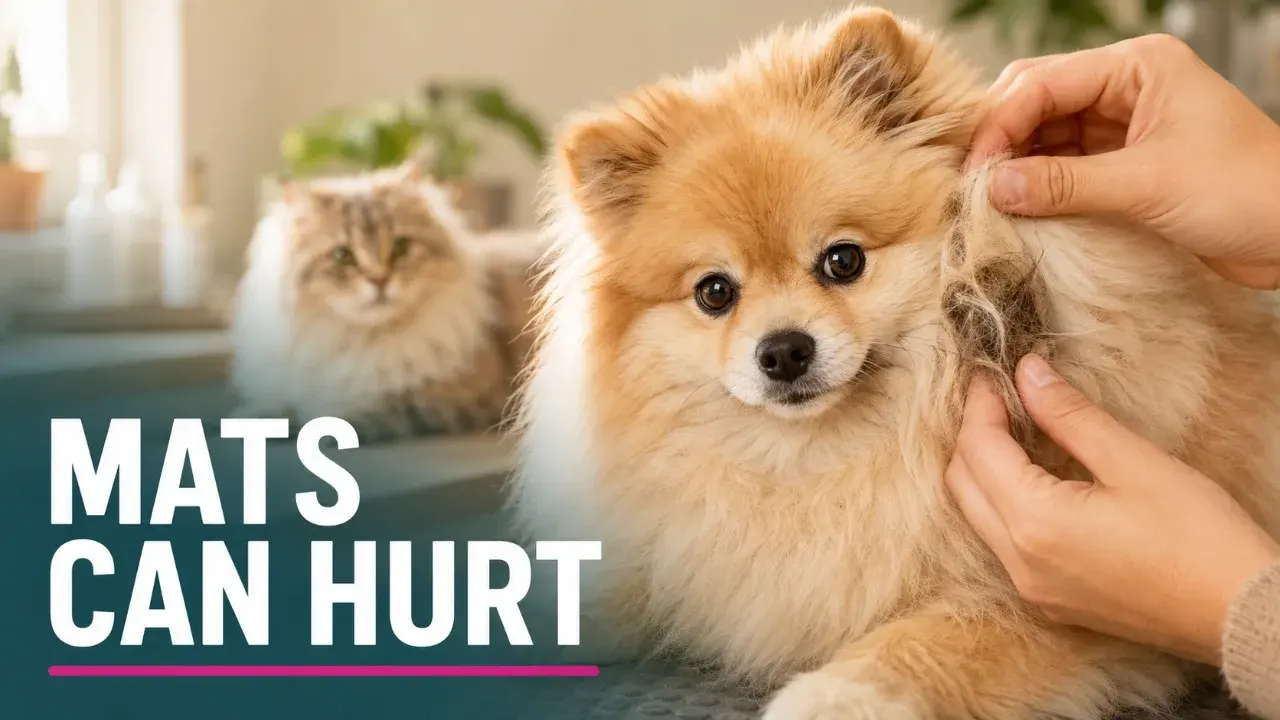
Matted fur continually pulls against the skin and can conceal irritation, wounds, moisture, and parasites. Removing it incorrectly may also injure your pet.
A small knot in your pet’s coat may not look urgent. But once loose hairs become tightly tangled around attached fur, the knot can grow denser and pull closer to the skin.
That is when an ordinary tangle becomes a mat—and potentially a painful health problem.
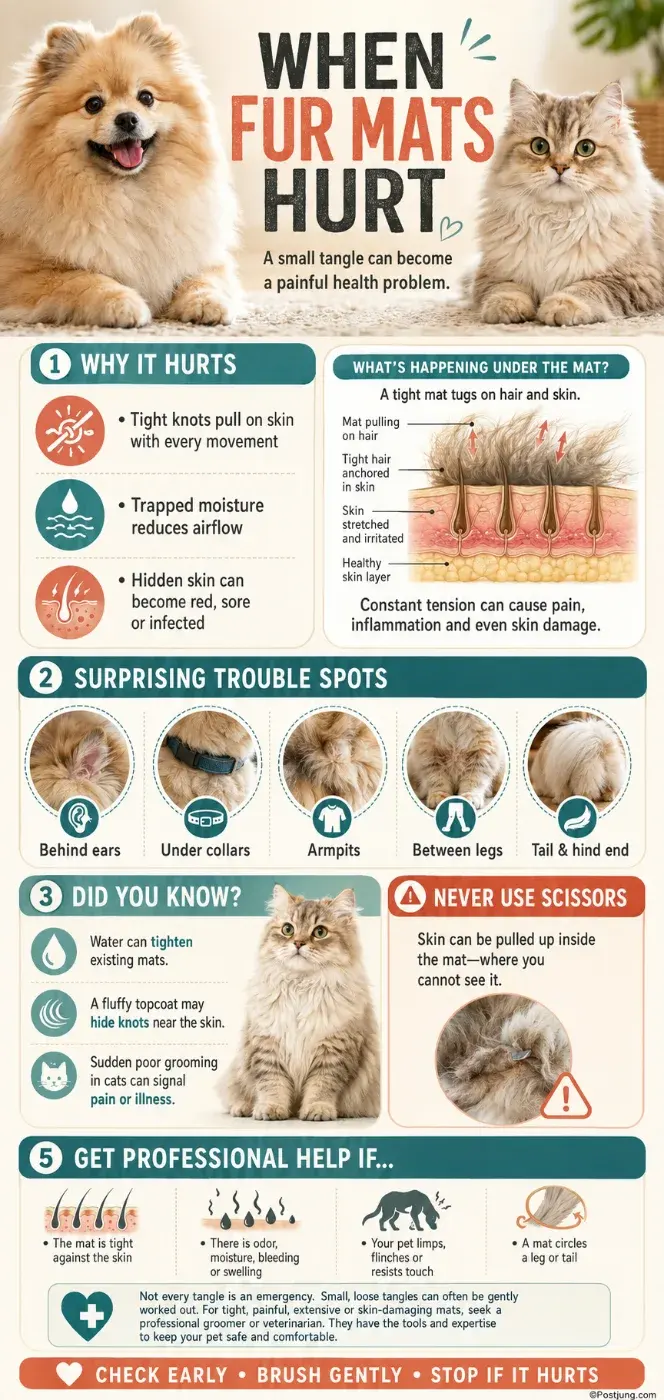
Mats are especially common in pets with long, curly, fine, or thick coats. They frequently form in high-friction areas such as behind the ears, under collars, in the armpits, between the legs, around the tail, and beneath a harness.
Unlike a surface tangle, a tight mat cannot always be brushed away safely. Every step, stretch, or turn of the head may cause it to tug against sensitive skin.
Why matted fur hurts
A mat is made of intertwined hair, shed fur, dirt, and sometimes moisture. As more hair enters the knot, it may contract into a dense clump.
Because the hairs remain attached to the animal, the mat pulls on the skin underneath. Movement then creates repeated tension. A mat near a joint or limb may make walking uncomfortable, while one behind the ear can pull whenever the animal turns its head.
This discomfort can explain why a normally gentle pet suddenly resists brushing, flinches when touched, tries to bite, or moves away when someone approaches the affected area. That reaction should not automatically be treated as bad behavior; the animal may be protecting a painful spot.
Severe matting can also restrict normal movement. A tightly matted coat may prevent a pet from comfortably extending a leg, lifting its tail, or changing position.
The skin underneath may be worse than it looks
One reason mats are deceptive is that they hide the skin.
Owners may not see redness, sores, swelling, or discharge until the fur is removed. Dense mats can trap moisture and reduce airflow, creating conditions in which irritated skin remains damp. In dogs, this can contribute to painful inflamed areas commonly called hot spots.
Fleas and ticks may also remain hidden within a matted coat. Mats around the hindquarters can trap urine or fecal material, causing further irritation and hygiene problems.
In advanced cases, a mat can become so tight that it cuts into the skin. Mats that wrap around a leg or tail are particularly concerning because they may constrict the tissue. These extreme complications are uncommon in regularly groomed pets, but they show why severe matting should never be dismissed as merely cosmetic.
Why bathing first can make matters worse
Bathing may seem like the obvious way to soften dirty or tangled fur, but water can make some mats tighter and more difficult to remove.
A wet mat may also take a long time to dry near the skin. That retained moisture can worsen irritation and make it harder to assess what is happening beneath the coat.
If your pet already has substantial matting, contact a professional groomer or veterinarian before giving a bath. They can determine whether the coat can be safely detangled or needs to be clipped.
Never cut a tight mat with scissors
Scissors are one of the biggest risks in at-home mat removal.
A pet’s skin can be pulled up into the base of a mat, making it difficult to see where the hair ends and the skin begins. Even when an owner believes there is space beneath the knot, one sudden movement can result in a deep cut.
Veterinary guidance recommends avoiding scissors for attached mats. Clippers are generally safer in trained hands, but tightly matted skin can still be fragile, folded, inflamed, or difficult to see.
Small, loose tangles may sometimes be worked apart carefully with an appropriate comb or dematting tool. Stop if the pet shows pain, becomes distressed, or if the mat sits firmly against the skin.
Large, dense, widespread, or foul-smelling mats belong in professional hands.
When to call a groomer—and when to call a veterinarian
An experienced groomer may be able to remove uncomplicated matting safely. However, a veterinarian is the better first call if you notice:
- Red, swollen, bleeding, or broken skin
- Discharge, moisture, or a strong odor beneath the coat
- Persistent licking, chewing, or scratching
- Fleas, ticks, maggots, or other parasites
- Pain when the area is touched
- Limping or restricted movement
- Mats wrapped tightly around a limb or tail
- Sudden deterioration in a cat’s coat or grooming habits
- A pet that cannot tolerate handling because of pain or fear
Some severely matted animals may require pain control or sedation for humane coat removal. This is not simply for convenience. Forcing prolonged dematting on an awake animal can cause significant pain and fear, particularly when the skin underneath is already inflamed.
Prevention should match the coat
There is no single brushing schedule that suits every pet. Coat length, texture, shedding pattern, age, health, and daily activity all matter.
Long-haired and curly-coated pets generally require more frequent attention than short-haired animals. Areas exposed to friction or moisture deserve regular checks, even when the rest of the coat looks smooth.
Brush in sections and check that an appropriate comb can pass through the coat near the skin without pulling. A fluffy surface can conceal tight knots underneath, so brushing only the top layer may not prevent matting.
Keep grooming sessions calm and brief, particularly with puppies, kittens, adopted animals, and pets that are not used to being handled. Rewarding cooperation can help grooming become routine rather than a struggle.
If mats begin appearing despite regular care, ask a groomer to demonstrate the right tools and technique for your pet’s coat. A sudden decline in self-grooming—especially in a cat—can also signal pain, obesity, dental trouble, arthritis, or another health problem that deserves veterinary attention.
Matted fur is easier and kinder to prevent than to remove. Finding a knot early can spare a pet from painful pulling, irritated skin, and a much more difficult grooming appointment later.
VCA Animal Hospitals, ASPCA, RSPCA
REFERENCES:
VCA Animal Hospitals — Grooming and Coat Care for Your Dog
VCA Animal Hospitals — Grooming and Coat Care for Your Cat
ASPCA — Preventing Your Pet’s Coat From Matting
RSPCA — How and Why to Groom Your Cat

เขียนโดย Postjung Insights
 5 คณะที่เรียนจบมาแล้ว มีอาชีพรองรับมากกว่าที่คิด
 โรงเรียนที่มีนักเรียนมากที่สุดในไทย
 Google ยอมรับแล้ว! Gemini AI เข้าถึงระบบบริษัทจริง 3 แห่ง ระหว่างการทดสอบความปลอดภัย
 เปิดรายชื่อโรงเรียนในไทยที่ “ว่ายน้ำ” อยู่ในหลักสูตร เรียนจริงตั้งแต่อนุบาลถึงมัธยม
 เลขเด็ดปฏิทิน "หลวงปู่โต๊ะ" งวดวันที่ 1 ตุลาคม 69..ส่องเลย เลขไหนให้โชค!
 สถิติย้อนหลัง 10 ปี ออกเลขไหนบ้างมาดูกัน
 รู้หรือไม่? เปิดรายได้พนักงานส่งพัสดุของแต่ละแอป วันหนึ่งได้เท่าไร
 อำเภอที่มีชื่ออำเภอสั้นที่สุด 3 อำเภอเท่านั้นในประเทศไทย
 ทำไมของพลาสติกเก่าบางชิ้นถึง “เหนียว” ขึ้นมาเอง ทั้งที่ไม่ได้เปื้อนอะไร?
 อุทยานเขาใหญ่เรียกตัว “ตีนผี” หลังขับจี้ช้างป่าพ่อลูก ลั่นระยะ 50 เมตรต้องจำให้ขึ้นใจ
 ดอลลาร์จะล่มสลายจริงไหม?
 ตาราง “เด่นเหนือเด่นใต้” งวด 1 ต.ค. 69 เปิดข้อมูลตามโพย เลขไหนอยู่ตรงไหน5 คณะที่เรียนจบมาแล้ว มีอาชีพรองรับมากกว่าที่คิดเปิดรายชื่อโรงเรียนในไทยที่ “ว่ายน้ำ” อยู่ในหลักสูตร เรียนจริงตั้งแต่อนุบาลถึงมัธยมGoogle ยอมรับแล้ว! Gemini AI เข้าถึงระบบบริษัทจริง 3 แห่ง ระหว่างการทดสอบความปลอดภัยเลขเด็ดปฏิทิน "หลวงปู่โต๊ะ" งวดวันที่ 1 ตุลาคม 69..ส่องเลย เลขไหนให้โชค!ทำไมของพลาสติกเก่าบางชิ้นถึง “เหนียว” ขึ้นมาเอง ทั้งที่ไม่ได้เปื้อนอะไร?อุทยานเขาใหญ่เรียกตัว “ตีนผี” หลังขับจี้ช้างป่าพ่อลูก ลั่นระยะ 50 เมตรต้องจำให้ขึ้นใจ
 English Edition