Why Your Pet’s Water Bowl Needs Washing Every Day
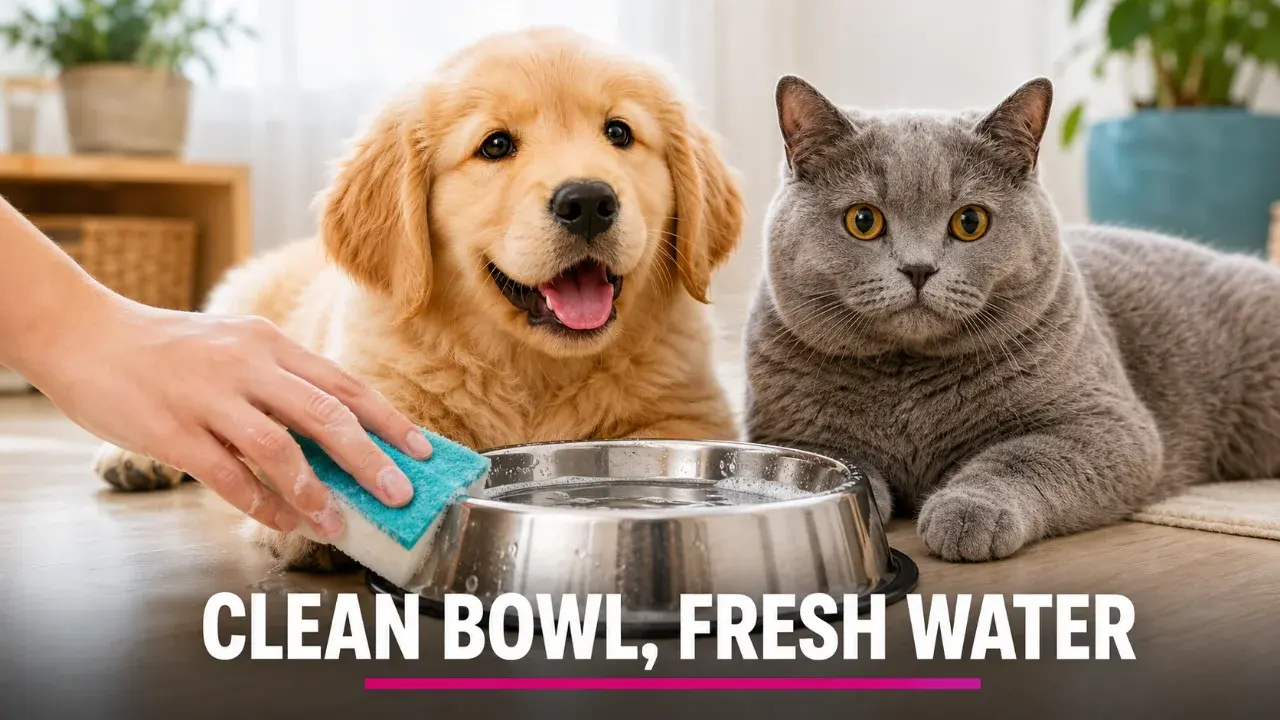
A quick refill may make a pet’s water look fresh, but it does not remove the residue collecting on the bowl. Daily washing is a small habit that helps keep drinking water cleaner and more inviting.
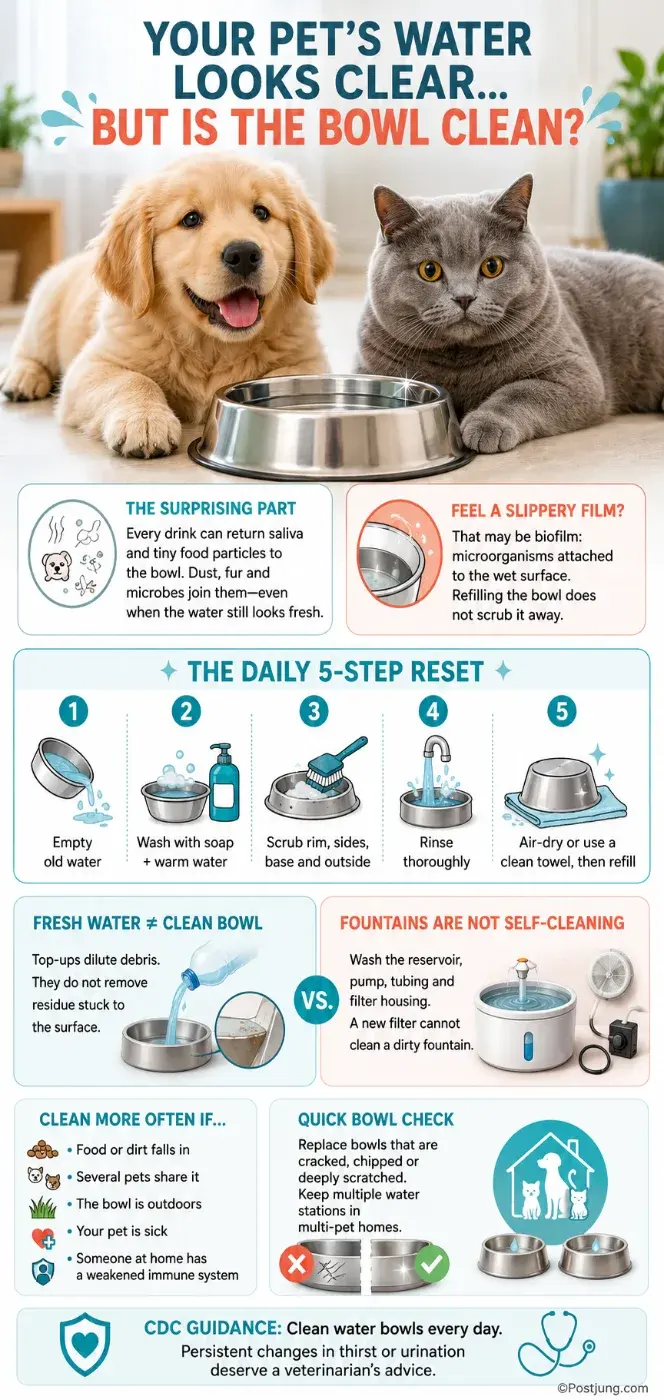
A pet’s water can look perfectly clear while the bowl holding it is overdue for a wash. Saliva, food crumbs, dust, hair, and microorganisms enter the water throughout the day, leaving residue that a simple refill will not remove.
That is why the Centers for Disease Control and Prevention recommends cleaning bowls used for water every day. The job takes only a few minutes, but it does require more than pouring out the old water and adding fresh water.
Clear water does not always mean a clean bowl
Every time a dog or cat drinks, some saliva returns to the water. A pet that drinks shortly after eating may also deposit tiny food particles in the bowl.
Add household dust, loose fur, and the occasional curious paw, and the bowl becomes a collection point for organic material. Outdoor dishes can receive even more debris, including soil, leaves, insects, and bird droppings.
Over time, microorganisms can attach to the wet surface and become part of a slippery layer commonly called biofilm. You may notice it as a slick feeling along the sides or bottom of the bowl, even when the water itself still appears normal.
Fresh-looking water can hide a dirty surface. Waiting until the bowl smells unpleasant or develops visible discoloration means waiting longer than necessary.
Refilling does not remove the residue
Topping up the bowl dilutes some debris, but it leaves the inner surface untouched. Even emptying and rinsing it briefly may not remove the film clinging to the sides.
A better daily routine is straightforward:
- Empty the remaining water.
- Wash the bowl with soap or detergent and warm water.
- Scrub the inside, outside, rim, and base.
- Rinse thoroughly so no soap remains.
- Air-dry it or use a clean towel before refilling.
The CDC says ordinary cleaning is sufficient for most pet supplies in routine household use. Dishwasher-safe bowls can also be washed in a dishwasher; a high-temperature or sanitizing setting may be used when disinfection is needed.
Soap, scrubbing, and rinsing do different jobs. Soap helps loosen residue, physical scrubbing removes material attached to the surface, and rinsing carries away both dirt and detergent.
Pet owners should wash their hands after handling used bowls, particularly before preparing food or eating.
Clean water may encourage pets to drink
Bowl hygiene is not only about germs. Smell, taste, temperature, and bowl condition can influence whether an animal finds its water appealing.
VCA Animal Hospitals advises washing and rinsing cat water bowls daily to limit bacterial buildup and changing the water frequently. Cats can be especially selective about their drinking setup, while older animals and pets with certain medical conditions may need close attention to hydration.
Water should be replaced whenever it becomes warm, cloudy, contaminated, or filled with food particles—not merely once at the end of the day. In hot climates, outdoor settings, or busy multi-pet homes, that may mean several water changes.
Cleaning the bowl daily and refreshing the water are related but separate tasks. New water belongs in a clean container.
A sudden increase or decrease in drinking should not automatically be blamed on the bowl. Changes in thirst or urination can accompany medical problems, so persistent changes deserve a call to a veterinarian.
Fountains need cleaning too
A circulating fountain may keep water moving, but movement does not make the system self-cleaning. Slime and debris can accumulate in the reservoir, pump, tubing, seams, and filter housing—areas that are easier to overlook than an open bowl.
Follow the manufacturer’s instructions for disassembly and cleaning. Replacing a filter is not a substitute for washing the parts that touch the water, and installing a new filter in a dirty reservoir leaves existing residue behind.
Keeping a second bowl or fountain can make the routine easier. One can be washed and dried while the other remains available, so the pet never loses access to water.
Bowl condition matters more than appearance
Stainless steel, ceramic, and plastic bowls can all become contaminated when they are not cleaned. Rather than assuming one material will solve the problem, choose a food-safe bowl that is easy to scrub, inspect, and dry.
Replace bowls that are deeply scratched, cracked, chipped, or difficult to clean. Damage can create small crevices where residue collects, while chipped ceramic may also expose material beneath its finished surface.
Wide, stable bowls are often easier to clean and less likely to tip. For cats that dislike their whiskers touching the sides, a broad, shallow dish may also make drinking more comfortable.
In a home with several animals, providing multiple water stations can reduce crowding and ensure that one pet cannot easily block another’s access. VCA recommends having a source of fresh, clean water available for each pet in the household.
When extra precautions make sense
More frequent cleaning or disinfection may be appropriate when a pet is sick, when a bowl has contacted urine or feces, or when someone in the household is at greater risk of severe illness from germs.
Reptile and amphibian supplies require particular care because these animals can carry Salmonella even when they appear healthy. The CDC advises using a dedicated wash tub or another location away from food-preparation areas for these items.
Disinfectants should never be improvised or mixed. Follow the product label, keep chemicals away from animals, and rinse pet-contact surfaces as directed. Cleaning comes before disinfection because leftover dirt can interfere with a disinfectant’s performance.
For an ordinary dog or cat bowl, the easiest rule is also the most memorable: wash it as routinely as a glass used by a person. A clean bowl, refreshed water, and a quick daily check create a drinking station that is safer, fresher, and more inviting.
Centers for Disease Control and Prevention, U.S. Food and Drug Administration, VCA Animal Hospitals, PLOS One
REFERENCES:
https://www.cdc.gov/healthy-pets/about/cleaning-and-disinfecting-pet-supplies.html
https://www.fda.gov/animal-veterinary/animal-health-literacy/tips-safe-handling-pet-food-and-treats
https://vcahospitals.com/resources/preventive-cat/nutrition/tips-to-encourage-cats-to-drink-more-water
https://journals.plos.org/plosone/article?id=10.1371/journal.pone.0259478

เขียนโดย Postjung Insights
 เปิดรายชื่อ 5 โรงเรียนเป้าหมาย เด็กสอบเข้าต้องเตรียมตัวให้พร้อม
 ซาบีดา” เรียกถกด่วน ปมภาพ “ชุดไทย” ถูกนำไปอ้างเป็นชุดกัมพูชา
 รู้หรือไม่? เปิดรายได้พนักงานส่งพัสดุของแต่ละแอป วันหนึ่งได้เท่าไร
 โรงเรียนที่มีนักเรียนมากที่สุดในไทย
 ตาราง “เด่นเหนือเด่นใต้” งวด 1 ต.ค. 69 เปิดข้อมูลตามโพย เลขไหนอยู่ตรงไหน
 Ctrip แพลตฟอร์มการท่องเที่ยวของจีน เปิดขายตั๋วสำหรับทริปท่องเที่ยวอวกาศ ของ Virgin Galactic 6 วัน ในราคาประมาณ 24 ล้านบาท
 'สควีชชี่'ของเล่นที่กำลังเป็นไวรัลอาจถูกเจ้าหน้าที่ของสนามบินยึดได้ ตรวจสอบให้ดีก่อนนำขึ้นเครื่อง
 อำเภอที่มีชื่ออำเภอสั้นที่สุด 3 อำเภอเท่านั้นในประเทศไทย
 หนุ่มขับ Porsche ใจหล่อสุดๆ ติดประกาศเด็กหายไว้รอบคัน..หวังช่วยเผยแพร่ข้อมูลให้ตามหาได้เร็วขึ้น
 โรสแมรี่ แฮร์ริส ‘ป้าเมย์’ แห่ง Spider-Man ฉบับโทบีย์ แม็คไกวร์ อายุครบ 99 ปี
 บุ๋ม ปนัดดา” เล่าเบื้องหลังหญิงตีเนียน หลังเจออยู่กลางวงสัมภาษณ์ “หนุ่ม กรรชัย”
 แปลปกสลาก งวด 1 ต.ค. 69 ส่องตัวเลขจากภาพปกสลากกินแบ่งรัฐบาลซาบีดา” เรียกถกด่วน ปมภาพ “ชุดไทย” ถูกนำไปอ้างเป็นชุดกัมพูชาเปิดรายชื่อ 5 โรงเรียนเป้าหมาย เด็กสอบเข้าต้องเตรียมตัวให้พร้อมหนุ่มขับ Porsche ใจหล่อสุดๆ ติดประกาศเด็กหายไว้รอบคัน..หวังช่วยเผยแพร่ข้อมูลให้ตามหาได้เร็วขึ้น
 วาบิ-ซาบิ (Wabi-Sabi) ปรัชญาญี่ปุ่นที่สอนให้เราโอบกอดความไม่สมบูรณ์แบบ
 English Edition